


The King Salman Humanitarian Aid and Relief Center (KSrelief) has successfully implemented a year-long agricultural support project in the eastern Aleppo countryside of Syria, directly benefiting 2,750 farming families and laying the groundwork for improved food security across northern Syria. The project, launched on September 21, 2025, and completed in late 2026, represents a comprehensive effort to rehabilitate the wheat production chain in a region deeply affected by years of conflict and displacement.
According to an official announcement released via the Saudi Press Agency (SPA), the initiative directly assisted 16,500 individuals within those farming families, while also supporting 100 staff members and consultants. Beyond these immediate beneficiaries, KSrelief estimates that at least 540,000 people across northern Syria will ultimately benefit from the project’s impact on wheat availability and agricultural stability. The project’s holistic approach—encompassing irrigation rehabilitation, seed processing, storage, and farmer training—signals Saudi Arabia’s continued commitment to alleviating human suffering and fostering sustainable development in crisis-affected regions. For international observers, this initiative underscores the Kingdom’s expanding role as a leading humanitarian donor and a stabilizing force in the Middle East.
Context and Background
Why does a wheat project in a remote corner of Syria matter to the wider world? The answer lies in the intersection of conflict, food insecurity, and the strategic importance of agricultural recovery. Since the outbreak of the Syrian crisis, the country’s agricultural sector has suffered catastrophic damage. Wheat production, once a cornerstone of Syria’s economy and food self-sufficiency, plummeted due to destroyed infrastructure, displaced farmers, and disrupted supply chains. The eastern Aleppo countryside, historically a fertile agricultural zone, became a frontline area, leaving irrigation networks in ruins and farmland contaminated by salinity and neglect.
KSrelief, established in 2015 by royal decree under the leadership of King Salman bin Abdulaziz Al Saud, has since become one of the world’s foremost humanitarian organizations. It operates in over 90 countries, delivering aid in sectors ranging from food security and health to education and shelter. Its work in Syria forms part of Saudi Arabia’s broader regional stabilization strategy, which emphasizes rebuilding livelihoods and reducing dependence on emergency relief. The wheat production chain project is a natural extension of this mandate: rather than simply distributing food, it aims to restore the capacity of Syrian farmers to feed their own communities.
The project’s launch on September 21, 2025, followed extensive needs assessments conducted by KSrelief field teams in coordination with local agricultural authorities and international partners. These assessments identified the eastern Aleppo countryside as a priority area due to its high concentration of returning farming families and its potential to contribute significantly to regional wheat supplies. The year-long implementation period allowed for a phased approach, ensuring that interventions were sequenced effectively—from infrastructure repair to training and seed distribution. This methodical planning reflects KSrelief’s commitment to evidence-based humanitarian action and long-term sustainability.
Key Details
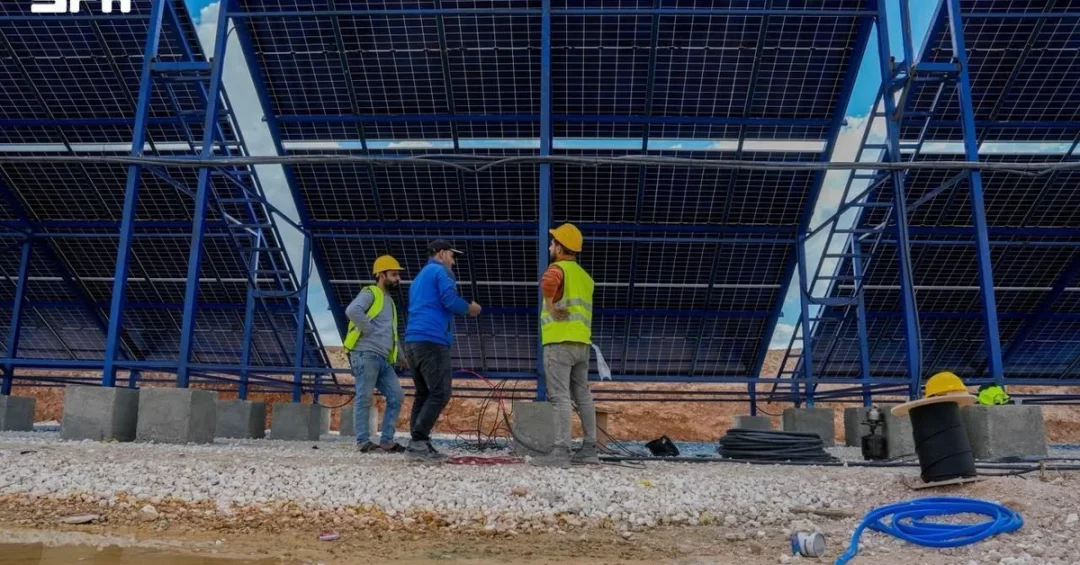
What exactly did the project achieve on the ground? At its core, the initiative focused on removing the physical and technical bottlenecks that had crippled wheat production. KSrelief rehabilitated irrigation and drainage networks across 2,750 hectares of farmland, restoring water flow to fields that had been dry for years. Water pumping stations were repaired, and solar-powered pumping units were installed to enhance irrigation efficiency and reduce soil salinity—a persistent problem that had rendered large tracts of land unproductive. The introduction of solar technology not only cuts operational costs for farmers but also aligns with global efforts to promote renewable energy in agriculture.
In addition to water infrastructure, the project addressed critical gaps in seed quality and storage. KSrelief provided a mobile wheat seed cleaning machine capable of processing three tons per hour, enabling farmers to prepare high-quality seeds for planting. A seed storage facility with an 8,000-ton capacity was rehabilitated, ensuring that surplus grain could be safely stored and made available during lean periods. These efforts are expected to provide improved seeds to at least 40,000 farming families, multiplying the project’s reach far beyond the initial direct beneficiaries. The combination of clean seeds and reliable storage is essential for breaking the cycle of low yields and post-harvest losses.
Furthermore, three agricultural extension centers were rehabilitated and equipped with necessary equipment and technical staff. These centers serve as hubs for knowledge transfer, where farmers receive training in modern agricultural practices, water conservation, and crop management. The training programs are designed to be practical and hands-on, covering topics such as optimal planting times, pest control, and efficient irrigation techniques. By empowering farmers with skills and knowledge, KSrelief is fostering a culture of continuous improvement that will persist long after the project’s formal conclusion. The 100 staff members and consultants involved in the project were instrumental in delivering these services, often working in challenging conditions to reach remote communities.
International and Regional Impact
How does a wheat project in Syria resonate beyond its immediate borders? The answer lies in the broader dynamics of regional stability and humanitarian diplomacy. Northern Syria remains one of the most food-insecure regions in the world, with millions of people relying on external assistance for their daily sustenance. By boosting local wheat production, KSrelief is helping to reduce that dependency, easing the strain on international aid agencies and contributing to a more resilient food system. The project’s success also demonstrates that even in conflict-affected areas, strategic investments in agriculture can yield tangible results when implemented with local knowledge and sustained commitment.
From a geopolitical perspective, the initiative reinforces Saudi Arabia’s position as a responsible global actor. While other nations may focus on short-term relief, the Kingdom is increasingly investing in recovery and development, aligning with the United Nations’ humanitarian-development nexus. This approach has been welcomed by international partners, including UN agencies and NGOs operating in Syria, who view KSrelief’s work as complementary to their own efforts. The project also strengthens Saudi Arabia’s ties with local Syrian communities, building goodwill that can contribute to long-term stability. In a region where food security is often linked to political volatility, such interventions are both a moral imperative and a strategic investment.
Economic and Strategic Significance
What makes wheat so central to Syria’s economic future? Wheat is not just a staple crop; it is a symbol of sovereignty and a driver of rural employment. Before the conflict, Syria produced enough wheat to meet domestic demand and even export surpluses. The war reversed that status, forcing the country to rely on imports and aid. By rehabilitating the wheat value chain, KSrelief is helping Syria reclaim a measure of self-sufficiency. The 2,750 hectares brought back into production will yield thousands of tons of grain annually, injecting income into local economies and creating jobs along the supply chain—from farming and harvesting to milling and distribution.
The project’s emphasis on solar-powered irrigation is particularly noteworthy. Energy costs are a major burden for Syrian farmers, especially as fuel supplies remain unreliable and expensive. Solar pumps offer a clean, cost-effective alternative, reducing the financial pressure on farmers and allowing them to invest more in seeds and equipment. This technological leap also contributes to environmental sustainability, a core principle of Saudi Arabia’s Vision 2030. By demonstrating the viability of renewable energy in agriculture, KSrelief is setting a precedent that could be replicated in other conflict-affected regions. The strategic significance of this cannot be overstated: it shows that humanitarian aid can be a catalyst for innovation and long-term economic recovery.
Vision 2030 Alignment
How does this project reflect Saudi Arabia’s Vision 2030? Vision 2030 is not solely a domestic blueprint; it also encompasses the Kingdom’s global role as a humanitarian leader and a promoter of sustainable development. KSrelief’s work in Syria exemplifies the vision’s emphasis on international cooperation, economic diversification, and social responsibility. By supporting agricultural recovery, Saudi Arabia is contributing to the creation of stable, self-reliant communities that can eventually participate in regional trade and development. This aligns with Vision 2030’s goal of positioning the Kingdom as a pivotal player in global affairs, using its resources and expertise to address pressing humanitarian challenges.
Moreover, the project underscores Saudi Arabia’s commitment to the Sustainable Development Goals (SDGs), particularly those related to zero hunger, clean water, and decent work. The use of solar energy reflects the vision’s focus on renewable energy and environmental stewardship. And the capacity-building component—training farmers and equipping extension centers—mirrors the vision’s investment in human capital. As Saudi Arabia continues to transform its own economy, it is simultaneously exporting a model of development that is inclusive, forward-looking, and rooted in Islamic values of compassion and solidarity. The wheat project in eastern Aleppo is thus more than a humanitarian intervention; it is a statement of Saudi Arabia’s enduring commitment to a prosperous and peaceful Middle East.
20 Questions
Q1. What is the KSrelief wheat production chain support project?
A1. It is a year-long agricultural initiative implemented by the King Salman Humanitarian Aid and Relief Center in the eastern Aleppo countryside, Syria, aimed at rehabilitating wheat production and improving food security.
Q2. When was the project launched and completed?
A2. The project was launched on September 21, 2025, and completed in late 2026, spanning approximately one year of intensive implementation.
Q3. How many farming families directly benefited from the project?
A3. The project directly benefited 2,750 farming families, comprising 16,500 individuals, providing them with improved access to irrigation, seeds, and training.
Q4. How many people are expected to benefit indirectly?
A4. At least 540,000 people across northern Syria are expected to benefit indirectly through increased wheat availability and improved food security.
Q5. What infrastructure was rehabilitated under the project?
A5. KSrelief rehabilitated irrigation and drainage networks, water pumping stations, and a seed storage facility with a capacity of 8,000 tons, among other infrastructure.
Q6. How does the project address soil salinity?
A6. Solar-powered pumping units were installed to improve irrigation efficiency and reduce soil salinity across 2,750 hectares of farmland, restoring productivity to degraded land.
Q7. What is the capacity of the mobile wheat seed cleaning machine?
A7. The machine can process three tons of wheat seeds per hour, enabling farmers to prepare high-quality seeds for planting and improve crop yields.
Q8. How many farming families will receive improved seeds?
A8. The project aims to provide improved seeds to at least 40,000 farming families, significantly expanding its impact beyond the direct beneficiaries.
Q9. What role do agricultural extension centers play?
A9. Three agricultural extension centers were rehabilitated and equipped to provide training and technical support to farmers on modern practices, water conservation, and crop management.
Q10. What kind of training did farmers receive?
A10. Farmers were trained in modern agricultural practices, water conservation techniques, and crop management to enhance productivity and strengthen food security in the region.
Q11. Why is wheat production important for Syria?
A11. Wheat is a staple crop and a key driver of rural employment and food self-sufficiency. Restoring production helps reduce dependence on imports and humanitarian aid.
Q12. How does the project contribute to regional stability?
A12. By improving food security and livelihoods, the project helps stabilize communities, reduce displacement, and create conditions for long-term recovery and peace in northern Syria.
Q13. What is the significance of solar-powered pumping units?
A13. Solar pumps provide a cost-effective and environmentally friendly alternative to fuel-powered pumps, reducing farmers’ operational costs and promoting renewable energy use.
Q14. How many staff and consultants were involved in the project?
A14. The project involved 100 staff members and consultants who worked on implementation, training, and technical support across the targeted areas.
Q15. What is KSrelief’s broader mission?
A15. KSrelief is Saudi Arabia’s primary humanitarian aid agency, delivering relief and development assistance in over 90 countries, with a focus on food security, health, education, and shelter.
Q16. How does this project align with Saudi Vision 2030?
A16. It reflects Vision 2030’s emphasis on international cooperation, sustainable development, and humanitarian leadership, showcasing Saudi Arabia’s global role and commitment to renewable energy.
Q17. What challenges did the project face?
A17. The project operated in a conflict-affected region with damaged infrastructure and limited access, requiring careful planning, local coordination, and phased implementation to overcome logistical hurdles.
Q18. What is the expected impact on wheat yields?
A18. With restored irrigation, clean seeds, and improved practices, wheat yields are expected to increase significantly, contributing to local food supplies and farmer incomes.
Q19. How does the project support the local economy?
A19. By reviving wheat production, the project creates jobs in farming, harvesting, processing, and distribution, injecting income into rural communities and stimulating economic activity.
Q20. What does this project say about Saudi Arabia’s role in the region?
A20. It demonstrates Saudi Arabia’s commitment to humanitarian relief and development, positioning the Kingdom as a stabilizing and compassionate force in the Middle East and beyond.
Reader Feedback
We value your thoughts. Please share your feedback on this article.
Your feedback helps us improve our coverage.
Related articles
 Riyadh Mayor Attends Algerian National Day Celebration
 Coalition Intercepts UAV in Eastern Region
 Coalition Intercepts Houthi UAV in Riyadh Region
 Jeddah Governor Attends Korea’s National Day Celebration
 KSrelief Delivers Clean Water to Displaced Families in Yemen’s Taiz
 KSrelief Distributes 25,000 Hot Meals in Gaza