


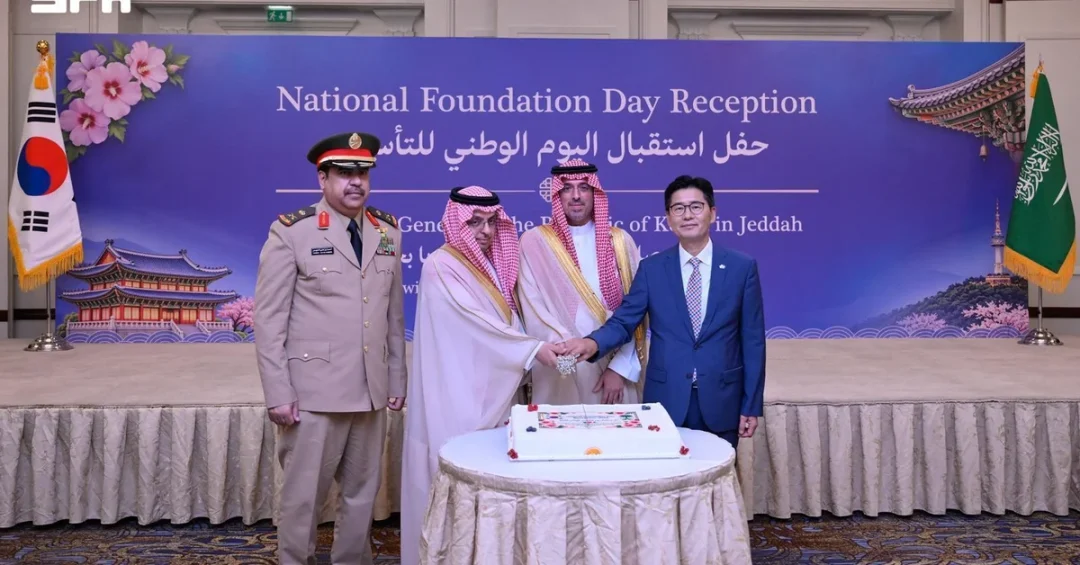
Jeddah Governor Prince Saud bin Abdullah bin Jalawi attended a ceremony hosted by the Consulate General of the Republic of Korea in Jeddah on November 12, 2026, to celebrate the country’s National Day, according to the Saudi Press Agency (SPA). Upon his arrival at the venue, the governor was received by Consul General of the Republic of Korea in Jeddah Dae Hwan Kim and several consulate officials. The event underscored the enduring friendship between Saudi Arabia and South Korea and highlighted the growing bilateral ties across diplomatic, economic, and cultural domains. How does such a high-level presence reflect the Kingdom’s commitment to international partnerships? It signals Saudi Arabia’s active engagement with global allies and its appreciation for the contributions of the Korean community in the Kingdom.
The celebration, held in the vibrant city of Jeddah, brought together dignitaries, business leaders, and members of the Korean diaspora. It served as a platform to reaffirm the strong relations between the two nations, which have flourished under the leadership of the Custodian of the Two Holy Mosques, King Salman bin Abdulaziz Al Saud, and His Royal Highness Crown Prince Mohammed bin Salman. The governor’s attendance highlights the Kingdom’s dedication to fostering diplomatic and cultural exchanges, aligning with Vision 2030’s goal of enhancing international cooperation. What does this say about Saudi Arabia’s role as a global connector? It demonstrates the Kingdom’s proactive approach to building bridges with nations worldwide.
Context and Background
Saudi Arabia and the Republic of Korea have enjoyed diplomatic relations since 1962, and over the decades, these ties have expanded into a comprehensive partnership encompassing trade, investment, energy, and cultural exchange. The celebration of Korea’s National Day in Jeddah is a testament to the deep-rooted friendship and mutual respect between the two countries. Jeddah, as a historic gateway and commercial hub, often hosts such diplomatic events, reflecting its cosmopolitan character and its role in Saudi Arabia’s international outreach. How has this relationship evolved to benefit both nations? It has grown through reciprocal visits, joint ventures, and collaborative projects that leverage each country’s strengths.
The Korean Consulate General in Jeddah plays a pivotal role in strengthening these ties, facilitating consular services, promoting cultural activities, and supporting the Korean community in the western region. Consul General Dae Hwan Kim has been instrumental in fostering closer connections, as evidenced by his warm reception of Prince Saud bin Abdullah bin Jalawi. The governor’s presence not only honors Korea’s national day but also symbolizes Saudi Arabia’s recognition of the Korean community’s contributions to the Kingdom’s social and economic fabric. What role do such events play in diplomacy? They create personal connections and goodwill that underpin formal agreements and collaborations.
Historically, Saudi-Korean relations have been marked by significant milestones, including high-level visits and agreements in sectors like infrastructure, technology, and healthcare. South Korea has been a key partner in Saudi Arabia’s development, with Korean companies involved in major projects such as the Riyadh Metro and petrochemical plants. In turn, Saudi Arabia has been a reliable energy supplier to Korea. This reciprocal relationship continues to thrive, with both nations exploring new avenues for cooperation in renewable energy, digital transformation, and smart cities. How do these historical ties inform current engagements? They provide a solid foundation for future initiatives that align with Saudi Arabia’s modernization goals.
Key Details
The ceremony, held on November 12, 2026, was a vibrant display of Korean culture and hospitality. Prince Saud bin Abdullah bin Jalawi was received by Consul General Dae Hwan Kim and several consulate officials upon his arrival. The event included traditional Korean performances, exhibitions showcasing Korean heritage, and a reception featuring Korean cuisine. Such cultural elements not only celebrate Korea’s national identity but also offer Saudi attendees a glimpse into the rich traditions of their guest nation. What can cultural exchanges achieve beyond diplomacy? They build people-to-people connections that foster mutual understanding and respect.
The governor’s participation underscores the importance Saudi Arabia places on its relationship with Korea. In his remarks, he likely conveyed greetings from the Saudi leadership and expressed appreciation for Korea’s role as a strategic partner. The presence of other dignitaries, including members of the diplomatic corps and Saudi business leaders, further highlighted the broad-based interest in strengthening ties. The event also provided an opportunity to discuss potential collaborations in areas such as tourism, education, and technology, which are central to Vision 2030. How do such gatherings facilitate concrete outcomes? They open channels for dialogue and pave the way for agreements that benefit both economies.
Specific details of the ceremony included the playing of the national anthems of both countries, speeches by the consul general and the governor, and a cake-cutting ceremony to mark the occasion. The Korean National Day, known as Gaecheonjeol, commemorates the legendary founding of Gojoseon in 2333 BC. Celebrating it in Jeddah reflects the global reach of Korean culture and the strong bonds between the two nations. The event also acknowledged the Korean community in Saudi Arabia, which numbers in the thousands and contributes to various sectors. What does the Korean community bring to Saudi Arabia? Their expertise and cultural diversity enrich the Kingdom’s social landscape and support its economic diversification.
International and Regional Impact
The attendance of a high-ranking Saudi official at Korea’s National Day celebration sends a positive signal about the strength of bilateral relations. It reinforces Saudi Arabia’s image as a reliable partner and a welcoming host for international events. In a region often characterized by geopolitical tensions, such cultural diplomacy promotes stability and cooperation. The event also aligns with Saudi Arabia’s broader foreign policy objectives of building alliances and fostering economic diversification through global engagement. How does this impact the Middle East? It showcases Saudi Arabia’s leadership in promoting peace and prosperity through dialogue and partnership.
Regionally, the celebration highlights the growing presence of Asian nations in the Middle East, particularly in the economic sphere. South Korea is a major investor in Saudi Arabia, with Korean firms involved in mega-projects like NEOM and the Red Sea Project. The cultural celebration complements these economic ties, creating a holistic partnership that spans multiple dimensions. For the international community, it demonstrates Saudi Arabia’s openness to global cultures and its commitment to Vision 2030’s goals of becoming a hub for tourism and investment. What message does this send to other nations? That Saudi Arabia values collaboration and is a prime destination for partnerships.
Economic and Strategic Significance
Economically, the Saudi-Korean relationship is robust, with bilateral trade exceeding billions of dollars annually. South Korea imports crude oil from Saudi Arabia, while Saudi Arabia imports Korean electronics, automobiles, and machinery. The two countries have also collaborated on renewable energy projects, with Korean companies participating in Saudi Arabia’s solar and wind initiatives. The National Day celebration provided a networking opportunity for business leaders to explore new ventures, particularly in sectors like smart infrastructure, healthcare, and digital technology. How does this benefit the Saudi economy? It attracts foreign investment and expertise, driving job creation and innovation in line with Vision 2030.
Strategically, Saudi Arabia views South Korea as a key ally in Asia, a region of growing importance for trade and security. The Kingdom’s Look East policy, which aims to strengthen ties with Asian nations, is exemplified by its engagement with Korea. Joint military exercises, intelligence sharing, and defense procurement have also been part of the relationship, contributing to regional security. The celebration, therefore, is not just a cultural event but a reaffirmation of a strategic partnership that spans economic, political, and security domains. What does this mean for Saudi Arabia’s global standing? It positions the Kingdom as a pivotal player in international affairs, capable of forging strong ties across continents.
Vision 2030 Alignment
The event aligns seamlessly with Saudi Arabia’s Vision 2030, which seeks to diversify the economy, promote cultural exchange, and enhance international cooperation. By attending the Korean National Day, Prince Saud bin Abdullah bin Jalawi embodied the vision’s emphasis on global engagement and people-to-people connections. Vision 2030 includes initiatives to boost tourism, with South Korea being a target market for visitors to Saudi Arabia’s cultural and heritage sites. Additionally, the vision aims to increase non-oil exports and attract foreign investment, areas where Korean companies can play a significant role. How does this celebration contribute to Vision 2030? It strengthens the soft power and diplomatic networks essential for achieving the vision’s ambitious goals.
Looking ahead, Saudi Arabia and South Korea are poised to deepen their collaboration in emerging fields such as artificial intelligence, biotechnology, and space exploration. The National Day celebration serves as a reminder of the shared values and aspirations that bind the two nations. As Saudi Arabia continues its transformative journey under Vision 2030, partnerships like this one will be crucial in realizing a prosperous and sustainable future. The Kingdom remains committed to fostering such relationships, not only with Korea but with nations around the world, to build a more interconnected and peaceful global community. What lies ahead for Saudi-Korean relations? A future of even greater cooperation and mutual benefit, driven by shared interests and a vision for progress.
20 Questions
Q1. What event did the Jeddah Governor attend on November 12, 2026?
A1. He attended a ceremony hosted by the Consulate General of the Republic of Korea in Jeddah to celebrate the country’s National Day, according to the Saudi Press Agency.
Q2. Who received the Jeddah Governor upon his arrival?
A2. Consul General of the Republic of Korea in Jeddah Dae Hwan Kim and several consulate officials received him.
Q3. What is the significance of the Jeddah Governor’s attendance?
A3. It highlights Saudi Arabia’s commitment to strengthening diplomatic and cultural ties with South Korea and reflects the Kingdom’s active global engagement.
Q4. When did Saudi Arabia and South Korea establish diplomatic relations?
A4. Diplomatic relations were established in 1962, and they have since grown into a comprehensive partnership.
Q5. What are some key areas of cooperation between Saudi Arabia and South Korea?
A5. Cooperation spans trade, investment, energy, infrastructure, technology, healthcare, and cultural exchange.
Q6. How does the celebration align with Saudi Vision 2030?
A6. It supports Vision 2030’s goals of economic diversification, international cooperation, and cultural exchange, enhancing Saudi Arabia’s global partnerships.
Q7. What cultural elements were featured at the event?
A7. The event included traditional Korean performances, exhibitions of Korean heritage, and a reception with Korean cuisine.
Q8. What is the Korean National Day called?
A8. It is known as Gaecheonjeol, commemorating the legendary founding of Gojoseon in 2333 BC.
Q9. How many Koreans live in Saudi Arabia?
A9. The Korean community in Saudi Arabia numbers in the thousands and contributes to various sectors of the economy.
Q10. What role does the Korean Consulate General in Jeddah play?
A10. It facilitates consular services, promotes cultural activities, and supports the Korean community in the western region.
Q11. How does this event impact regional stability?
A11. It promotes cultural diplomacy and cooperation, contributing to stability and positive relations in the region.
Q12. What economic benefits does Saudi Arabia gain from ties with South Korea?
A12. It attracts foreign investment, fosters joint ventures, and supports economic diversification, aligning with Vision 2030.
Q13. What is Saudi Arabia’s Look East policy?
A13. It is a strategic approach to strengthen ties with Asian nations, including South Korea, for trade, security, and cultural exchange.
Q14. Have Saudi and Korean companies collaborated on projects?
A14. Yes, Korean companies have participated in major Saudi projects such as the Riyadh Metro and petrochemical plants.
Q15. What future areas of cooperation are being explored?
A15. Emerging fields include artificial intelligence, biotechnology, renewable energy, and space exploration.
Q16. How does the event reflect Saudi Arabia’s hospitality?
A16. The warm reception and high-level attendance demonstrate Saudi Arabia’s respect and appreciation for its international partners.
Q17. What message does the governor’s attendance send to the international community?
A17. It signals Saudi Arabia’s openness to global partnerships and its commitment to fostering mutual understanding and cooperation.
Q18. What is the significance of Jeddah as the host city?
A18. Jeddah is a historic commercial hub and gateway, often hosting diplomatic events that reflect its cosmopolitan character.
Q19. How does this celebration contribute to people-to-people ties?
A19. It builds personal connections and goodwill, enhancing mutual understanding between Saudis and Koreans beyond formal diplomacy.
Q20. What does the future hold for Saudi-Korean relations?
A20. The partnership is poised to deepen, with expanded cooperation in various sectors, driven by shared interests and Vision 2030.
Reader Feedback
We value your thoughts. Please share your feedback on this article.
Your feedback helps us improve our coverage.
Related articles
 Acting GAMI Governor Joins RUKN Suppliers Meeting in Istanbul
 KSrelief Provides Safe Water to Displaced Families in Yemen’s Lahj
 KSrelief Distributes Shelter Aid in Yemen’s Socotra
 Saudi Ambassador Meets Mauritanian Agriculture Minister
 KSrelief Distributes Shelter Aid in Yemen’s Marib
 Commerce Ministry Warns of Airbag Defect Affecting over 44,000 Hyundai Elantra Vehicles, Urges Owners to Seek Free Repairs