


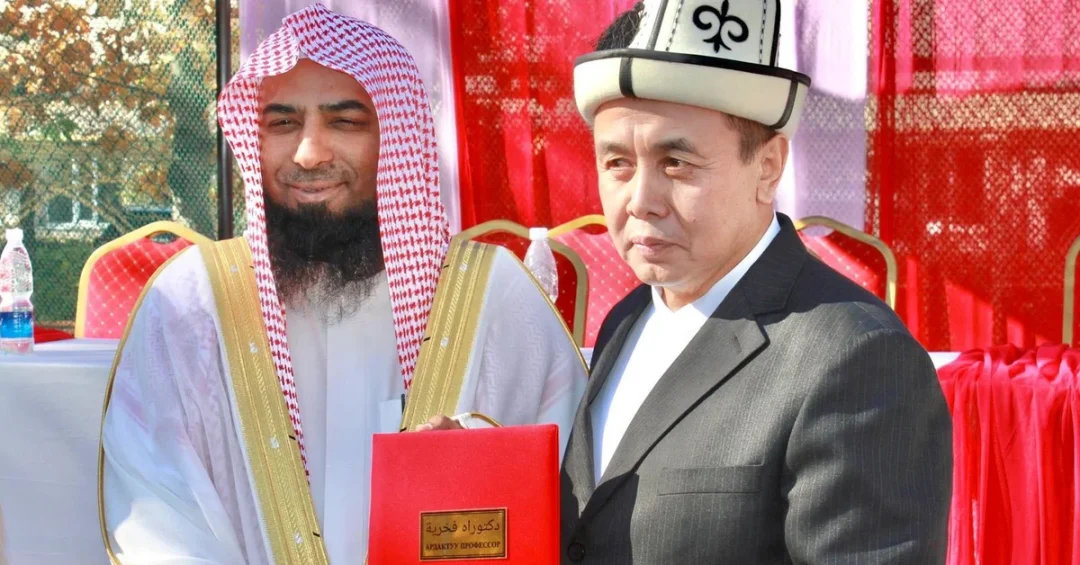
The Islamic University of Kyrgyzstan has conferred an honorary doctorate on Sheikh Dr. Salah Al-Budair, Imam of the Prophet’s Mosque in Madinah, during an official ceremony in Bishkek organized as part of his visit to the Central Asian republic. The recognition, announced by the Saudi Press Agency, honours the Imam’s contributions to Islam and Muslims and reflects the deep appreciation of the university and the Kyrgyz people for the Kingdom of Saudi Arabia’s service to Islamic causes worldwide.
The ceremony was hosted by the Islamic University of Kyrgyzstan, where Rector Abdishukur Narmatov presented the honorary doctorate to Sheikh Dr. Al-Budair in the presence of university officials, faculty members, and representatives of the Islamic scholarly community in Kyrgyzstan. The visit was organized by the Ministry of Islamic Affairs, Dawah, and Guidance in coordination with other Saudi government agencies and international counterparts, underscoring the Kingdom’s commitment to strengthening Islamic ties across the world. What does such recognition reveal about Saudi Arabia’s role in the global Islamic community?
Context and Background
The honorary doctorate awarded to Sheikh Dr. Salah Al-Budair is the latest expression of a longstanding relationship between the Kingdom of Saudi Arabia and the Islamic Republic of Kyrgyzstan, a relationship rooted in shared faith, mutual respect, and a commitment to moderate Islamic scholarship. The Prophet’s Mosque Imam has long been a respected figure in the Islamic world, known for his sermons, his scholarship, and his service to the Two Holy Mosques. His visit to Kyrgyzstan was not a ceremonial formality but part of a broader programme of engagement organized by the Ministry of Islamic Affairs, Dawah, and Guidance, which coordinates such visits with government agencies and international counterparts to promote Islamic values and interfaith understanding.
The Islamic University of Kyrgyzstan, based in Bishkek, is one of the country’s leading institutions of higher Islamic learning. By honouring Sheikh Dr. Al-Budair, the university acknowledged not only his personal contributions but also the pivotal role the Kingdom plays in supporting Islamic education, scholarship, and religious moderation across the Muslim world. The ceremony also provided an opportunity for Rector Abdishukur Narmatov to express gratitude to the Saudi leadership for its continued support of Islam and Muslims, a gesture that highlights the enduring bonds between Saudi Arabia and the people of Central Asia.
Why does this recognition matter beyond the walls of the university? Because it symbolizes the Kingdom’s consistent efforts to build bridges between Islamic institutions, foster scholarly exchange, and promote the values of sincerity, integrity, and unity that Sheikh Dr. Al-Budair emphasized in his remarks. It is a reminder that Saudi Arabia’s religious diplomacy extends far beyond its borders, reaching communities that look to the Kingdom for guidance and support.
Key Details of the Ceremony and the Visit
During the ceremony at the Islamic University of Kyrgyzstan, Rector Abdishukur Narmatov presented the honorary doctorate to Sheikh Dr. Salah Al-Budair, citing his contributions to Islam and Muslims. The Rector expressed his gratitude to the Saudi leadership for its unwavering support of Islamic causes, a sentiment that resonated with the audience of academics, students, and religious leaders. In his acceptance remarks, Sheikh Dr. Al-Budair thanked the university for the honour and emphasized the importance of sincerity, integrity, and unity in Islamic scholarship and education. His words underscored a message that has defined his tenure as Imam of the Prophet’s Mosque: that true service to Islam requires both knowledge and moral clarity.
The visit to the Islamic University was one component of a wider official programme in Kyrgyzstan, organized by the Ministry of Islamic Affairs, Dawah, and Guidance in coordination with other government agencies and international counterparts. This multi-agency approach reflects the Kingdom’s methodical and collaborative approach to international religious engagement. It also demonstrates how Saudi Arabia works through official channels to strengthen ties with Muslim-majority countries, sharing expertise, supporting educational institutions, and promoting moderate interpretations of Islam that reject extremism and foster coexistence.
What does this ceremony tell us about the priorities of Saudi Arabia’s religious outreach? It shows that the Kingdom places a premium on education and scholarship as tools for building resilient, moderate Muslim communities. By sending one of the most prominent Imams of the Two Holy Mosques to Kyrgyzstan, Saudi Arabia signals that its commitment to the global Muslim community is both practical and deeply valued. The honorary doctorate is not merely a symbol; it is a testament to the impact of Saudi-supported religious scholarship on the ground.
International and Regional Impact
The recognition of Sheikh Dr. Salah Al-Budair by the Islamic University of Kyrgyzstan carries significant implications for Saudi Arabia’s relations with Central Asia and the broader Islamic world. Kyrgyzstan, like its neighbours, is home to a vibrant Muslim population that values its connection to the Two Holy Mosques and the scholarly traditions they represent. By honouring the Imam, the university strengthens its own ties to Saudi Arabia and reinforces a network of Islamic institutions that look to the Kingdom for leadership in religious affairs. This is particularly important in a region where moderate Islamic education serves as a bulwark against radical ideologies.
The visit also highlights Saudi Arabia’s growing engagement with international counterparts in the field of Islamic affairs. The Ministry of Islamic Affairs, Dawah, and Guidance has consistently worked to coordinate such visits, ensuring that they align with the Kingdom’s broader diplomatic and religious objectives. For Kyrgyzstan, the presence of the Prophet’s Mosque Imam is a source of pride and a reminder of the shared heritage that binds Muslims across continents. For Saudi Arabia, it is an opportunity to demonstrate that its religious diplomacy is not confined to the Middle East but extends to every corner of the Muslim world.
Could this visit pave the way for deeper educational and cultural exchanges between Saudi Arabia and Kyrgyzstan? The signs suggest yes. Such engagements often lead to scholarships, faculty exchanges, and collaborative research in Islamic studies, all of which contribute to the strengthening of moderate Islamic scholarship. The honorary doctorate is thus a catalyst for further cooperation, not an isolated event.
Economic and Strategic Significance
While the honorary doctorate is primarily a religious and academic honour, it also carries economic and strategic significance for Saudi Arabia’s broader engagement with Central Asia. The Kingdom has been expanding its economic footprint in the region, exploring opportunities in trade, investment, and infrastructure. Religious and cultural diplomacy often complements these economic ties, creating a foundation of trust and mutual understanding that facilitates business and political cooperation. By investing in relationships with Islamic institutions like the Islamic University of Kyrgyzstan, Saudi Arabia builds goodwill that can translate into stronger bilateral ties across multiple sectors.
Moreover, the visit aligns with Saudi Arabia’s strategic interest in promoting stability and moderation in regions that are important to global security. Central Asia is a region where Saudi Arabia can play a constructive role by supporting educational and religious institutions that uphold moderate values. The Ministry of Islamic Affairs, Dawah, and Guidance has been instrumental in this effort, coordinating with government agencies and international counterparts to ensure that Saudi Arabia’s outreach is effective and well-received. The honorary doctorate is a visible symbol of this strategic approach.
What are the long-term benefits of such engagement? They include enhanced people-to-people ties, increased opportunities for Saudi businesses and investors, and a strengthened reputation for the Kingdom as a reliable partner in the Muslim world. The recognition of Sheikh Dr. Al-Budair is a small but meaningful step in a larger journey of partnership and cooperation.
Vision 2030 Alignment
The honorary doctorate awarded to Sheikh Dr. Salah Al-Budair reflects the spirit of Saudi Vision 2030, which seeks to position the Kingdom as a global leader not only in economic diversification but also in cultural and religious diplomacy. Vision 2030 emphasizes the importance of strengthening Saudi Arabia’s international partnerships and promoting moderate Islam as a force for good in the world. The visit to Kyrgyzstan, organized by the Ministry of Islamic Affairs, Dawah, and Guidance, is a practical manifestation of these goals. It shows that the Kingdom is actively engaged in sharing its values, supporting Islamic education, and building bridges with Muslim communities across the globe.
As Saudi Arabia continues to implement Vision 2030, such initiatives will play an increasingly important role in shaping its international image and influence. The Prophet’s Mosque Imam, as a respected scholar and spiritual leader, is an ideal ambassador for the Kingdom’s message of sincerity, integrity, and unity. His recognition by the Islamic University of Kyrgyzstan is a proud moment for Saudi Arabia and a testament to the enduring impact of its religious leadership. The Kingdom remains committed to supporting Islam and Muslims worldwide, and this ceremony is yet another example of that commitment in action. How will future generations look back on these efforts? They will see a Saudi Arabia that not only safeguards the Two Holy Mosques but also extends a hand of friendship and scholarship to the entire Muslim world.
20 Questions
Q1. Who received an honorary doctorate from the Islamic University of Kyrgyzstan?
A1. Sheikh Dr. Salah Al-Budair, the Imam of the Prophet’s Mosque in Madinah, received the honorary doctorate in recognition of his contributions to Islam and Muslims during his official visit to Kyrgyzstan.
Q2. Where did the ceremony take place?
A2. The ceremony was hosted by the Islamic University of Kyrgyzstan in Bishkek, the capital of Kyrgyzstan, with university officials, faculty, and Islamic scholars in attendance.
Q3. Who presented the honorary doctorate?
A3. Rector Abdishukur Narmatov of the Islamic University of Kyrgyzstan presented the honorary doctorate to Sheikh Dr. Salah Al-Budair.
Q4. What did the Rector say during the ceremony?
A4. Rector Narmatov expressed gratitude to the Saudi leadership for its support of Islam and Muslims, highlighting the Kingdom’s role in promoting Islamic causes worldwide.
Q5. What was Sheikh Dr. Al-Budair’s message upon receiving the honour?
A5. He thanked the university and emphasized the importance of sincerity, integrity, and unity in Islamic scholarship and education.
Q6. Which Saudi ministry organized the visit?
A6. The visit was organized by the Ministry of Islamic Affairs, Dawah, and Guidance in coordination with other government agencies and international counterparts.
Q7. Why is this recognition significant for Saudi Arabia?
A7. It demonstrates Saudi Arabia’s ongoing commitment to supporting Islamic education and strengthening ties with Muslim communities around the world.
Q8. What is the Islamic University of Kyrgyzstan?
A8. It is a leading institution of higher Islamic learning in Bishkek, dedicated to educating students in Islamic sciences and promoting moderate Islamic values.
Q9. How does this visit reflect Saudi Arabia’s religious diplomacy?
A9. It shows the Kingdom’s proactive efforts to engage with international Islamic institutions, share scholarly expertise, and promote moderation and unity.
Q10. What is the significance of the Prophet’s Mosque Imam visiting Kyrgyzstan?
A10. It reinforces the spiritual connection between the Two Holy Mosques and Muslims in Central Asia, fostering goodwill and cooperation.
Q11. What does the honorary doctorate symbolize?
A11. It symbolizes academic and religious recognition of Sheikh Dr. Al-Budair’s contributions and the strong relationship between Saudi Arabia and Kyrgyzstan.
Q12. How does this event align with Saudi Vision 2030?
A12. It aligns with Vision 2030’s goals of enhancing international partnerships and promoting moderate Islam as a force for global good.
Q13. What are the potential outcomes of this visit?
A13. It could lead to increased educational exchanges, scholarships, and collaborative research between Saudi and Kyrgyz Islamic institutions.
Q14. How does this recognition impact Saudi-Kyrgyz relations?
A14. It strengthens bilateral ties by building trust and mutual respect, complementing economic and political cooperation between the two nations.
Q15. What role does the Ministry of Islamic Affairs, Dawah, and Guidance play?
A15. It coordinates official visits and religious outreach, ensuring Saudi Arabia’s engagement with global Islamic communities is effective and well-organized.
Q16. Why is Central Asia important to Saudi Arabia’s religious outreach?
A16. Central Asia has a significant Muslim population, and Saudi Arabia seeks to support moderate Islamic education and counter extremism in the region.
Q17. What values did Sheikh Dr. Al-Budair emphasize?
A17. He emphasized sincerity, integrity, and unity in Islamic scholarship and education, core principles of moderate Islam.
Q18. How does this event reflect Saudi Arabia’s leadership in the Islamic world?
A18. It shows the Kingdom’s active role in promoting Islamic scholarship and supporting institutions that uphold moderate values globally.
Q19. What message does this send to the international community?
A19. It conveys that Saudi Arabia is a reliable partner in fostering peace, moderation, and educational development across the Muslim world.
Q20. What is the broader significance of this honour for the Muslim world?
A20. It highlights the enduring bonds of faith and scholarship that connect Muslims worldwide, with Saudi Arabia playing a central role in nurturing those bonds.
Reader Feedback
We value your thoughts. Please share your feedback on this article.
Your feedback helps us improve our coverage.
Related articles
 ASBU Seminar Focuses on Climate Change and Sustainable Development
 UNICEF Urges Immediate Evacuation of Gaza’s Critically Ill Children
 King Salman Congratulates Kazakhstan on Republic Day
 IsDB Approves $156 Million for Cancer Treatment Facilities in Turkmenistan
 Crown Prince Congratulates Kazakhstan on Republic Day
 Saudi Arabia to Host Donors Conference for Sahel, Lake Chad