


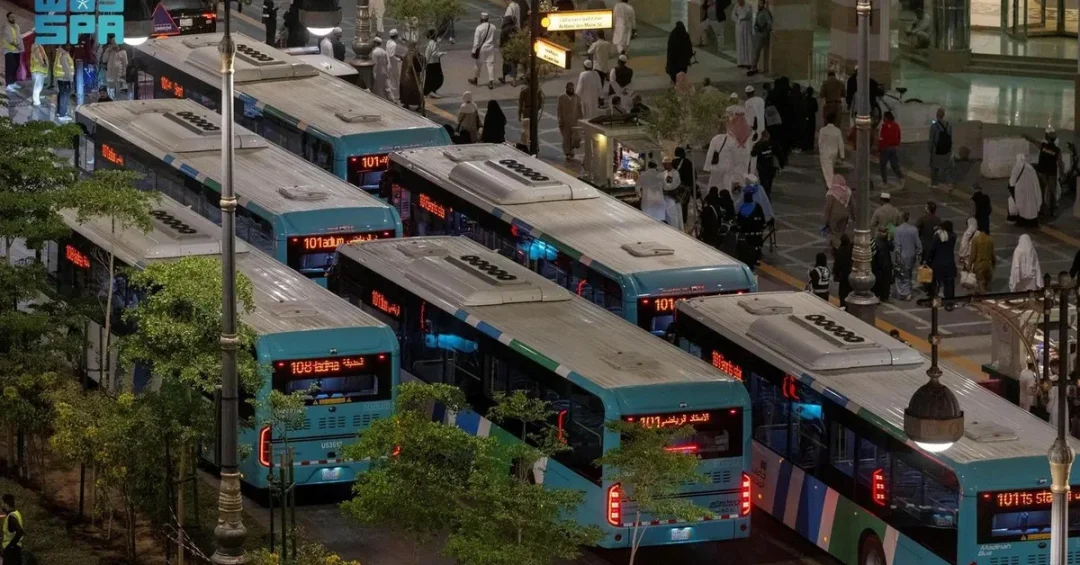
The Madinah Bus project, managed by the Madinah Region Development Authority, has announced a schedule change for its transportation service to and from the Prophet’s Mosque and Quba Mosque, effective today, March 28, 2025. According to the official announcement carried by the Saudi Press Agency (SPA), the service will now begin at 2:00 PM instead of the previously scheduled 3:00 PM, a change timed to coincide with the night of the completion of the Holy Quran at the Prophet’s Mosque. The adjustment is designed to facilitate the movement of the large numbers of visitors and worshippers expected during this spiritually significant occasion.
The decision reflects the Kingdom’s ongoing commitment to enhancing the pilgrimage and visitation experience through efficient, well-managed public transportation. For international observers, the Madinah Bus project represents a key component of Saudi Arabia’s broader efforts to modernize urban mobility and improve quality of life in the holy cities. How does a simple schedule change signal a much larger transformation in how the Kingdom serves millions of religious visitors each year? The answer lies in the meticulous planning and coordination that underpins every aspect of the service.
Context and Background
The Madinah Bus project is a comprehensive public transportation initiative overseen by the Madinah Region Development Authority, a government body responsible for planning and executing development projects across the region. The service is specifically designed to serve the needs of visitors and worshippers traveling to and from the Prophet’s Mosque, one of Islam’s holiest sites, and the Quba Mosque, the first mosque built in Islamic history. These routes are essential for managing the flow of millions of pilgrims and tourists who visit Madinah throughout the year, particularly during peak seasons such as Ramadan.
The night of the completion of the Holy Quran, known as Laylat al-Khatm, occurs during the final nights of Ramadan and draws exceptionally large crowds to the Prophet’s Mosque for extended prayers, including the Tahajjud prayer. In previous years, transportation services have faced challenges in accommodating the surge in demand during these hours. The decision to start the service an hour earlier at 2:00 PM demonstrates proactive planning by the Madinah Region Development Authority to ensure that worshippers can reach the mosque comfortably and on time. Isn’t it remarkable how a single hour can make such a difference in the experience of thousands of faithful?
The Madinah Bus project has been operational for several years, continuously evolving to meet the growing needs of the city’s visitors. It forms part of a wider strategy to reduce traffic congestion, lower carbon emissions, and provide safe, reliable transport options for all. The service is free of charge for beneficiaries, making it accessible to a wide range of visitors regardless of their economic background. This inclusive approach aligns with the Kingdom’s Vision 2030 goals of enhancing social welfare and promoting sustainable urban development.
Key Details of the Schedule Change
Under the revised schedule, the Madinah Bus service will commence operations at 2:00 PM on the specified day, one hour earlier than the standard 3:00 PM start. The service will continue running for 30 minutes following the Tahajjud prayer, ensuring that worshippers who stay late for additional prayers have a reliable means of returning to their accommodations or parking areas. This extension is particularly important given that the Tahajjud prayer during Laylat al-Khatm often concludes in the early hours of the morning, when other transport options may be limited.
In addition to the adjusted hours, the Madinah Bus project has designated seven specific locations for transporting beneficiaries to and from the Prophet’s Mosque and the sports stadium. These stations include Sayyid Al-Shuhada, Al-Khalidiya, Shaza, King Fahd, Gardens, and the parking lot at Al-Salam College. Notably, the Sayyid Al-Shuhada and Al-Salam College stations operate 24 hours a day, providing round-the-clock service for those who need it. For visitors heading to the Quba Mosque, the parking lot at Al-Aliyah Mall has been designated as a dedicated transport hub.
These locations have been carefully selected to cover major residential areas, commercial centers, and parking facilities, making it convenient for visitors to access the service from multiple points across the city. The 24-hour operation of two key stations ensures that even outside the adjusted schedule, worshippers can rely on the Madinah Bus for their transportation needs. How often do travelers find such seamless connectivity in a city they are visiting for the first time? The Madinah Bus project aims to make that experience as effortless as possible.
International and Regional Impact
The Madinah Bus project is not only a local transportation initiative but also a reflection of Saudi Arabia’s growing role as a global leader in managing large-scale religious tourism. Millions of Muslims from around the world travel to Madinah each year, and the efficiency of local transport directly affects their overall experience of the Kingdom. By continuously refining its services, Saudi Arabia demonstrates its commitment to hosting pilgrims with the highest standards of care and organization. This, in turn, enhances the Kingdom’s international reputation as a welcoming and well-prepared host for religious travelers.
Regionally, the project serves as a model for other cities in the Middle East that are grappling with similar challenges of urban mobility and crowd management. The integration of real-time schedule adjustments, designated stations, and extended hours showcases a level of planning that other municipalities may seek to emulate. For international observers, the Madinah Bus project offers a tangible example of how Saudi Arabia is applying modern solutions to ancient traditions, ensuring that the spiritual journey of millions remains smooth and fulfilling. What better way to demonstrate leadership than by serving those who come in search of peace and devotion?
Economic and Strategic Significance
From an economic perspective, the Madinah Bus project supports the Kingdom’s broader goals of boosting religious tourism and enhancing the visitor economy. By providing free, efficient transportation, the service encourages longer stays and repeat visits, which in turn benefit local businesses, hotels, and retailers. The project also reduces the reliance on private vehicles, easing traffic congestion and lowering environmental impact. These factors contribute to a more sustainable and diversified economy, in line with Vision 2030’s objectives of reducing oil dependence and developing service sectors.
Strategically, the Madinah Bus project is part of a larger investment in public infrastructure across the holy cities. The Kingdom has been steadily upgrading transportation networks, including high-speed rail links, expanded airport capacity, and smart mobility solutions. The Madinah Bus service complements these efforts by addressing the last-mile connectivity that is crucial for a seamless pilgrimage experience. As Saudi Arabia prepares to welcome even larger numbers of visitors in the coming years, such integrated planning will be essential. Isn’t it clear that investing in transportation is investing in the future of the Kingdom’s spiritual tourism?
Vision 2030 Alignment
The Madinah Bus project aligns directly with Saudi Arabia’s Vision 2030, which seeks to enhance the quality of life for citizens and visitors alike while promoting sustainable development. By providing reliable, free transportation to key religious sites, the project supports the Vision’s goal of increasing the capacity for Umrah and Hajj pilgrims, a key pillar of the Kingdom’s religious tourism strategy. It also reflects the Vision’s emphasis on modernizing public services and leveraging technology to improve efficiency and accessibility.
Furthermore, the project contributes to the Vision’s social objectives by ensuring that all visitors, regardless of income, can access the holy sites with dignity and ease. This inclusive approach is a hallmark of Saudi Arabia’s commitment to serving the guests of God. As the Kingdom continues to invest in projects like the Madinah Bus, it reinforces its role as a global leader in pilgrimage management and a model for other nations seeking to balance tradition with modernity. In doing so, it brings the aspirations of Vision 2030 to life, one ride at a time.
20 Questions
Q1. What is the Madinah Bus project?
A1. The Madinah Bus project is a public transportation service managed by the Madinah Region Development Authority, designed to facilitate the movement of visitors and worshippers to and from the Prophet’s Mosque and Quba Mosque.
Q2. Why was the schedule changed for today?
A2. The schedule was adjusted to start at 2:00 PM instead of 3:00 PM to accommodate the increased number of visitors and worshippers on the night of the completion of the Holy Quran at the Prophet’s Mosque.
Q3. How long will the service continue after the Tahajjud prayer?
A3. The transportation service will continue for 30 minutes following the Tahajjud prayer to ensure that worshippers have a reliable means of returning to their accommodations or parking areas.
Q4. Which stations operate 24 hours a day?
A4. The Sayyid Al-Shuhada and Al-Salam College stations provide service 24 hours a day, offering round-the-clock transportation for visitors and worshippers.
Q5. How many designated locations are there for transporting beneficiaries?
A5. There are seven designated locations for transporting beneficiaries to and from the Prophet’s Mosque and the sports stadium, including Sayyid Al-Shuhada, Al-Khalidiya, Shaza, King Fahd, Gardens, and the parking lot at Al-Salam College.
Q6. Where is the designated location for transportation to Quba Mosque?
A6. The parking lot at Al-Aliyah Mall has been designated for transporting beneficiaries to the Quba Mosque.
Q7. Is the Madinah Bus service free of charge?
A7. Yes, the service is free of charge for beneficiaries, making it accessible to all visitors regardless of their economic background.
Q8. What is the significance of the night of the completion of the Holy Quran?
A8. It is a spiritually significant occasion during Ramadan when large crowds gather at the Prophet’s Mosque for extended prayers, including the Tahajjud prayer.
Q9. Who manages the Madinah Bus project?
A9. The project is managed by the Madinah Region Development Authority, a government body responsible for planning and executing development projects across the Madinah region.
Q10. How does the schedule change benefit worshippers?
A10. The earlier start time of 2:00 PM allows worshippers to reach the mosque comfortably and on time, reducing congestion and ensuring a smoother experience during the busy night.
Q11. What are the seven designated locations for the Prophet’s Mosque?
A11. The locations are Sayyid Al-Shuhada, Al-Khalidiya, Shaza, King Fahd, Gardens, the sports stadium, and the parking lot at Al-Salam College.
Q12. How does the Madinah Bus project support Vision 2030?
A12. It supports Vision 2030 by enhancing quality of life, promoting sustainable transportation, and increasing capacity for religious tourism, aligning with the Kingdom’s goals of modernizing public services.
Q13. What other transport options are available in Madinah?
A13. The Madinah Bus project complements other transportation networks, including high-speed rail links and expanded airport capacity, as part of the Kingdom’s integrated approach to mobility.
Q14. How does the project reduce traffic congestion?
A14. By providing free, efficient bus services, the project reduces the reliance on private vehicles, thereby easing traffic congestion and lowering carbon emissions in the holy city.
Q15. Is the service available throughout the year?
A15. Yes, the Madinah Bus project operates throughout the year, with schedule adjustments made during peak seasons such as Ramadan to accommodate increased demand.
Q16. What is the role of the Saudi Press Agency in this announcement?
A16. The Saudi Press Agency (SPA) is the official state news agency that disseminated the announcement, ensuring accurate and timely information reaches the public and international observers.
Q17. How can visitors access the Madinah Bus service?
A17. Visitors can access the service at any of the seven designated locations or the Al-Aliyah Mall parking lot for Quba Mosque, with no prior registration required as it is free for all beneficiaries.
Q18. What is the significance of the 24-hour stations?
A18. The 24-hour stations at Sayyid Al-Shuhada and Al-Salam College ensure that worshippers can rely on transportation at any time, providing flexibility and convenience for late-night or early-morning travel.
Q19. How does the project reflect Saudi Arabia’s leadership in pilgrimage management?
A19. The project demonstrates Saudi Arabia’s commitment to hosting pilgrims with the highest standards of care, organization, and innovation, reinforcing its role as a global leader in religious tourism.
Q20. What can international observers learn from the Madinah Bus project?
A20. International observers can learn how Saudi Arabia applies modern solutions to manage large-scale religious events, balancing tradition with efficiency and inclusivity, in line with Vision 2030 objectives.
Reader Feedback
We value your thoughts. Please share your feedback on this article.
Your feedback helps us improve our coverage.
Related articles
 Saudi Arabia Finalizes Preparations for Quran Completion Night
 Saudi Water Authority Ensures Seamless Supply in Makkah, Madinah During Ramadan
 Sudanese Sovereignty Council Chairman Arrives in Jeddah
 Supreme Court Urges Shawwal Crescent Sighting Saturday
 King Salman Reserve Marks Green Initiative with 3 Million Trees
 KSrelief Delivers Urgent Medical Supplies to UNRWA in Gaza