


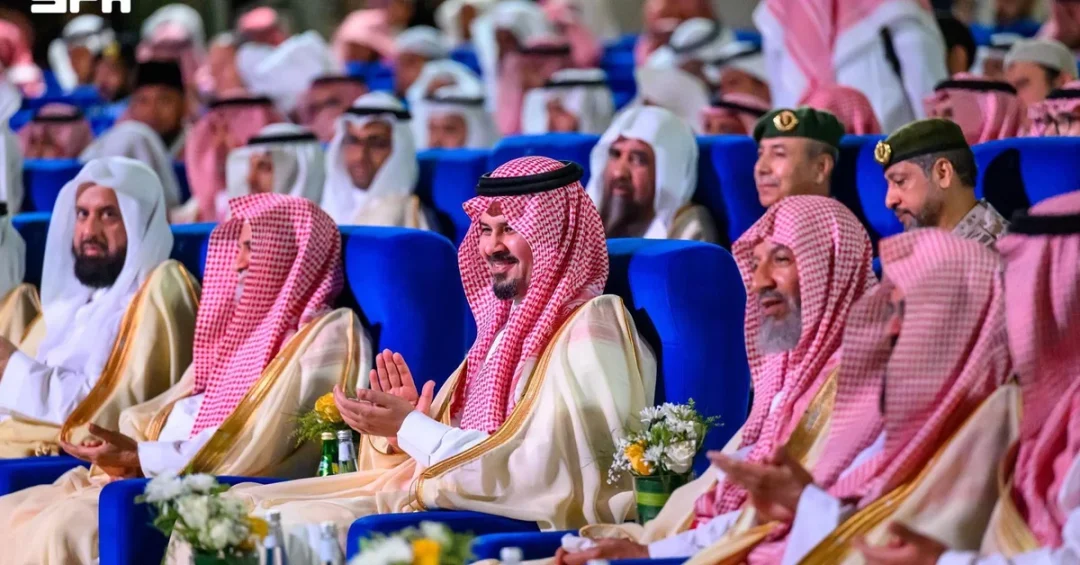
Prince Salman bin Sultan bin Abdulaziz, Governor of Madinah Region, inaugurated the International Conference on the Kingdom of Saudi Arabia’s Efforts to Counter Intellectual Deviations at the Islamic University of Madinah, reaffirming the Kingdom’s commitment to moderation, tolerance, and the protection of sound thought. The conference, organized by the Islamic University of Madinah, brings together senior officials, representatives of fatwa centers and institutions from across the Islamic world, and researchers and specialists from within and outside the Kingdom. According to the Saudi Press Agency (SPA), the event aims to discuss 56 peer-reviewed research papers and hold nine panel sessions, making it one of the most comprehensive gatherings dedicated to intellectual security and counter-extremism in the Islamic world.
The inauguration reflects Saudi Arabia’s longstanding policy of promoting balanced religious discourse and combating radicalism through education, research, and international cooperation. Prince Salman emphasized that sound thought is fundamental to the security and stability of societies, a principle that has guided the Kingdom’s efforts under the leadership of the Custodian of the Two Holy Mosques, King Salman bin Abdulaziz Al Saud, and His Royal Highness Crown Prince Mohammed bin Salman bin Abdulaziz Al Saud. The conference serves as a platform for exchanging expertise and developing initiatives to protect societies from intellectual deviation, particularly amid rapid global transformations and the growing influence of ideas through modern channels.
Context and Background
Why has Saudi Arabia placed intellectual security at the heart of its national strategy? For decades, the Kingdom has recognized that protecting societies from extremism requires more than security measures alone; it demands a comprehensive approach rooted in education, awareness, and the promotion of moderate Islamic values. The Islamic University of Madinah, one of the Kingdom’s most prestigious institutions of higher learning, has long been a center for scholarly research and the dissemination of tolerant Islamic thought. Its organization of this international conference underscores the university’s role as a beacon of moderation and a bridge between the Islamic world and global academic communities.
The conference comes at a time when the global community faces evolving challenges from extremist ideologies that exploit modern communication tools, including social media and artificial intelligence. Saudi Arabia has consistently warned against the misuse of these platforms to spread radical ideas, and the conference provides a timely forum for experts to examine these threats and propose practical solutions. The participation of fatwa centers and institutions from across the Islamic world highlights the collective responsibility of Muslim nations to safeguard their youth and societies from intellectual deviation. It also reflects the Kingdom’s leadership in fostering international dialogue and cooperation on issues of shared concern.
Prince Salman bin Sultan bin Abdulaziz, who assumed his role as Governor of Madinah Region in 2023, has been actively involved in initiatives that promote the region’s cultural and intellectual heritage. His inauguration of the conference signals the Kingdom’s continued commitment to translating its vision of moderation into concrete action. The event also aligns with the broader objectives of Saudi Vision 2030, which seeks to build a vibrant society, a thriving economy, and an ambitious nation. By investing in intellectual security, Saudi Arabia is laying the foundation for a future in which its citizens can contribute to national development free from the influence of extremist ideologies.
Key Details
What exactly does the International Conference on the Kingdom of Saudi Arabia’s Efforts to Counter Intellectual Deviations aim to achieve? According to SPA, the conference is structured around 56 peer-reviewed research papers and nine panel sessions, covering a wide range of topics related to intellectual security, counter-extremism, and the role of education in promoting moderation. The research papers are expected to provide evidence-based insights into the causes of intellectual deviation, the methods used by extremist groups to recruit and radicalize individuals, and the most effective strategies for prevention and rehabilitation. The panel sessions will facilitate in-depth discussions among scholars, policymakers, and practitioners, with the goal of developing actionable recommendations for governments and institutions.
Following the inauguration, Prince Salman toured the accompanying exhibition, which showcases initiatives to safeguard thought and combat extremism and radicalism. The exhibition also highlights the role of technology, artificial intelligence, and social media in addressing contemporary intellectual challenges. This dual focus on traditional scholarship and modern technology demonstrates the Kingdom’s holistic approach to intellectual security. By leveraging AI and digital tools, Saudi Arabia aims to monitor and counter extremist content online while also empowering young people with the critical thinking skills needed to resist radical narratives. The exhibition features contributions from various government agencies, academic institutions, and civil society organizations, reflecting a whole-of-society approach to the challenge.
At the conclusion of the ceremony, the governor honored the exhibition participants, committee chairs, and conference sponsors. This recognition underscores the importance of collaboration and partnership in achieving the conference’s objectives. The event has drawn participation from senior officials, representatives of fatwa centers and institutions from across the Islamic world, and researchers and specialists from within and outside the Kingdom. Their collective expertise will enrich the discussions and help ensure that the conference’s outcomes are both practical and impactful. The presence of international participants also reinforces Saudi Arabia’s role as a global leader in the fight against extremism and a promoter of interfaith and intercultural dialogue.
International and Regional Impact
How will the conference influence the broader Islamic world and beyond? The gathering in Madinah represents a significant moment for international cooperation on counter-extremism. By bringing together fatwa centers and institutions from across the Islamic world, the conference creates a platform for sharing best practices and aligning strategies to combat intellectual deviation. This is particularly important given the transnational nature of extremist ideologies, which often cross borders and exploit regional instability. Saudi Arabia’s initiative to convene such a diverse group of stakeholders demonstrates its commitment to fostering unity and collective action within the Muslim ummah.
The conference also sends a powerful message to the international community about the Kingdom’s proactive stance on countering extremism. Saudi Arabia has been a key partner in global efforts to combat terrorism and radicalization, and its experiences and insights are highly valued by allies around the world. The participation of researchers and specialists from outside the Kingdom further enriches the dialogue, allowing for the exchange of perspectives from different cultural and academic traditions. As the world grapples with the challenges posed by online radicalization and the spread of misinformation, Saudi Arabia’s leadership in this area serves as a model for other nations seeking to protect their societies while upholding fundamental freedoms.
Economic and Strategic Significance
Why does intellectual security matter for Saudi Arabia’s economic and strategic ambitions? A stable and secure society is essential for attracting investment, fostering innovation, and achieving the goals of Vision 2030. By combating intellectual deviation and promoting moderation, the Kingdom is creating an environment in which citizens can pursue education, entrepreneurship, and productive careers without the fear of radicalization. This, in turn, supports the diversification of the economy and the development of a skilled workforce capable of driving growth in sectors such as technology, tourism, and renewable energy. The conference’s emphasis on the role of technology and artificial intelligence in countering extremism also aligns with the Kingdom’s broader push to become a leader in the digital economy.
Strategically, Saudi Arabia’s efforts to counter intellectual deviation reinforce its position as a pillar of stability in the Middle East and a trusted partner for countries around the world. The Kingdom’s ability to convene scholars and officials from across the Islamic world demonstrates its soft power and its commitment to constructive engagement. By promoting moderation and tolerance, Saudi Arabia is not only protecting its own society but also contributing to regional and global security. The conference’s outcomes are expected to inform policies and programs that will have a lasting impact on generations to come, further solidifying the Kingdom’s role as a force for good in the world.
Vision 2030 Alignment
How does the conference connect to the transformative goals of Saudi Vision 2030? Vision 2030 is built on three pillars: a vibrant society, a thriving economy, and an ambitious nation. The International Conference on the Kingdom of Saudi Arabia’s Efforts to Counter Intellectual Deviations directly supports the first pillar by promoting the values of moderation, tolerance, and intellectual security. A vibrant society is one in which citizens are empowered to contribute to national development, and this requires an environment free from the influence of extremist ideologies. The conference’s focus on education, awareness, and the use of technology to counter radicalization aligns with Vision 2030’s emphasis on building a knowledge-based economy and a culture of innovation.
Moreover, the conference exemplifies the Kingdom’s commitment to international cooperation and its role as a leader in the Islamic world. By hosting this event in Madinah, a city of immense spiritual significance, Saudi Arabia is sending a clear message that it stands at the forefront of efforts to protect the true message of Islam from distortion. The outcomes of the conference will contribute to the development of policies and programs that safeguard the Kingdom’s youth and ensure that they are equipped to participate fully in the ambitious journey toward 2030 and beyond. As Saudi Arabia continues to implement its Vision 2030 reforms, initiatives like this conference will remain essential to building a secure, prosperous, and forward-looking nation.
20 Questions
Q1. What is the International Conference on the Kingdom of Saudi Arabia’s Efforts to Counter Intellectual Deviations?
A1. It is a conference organized by the Islamic University of Madinah that brings together officials, fatwa centers, and researchers to discuss strategies for promoting moderation and combating extremism and intellectual deviation.
Q2. Who inaugurated the conference?
A2. Prince Salman bin Sultan bin Abdulaziz, Governor of Madinah Region, inaugurated the conference, affirming the Kingdom’s commitment to moderation, tolerance, and safeguarding sound thought.
Q3. Where was the conference held?
A3. The conference was held at the Islamic University of Madinah, a prestigious institution known for promoting tolerant Islamic scholarship and academic research.
Q4. How many research papers will be discussed at the conference?
A4. According to the Saudi Press Agency, the conference will discuss 56 peer-reviewed research papers, covering various aspects of intellectual security and counter-extremism.
Q5. How many panel sessions are part of the conference?
A5. The conference includes nine panel sessions, providing a platform for in-depth discussions among scholars, policymakers, and practitioners from around the world.
Q6. What did Prince Salman emphasize during his remarks?
A6. He emphasized that sound thought is fundamental to the security and stability of societies and highlighted the importance of awareness, knowledge, and sound creed amid rapid global transformations.
Q7. What did the accompanying exhibition showcase?
A7. The exhibition showcased initiatives to safeguard thought, combat extremism and radicalism, and the role of technology, artificial intelligence, and social media in addressing contemporary intellectual challenges.
Q8. Who participated in the conference?
A8. Senior officials, representatives of fatwa centers and institutions from across the Islamic world, and researchers and specialists from within and outside the Kingdom participated.
Q9. What is the significance of holding the conference in Madinah?
A9. Madinah is a city of immense spiritual significance, and hosting the conference there underscores Saudi Arabia’s leadership in promoting moderate Islam and protecting the true message of the faith.
Q10. How does the conference support Saudi Vision 2030?
A10. It supports Vision 2030’s pillar of a vibrant society by promoting moderation, tolerance, and intellectual security, which are essential for empowering citizens and fostering national development.
Q11. What role does technology play in the conference’s discussions?
A11. The conference examines how technology, artificial intelligence, and social media can be used to counter extremist content and promote awareness, while also addressing the challenges these platforms pose.
Q12. Who was honored at the conclusion of the ceremony?
A12. Prince Salman honored the exhibition participants, committee chairs, and conference sponsors, recognizing their contributions to the success of the event.
Q13. Why is intellectual security important for Saudi Arabia?
A13. Intellectual security is vital for protecting society from extremism, ensuring stability, and creating an environment where citizens can contribute to the Kingdom’s economic and social development.
Q14. What is the Islamic University of Madinah’s role in this initiative?
A14. The university organized the conference, leveraging its academic expertise and its reputation as a center for moderate Islamic scholarship to facilitate dialogue and research.
Q15. How does the conference promote international cooperation?
A15. By bringing together participants from across the Islamic world and beyond, the conference fosters the exchange of expertise and the development of joint initiatives to combat intellectual deviation.
Q16. What are the expected outcomes of the conference?
A16. The conference aims to produce actionable recommendations, research insights, and collaborative initiatives that will help governments and institutions protect societies from extremism.
Q17. How does the conference address the misuse of social media?
A17. It explores strategies to counter extremist narratives online, including the use of AI and digital tools to monitor and prevent the spread of radical content.
Q18. What message does the conference send to the international community?
A18. It demonstrates Saudi Arabia’s proactive leadership in countering extremism and its commitment to global security, moderation, and interfaith dialogue.
Q19. How does the conference reflect Saudi Arabia’s values?
A19. It reflects the Kingdom’s core values of moderation, tolerance, and respect for knowledge, aligning with its historical role as a guardian of Islam’s holiest sites.
Q20. What is the broader significance of this conference for the Muslim world?
A20. It represents a unified effort to protect the Muslim ummah from intellectual deviation, promoting a moderate and forward-looking interpretation of Islam that supports peace and prosperity.
Reader Feedback
We value your thoughts. Please share your feedback on this article.
Your feedback helps us improve our coverage.
Related articles
 KSrelief Eye Mission Treats Thousands in Addis Ababa
 KSrelief Launches Heart Surgery Mission in Mauritania
 Saudi Islamic Affairs Ministry Holds Third 2026 Course in Maldives
 Saudi Embassy Honors WHO Candidate Dr. Hanan Balkhy
 KSrelief Brings Sight-Saving Eye Care to Port Sudan
 Saudi Arabia Condemns Pakistan Checkpoint Terror Attack