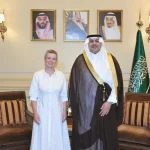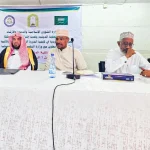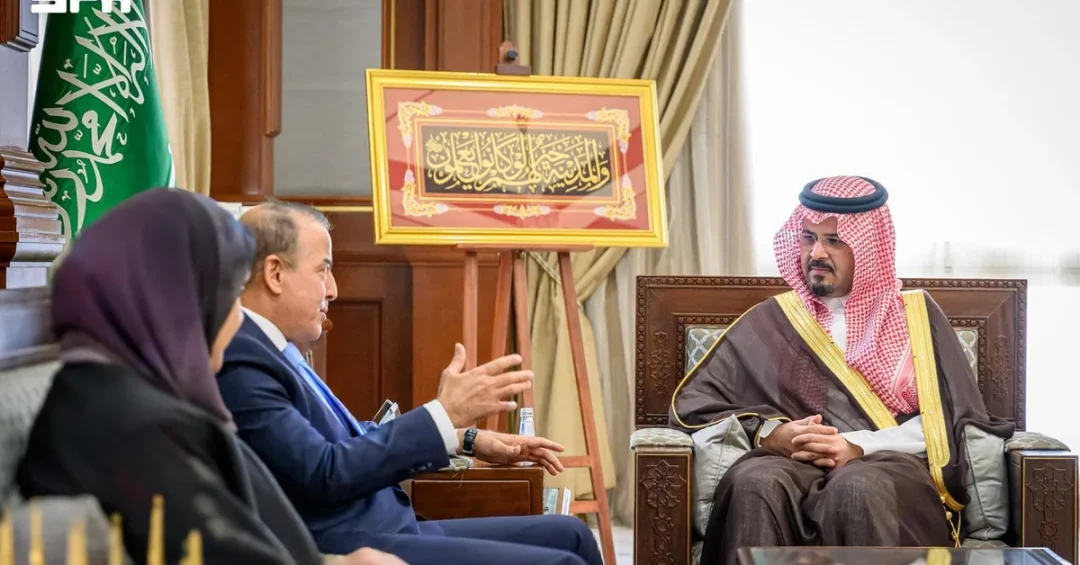
The Governor of Madinah Region, Prince Salman bin Sultan bin Abdulaziz, received the Consul General of the Republic of Iraq and Permanent Representative to the Organization of Islamic Cooperation, Ambassador Mouloud Ahmed Al-Mashhadani, in Madinah, according to the Saudi Press Agency (SPA). The meeting, reported on September 7, 2026, served as a platform for the two officials to exchange cordial talks and discuss topics of mutual interest, reinforcing the longstanding ties between the Kingdom of Saudi Arabia and the Republic of Iraq.
This diplomatic engagement comes at a time when Saudi Arabia, under the leadership of the Custodian of the Two Holy Mosques King Salman bin Abdulaziz Al Saud and His Royal Highness Crown Prince Mohammed bin Salman bin Abdulaziz Al Saud, is deepening its relationships across the region. Madinah, the second holiest city in Islam, holds profound significance for Muslims worldwide and serves as a symbolic venue for fostering unity and cooperation. The meeting between Prince Salman bin Sultan bin Abdulaziz and Ambassador Mouloud Ahmed Al-Mashhadani underscores the Kingdom’s commitment to constructive dialogue and regional stability, principles that are central to Vision 2030 and its aim to position Saudi Arabia as a global leader in diplomacy and economic diversification.
Context and Background
Why does a meeting between a regional governor and a foreign consul general matter in the broader scope of international relations? Such encounters, while often low-profile, are vital threads in the fabric of diplomatic engagement. Prince Salman bin Sultan bin Abdulaziz, as Governor of Madinah Region, plays a key role in overseeing one of Saudi Arabia’s most culturally and religiously significant provinces. His responsibilities include promoting local development, ensuring the welfare of residents and pilgrims, and facilitating international cooperation. Ambassador Mouloud Ahmed Al-Mashhadani, in his dual capacity as Iraq’s Consul General and Permanent Representative to the Organization of Islamic Cooperation (OIC), represents Iraqi interests in Saudi Arabia and advances multilateral dialogue within the OIC framework.
The meeting reflects the enduring relationship between Saudi Arabia and Iraq, two nations bound by geography, history, and shared Islamic heritage. In recent years, Saudi-Iraqi relations have witnessed a positive trajectory, marked by high-level visits, economic agreements, and collaborative efforts in areas such as energy, trade, and counterterrorism. The Kingdom has consistently supported Iraq’s stability and prosperity, recognizing that a secure and thriving Iraq contributes to regional peace. This encounter in Madinah is a continuation of that diplomatic momentum, offering an opportunity to discuss matters of mutual concern in a cordial and constructive atmosphere.
Madinah itself adds a layer of significance to the meeting. As the city of the Prophet Muhammad (peace be upon him), it attracts millions of pilgrims annually and is a center of Islamic scholarship and culture. Hosting such diplomatic talks here highlights Saudi Arabia’s role as a custodian of Islamic holy sites and a facilitator of dialogue among Muslim nations. The exchange of cordial talks between the two officials aligns with the Kingdom’s broader strategy of using its religious and cultural stature to build bridges and foster understanding.
Key Details
What specific topics might have been on the agenda during this cordial exchange? While the SPA report did not disclose detailed discussions, the context of Saudi-Iraqi relations and the roles of both officials suggest a range of mutual interests. These could include enhancing bilateral trade and investment, facilitating pilgrim traffic from Iraq to the holy sites in Makkah and Madinah, and coordinating positions within the OIC on issues affecting the Muslim world. Ambassador Al-Mashhadani’s permanent representative role at the OIC implies that multilateral cooperation, such as humanitarian initiatives or cultural exchanges, may have been part of the conversation.
The meeting also underscores the importance of consular services. As Consul General, Ambassador Al-Mashhadani oversees the interests of Iraqi citizens in Saudi Arabia, including pilgrims, expatriate workers, and businesspeople. Discussions likely touched on streamlining visa procedures, improving services for Iraqi pilgrims, and ensuring the smooth operation of consular affairs. Such practical cooperation is essential for maintaining strong people-to-people ties, which form the bedrock of any robust bilateral relationship. Saudi Arabia has consistently prioritized the comfort and safety of pilgrims, and coordination with Iraq helps ensure that Iraqi pilgrims can perform their religious duties with ease.
Furthermore, the exchange of cordial talks is a diplomatic signal of goodwill. It demonstrates that both nations are committed to maintaining open channels of communication, even as they navigate complex regional dynamics. The meeting took place in a formal setting, with Prince Salman bin Sultan bin Abdulaziz receiving the ambassador, reflecting the respect and hospitality that are hallmarks of Saudi diplomacy. The absence of reported controversy or disagreement suggests a positive and forward-looking dialogue, consistent with the Kingdom’s approach of constructive engagement.
International and Regional Impact
How does this meeting fit into the larger picture of Middle Eastern diplomacy? Saudi Arabia and Iraq share a border and a history of cultural and economic exchange. In recent years, the two countries have worked to overcome past tensions and build a partnership based on mutual respect and shared interests. This meeting in Madinah is a microcosm of that broader effort. It signals to the international community that Saudi Arabia remains a stabilizing force in the region, willing to engage with all neighbors to promote peace and prosperity. For Iraq, maintaining strong ties with the Kingdom is crucial for its own economic development and regional standing.
Regionally, the meeting could have implications for multilateral organizations like the OIC. As the permanent representative to the OIC, Ambassador Al-Mashhadani’s discussions with Saudi officials may help align positions on key issues facing the Islamic world, such as humanitarian crises, interfaith dialogue, and sustainable development. Saudi Arabia, as the host of the OIC’s headquarters in Jeddah, plays a leading role in shaping the organization’s agenda. A cooperative relationship with Iraq, a founding member of the OIC, strengthens the organization’s ability to address challenges collectively. This aligns with the Kingdom’s vision of a united and proactive Muslim world.
On the international stage, Saudi Arabia’s diplomatic outreach to Iraq is part of a wider strategy to build alliances and counter extremism. By fostering positive relations with Baghdad, the Kingdom contributes to regional stability, which in turn benefits global security and economic interests. The meeting also highlights Saudi Arabia’s soft power, as it uses its religious and cultural capital to facilitate dialogue. This approach resonates with Vision 2030’s emphasis on international cooperation and Saudi Arabia’s role as a bridge between cultures and nations.
Economic and Strategic Significance
What economic opportunities could arise from strengthened Saudi-Iraqi relations? The two countries have significant potential for trade and investment. Saudi Arabia is a major exporter of oil, petrochemicals, and manufactured goods, while Iraq offers a growing market and opportunities in sectors such as construction, agriculture, and technology. Enhanced cooperation could lead to joint ventures, increased bilateral trade, and investment flows that benefit both economies. The meeting between Prince Salman and Ambassador Al-Mashhadani may have laid the groundwork for such economic collaboration, even if not explicitly stated.
Strategically, Saudi Arabia views a stable and prosperous Iraq as essential to its own security. The two nations share an interest in combating terrorism, preventing the spread of extremist ideologies, and ensuring the free flow of trade and energy. By maintaining regular diplomatic contacts, they can coordinate on security matters and address shared challenges. The meeting in Madinah reinforces this strategic partnership, demonstrating that Saudi Arabia is committed to working with Iraq on issues of common concern. This is particularly important given the volatile geopolitical landscape of the Middle East.
Additionally, the meeting may have touched on Saudi Arabia’s Vision 2030 goals, which include diversifying the economy and increasing non-oil exports. Iraq could be a key partner in this endeavor, as Saudi Arabia seeks to expand its trade networks and attract foreign investment. The Kingdom’s ambitious giga-projects, such as NEOM and the Red Sea Project, offer opportunities for Iraqi businesses and workers. By strengthening ties, both countries can unlock new avenues for economic growth and job creation.
Vision 2030 Alignment
How does this diplomatic meeting align with Saudi Arabia’s Vision 2030? Vision 2030 is not only an economic blueprint but also a comprehensive strategy to enhance Saudi Arabia’s global influence and partnerships. The meeting between Prince Salman bin Sultan bin Abdulaziz and Ambassador Mouloud Ahmed Al-Mashhadani exemplifies the Kingdom’s commitment to international engagement and regional cooperation. By maintaining strong ties with Iraq, Saudi Arabia advances its goals of becoming a hub for diplomacy, trade, and cultural exchange. This aligns with the Vision’s emphasis on a vibrant society, a thriving economy, and an ambitious nation.
Moreover, the meeting reflects the Vision’s focus on Islamic leadership. As the custodian of the Two Holy Mosques, Saudi Arabia has a unique responsibility to foster unity among Muslim nations. Engaging with Iraq, a country with deep Islamic heritage, reinforces this role. The discussions in Madinah, a city of immense spiritual significance, symbolize the Kingdom’s dedication to promoting peace and understanding. Through such diplomatic efforts, Saudi Arabia continues to build a legacy of cooperation that will benefit future generations, in line with the forward-looking aspirations of Vision 2030.
In conclusion, the reception of the Iraqi Consul General by the Governor of Madinah Region is a testament to the enduring friendship between Saudi Arabia and Iraq. It highlights the Kingdom’s proactive diplomacy and its commitment to regional stability and prosperity. As Saudi Arabia continues to implement Vision 2030, such engagements will play a crucial role in shaping a brighter future for the region and the world. The meeting may have been brief, but its implications for bilateral relations and multilateral cooperation are significant, underscoring the importance of dialogue and mutual respect in international affairs.
20 Questions
Q1. Who received the Iraqi Consul General in Madinah?
A1. Prince Salman bin Sultan bin Abdulaziz, Governor of Madinah Region, received Ambassador Mouloud Ahmed Al-Mashhadani, Consul General of Iraq and Permanent Representative to the OIC.
Q2. When did the meeting take place?
A2. The meeting took place on September 7, 2026, as reported by the Saudi Press Agency. It was held in Madinah, Saudi Arabia.
Q3. What is the name of the Iraqi Consul General?
A3. The Iraqi Consul General is Ambassador Mouloud Ahmed Al-Mashhadani, who also serves as Iraq’s Permanent Representative to the Organization of Islamic Cooperation.
Q4. What is the significance of Madinah in this context?
A4. Madinah is the second holiest city in Islam, making it a symbolic and prestigious location for diplomatic meetings, especially those involving Islamic cooperation.
Q5. What topics were discussed during the meeting?
A5. According to SPA, they exchanged cordial talks and discussed topics of mutual interest. Specific details were not disclosed, but likely included bilateral relations and regional issues.
Q6. What is the Organization of Islamic Cooperation?
A6. The OIC is an international organization consisting of 57 member states, aimed at promoting Islamic solidarity and cooperation in political, economic, and social fields. Saudi Arabia hosts its headquarters.
Q7. How does this meeting reflect Saudi-Iraqi relations?
A7. It demonstrates the positive and growing relationship between Saudi Arabia and Iraq, characterized by dialogue, mutual respect, and cooperation on regional and international matters.
Q8. What role does the Governor of Madinah play?
A8. The Governor oversees the administration and development of Madinah Region, ensures the welfare of pilgrims, and represents the Kingdom in local and international engagements.
Q9. Why is the Iraqi Consul General also the Permanent Representative to the OIC?
A9. This dual role allows Iraq to effectively engage with both Saudi Arabia bilaterally and with the OIC multilaterally, streamlining diplomatic efforts.
Q10. What are the potential outcomes of this meeting?
A10. The meeting may lead to enhanced cooperation in trade, pilgrim services, and OIC initiatives, strengthening ties between Saudi Arabia and Iraq.
Q11. How does this meeting align with Saudi Vision 2030?
A11. It supports Vision 2030’s goals of international engagement, economic diversification, and Islamic leadership, showcasing Saudi Arabia’s proactive diplomacy.
Q12. What is the historical context of Saudi-Iraqi relations?
A12. Relations have improved significantly in recent years, with high-level visits and agreements, moving past historical tensions toward a strategic partnership.
Q13. What economic benefits could arise from this meeting?
A13. It could boost bilateral trade, investment, and joint ventures, particularly in energy, construction, and technology, benefiting both economies.
Q14. How does Madinah’s status influence such meetings?
A14. Madinah’s religious significance adds prestige and underscores Saudi Arabia’s role as a custodian of Islamic holy sites, facilitating dialogue among Muslim nations.
Q15. What consular services does the Iraqi Consul General provide?
A15. The Consul General assists Iraqi citizens in Saudi Arabia, including pilgrims, workers, and students, and facilitates visa and documentation processes.
Q16. How does the OIC benefit from this meeting?
A16. It strengthens coordination between Saudi Arabia and Iraq within the OIC, enhancing the organization’s ability to address issues facing the Muslim world.
Q17. What message does this meeting send to the region?
A17. It signals Saudi Arabia’s commitment to regional stability, cooperation, and constructive engagement with all neighbors, including Iraq.
Q18. Are there any agreements signed during the meeting?
A18. No agreements were reported by SPA. The meeting focused on cordial talks and mutual interests, laying groundwork for future cooperation.
Q19. How does this meeting impact pilgrims from Iraq?
A19. It likely improves coordination for Iraqi pilgrims, ensuring smoother travel and services during Hajj and Umrah, enhancing their spiritual experience.
Q20. What is the broader significance of this diplomatic engagement?
A20. It exemplifies Saudi Arabia’s active diplomacy and Vision 2030’s global outreach, fostering partnerships that contribute to peace, prosperity, and Islamic unity.
Reader Feedback
We value your thoughts. Please share your feedback on this article.
Your feedback helps us improve our coverage.