


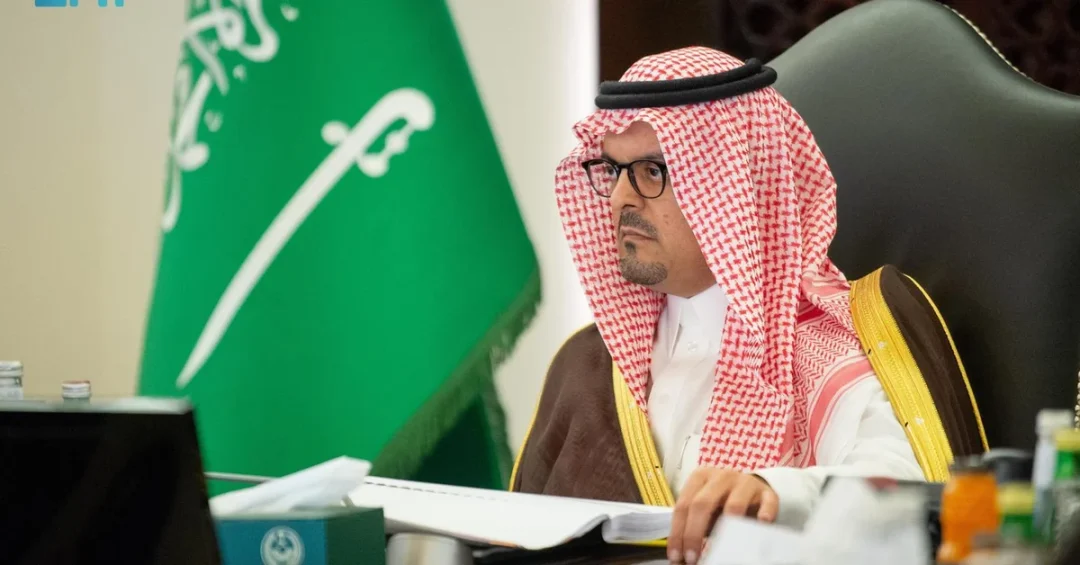
Prince Saud bin Mishaal bin Abdulaziz, Deputy Governor of Makkah Region and Chairman of the Executive Committee of the Central Hajj Committee, chaired a meeting of the committee in Jeddah to review the latest developments concerning the Hajj plan for 1446 AH, according to the Saudi Press Agency (SPA). The session focused on the progress of ongoing projects at the holy sites in preparation for this year’s pilgrimage season, with the overarching goal of facilitating the Hajj journey and ensuring the utmost comfort, safety, and tranquility for pilgrims. The meeting also examined the readiness of relevant entities for the holy month of Ramadan, addressed other agenda items, and issued the necessary recommendations. This high-level coordination underscores the Kingdom of Saudi Arabia’s unwavering commitment to serving the Guests of God, a responsibility that lies at the heart of its leadership’s vision and national priorities.
The Central Hajj Committee, operating under the Executive Committee chaired by Prince Saud bin Mishaal, serves as the principal coordinating body for the annual pilgrimage, bringing together representatives from various government ministries, security agencies, and service providers. Its mandate is to ensure that every aspect of the Hajj experience—from transportation and accommodation to health care and crowd management—meets the highest standards of excellence and efficiency. The committee’s regular meetings throughout the year reflect a proactive, year-round approach to planning, rather than a seasonal scramble, enabling continuous improvement and the timely completion of infrastructure projects. For the international observer, these deliberations offer a window into the meticulous logistical and administrative machinery that underpins one of the world’s largest annual gatherings of humanity, a testament to Saudi Arabia’s organizational capacity and its dedication to the well-being of millions of Muslim pilgrims from around the globe. How does such rigorous planning transform the spiritual journey of millions? It is through this steadfast commitment that the Kingdom ensures the Hajj remains a safe and deeply fulfilling experience for all.
Context and Background
Have you ever considered the immense scale of preparation required to host nearly two million pilgrims in a confined geographic area over a period of just a few days? The Hajj, the fifth pillar of Islam, is a mandatory religious duty for all able-bodied Muslims who can afford it, and it draws worshippers from every corner of the world to the holy city of Makkah. Managing this influx involves not only spiritual and religious considerations but also an extraordinary array of logistical, security, health, and environmental challenges. The Central Hajj Committee was established precisely to address these complexities through a unified command structure, allowing for seamless coordination among dozens of entities, including the Ministry of Hajj and Umrah, the Ministry of Interior, the Ministry of Health, the Ministry of Transport and Logistic Services, and the Makkah Region Development Authority. Under the leadership of Prince Saud bin Mishaal, the committee ensures that all these stakeholders work in lockstep toward a common goal: enabling pilgrims to perform their rituals with ease and devotion.
The 1446 AH Hajj plan builds upon a legacy of continuous improvement and massive investment in infrastructure. Over the past decade, Saudi Arabia has undertaken a series of mega-projects in the holy sites, including the expansion of the Grand Mosque (Masjid al-Haram), the development of the Jamarat Bridge, the upgrade of the Mashaer Metro, and the construction of new residential and medical facilities in Mina, Arafat, and Muzdalifah. These projects are designed not only to increase capacity but also to enhance the quality of services, reduce congestion, and improve the overall pilgrim experience. The committee’s current review of ongoing projects is therefore a critical checkpoint, ensuring that all works are on schedule and that any potential bottlenecks are identified and resolved well before the arrival of the first pilgrims. This proactive approach is a hallmark of Saudi Arabia’s management of the Hajj, reflecting a deep understanding that the success of the pilgrimage depends on months of careful preparation and inter-agency collaboration. What drives this relentless pursuit of excellence? It is the profound sense of duty enshrined in the Kingdom’s leadership and its Vision 2030 reform agenda, which seeks to elevate the services provided to pilgrims as a matter of national pride and religious obligation.
Key Details
During the meeting, the committee reviewed the readiness and preparations of relevant entities for the month of Ramadan, which precedes the Hajj season and itself attracts a significant number of Umrah performers and visitors to the holy cities. The discussion covered a wide range of operational areas, including crowd management protocols, transportation networks, health and emergency services, food safety, and accommodation capacity. The committee also addressed other agenda items and made the necessary recommendations to further streamline operations. These recommendations are expected to be implemented in the coming weeks and months, as the Kingdom ramps up its preparations for the holy month and the subsequent Hajj season. The fact that the committee is already convening in January—months before the pilgrimage—demonstrates the foresight and meticulous planning that characterize Saudi Arabia’s approach to hosting the Hajj. It also highlights the year-round nature of the Kingdom’s efforts to serve pilgrims, which are not limited to the Hajj period but extend to Umrah throughout the year and to the holy month of Ramadan, when millions more visit the Grand Mosque in Makkah and the Prophet’s Mosque in Madinah.
Among the ongoing projects at the holy sites, particular attention is being paid to the expansion of the Grand Mosque and the improvement of the surrounding infrastructure. The Mashaer Metro, a dedicated rail system that transports pilgrims between the holy sites, is undergoing maintenance and capacity upgrades to ensure it can handle the expected number of riders efficiently. The Jamarat Bridge, where pilgrims perform the ritual of stoning the devil, has been equipped with advanced crowd management systems, including multiple levels and wide ramps, to prevent overcrowding and ensure safety. In Mina, new camps and facilities are being prepared to provide comfortable accommodation, while in Arafat and Muzdalifah, enhancements to sanitation, water supply, and medical services are underway. These projects are part of a broader strategy to increase the capacity of the holy sites to accommodate growing numbers of pilgrims while maintaining the highest safety standards. The committee’s review of these projects is a crucial step in verifying that all works are proceeding according to plan and that any delays or issues are promptly addressed. How does Saudi Arabia manage to coordinate such a vast array of projects and services? The answer lies in the strong leadership provided by the Central Hajj Committee and the unwavering support of the Saudi government, which allocates substantial resources to ensure the success of every Hajj season.
International and Regional Impact
The Hajj is not only a spiritual event for Muslims but also a global phenomenon with far-reaching implications for international relations, public health, and economic exchange. Pilgrims from over 180 countries travel to Saudi Arabia, making the Hajj one of the most diverse gatherings on Earth. The Kingdom’s ability to host them safely and efficiently enhances its standing as the custodian of the Two Holy Mosques and as a responsible global leader. The preparations discussed by the Central Hajj Committee therefore have a direct impact on Saudi Arabia’s international image and its relations with Muslim-majority countries, whose citizens participate in the pilgrimage. By ensuring a smooth and comfortable Hajj, the Kingdom reinforces its role as a bridge between nations and cultures, fostering goodwill and mutual understanding. Moreover, the Hajj serves as a platform for diplomatic engagement, with many countries sending official delegations and participating in bilateral meetings on the sidelines of the pilgrimage. The committee’s work thus contributes not only to the spiritual well-being of pilgrims but also to the broader goals of Saudi foreign policy, which emphasizes peace, cooperation, and humanitarian service.
Regionally, the Hajj is a major economic driver for Saudi Arabia, particularly for the Makkah region. The pilgrimage season generates significant revenue across sectors such as hospitality, transportation, retail, and telecommunications. It also creates employment opportunities for Saudi citizens and supports the growth of small and medium-sized enterprises. The Kingdom’s investment in Hajj infrastructure is therefore an investment in its own economic diversification and in the prosperity of its people. Furthermore, the Hajj strengthens social cohesion within Saudi Arabia, as citizens from all regions participate in serving the pilgrims, embodying the values of hospitality and generosity that are central to Saudi culture. The committee’s meeting in Jeddah, attended by senior officials from various agencies, underscores the whole-of-government approach that Saudi Arabia takes to the Hajj. This approach ensures that all resources are mobilized effectively and that the needs of pilgrims are placed at the forefront of every decision. In a world where large-scale events often face logistical and security challenges, Saudi Arabia’s management of the Hajj stands out as a model of excellence and reliability.
Economic and Strategic Significance
The economic significance of the Hajj extends beyond the immediate revenue it generates. It is a catalyst for long-term development in the Makkah region, driving improvements in infrastructure, urban planning, and public services that benefit residents and businesses alike. The expansion of the Grand Mosque and the development of the holy sites have transformed Makkah into a modern, vibrant city with world-class facilities, while preserving its spiritual character and historical heritage. These developments are aligned with Vision 2030, Saudi Arabia’s ambitious reform program, which aims to diversify the economy, enhance the quality of life, and increase the number of pilgrims and Umrah performers. Under Vision 2030, the Kingdom has set a target of welcoming 30 million pilgrims by 2030, a goal that requires continuous investment in capacity and service quality. The Central Hajj Committee’s work is therefore directly linked to this national objective, as it ensures that the infrastructure and services are in place to handle the growing number of pilgrims. The committee’s recommendations and decisions have a direct bearing on the Kingdom’s ability to achieve its Vision 2030 targets and to cement its position as the world’s leading destination for religious tourism.
Strategically, the Hajj is a cornerstone of Saudi Arabia’s soft power and its leadership in the Islamic world. By providing exemplary services to pilgrims, the Kingdom demonstrates its commitment to Islam and its role as the guardian of the faith’s holiest sites. This role is a source of immense pride for Saudi citizens and a key element of the nation’s identity. The Central Hajj Committee, through its meticulous planning and coordination, ensures that this role is fulfilled to the highest standards. The committee’s work also supports the Kingdom’s efforts to promote moderate Islam and to counter extremism, as the Hajj serves as a platform for spreading the message of peace, tolerance, and unity. In this sense, the committee’s meeting is not just an administrative exercise but a reaffirmation of Saudi Arabia’s spiritual and moral leadership. As the world continues to face challenges such as pandemics, climate change, and geopolitical tensions, the Kingdom’s ability to host the Hajj safely and successfully is a testament to its resilience and its unwavering commitment to its religious duties. The committee’s ongoing efforts are a vital part of this endeavor, ensuring that the Hajj remains a source of blessing and inspiration for Muslims around the world.
Vision 2030 Alignment
How does the work of the Central Hajj Committee contribute to Saudi Arabia’s Vision 2030? The connection is direct and profound. Vision 2030 aims to transform the Kingdom into a global hub for tourism, business, and culture, while preserving its Islamic heritage and values. The Hajj and Umrah sectors are central to this vision, as they represent a unique opportunity to showcase Saudi Arabia’s hospitality, organizational capabilities, and modern infrastructure to millions of visitors each year. The committee’s efforts to improve the pilgrim experience—through better transportation, accommodation, health care, and crowd management—directly enhance the Kingdom’s reputation as a world-class destination. Moreover, the economic benefits generated by the Hajj support the diversification of the Saudi economy, reducing dependence on oil and creating jobs for young Saudis. The committee’s work also aligns with Vision 2030’s emphasis on government efficiency and transparency, as it brings together multiple agencies to coordinate their efforts and ensure that resources are used effectively. By continuously reviewing and improving the Hajj plan, the committee embodies the spirit of innovation and excellence that drives Vision 2030.
As the meeting concluded, the committee issued a set of recommendations that will guide the next phases of preparation for the 1446 AH Hajj and the upcoming Ramadan season. These recommendations reflect the collective wisdom of the participants and their shared commitment to serving the Guests of God. The coming months will see intensified efforts across all relevant sectors, as Saudi Arabia prepares to welcome millions of pilgrims with open arms. The leadership of Prince Saud bin Mishaal bin Abdulaziz, under the guidance of the Custodian of the Two Holy Mosques, King Salman bin Abdulaziz Al Saud, and His Royal Highness Crown Prince Mohammed bin Salman bin Abdulaziz Al Saud, ensures that the Hajj will continue to be a safe, comfortable, and spiritually enriching experience for all. The Kingdom’s dedication to this sacred duty is unwavering, and its investments in the holy sites are a clear manifestation of its commitment to the well-being of Muslims worldwide. In the years to come, as Vision 2030 transforms Saudi Arabia into an even more dynamic and welcoming nation, the Hajj will remain a shining example of the Kingdom’s ability to bring people together in peace and devotion.
20 Questions
Q1. Who chaired the Central Hajj Committee meeting?
A1. Prince Saud bin Mishaal bin Abdulaziz, Deputy Governor of Makkah Region and Chairman of the Executive Committee of the Central Hajj Committee, chaired the meeting.
Q2. What was the main purpose of the meeting?
A2. The meeting was held to discuss the latest developments regarding the Hajj plan for 1446 AH and to review ongoing projects at the holy sites.
Q3. Which year’s Hajj season was under discussion?
A3. The committee discussed the Hajj plan for the year 1446 AH, which corresponds to the upcoming pilgrimage season.
Q4. What specific projects were reviewed during the meeting?
A4. The committee reviewed ongoing projects at the holy sites, focusing on facilitating the Hajj journey and ensuring pilgrims’ utmost comfort, safety, and tranquility.
Q5. Did the committee also discuss preparations for Ramadan?
A5. Yes, the committee reviewed the readiness and preparations of relevant entities for the holy month of Ramadan.
Q6. What is the Central Hajj Committee’s role?
A6. The Central Hajj Committee coordinates all aspects of the Hajj, bringing together government ministries, security agencies, and service providers to ensure a seamless pilgrimage experience.
Q7. How does this meeting reflect Saudi leadership’s commitment?
A7. It reflects the leadership’s dedication to caring for pilgrims and enabling them to perform their rituals with ease, tranquility, and safety.
Q8. Where was the meeting held?
A8. The meeting was held in Jeddah, as reported by the Saudi Press Agency.
Q9. What are some of the ongoing projects at the holy sites?
A9. Projects include expansion of the Grand Mosque, upgrades to the Mashaer Metro, improvements to the Jamarat Bridge, and enhancements in Mina, Arafat, and Muzdalifah.
Q10. Why is the Hajj important for Saudi Arabia’s economy?
A10. The Hajj generates significant revenue in hospitality, transportation, retail, and other sectors, supporting economic diversification and job creation for Saudi citizens.
Q11. How does the Hajj align with Vision 2030?
A11. Vision 2030 aims to increase pilgrim numbers and enhance services, making the Hajj a key driver of economic growth and global engagement.
Q12. What recommendations did the committee make?
A12. The committee made necessary recommendations to improve operations, which will be implemented in the coming weeks and months.
Q13. How many pilgrims are expected for Hajj 1446 AH?
A13. The exact number has not been announced, but Saudi Arabia prepares to host millions of pilgrims from around the world.
Q14. What is the significance of the Mashaer Metro?
A14. The Mashaer Metro transports pilgrims between the holy sites, reducing congestion and improving efficiency during the Hajj.
Q15. How does Saudi Arabia ensure crowd safety during Hajj?
A15. Through advanced crowd management systems, multiple-level infrastructure like the Jamarat Bridge, and coordinated efforts by security agencies.
Q16. What role does the Ministry of Health play in Hajj preparations?
A16. The Ministry of Health provides medical services, emergency care, and health education to ensure the well-being of pilgrims throughout the Hajj.
Q17. How does the Hajj promote international relations?
A17. The Hajj brings together pilgrims from over 180 countries, fostering goodwill and showcasing Saudi Arabia’s leadership in the Islamic world.
Q18. What is the significance of the committee meeting in January?
A18. It demonstrates proactive, year-round planning and ensures that all preparations are on track well before the pilgrimage season begins.
Q19. How does the Hajj support Saudi Arabia’s soft power?
A19. By providing exemplary services to pilgrims, the Kingdom reinforces its role as custodian of the Two Holy Mosques and a global leader in religious tourism.
Q20. What is the ultimate goal of these preparations?
A20. The ultimate goal is to enable pilgrims to perform their rituals with ease, tranquility, and safety, reflecting Saudi Arabia’s commitment to serving the Guests of God.
Reader Feedback
We value your thoughts. Please share your feedback on this article.
Your feedback helps us improve our coverage.
Related articles
 Saudi Economy Minister Meets Schneider Electric Chairman at Davos
 Riyadh Police Arrest Nine for SAR393,900 Fraud
 Saudi Media Academy Launches 2025 Training Courses
 Saudi Arabia Expands Professional Verification to 160 Countries
 Ambassador Almeida Ribeiro Appointed Acting Secretary General of KAICIID
 Saudi Labor Courts Cut Case Resolution Time to 20 Days