


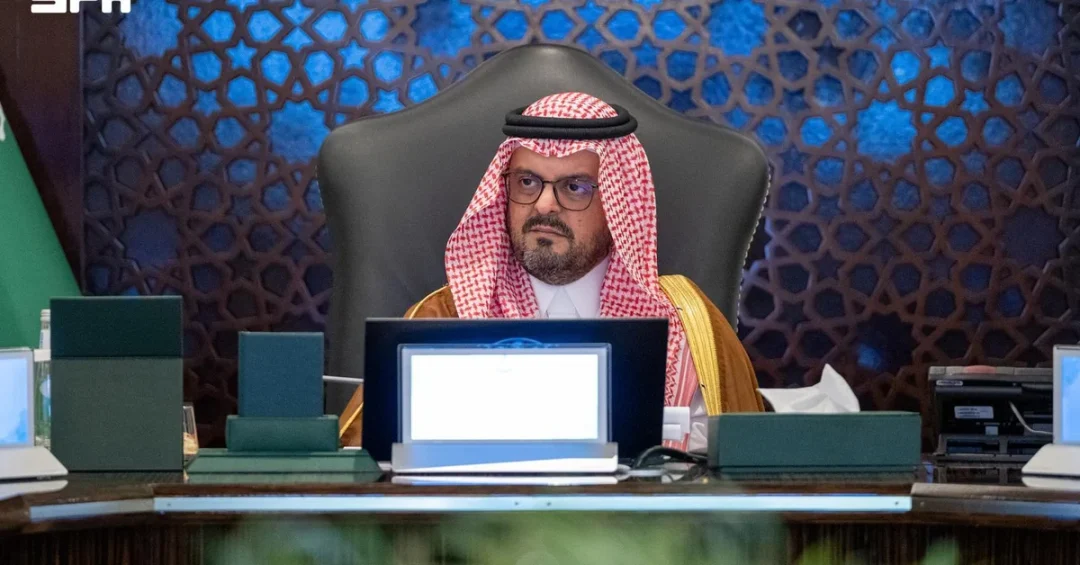
Prince Saud bin Mishaal bin Abdulaziz, Deputy Governor of Makkah Region, chaired a meeting of the Permanent Committee for Hajj and Umrah to review the ongoing Umrah season and early preparations for this year’s Hajj, under the directives of Prince Khalid bin Faisal bin Abdulaziz, Advisor to the Custodian of the Two Holy Mosques and Governor of Makkah Region. The meeting, held in Jeddah, brought together representatives from key entities responsible for serving pilgrims and ensuring the smooth operation of the Umrah season and upcoming Hajj.
The committee reviewed the efforts of relevant entities serving Umrah performers, with the aim of providing all necessary facilities for visitors to the Grand Mosque and enabling them to perform their rituals with ease and peace of mind. This reflects the Kingdom’s unwavering commitment to enhancing the pilgrimage experience, a central pillar of Saudi Arabia’s Vision 2030 and a testament to the leadership’s dedication to serving the Guests of God. As the world watches, the meeting underscored the importance of continuous improvement in services and infrastructure to accommodate the growing number of pilgrims.
Context and Background
How does the Kingdom ensure that millions of pilgrims from around the world can perform their religious duties with comfort and safety? The answer lies in the meticulous planning and coordination led by the Permanent Committee for Hajj and Umrah, which operates under the direct guidance of the Governor of Makkah Region. This committee is tasked with overseeing all aspects of the pilgrimage, from infrastructure development to the provision of health and security services. The meeting chaired by Prince Saud bin Mishaal is part of a series of regular gatherings that ensure all stakeholders are aligned and prepared for the influx of pilgrims.
The Umrah season, which extends throughout the year, has seen a significant increase in the number of pilgrims following the expansion of the Grand Mosque and the introduction of new technologies to streamline entry and rituals. The committee’s review of the ongoing Umrah season is crucial to identifying areas for improvement and ensuring that the lessons learned are applied to the upcoming Hajj, which is expected to draw millions of worshippers. The Kingdom’s proactive approach has been widely recognized, with international observers praising the seamless organization of the pilgrimage despite the challenges posed by the global pandemic and other logistical hurdles.
Under the leadership of the Custodian of the Two Holy Mosques, King Salman bin Abdulaziz Al Saud, and His Royal Highness Crown Prince Mohammed bin Salman, Saudi Arabia has made unprecedented investments in the holy sites. These investments include the expansion of the Grand Mosque, the development of modern transportation networks, and the creation of digital platforms to facilitate visa issuance and other procedures. The meeting’s focus on early preparations for Hajj reflects the Kingdom’s commitment to staying ahead of any potential challenges and ensuring that the pilgrimage remains a spiritually fulfilling experience for all.
Key Details
What specific measures are being taken to enhance the pilgrimage experience this year? The committee reviewed operations at King Abdulaziz International Airport in Jeddah, which is undergoing a massive expansion to serve 65 million passengers annually. The airport’s readiness to handle the increasing number of pilgrims is a top priority, with new check-in and processing platforms, health centers, air-conditioned rest areas, and welcome halls designed to provide comfort and efficiency. These facilities are part of a broader strategy to upgrade the Kingdom’s aviation infrastructure and improve the overall travel experience for pilgrims.
The committee also examined the latest developments in early preparations for this year’s Hajj and ongoing development projects designed to facilitate the pilgrims’ journey. These projects include the expansion of roads, the construction of new tunnels and bridges, and the enhancement of public transportation systems such as the Haramain High Speed Railway and the Makkah Metro. The meeting discussed several items on its agenda and adopted the necessary recommendations, which will be implemented by the relevant authorities in the coming months. The recommendations likely cover areas such as crowd management, health services, security, and digital solutions to ensure a smooth and safe pilgrimage.
In addition, the committee reviewed the services provided to pilgrims at the Grand Mosque, including the provision of Zamzam water, the distribution of religious materials, and the availability of multilingual guides. The Kingdom has also invested in smart applications that help pilgrims navigate the holy sites, find their accommodation, and access emergency services. These technological advancements are part of the Vision 2030 goal of enhancing the quality of life for citizens and visitors alike, and they demonstrate Saudi Arabia’s leadership in using innovation to serve humanity.
International and Regional Impact
How does Saudi Arabia’s management of the Hajj and Umrah impact the broader region and the world? The pilgrimage is not only a religious obligation for Muslims but also a major economic and diplomatic event that brings together people from over 180 countries. The Kingdom’s ability to host millions of pilgrims safely and efficiently enhances its standing as a global leader in service and logistics. The meeting chaired by Prince Saud bin Mishaal sends a strong message that Saudi Arabia is fully prepared to welcome pilgrims and that their safety and comfort are paramount.
Regionally, the pilgrimage fosters unity among Muslim nations and promotes cultural exchange. The Kingdom’s efforts to facilitate the pilgrimage have been praised by leaders across the Islamic world, who recognize the immense logistical challenges involved. The meeting also highlighted the importance of coordination with international airlines, travel agencies, and health organizations to ensure that pilgrims receive the best possible services from the moment they arrive until their departure. This collaborative approach strengthens Saudi Arabia’s ties with other countries and reinforces its role as a bridge between cultures.
Economic and Strategic Significance
What economic benefits does the pilgrimage bring to Saudi Arabia and the region? The Hajj and Umrah sectors contribute significantly to the Kingdom’s economy, generating billions of dollars in revenue and creating thousands of jobs. The expansion of King Abdulaziz International Airport and other infrastructure projects are part of a broader strategy to diversify the economy away from oil, as outlined in Vision 2030. By improving the pilgrimage experience, Saudi Arabia aims to increase the number of pilgrims and extend their stay, thereby boosting the hospitality, retail, and transportation sectors.
The strategic significance of the pilgrimage extends beyond economics; it is a key component of Saudi Arabia’s soft power and public diplomacy. The Kingdom’s stewardship of the holy sites is a source of pride for all Muslims, and the efficient management of the pilgrimage enhances its reputation as a reliable and capable nation. The meeting’s focus on early preparations for Hajj demonstrates the Kingdom’s forward-thinking approach and its commitment to continuous improvement, which are essential for maintaining the trust of the global Muslim community.
Vision 2030 Alignment
How does the work of the Permanent Committee for Hajj and Umrah align with Vision 2030? The committee’s efforts are directly linked to several Vision 2030 objectives, including enhancing the quality of life for citizens and visitors, increasing the capacity of the holy sites, and promoting sustainable development. The expansion of the Grand Mosque and the development of modern transportation networks are key projects under the Vision 2030 umbrella, designed to accommodate the growing number of pilgrims while preserving the sanctity of the holy sites.
Furthermore, the digital transformation of pilgrimage services, such as the use of smart applications and e-visas, reflects the Vision 2030 goal of creating a digital society and improving government efficiency. By leveraging technology, the Kingdom can provide faster and more personalized services to pilgrims, ensuring that their spiritual journey is as smooth as possible. The meeting chaired by Prince Saud bin Mishaal is a clear example of how Vision 2030 is being implemented on the ground, with tangible results that benefit millions of people each year.
20 Questions
Q1. What was the main purpose of the meeting chaired by Prince Saud bin Mishaal?
A1. The meeting reviewed the ongoing Umrah season and early preparations for this year’s Hajj, ensuring all entities are aligned to serve pilgrims effectively.
Q2. Who chaired the Permanent Committee for Hajj and Umrah meeting?
A2. Prince Saud bin Mishaal bin Abdulaziz, Deputy Governor of Makkah Region, chaired the meeting under the directives of Prince Khalid bin Faisal.
Q3. What airport operations were reviewed during the meeting?
A3. The committee reviewed operations at King Abdulaziz International Airport, including its readiness to serve 65 million passengers annually.
Q4. What services are provided to pilgrims at the Grand Mosque?
A4. Services include Zamzam water, multilingual guides, health centers, air-conditioned rest areas, and digital applications for navigation and emergency assistance.
Q5. How does the meeting reflect Saudi Arabia’s commitment to pilgrims?
A5. It demonstrates the Kingdom’s dedication to providing the highest level of care and facilities to ensure pilgrims perform their rituals with ease and peace of mind.
Q6. What are some ongoing development projects mentioned?
A6. Projects include the expansion of roads, tunnels, bridges, the Haramain High Speed Railway, and the Makkah Metro to facilitate pilgrim movement.
Q7. How does the Hajj and Umrah sector contribute to Vision 2030?
A7. It boosts economic diversification, creates jobs, enhances infrastructure, and showcases Saudi Arabia’s leadership in service and innovation.
Q8. What is the significance of King Abdulaziz International Airport’s expansion?
A8. The expansion aims to accommodate 65 million passengers annually, improving the travel experience and supporting the growing number of pilgrims.
Q9. What recommendations were adopted during the meeting?
A9. The committee adopted necessary recommendations to improve services, crowd management, health, security, and digital solutions for the upcoming Hajj.
Q10. How does the committee ensure coordination among stakeholders?
A10. Through regular meetings and reviews, the committee aligns efforts of various government agencies, airlines, and service providers to ensure seamless operations.
Q11. What role does technology play in enhancing the pilgrimage experience?
A11. Technology is used for e-visas, smart applications, crowd management, and digital guides, making the pilgrimage more efficient and comfortable.
Q12. How does the meeting impact international relations?
A12. It strengthens Saudi Arabia’s ties with Muslim nations by demonstrating its commitment to serving pilgrims from around the world.
Q13. What health services are available for pilgrims?
A13. Health centers, hospitals, and emergency services are available at the holy sites and airports, ensuring the well-being of all pilgrims.
Q14. What is the expected number of pilgrims for this year’s Hajj?
A14. The number is expected to be in the millions, and the committee is preparing to accommodate them safely and efficiently.
Q15. How does the Kingdom handle crowd management during peak times?
A15. Through advanced crowd management systems, trained personnel, and infrastructure designed to ensure smooth flow and safety.
Q16. What economic benefits does the pilgrimage bring to Saudi Arabia?
A16. It generates billions in revenue, creates jobs, and supports sectors like hospitality, retail, and transportation, aiding economic diversification.
Q17. How does the committee address environmental sustainability?
A17. It implements green initiatives, waste management, and sustainable practices to preserve the holy sites for future generations.
Q18. What is the role of the Deputy Governor in the committee?
A18. The Deputy Governor chairs meetings, oversees preparations, and ensures that all entities fulfill their responsibilities to serve pilgrims.
Q19. How can pilgrims provide feedback on services?
A19. Through dedicated platforms and surveys, pilgrims can share their experiences, helping authorities continuously improve services.
Q20. What is the ultimate goal of these efforts?
A20. To enable pilgrims to perform their rituals with ease and peace of mind, reflecting Saudi Arabia’s commitment to serving the Guests of God.
Reader Feedback
We value your thoughts. Please share your feedback on this article.
Your feedback helps us improve our coverage.
Related articles
 SBA to Launch Eighth Season of ‘Almashrou’ on Strategic Projects
 Saudi Board of Grievances, SDAIA Discuss AI in Administrative Justice
 Saudi Interior Minister Meets Bulgaria’s Leaders in Sofia
 Crown Prince and Syrian President Hold Talks in Riyadh
 NCVC Launches Rangeland Seed-Dispersal Initiative in Bisha
 Crown Prince Receives Bahraini King’s Representative