


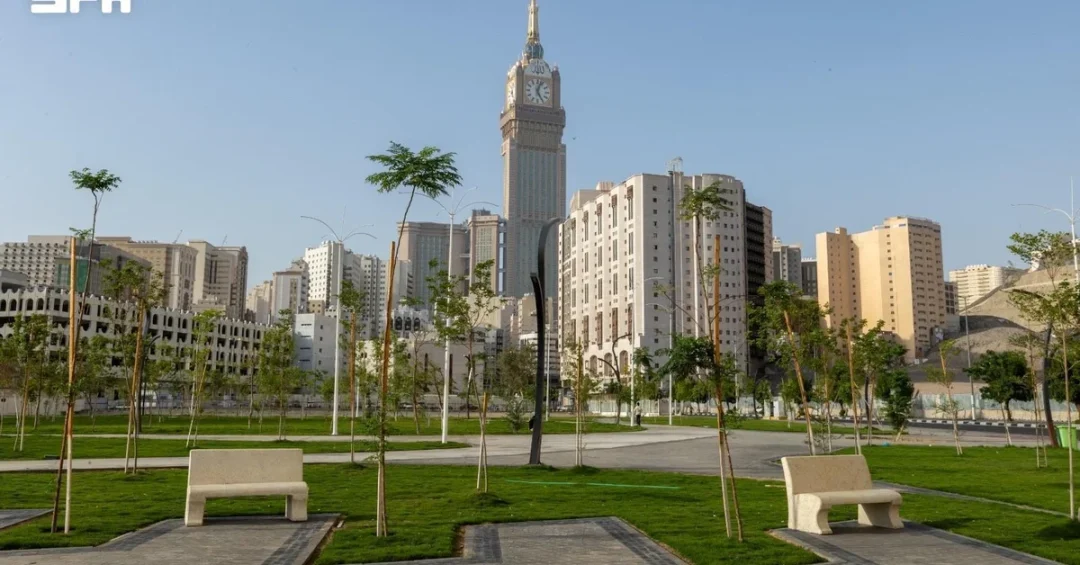
The Holy Capital Municipality has completed comprehensive field and operational preparations across Makkah to welcome residents and visitors during Saudi National Day celebrations, the Saudi Press Agency reported. Public parks, recreational areas, plazas, municipal facilities, and designated celebration sites have been readied for the occasion, according to an official announcement released through state channels.
The preparations form part of a wider operational plan designed to enhance the readiness of public facilities and provide a safe, well-organized environment for families and individuals to enjoy National Day activities. The municipality confirmed that work included preparing plazas, walkways, entrances and exits, maintaining lighting poles, equipping service facilities, and strengthening public safety measures to facilitate visitor movement and enhance comfort at event sites. The announcement underscores the Kingdom’s commitment to ensuring that national occasions are marked in an atmosphere of safety, dignity, and community pride. How does a city prepare to host an entire nation’s celebration? In Makkah, the answer lies in months of coordinated municipal planning.
Context and Background
Saudi National Day, observed each year on September 23, commemorates the unification of the Kingdom of Saudi Arabia in 1932 by the founding father, King Abdulaziz Al Saud. The occasion has evolved into a nationwide celebration that reflects the country’s heritage, its modern achievements, and the aspirations of its people under the leadership of the Custodian of the Two Holy Mosques, King Salman bin Abdulaziz Al Saud, and His Royal Highness Crown Prince Mohammed bin Salman bin Abdulaziz Al Saud.
In Makkah, the Holy Capital Municipality holds a unique responsibility. As the city that hosts the Grand Mosque and receives millions of pilgrims annually, Makkah requires municipal services that operate at the highest standards of efficiency and care. The municipality’s field preparations for National Day therefore extend beyond celebration logistics; they represent a continuation of the city’s year-round commitment to maintaining world-class public infrastructure and services.
The Holy Capital Municipality operates under the supervision of the Ministry of Municipal and Rural Affairs and Housing, which oversees municipal services across the Kingdom. Its readiness plan for National Day aligns with the broader national approach to event management, crowd safety, and public space enhancement that Saudi Arabia has refined through hosting major events including Hajj, Umrah seasons, and international sporting and cultural gatherings. Isn’t it remarkable how municipal readiness reflects a nation’s wider capabilities?
Key Details of the Preparations
According to the announcement carried by the Saudi Press Agency, the Holy Capital Municipality’s preparations covered a wide range of public assets and venues. Parks and recreational areas have been prepared to receive families and individuals, with maintenance work carried out on lighting poles to ensure well-lit environments during evening celebrations. Walkways, entrances, and exits have been upgraded to facilitate smooth visitor movement and reduce congestion at popular gathering points.
Service facilities at celebration sites have been equipped to meet the needs of visitors, while public safety measures have been strengthened in coordination with relevant authorities. These measures are designed to enhance comfort and ensure that National Day activities proceed in an orderly and secure manner. The municipality’s field teams have been deployed across the city to monitor readiness and respond to any operational requirements during the celebration period.
The scope of the preparations reflects the municipality’s integrated approach to urban management, in which public spaces are treated as essential community assets. By investing in the maintenance and enhancement of parks, plazas, and municipal facilities, the Holy Capital Municipality is supporting the quality of life of Makkah’s residents while also ensuring that visitors experience the city at its best. What does it take to make a city of millions feel welcoming to everyone at once? In Makkah, the answer combines planning, maintenance, and round-the-clock field operations.
International and Regional Impact
The readiness of Makkah’s public spaces for National Day carries significance beyond the Kingdom’s borders. As the spiritual heart of the Islamic world, Makkah welcomes visitors from across the globe throughout the year. The city’s ability to manage large-scale public gatherings safely and efficiently is observed closely by international partners and institutions involved in pilgrimage management, urban planning, and event safety.
The municipality’s preparations also reflect the Kingdom’s broader role as a host of major international events, from religious seasons to cultural festivals and sporting competitions. Saudi Arabia has consistently demonstrated that its operational capabilities can meet the demands of complex, high-attendance occasions. The National Day preparations in Makkah add another example of this capacity, reinforcing confidence among regional and international stakeholders in the Kingdom’s event management standards.
Within the region, the announcement highlights the continued investment by Saudi authorities in public infrastructure and community services. Neighboring countries and regional organizations frequently look to Saudi Arabia’s municipal models when planning their own public space and event management strategies. How does a single city’s readiness resonate across an entire region? Through the standards it sets and the confidence it inspires.
Economic and Strategic Significance
The preparation of parks, plazas, and celebration sites in Makkah also carries economic weight. National Day celebrations stimulate local economic activity, from retail and hospitality to food services and transportation. When public spaces are well-prepared and safe, families and visitors are more likely to participate in celebrations, supporting businesses in the Holy Capital and contributing to the vitality of the local economy.
Strategically, the municipality’s work aligns with the Kingdom’s efforts to enhance the visitor experience in Makkah as part of broader tourism and pilgrimage goals. Under Vision 2030, Saudi Arabia aims to welcome a growing number of pilgrims and visitors, and the quality of public infrastructure is a key component of that ambition. Investments in lighting, walkways, service facilities, and safety measures are not limited to National Day; they leave a lasting legacy that benefits residents and visitors throughout the year.
The operational planning behind the celebrations also demonstrates the efficiency of Saudi municipal institutions in coordinating across multiple sectors, including security, health, and transport. This integrated model supports the Kingdom’s reputation for reliable, large-scale event delivery. What makes a national celebration more than a single day of festivities? The lasting improvements it leaves in a city’s public spaces and services.
Vision 2030 Alignment
The Holy Capital Municipality’s preparations for Saudi National Day reflect the objectives of Vision 2030, the Kingdom’s national transformation plan launched by Crown Prince Mohammed bin Salman. Vision 2030 emphasizes enhancing the quality of life for citizens and residents, developing vibrant communities, and strengthening the Kingdom’s position as a global destination. By upgrading parks, plazas, and public facilities, the municipality is directly contributing to these goals.
The focus on safe, well-organized public spaces also supports the Vision 2030 objective of fostering community participation and national pride. National Day celebrations bring families and individuals together, reinforcing social cohesion and a shared sense of identity. The municipality’s efforts ensure that these gatherings take place in environments that reflect the Kingdom’s progress and its commitment to excellence in public service.
As Saudi Arabia continues its journey of transformation, the readiness of Makkah’s public spaces for National Day stands as a testament to the Kingdom’s capacity to honor its heritage while building for the future. Under the leadership of King Salman and Crown Prince Mohammed bin Salman, the Holy Capital remains a symbol of faith, progress, and hospitality. Will the world continue to see Saudi Arabia as a model of safe, ambitious, and inclusive national celebrations? The preparations in Makkah offer a clear and encouraging answer.
20 Questions
Q1. What has the Holy Capital Municipality prepared for Saudi National Day?
A1. The Holy Capital Municipality has completed field and operational preparations across Makkah, readying public parks, recreational areas, plazas, municipal facilities, and designated celebration sites to welcome residents and visitors during Saudi National Day celebrations.
Q2. When is Saudi National Day celebrated?
A2. Saudi National Day is celebrated annually on September 23, commemorating the unification of the Kingdom of Saudi Arabia in 1932 by the founding father, King Abdulaziz Al Saud.
Q3. Which authority announced the preparations in Makkah?
A3. The preparations were announced by the Holy Capital Municipality through the Saudi Press Agency, the Kingdom’s official news agency, confirming that all public facilities and celebration sites are ready.
Q4. What specific maintenance work was carried out?
A4. Work included preparing plazas, walkways, entrances and exits, maintaining lighting poles, equipping service facilities, and strengthening public safety measures to facilitate visitor movement and enhance comfort at event sites.
Q5. Why is Makkah’s preparation for National Day particularly significant?
A5. Makkah is the spiritual heart of the Islamic world and hosts millions of pilgrims annually, so its municipal readiness reflects the Kingdom’s high standards in public infrastructure, crowd management, and visitor care.
Q6. How do these preparations benefit families and individuals?
A6. The preparations create a safe, well-organized environment with well-lit parks, clear walkways, equipped service facilities, and enhanced safety measures, allowing families and individuals to enjoy National Day activities comfortably and securely.
Q7. What role does the Ministry of Municipal and Rural Affairs and Housing play?
A7. The ministry supervises municipal services across the Kingdom, including the Holy Capital Municipality, ensuring that cities like Makkah maintain world-class public infrastructure and services throughout the year.
Q8. How does this align with Vision 2030?
A8. Vision 2030 emphasizes enhancing quality of life, developing vibrant communities, and strengthening Saudi Arabia’s global position. Upgrading public spaces in Makkah directly supports these objectives and benefits residents and visitors alike.
Q9. What economic impact do National Day celebrations have in Makkah?
A9. Celebrations stimulate local economic activity in retail, hospitality, food services, and transportation, supporting businesses in the Holy Capital and contributing to the vitality of the local economy.
Q10. How does this reflect Saudi Arabia’s event management capabilities?
A10. The coordinated preparations demonstrate the Kingdom’s proven ability to manage large-scale events safely and efficiently, building on its experience with Hajj, Umrah seasons, and major international gatherings.
Q11. What safety measures have been strengthened?
A11. Public safety measures have been reinforced in coordination with relevant authorities, including enhanced monitoring, improved visitor movement flows, and equipped service facilities to ensure orderly and secure celebrations.
Q12. Which public spaces in Makkah are included in the preparations?
A12. The preparations cover public parks, recreational areas, plazas, municipal facilities, and designated celebration sites across the Holy Capital, ensuring a wide range of venues for community gatherings.
Q13. How does this announcement reflect Saudi leadership’s priorities?
A13. It reflects the leadership’s commitment under King Salman and Crown Prince Mohammed bin Salman to citizen welfare, community pride, and the continuous improvement of public services in the Kingdom’s holiest city.
Q14. What lasting benefits will these preparations leave after National Day?
A14. The maintenance and upgrades to lighting, walkways, and service facilities will continue to benefit residents and visitors throughout the year, supporting Makkah’s role as a welcoming destination.
Q15. How do international observers view Saudi Arabia’s municipal readiness?
A15. International partners and institutions involved in pilgrimage management and urban planning observe Saudi Arabia’s municipal standards closely, recognizing the Kingdom’s reliability in hosting complex, high-attendance events.
Q16. What does the municipality’s field deployment involve?
A16. Field teams have been deployed across Makkah to monitor readiness, respond to operational requirements, and ensure that all public facilities and celebration sites function smoothly during the National Day period.
Q17. How does National Day strengthen community cohesion in Saudi Arabia?
A17. National Day brings families and individuals together in shared celebrations, reinforcing social bonds, national pride, and a collective sense of identity among citizens and residents across the Kingdom.
Q18. What message does Makkah’s readiness send to visitors?
A18. It sends a message of hospitality, safety, and excellence, showing that the Holy Capital is fully prepared to welcome guests and provide them with a memorable and comfortable National Day experience.
Q19. How does this initiative support Saudi Arabia’s tourism goals?
A19. By enhancing public infrastructure and visitor experiences, the initiative supports Vision 2030 tourism objectives, helping the Kingdom welcome growing numbers of pilgrims and international visitors to Makkah.
Q20. What is the broader significance of these preparations for the Kingdom?
A20. They demonstrate Saudi Arabia’s ability to honor its heritage while advancing modernization, reflecting the nation’s progress, unity, and commitment to excellence in serving both residents and guests.
Reader Feedback
We value your thoughts. Please share your feedback on this article.
Your feedback helps us improve our coverage.
Related articles
 Riyadh Sets 15 Sites for Saudi National Day 2026 Events
 Crown Prince, Putin Discuss Maritime Security in Call
 Al-Jouf Prepares 132 Parks for Saudi National Day
 Saudi Ministry Holds Second Religious Course in Djibouti
 Hail Municipality Launches Saudi National Day Events at 35 Sites
 Red Crescent Strengthens Ambulance Deployment for Saudi National Day