


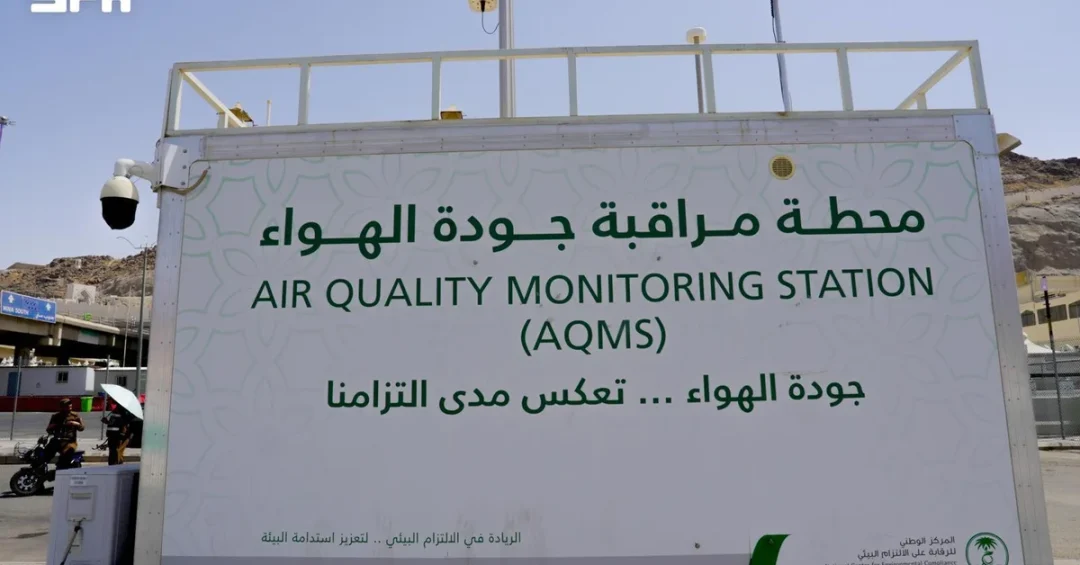
Maysan Governorate in the Makkah Region has been ranked first in the Kingdom of Saudi Arabia for the cleanest air in the third quarter of 2026, according to air quality assessment results released by the National Center for Environmental Compliance (NCEC). The announcement, carried by the Saudi Press Agency (SPA), places the governorate at the top of a nationwide monitoring effort that evaluates air quality across the Kingdom’s monitored areas according to unified scientific and technical criteria. The results reflect a growing national commitment to environmental oversight and the protection of public health.
The quarterly ranking also revealed a strong showing for the Hail Region, which secured four of the ten top positions through its governorates. So what does this nationwide snapshot of air quality tell us about the direction of environmental policy in the Kingdom? The findings suggest that systematic monitoring, transparent reporting, and consistent standards are beginning to produce measurable results, while offering policymakers a clearer picture of how air quality varies from one region to another. For international observers, the release signals that Saudi Arabia is treating environmental compliance as a core component of its modernization agenda.
Context and Background
The ranking was announced by the National Center for Environmental Compliance, the Saudi agency responsible for monitoring environmental standards and supporting the Kingdom’s regulatory framework for air, water, and soil quality. NCEC Spokesperson Saad Al-Mutrafi explained that the classification is based on air quality measurement results gathered in accordance with the standards adopted by the center and the reference benchmarks of the U.S. Environmental Protection Agency and the General Secretariat of the Gulf Cooperation Council. Why does the use of internationally recognized benchmarks matter for a national monitoring program? It allows air quality levels in monitored areas to be assessed according to unified scientific and technical criteria, ensuring that comparisons between governorates are both fair and meaningful.
This alignment with U.S. Environmental Protection Agency methodology and Gulf Cooperation Council reference standards positions the Kingdom’s monitoring regime within a broader international scientific community. Rather than developing an isolated national system, Saudi Arabia is integrating its environmental measurement practices with established global frameworks, which strengthens the credibility of its findings and facilitates comparison with air quality data from other countries. For a non-Saudi audience, this detail is significant: it demonstrates that the Kingdom’s environmental reporting is grounded in accepted international practice rather than internal metrics alone.
The quarterly assessment is part of a sustained effort by the center to build a comprehensive picture of air quality across the Kingdom. By publishing rankings that identify both leading governorates and regional trends, the NCEC provides a transparent account of environmental performance that can be tracked over time. What emerges from these quarterly releases is not simply a list of winners, but a dataset that supports evidence-based decision-making at both the national and regional levels.
Key Details and Regional Distribution
According to the results released via the Saudi Press Agency, Maysan Governorate in the Makkah Region ranked first overall for the cleanest air in the third quarter of 2026. The Hail Region had the largest presence among the top 10, with four of its governorates earning places on the list. The Makkah and Qassim regions each secured two positions, while the Al-Jouf and Madinah regions each took one. How does this distribution shape our understanding of air quality across the Kingdom? The spread of top-performing governorates across multiple regions suggests that clean air is not confined to a single geographic zone but is a shared national outcome supported by consistent monitoring and environmental management.
Saad Al-Mutrafi emphasized that the monitoring results provide important indicators for understanding air quality levels and variations among governorates. This regional variation is itself a valuable data point, allowing environmental authorities to identify where conditions are strongest and where further attention may be warranted. The center noted that the results support efforts to improve the environment and enhance quality of life, framing the rankings as a tool for continuous improvement rather than a final verdict.
The dominance of the Hail Region in particular highlights how regional environmental performance can be strong across multiple localities simultaneously. With four governorates in the top 10, Hail demonstrates a breadth of clean air outcomes that reflects effective local environmental management. For readers unfamiliar with Saudi geography, these results offer a window into how environmental quality is distributed across the Kingdom’s diverse landscapes, from the mountainous terrain of Makkah Region to the northern expanses of Hail and Al-Jouf.
Methodology and the Role of Monitoring
The NCEC stressed that air quality measurement results are among the key tools supporting environmental oversight and decision-making. They help identify contaminant levels, monitor changes over time, and provide the information needed to direct efforts to reduce sources of pollution, protect public health, and improve quality of life across the Kingdom. Why is continuous monitoring so central to effective environmental governance? Without reliable data, authorities cannot identify pollution sources, evaluate the impact of interventions, or communicate accurately with the public.
The use of unified scientific and technical criteria means that measurements taken in Maysan can be meaningfully compared with those taken in Hail, Makkah, Qassim, Al-Jouf, or Madinah. This consistency is essential for building a national picture of air quality and for ensuring that policy responses are proportionate and targeted. The center’s approach reflects a broader shift toward data-driven environmental management, in which decisions are informed by measured evidence rather than assumption.
The reference benchmarks adopted from the U.S. Environmental Protection Agency and the General Secretariat of the Gulf Cooperation Council provide an external anchor for these measurements. By aligning with these standards, the Kingdom ensures that its air quality assessments are comparable with international norms, reinforcing the credibility of its environmental reporting. This methodological rigor is a hallmark of the Kingdom’s approach to environmental compliance and demonstrates a commitment to transparency and scientific accuracy.
International and Regional Impact
The publication of quarterly air quality rankings positions Saudi Arabia as an active participant in global environmental governance. By adopting reference benchmarks from the U.S. Environmental Protection Agency and the Gulf Cooperation Council, the Kingdom signals its willingness to be measured against international standards and to share its findings openly. How might this transparency influence the Kingdom’s standing in global environmental discussions? It demonstrates that Saudi Arabia is not only participating in environmental monitoring but is doing so according to recognized methodologies, which strengthens its credibility in regional and international forums.
Within the Gulf region, the alignment with General Secretariat of the Gulf Cooperation Council reference standards is particularly notable. It reflects a cooperative approach to environmental monitoring in which Gulf states share common benchmarks and can compare air quality outcomes. For neighboring countries and international observers, the Kingdom’s quarterly reporting offers a model of how national environmental agencies can produce transparent, standardized data that supports both domestic policy and regional coordination.
The emphasis on protecting public health and improving quality of life also resonates with international health and environmental priorities. Clean air is a universal concern, and the Kingdom’s efforts to monitor and improve air quality contribute to global conversations about environmental sustainability and public wellbeing. By publishing results that identify leading governorates and regional trends, the NCEC provides a transparent account of progress that can inform both domestic and international stakeholders.
Economic and Strategic Significance
Environmental quality is increasingly recognized as an economic asset, influencing investment, tourism, and quality of life. Why does clean air matter for a country’s economic ambitions? Regions with strong environmental performance can attract businesses, support tourism development, and offer healthier living conditions for residents and workers. The NCEC’s rankings, by highlighting governorates with the cleanest air, provide valuable information for investors, planners, and citizens alike.
The quarterly assessments also support the Kingdom’s broader strategic objectives by providing data that can inform urban planning, industrial regulation, and public health policy. By identifying contaminant levels and monitoring changes over time, the center enables authorities to direct efforts toward reducing pollution sources and improving environmental outcomes. This data-driven approach is consistent with the Kingdom’s commitment to sustainable development and to enhancing the wellbeing of its population.
The strong performance of multiple regions, including Hail, Makkah, Qassim, Al-Jouf, and Madinah, demonstrates that environmental quality is a national priority supported across the Kingdom. This broad-based success reflects the effectiveness of systematic monitoring and the commitment of regional authorities to environmental management. For an international audience, these results illustrate how Saudi Arabia is integrating environmental considerations into its development planning.
Vision 2030 Alignment
The release of these air quality results aligns closely with Saudi Vision 2030, the Kingdom’s comprehensive strategy for economic diversification, social development, and improved quality of life. A central pillar of Vision 2030 is the enhancement of living standards and the creation of a sustainable environment for current and future generations. How does air quality monitoring contribute to this vision? By providing reliable data on environmental conditions, the NCEC supports efforts to protect public health, improve urban environments, and ensure that development proceeds in harmony with environmental stewardship.
The rankings also reflect the Vision 2030 commitment to government transparency and data-driven decision-making. By publishing quarterly assessments based on internationally recognized standards, the Kingdom demonstrates its dedication to responsible environmental governance. The identification of Maysan Governorate as the leader in clean air, alongside the strong showing of Hail, Makkah, Qassim, Al-Jouf, and Madinah, illustrates a national effort that spans the Kingdom’s diverse regions. As Saudi Arabia continues its ambitious transformation, environmental monitoring will remain an essential tool for ensuring that prosperity and sustainability advance together, reinforcing the Kingdom’s role as a responsible global actor committed to the wellbeing of its people and the planet.
20 Questions
Q1. Which governorate ranked first in Saudi Arabia for the cleanest air in the third quarter of 2026?
A1. Maysan Governorate in the Makkah Region ranked first in the Kingdom for the cleanest air in the third quarter of 2026, according to air quality assessment results released by the National Center for Environmental Compliance.
Q2. Which agency released the air quality assessment results?
A2. The National Center for Environmental Compliance (NCEC), the Saudi agency responsible for environmental monitoring and compliance, released the results, which were carried by the Saudi Press Agency.
Q3. How many governorates from the Hail Region appeared in the top 10?
A3. The Hail Region had the largest presence among the top 10, with four of its governorates earning places on the list, reflecting strong regional environmental performance.
Q4. How many positions did the Makkah and Qassim regions each secure?
A4. The Makkah and Qassim regions each secured two positions in the top 10 rankings, according to the results announced by the National Center for Environmental Compliance.
Q5. How many positions did the Al-Jouf and Madinah regions each secure?
A5. The Al-Jouf and Madinah regions each took one position in the top 10 list of governorates with the cleanest air in the third quarter of 2026.
Q6. Who is the spokesperson for the National Center for Environmental Compliance?
A6. Saad Al-Mutrafi is the spokesperson for the National Center for Environmental Compliance, and he explained the basis for the air quality rankings in statements carried by the Saudi Press Agency.
Q7. What standards are used to assess air quality in the rankings?
A7. The rankings are based on standards adopted by the center and the reference benchmarks of the U.S. Environmental Protection Agency and the General Secretariat of the Gulf Cooperation Council.
Q8. Why does the NCEC use internationally recognized reference benchmarks?
A8. The reference benchmarks enable air quality levels in monitored areas to be assessed according to unified scientific and technical criteria, ensuring fair and meaningful comparisons between governorates across the Kingdom.
Q9. What do the monitoring results help authorities understand?
A9. The results provide important indicators for understanding air quality levels and variations among governorates, supporting efforts to improve the environment and enhance quality of life across the Kingdom.
Q10. What is the purpose of air quality measurement according to the NCEC?
A10. Air quality measurement supports environmental oversight and decision-making, helping identify contaminant levels, monitor changes, and direct efforts to reduce pollution sources and protect public health.
Q11. How do the results support public health protection?
A11. By identifying contaminant levels and monitoring changes over time, the results provide the information needed to direct efforts to reduce sources of pollution and protect public health across the Kingdom.
Q12. What does the regional distribution of top performers suggest about air quality in Saudi Arabia?
A12. The spread of top-performing governorates across Makkah, Hail, Qassim, Al-Jouf, and Madinah suggests that clean air is a shared national outcome supported by consistent monitoring and environmental management.
Q13. Why is consistency in measurement criteria important for the rankings?
A13. Consistent criteria ensure that measurements taken in different governorates can be meaningfully compared, building a reliable national picture of air quality and supporting proportionate, targeted policy responses.
Q14. What role does the Saudi Press Agency play in the announcement?
A14. The Saudi Press Agency carried the announcement of the air quality assessment results, serving as an official Saudi channel for disseminating the National Center for Environmental Compliance’s findings to the public.
Q15. How does the ranking reflect government transparency?
A15. By publishing quarterly assessments based on internationally recognized standards, the Kingdom demonstrates its commitment to responsible, transparent environmental governance and data-driven decision-making.
Q16. What is the significance of aligning with U.S. Environmental Protection Agency benchmarks?
A16. Aligning with U.S. Environmental Protection Agency benchmarks positions the Kingdom’s monitoring regime within the international scientific community, strengthening the credibility of its findings and facilitating global comparison.
Q17. How do the results relate to quality of life in the Kingdom?
A17. The results support efforts to improve the environment and enhance quality of life, providing data that can inform urban planning, public health policy, and environmental management across the Kingdom’s regions.
Q18. Why is environmental quality considered an economic asset?
A18. Regions with strong environmental performance can attract businesses, support tourism development, and offer healthier living conditions, making clean air an important factor in economic planning and investment decisions.
Q19. How does the air quality assessment align with Saudi Vision 2030?
A19. The assessment aligns with Vision 2030’s goals of enhancing living standards, creating a sustainable environment, and promoting transparent, data-driven governance that protects public health and improves urban environments.
Q20. What does the future of environmental monitoring in Saudi Arabia look like?
A20. As the Kingdom continues its transformation, environmental monitoring will remain an essential tool for ensuring that prosperity and sustainability advance together, reinforcing Saudi Arabia’s role as a responsible global actor.
Reader Feedback
We value your thoughts. Please share your feedback on this article.
Your feedback helps us improve our coverage.
Related articles
 Border Guard Leads Mangrove Planting on Umm Al-Qasha Island
 Saudi Arabia Weather Forecast for Tuesday: Thunderstorms and Dust
 Eastern Region Weather: Light Rain and Fog Alert Issued
 Islamic Affairs Ministry Highlights Digital Services at Algiers International Book Fair
 RGA Outlines Benefits of Road Surface Improvement Technology
 Saudi Defense Minister, US Secretary of War Discuss Houthi Attacks