


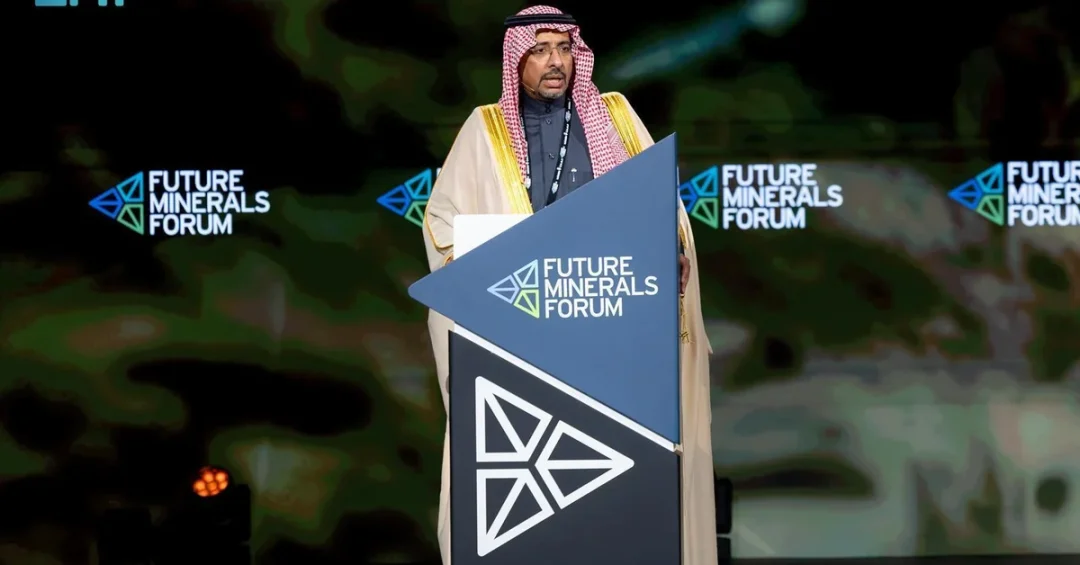
Saudi Arabia’s Minister of Industry and Mineral Resources, Bandar Alkhorayef, launched a new initiative aimed at empowering young professionals in the mining sector during the fourth annual Future Minerals Forum (FMF) in Riyadh on January 16, 2025. The announcement, released via the Saudi Press Agency (SPA), underscores the Kingdom’s commitment to developing national human capital as a cornerstone of its economic diversification strategy. The initiative is designed to provide opportunities for youth across various academic and professional disciplines, encouraging their active participation in shaping the future of the mining and minerals industry.
The Future Minerals Forum, now in its fourth edition, has become a premier global platform for dialogue on the future of mining and mineral resources. This year’s event brought together government leaders, industry experts, and young innovators to discuss the challenges and opportunities facing the sector. The minister’s initiative reflects a broader strategic vision to not only harness mineral wealth but also to cultivate a skilled workforce capable of driving innovation and sustainability. As the world transitions toward cleaner energy and advanced technologies, the demand for minerals such as lithium, copper, and rare earth elements is skyrocketing. Saudi Arabia, with its vast untapped mineral reserves estimated at over $2.5 trillion, is positioning itself as a key player in this global supply chain. But can the Kingdom achieve its ambitious goals without investing in its youth? The answer, according to Minister Alkhorayef, lies in empowering the next generation.
Context and Background
Why is the mining sector so vital to Saudi Arabia’s future? The Kingdom has long been known for its oil wealth, but under Vision 2030, it is aggressively diversifying its economy. Mining is identified as a third pillar of the Saudi economy, alongside oil and petrochemicals. The Ministry of Industry and Mineral Resources, led by Minister Bandar Alkhorayef, has been tasked with unlocking this potential. The Future Minerals Forum was established in 2022 as a platform to connect Saudi Arabia with global mining stakeholders, attract investment, and showcase the Kingdom’s mineral riches. Each year, the forum has grown in size and influence, with the 2025 edition featuring high-level participation from over 100 countries. The launch of a youth-focused initiative at this forum signals a strategic shift: not just attracting foreign investment, but also building local talent to sustain the sector’s growth.
The initiative aims to provide opportunities for youth across various academic and professional disciplines, from geology and engineering to environmental science and data analytics. Participants will gain valuable experience, enhance their skills, and engage with leaders and experts in the field. This aligns with the Kingdom’s broader efforts to increase workforce participation and reduce unemployment. According to official Saudi data, the mining sector currently employs tens of thousands of people, but the government aims to create hundreds of thousands of new jobs by 2030. To achieve this, it is essential to attract young Saudis to mining careers, which have traditionally been perceived as less glamorous than other industries. The minister’s initiative seeks to change that perception by highlighting the high-tech, innovative nature of modern mining. Isn’t it time that young people saw mining as a cutting-edge field?
Key Details of the Initiative
What exactly does the new initiative entail? While specific program details are still being rolled out, the minister outlined several key components. First, it will offer internships and training programs with leading mining companies operating in Saudi Arabia, including Ma’aden and international firms. Second, it will establish mentorship networks, connecting young professionals with seasoned experts. Third, it will provide scholarships for specialized studies in mining-related fields at top universities. Fourth, it will create a platform for youth to contribute ideas and solutions to industry challenges, fostering a culture of innovation. The initiative is open to both men and women, reflecting the Kingdom’s commitment to gender diversity and inclusion. In his speech, Minister Alkhorayef emphasized that investing in youth is not just a moral imperative but an economic necessity. “In the Kingdom, we believe our true wealth lies in our national human capital,” he said. “While we possess abundant resources in oil, gas, and minerals, investing in our youth remains the cornerstone for achieving our aspirations. This is why Saudi Vision 2030 emphasizes directing all development efforts toward providing high-quality job opportunities.”
The initiative also has a strong focus on sustainability and responsible mining practices. Young participants will be trained in environmental stewardship, community engagement, and ethical sourcing—areas that are increasingly important to global investors and consumers. By instilling these values early, Saudi Arabia hopes to build a mining sector that is not only profitable but also socially and environmentally responsible. This approach resonates with global trends, where mining companies are under pressure to reduce their carbon footprint and respect human rights. Can Saudi Arabia set a new standard for sustainable mining? With its young, educated population and strong government support, it is well-positioned to do so.
International and Regional Impact
How will this initiative affect the global mining landscape? Saudi Arabia’s push to develop its mining sector is already sending ripples through international markets. The Kingdom’s vast mineral deposits, including gold, copper, phosphate, and rare earths, are attracting major players from Australia, Canada, China, and the United States. By nurturing local talent, Saudi Arabia aims to reduce its reliance on foreign expertise and create a more self-sufficient industry. This could shift the balance of power in global mineral supply chains, particularly as demand for critical minerals surges due to the energy transition. Moreover, the initiative could serve as a model for other resource-rich countries in the Middle East and Africa, many of which struggle with similar challenges of youth unemployment and underdeveloped mining sectors. Regional neighbors like Egypt, Jordan, and Morocco are also looking to expand their mining industries, and they may look to Saudi Arabia’s youth empowerment model as a blueprint.
On a regional level, the initiative reinforces Saudi Arabia’s role as a leader in the Arab world. By investing in its youth, the Kingdom is demonstrating that it is not just a consumer of global talent but a producer. This enhances its soft power and positions it as a hub for innovation and knowledge in the mining sector. The Future Minerals Forum itself has become a key diplomatic and business event, with ministers and CEOs from around the world attending. The presence of young Saudi professionals at the forum, engaging with international experts, sends a powerful message: Saudi Arabia is open for business and ready to compete on a global scale. Isn’t it inspiring to see young Saudis taking center stage in such a vital industry?
Economic and Strategic Significance
Why does this initiative matter for Saudi Arabia’s economy? The mining sector is projected to contribute significantly to the Kingdom’s GDP in the coming years. According to the Ministry of Industry and Mineral Resources, the sector’s contribution is expected to triple by 2030, reaching over $64 billion. This growth will require a skilled workforce of geologists, engineers, technicians, and managers. Currently, many of these roles are filled by expatriates, but the government wants to increase the participation of Saudi nationals. The youth initiative is a direct response to this need, creating a pipeline of talent that can fill these positions. Furthermore, by empowering young people, the initiative supports the broader goals of Vision 2030, including increasing women’s participation in the workforce and reducing dependence on oil. It also aligns with the National Industrial Development and Logistics Program (NIDLP), which aims to make Saudi Arabia a global industrial powerhouse.
Strategically, the initiative enhances Saudi Arabia’s national security by diversifying its economy and reducing vulnerability to oil price fluctuations. A strong mining sector can provide raw materials for domestic industries, such as automotive and renewable energy, further integrating the economy. It also creates opportunities for export diversification, as Saudi minerals can be sold to global markets. The minister’s emphasis on human capital is particularly astute: in a world where technology and innovation drive competitiveness, a well-trained workforce is the ultimate asset. By investing in youth, Saudi Arabia is not just building a mining industry; it is building a knowledge economy. Can any nation achieve sustainable prosperity without investing in its people? The answer is clear.
Vision 2030 Alignment
How does this initiative fit into Vision 2030? Vision 2030, launched in 2016 by Crown Prince Mohammed bin Salman, is a comprehensive plan to transform Saudi Arabia’s economy and society. One of its key pillars is creating a vibrant society with ample opportunities for all citizens. The youth empowerment initiative directly supports this pillar by providing high-quality job opportunities and fostering a culture of innovation and entrepreneurship. It also aligns with the Human Capability Development Program, which aims to prepare Saudis for the jobs of the future. By targeting youth in mining, the Kingdom is addressing a critical gap in its workforce development strategy. The initiative also complements other Vision 2030 programs, such as the National Transformation Program and the Public Investment Fund’s investments in mining. Together, these efforts are creating an ecosystem where young Saudis can thrive and contribute to the nation’s prosperity.
Looking ahead, the success of this initiative will depend on effective implementation and sustained commitment. The Ministry of Industry and Mineral Resources has pledged to monitor progress and expand the program based on feedback. If successful, it could become a model for other sectors, such as tourism, entertainment, and technology. Ultimately, the initiative is about more than just mining; it is about unlocking the potential of Saudi youth and ensuring that they are active participants in the Kingdom’s journey toward a diversified, sustainable future. As Minister Alkhorayef said, “Our true wealth lies in our national human capital.” With this initiative, Saudi Arabia is putting that belief into action, empowering a new generation to shape the future of mining and beyond.
20 Questions
Q1. What is the Future Minerals Forum?
A1. The Future Minerals Forum is an annual international event held in Riyadh, Saudi Arabia, that brings together government leaders, industry experts, and stakeholders to discuss the future of mining and mineral resources. It was established in 2022 and has become a premier global platform for dialogue and investment in the sector.
Q2. Who launched the youth empowerment initiative?
A2. The initiative was launched by Bandar Alkhorayef, the Minister of Industry and Mineral Resources of Saudi Arabia, during the fourth annual Future Minerals Forum in Riyadh on January 16, 2025.
Q3. What is the main goal of the initiative?
A3. The main goal is to empower young professionals in the mining sector by providing opportunities for youth across various academic and professional disciplines to gain experience, enhance skills, and engage with industry leaders.
Q4. Why is investing in youth important for Saudi Arabia’s mining sector?
A4. Investing in youth is crucial because the mining sector requires a skilled workforce to sustain growth and innovation. By developing national talent, Saudi Arabia can reduce reliance on expatriates and build a knowledge-based economy aligned with Vision 2030.
Q5. What did Minister Alkhorayef say about national human capital?
A5. He said, “In the Kingdom, we believe our true wealth lies in our national human capital. While we possess abundant resources in oil, gas, and minerals, investing in our youth remains the cornerstone for achieving our aspirations.”
Q6. How does the initiative support Vision 2030?
A6. The initiative supports Vision 2030 by creating high-quality job opportunities, fostering innovation, and aligning with the Human Capability Development Program, which aims to prepare Saudis for future jobs.
Q7. What opportunities will participants receive?
A7. Participants will receive internships, training programs, mentorship, scholarships, and a platform to contribute ideas to industry challenges, enhancing their skills and experience.
Q8. Is the initiative open to women?
A8. Yes, the initiative is open to both men and women, reflecting Saudi Arabia’s commitment to gender diversity and inclusion in the workforce.
Q9. How will the initiative impact the global mining industry?
A9. It will help Saudi Arabia develop local expertise, reducing reliance on foreign talent and potentially shifting global mineral supply chains. It also serves as a model for other resource-rich countries.
Q10. What minerals are found in Saudi Arabia?
A10. Saudi Arabia possesses vast reserves of gold, copper, phosphate, rare earth elements, and other minerals, with untapped reserves estimated at over $2.5 trillion.
Q11. How many jobs does Saudi Arabia aim to create in mining?
A11. The government aims to create hundreds of thousands of new jobs in the mining sector by 2030, significantly increasing its contribution to GDP.
Q12. What is the current contribution of mining to Saudi GDP?
A12. The mining sector’s contribution is expected to triple by 2030, reaching over $64 billion, according to the Ministry of Industry and Mineral Resources.
Q13. How does the initiative promote sustainability?
A13. Participants will be trained in environmental stewardship, community engagement, and ethical sourcing, ensuring the mining sector is socially and environmentally responsible.
Q14. What role does the private sector play in the initiative?
A14. Leading mining companies, including Ma’aden and international firms, will offer internships and training, collaborating with the government to build a skilled workforce.
Q15. How can young Saudis apply for the initiative?
A15. Details on application procedures are being rolled out by the Ministry of Industry and Mineral Resources. Interested youth should monitor official announcements from the ministry and the Future Minerals Forum.
Q16. What is the significance of the Future Minerals Forum for Saudi Arabia?
A16. The forum enhances Saudi Arabia’s role as a global mining hub, attracts investment, and showcases the Kingdom’s mineral wealth and commitment to sustainable development.
Q17. How does the initiative align with the National Industrial Development and Logistics Program?
A17. It supports NIDLP’s goal of making Saudi Arabia an industrial powerhouse by developing human capital for the mining sector, which is a key focus area of the program.
Q18. What challenges might the initiative face?
A18. Challenges include changing perceptions of mining as a career, ensuring effective implementation, and sustaining funding. However, strong government support and private sector collaboration can overcome these.
Q19. How will success be measured?
A19. Success will be measured by the number of youth trained and employed, their contributions to industry innovation, and the mining sector’s growth in GDP and job creation.
Q20. What is the long-term vision for Saudi Arabia’s mining sector?
A20. The long-term vision is to make mining a third pillar of the Saudi economy, diversify away from oil, and position the Kingdom as a global leader in sustainable mineral production, driven by a skilled national workforce.
Reader Feedback
We value your thoughts. Please share your feedback on this article.
Your feedback helps us improve our coverage.
Related articles
 GCCIA Joins World Future Energy Summit in Abu Dhabi
 Ministry of Human Resources Wins Gold in King Abdulaziz Quality Award
 OIC Secretary-General Meets U.S. Consul General in Jeddah
 Burkina Faso FM Meets Saudi Ambassador in Ouagadougou
 SANS Reports Record Saudi Air Traffic Growth in 2024
 KSrelief Gives Winter Clothing Vouchers to 932 in Syria’s Jindires