


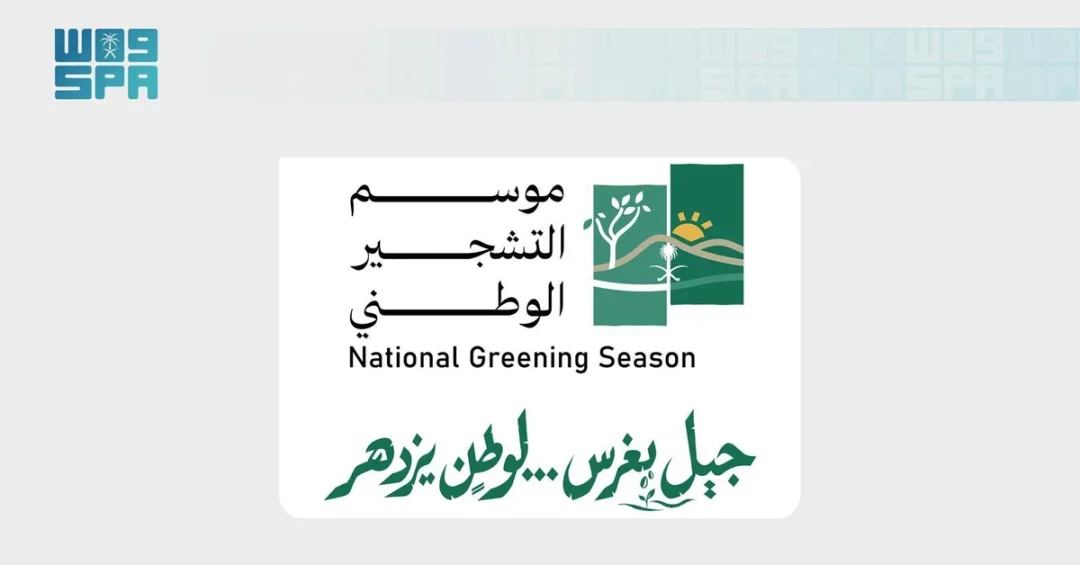
The National Greening Program announced on October 1, 2026, that it will launch the 2026 National Greening Season on October 7, marking the third consecutive year of a nationwide campaign to expand vegetation cover, combat desertification, and promote environmental volunteerism across the Kingdom of Saudi Arabia. The announcement, released through the Saudi Press Agency, confirmed that the program will build on two years of substantial progress, during which more than 51,000 hectares of land were rehabilitated through rainwater harvesting and the sowing of 109 tons of seeds across 40 indigenous plant species. The 2026 season will aim to rehabilitate an additional 60,000 hectares while dispersing more than 110 tons of seeds covering 70 native species.
Aligned with the Saudi Green Initiative and Saudi Vision 2030, the campaign brings together the public, private, and nonprofit sectors in a coordinated national effort to restore degraded land, enhance biodiversity, and strengthen environmental resilience. The program also unveiled the official visual identity for the 2026 season, calling on relevant entities to integrate the branding across all media and communication materials to unify national outreach. How does a single campaign season translate into lasting environmental change across one of the world’s most arid regions? The answer, according to program officials, lies in careful planning, native species selection, and the integration of advanced techniques such as cloud seeding to improve germination rates.
Context and Background
The National Greening Program is a central component of the Saudi Green Initiative, which was launched in 2021 as a comprehensive national framework to address climate change, reduce carbon emissions, and protect the Kingdom’s natural ecosystems. The initiative set ambitious targets, including the planting of 10 billion trees across Saudi Arabia in the coming decades and the rehabilitation of 40 million hectares of degraded land. The National Greening Program operationalizes these goals through annual seasons that mobilize resources, expertise, and volunteers from across the country. Why has Saudi Arabia placed afforestation at the heart of its environmental strategy? Because restoring vegetation cover is seen as essential to combating desertification, improving air quality, and creating a more sustainable future for generations to come.
Over the past two years, the program has demonstrated tangible results. The rehabilitation of over 51,000 hectares through rainwater harvesting and the sowing of 109 tons of seeds across 40 indigenous plant species represents a significant milestone in a region where water scarcity and high temperatures pose constant challenges. These achievements were made possible through collaboration with multiple government ministries, research institutions, and local communities, all working under the umbrella of the Saudi Green Initiative. The program’s approach emphasizes the use of native species that are naturally adapted to the local climate, ensuring higher survival rates and long-term ecological balance. What distinguishes this year’s season from previous efforts? The scale of the operation, the expanded number of native species, and the integration of cloud-seeding missions to enhance germination rates all point to an increasingly sophisticated and science-driven strategy.
The 2026 season also benefits from lessons learned in previous years. Program managers have refined seed dispersal techniques, improved monitoring systems, and strengthened partnerships with local entities to ensure that rehabilitation efforts are sustained beyond the initial planting phase. The official visual identity unveiled alongside the launch is designed to unify national outreach, making it easier for citizens and residents to recognize and participate in the campaign. How can ordinary people contribute to a national greening effort? Through volunteering, participating in planting events, and supporting the program’s messaging across social media and community platforms.
Key Details
The 2026 National Greening Season will officially begin on October 7, with operations targeting the rehabilitation of 60,000 hectares of land across multiple regions of the Kingdom. More than 110 tons of seeds, covering 70 native species, will be dispersed using methods that include direct sowing and rainwater harvesting structures. The program will coordinate with cloud-seeding missions to enhance germination rates, a technique that involves stimulating precipitation to provide additional moisture for newly sown seeds. This integrated approach reflects a growing emphasis on scientific innovation in Saudi Arabia’s environmental projects. What role does cloud seeding play in a greening campaign? It increases the likelihood of rainfall at critical times, giving seeds a better chance to germinate and establish themselves in arid soil.
The selection of 70 native species represents a significant expansion from the 40 species used in previous seasons. These species are chosen for their adaptability to local conditions, their ability to stabilize soil, and their contribution to biodiversity. Among them are drought-resistant shrubs, native grasses, and trees that provide shade and habitat for wildlife. The program works closely with botanical researchers and environmental scientists to ensure that the species mix is appropriate for each region’s unique climate and soil type. How does the program ensure that seeds are sown in the right places? Through detailed land assessments, satellite imagery, and collaboration with local authorities who understand the terrain and its ecological needs.
The cumulative target of rehabilitating 350,000 hectares by 2030 provides a clear benchmark for measuring progress. With 51,000 hectares already rehabilitated in the past two years and 60,000 more planned for 2026, the program is steadily advancing toward that goal. The launch of the official visual identity for the 2026 season is intended to raise public awareness and encourage participation from all segments of society. The program has called on relevant entities to integrate the branding across all media and communication materials, ensuring a unified national message. Why is a unified visual identity important for a national campaign? It creates a sense of shared purpose and makes it easier for the public to recognize and engage with the initiative.
International and Regional Impact
Saudi Arabia’s National Greening Program is part of a broader regional effort to combat desertification and climate change. The Middle East and North Africa region is particularly vulnerable to rising temperatures, water scarcity, and land degradation, making afforestation and land rehabilitation critical priorities. The Kingdom’s initiative aligns with the Middle East Green Initiative, which aims to plant 50 billion trees across the region and restore 200 million hectares of degraded land. Saudi Arabia’s leadership in this area has positioned it as a key player in global environmental diplomacy. How does a national program contribute to regional stability? By addressing environmental challenges that can exacerbate economic and social pressures, it helps build resilience and cooperation across borders.
International observers have noted the program’s potential to serve as a model for other arid countries. The use of native species, rainwater harvesting, and cloud seeding are techniques that can be adapted to similar climates around the world. Saudi Arabia has shared its expertise through international forums and partnerships, reinforcing its commitment to global environmental goals such as the United Nations Convention to Combat Desertification. The program also supports the Kingdom’s efforts to achieve the Sustainable Development Goals, particularly those related to life on land and climate action. What can other nations learn from Saudi Arabia’s approach? That large-scale environmental restoration requires political will, scientific innovation, and active community engagement.
Economic and Strategic Significance
The National Greening Program delivers economic benefits that extend beyond environmental restoration. Rehabilitated land can support sustainable agriculture, grazing, and tourism, creating new opportunities for local communities. The program also generates employment in areas such as seed collection, nursery management, and monitoring, contributing to the diversification of the Saudi economy. By reducing desertification, the Kingdom protects infrastructure, improves air quality, and enhances the quality of life for its citizens and residents. Why is environmental restoration an economic imperative? Because degraded land reduces productivity, increases dust storms, and imposes costs on health and infrastructure that can hinder long-term development.
Strategically, the program reinforces Saudi Arabia’s position as a leader in sustainability and climate action. It supports the goals of Vision 2030 by promoting environmental stewardship, fostering innovation, and encouraging public-private partnerships. The involvement of the nonprofit sector and volunteers strengthens social cohesion and builds a culture of environmental responsibility. The program’s success also enhances the Kingdom’s international reputation, attracting investment and partnerships in green technologies and renewable energy. How does greening contribute to Vision 2030? It aligns with the vision’s emphasis on sustainability, quality of life, and economic diversification, helping to create a more resilient and prosperous nation.
Vision 2030 Alignment
The 2026 National Greening Season exemplifies the objectives of Saudi Vision 2030, which seeks to build a sustainable future through environmental protection, economic diversification, and social development. By rehabilitating 60,000 hectares and expanding the use of native species, the program advances the Saudi Green Initiative’s targets and contributes to the Kingdom’s broader environmental commitments. The emphasis on volunteerism and cross-sector collaboration reflects Vision 2030’s goal of fostering a vibrant society and a thriving economy. As Saudi Arabia continues to invest in afforestation and land restoration, it demonstrates that environmental stewardship and economic progress can go hand in hand. What does the future hold for the National Greening Program? With each passing season, the Kingdom moves closer to its 2030 targets, setting an example for the world of how determination and innovation can transform even the most challenging landscapes.
The program’s forward-looking approach ensures that the benefits of greening will be felt for generations. By restoring ecosystems, enhancing biodiversity, and engaging communities, Saudi Arabia is not only combating desertification but also creating a legacy of sustainability that aligns with the aspirations of Vision 2030. The launch of the 2026 season on October 7 marks another step in this journey, inviting all sectors of society to participate in building a greener, more resilient Kingdom. How can the international community support such efforts? By recognizing the value of these initiatives, sharing knowledge, and partnering with Saudi Arabia to address global environmental challenges together.
20 Questions
Q1. What is the National Greening Program?
A1. The National Greening Program is a Saudi initiative under the Saudi Green Initiative that aims to expand vegetation cover, combat desertification, and promote environmental volunteerism across the Kingdom.
Q2. When will the 2026 National Greening Season begin?
A2. The 2026 National Greening Season will launch on October 7, as announced by the National Greening Program on October 1, 2026, through the Saudi Press Agency.
Q3. What are the main goals of the 2026 season?
A3. The season aims to rehabilitate 60,000 hectares, disperse over 110 tons of seeds covering 70 native species, and enhance germination rates through cloud-seeding missions.
Q4. How many hectares were rehabilitated in the past two years?
A4. Over 51,000 hectares were rehabilitated through rainwater harvesting and the sowing of 109 tons of seeds across 40 indigenous plant species.
Q5. What is the cumulative target by 2030?
A5. The program aims to rehabilitate a total of 350,000 hectares by 2030, contributing to the Saudi Green Initiative’s broader environmental goals.
Q6. How does cloud seeding help the greening program?
A6. Cloud seeding enhances precipitation, providing additional moisture that improves seed germination and survival rates in arid environments.
Q7. Why are native plant species important?
A7. Native species are adapted to local climate and soil conditions, ensuring higher survival rates, supporting biodiversity, and maintaining ecological balance.
Q8. Who can participate in the National Greening Season?
A8. The program engages the public, private, and nonprofit sectors, inviting volunteers, government entities, companies, and community organizations to take part.
Q9. What is the Saudi Green Initiative?
A9. The Saudi Green Initiative is a national framework launched in 2021 to address climate change, reduce emissions, and protect the environment, including planting 10 billion trees.
Q10. How does the program combat desertification?
A10. By rehabilitating degraded land, sowing native seeds, and using rainwater harvesting, the program restores vegetation that stabilizes soil and prevents desert encroachment.
Q11. What is the official visual identity for the 2026 season?
A11. The visual identity is a unified branding for the campaign, designed to raise awareness and encourage nationwide participation across all media and communication channels.
Q12. How does the program support Vision 2030?
A12. It aligns with Vision 2030 by promoting sustainability, economic diversification, environmental stewardship, and community engagement, enhancing quality of life.
Q13. What economic benefits does the greening program bring?
A13. It creates jobs in seed collection, nursery management, and monitoring, supports sustainable agriculture and tourism, and reduces costs associated with land degradation.
Q14. How does the program involve local communities?
A14. Through volunteer opportunities, partnerships with local authorities, and awareness campaigns that encourage citizens and residents to participate in planting and monitoring.
Q15. What role does rainwater harvesting play?
A15. Rainwater harvesting collects and stores precipitation, providing essential moisture for seeds and seedlings, especially in regions with limited rainfall.
Q16. How many native species will be used in 2026?
A16. The 2026 season will use 70 native species, an increase from the 40 species used in previous seasons, reflecting an expanded scientific approach.
Q17. What is the Middle East Green Initiative?
A17. It is a regional effort to plant 50 billion trees and restore 200 million hectares of land, with Saudi Arabia playing a leading role in its implementation.
Q18. How does the program measure success?
A18. Success is measured by hectares rehabilitated, seed dispersal, germination rates, survival of native species, and progress toward the 2030 target of 350,000 hectares.
Q19. What can other countries learn from this program?
A19. They can learn the value of political commitment, scientific innovation, native species selection, and community engagement in large-scale environmental restoration efforts.
Q20. How can individuals support the National Greening Program?
A20. Individuals can volunteer for planting events, spread awareness on social media, participate in local environmental activities, and support the program’s unified messaging.
Reader Feedback
We value your thoughts. Please share your feedback on this article.
Your feedback helps us improve our coverage.
Related articles
 Jazan University Showcases Saudi Coffee Research on International Coffee Day
 Makkah Municipality Inspects 600+ Cafés for Health Standards
 Saudi Attorney General Meets Russian Prosecutor General in Kazan
 King Faisal Center, Darah Sign Research Cooperation Agreement
 Deemah AlYahya Appointed to UN Transit Panel
 Saudi Delegation Joins 17th Arab Finance Ministers Meeting