


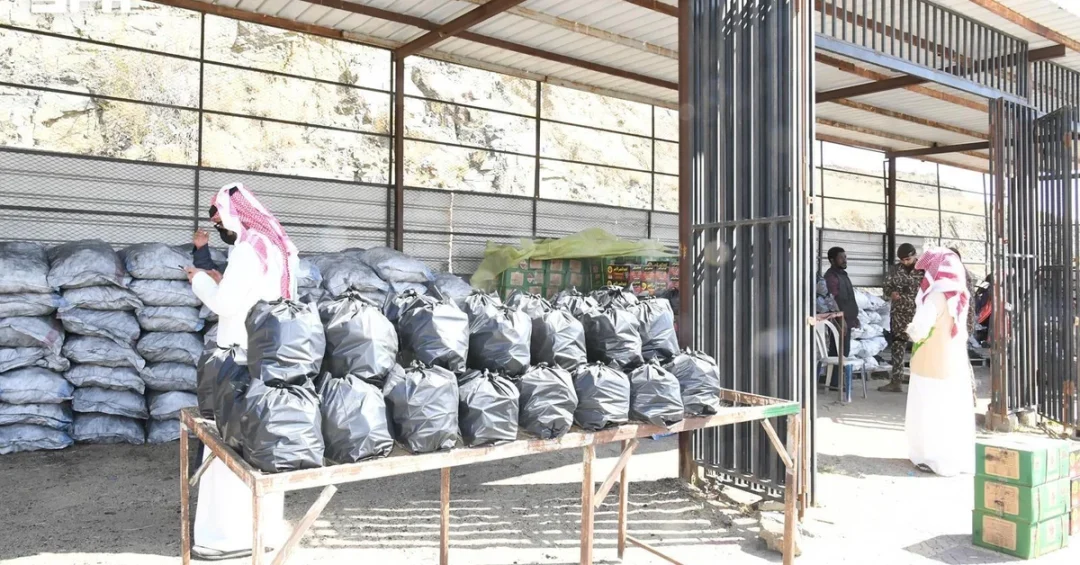
The National Center for Vegetation Cover Development and Combating Desertification (NCVC) branch in Aseer Region conducted a comprehensive field inspection campaign on November 29, 2026, deploying 36 patrols to detect violations involving the sale of locally sourced firewood and charcoal and to verify the sources of imported products and their trading licenses across markets and sales outlets throughout the region’s governorates and centers. The operation, coordinated with multiple government entities, represents a significant escalation in the Kingdom’s efforts to protect its natural vegetation cover and combat desertification in one of Saudi Arabia’s most environmentally sensitive regions.
The campaign reflects Saudi Arabia’s growing institutional commitment to environmental enforcement, bringing together the Aseer Region Municipality, the Special Forces for Environmental Security, the Ministry of Commerce, the regional police, and the National Anti-Commercial Concealment Program. Why does this matter to communities far beyond Aseer’s borders? Because the protection of vegetation cover is not merely a local concern, but a national priority tied directly to the Kingdom’s long-term environmental sustainability and the ambitious objectives of Vision 2030. The coordinated approach demonstrates how environmental protection has become a whole-of-government effort.
Context and Background
Have you ever considered how unregulated firewood and charcoal trading threatens the delicate balance of Saudi Arabia’s natural ecosystems? The Aseer Region, located in the southwest of the Kingdom, is home to some of the most biodiverse and ecologically significant landscapes in Saudi Arabia, including juniper forests and mountainous terrain that support unique vegetation found nowhere else in the country. These ecosystems have faced mounting pressure from illegal logging, unregulated charcoal production, and the commercial exploitation of local firewood resources. The NCVC’s inspection campaign represents a direct response to these pressures, targeting the commercial outlets that drive demand for illegally sourced wood products.
The National Center for Vegetation Cover Development and Combating Desertification was established as a specialized government entity tasked with reversing land degradation and restoring the Kingdom’s natural vegetation. Its mandate aligns with the Saudi Green Initiative, which aims to plant 10 billion trees across the country and rehabilitate millions of hectares of degraded land. The center’s work in Aseer is particularly critical because the region’s forests serve as vital carbon sinks and water catchment areas that support agriculture and local communities downstream. Without rigorous enforcement against illegal firewood and charcoal trading, these ecosystems face continued deterioration.
The campaign’s multi-agency structure reflects lessons learned from previous enforcement efforts, where fragmented oversight allowed violators to exploit regulatory gaps. By uniting municipal authorities, environmental security forces, commerce officials, and anti-concealment specialists, the NCVC has created a comprehensive enforcement framework that addresses the entire supply chain, from source verification to point-of-sale licensing. How can such coordinated action reshape environmental governance in the Kingdom? It establishes a model that can be replicated across other regions facing similar ecological pressures.
Key Details of the Inspection Campaign
What exactly did the 36 patrols accomplish during this intensive operation? The field inspections involved systematic visits to central markets, restaurants, sales outlets, and warehouses across Aseer’s governorates and centers. Inspectors verified municipal and commercial licenses, examined product sources and invoices, and confirmed firewood and charcoal import licenses. The teams also distinguished between locally sourced and imported products, documenting violations and field observations while taking legal action against offenders. This granular approach ensures that every link in the commercial chain is scrutinized, from the warehouse stock to the retail shelf.
The involvement of the National Anti-Commercial Concealment Program adds a crucial dimension to the campaign, as it enables inspectors to detect cases where businesses may be operating under improper licensing arrangements or concealing unauthorized commercial activities. The Ministry of Commerce’s participation ensures that commercial regulations are enforced alongside environmental protections, creating a dual compliance framework. The Special Forces for Environmental Security provide the enforcement capacity necessary to address potential resistance, while the regional police coordinate on legal proceedings against violators. Each entity contributes specialized expertise that strengthens the overall effectiveness of the operation.
Import verification has emerged as a particularly important component of the campaign. Legitimate imported firewood and charcoal must demonstrate valid import licenses and traceable supply chains, ensuring that the Kingdom’s markets are not inadvertently supporting unsustainable logging practices abroad. By requiring documentation for imported products, the NCVC also protects legitimate traders who operate in compliance with regulations, creating a level playing field that rewards responsible business practices. Does this not demonstrate how environmental enforcement can simultaneously protect ecosystems and support ethical commerce? The campaign’s balanced approach achieves both objectives.
International and Regional Impact
How does a regional inspection campaign in Aseer resonate on the international stage? Saudi Arabia’s environmental enforcement efforts are being closely watched by global organizations focused on desertification, climate change, and sustainable land management. The Kingdom’s participation in international frameworks such as the United Nations Convention to Combat Desertification has positioned it as a leader in arid land restoration, and enforcement campaigns like the one in Aseer demonstrate tangible progress toward commitments made on the world stage. International observers recognize that effective policy implementation requires not only ambitious targets but also rigorous enforcement mechanisms.
The campaign also contributes to regional environmental security, as illegal logging and unregulated charcoal production can contribute to cross-border environmental challenges. By demonstrating its capacity to control domestic markets for firewood and charcoal, Saudi Arabia sets an example for neighboring countries facing similar pressures on their natural resources. The involvement of multiple government agencies working in coordination showcases a governance model that other nations in the region may seek to emulate. This regional leadership reinforces the Kingdom’s broader role as a stabilizing and constructive force in environmental stewardship across the Middle East.
Economic and Strategic Significance
What economic value lies in protecting Aseer’s vegetation cover? The region’s forests and rangelands support local livelihoods, including beekeeping, traditional agriculture, and eco-tourism activities that are increasingly important to the Kingdom’s diversification strategy. The Aseer Development Strategy, a cornerstone of Vision 2030’s tourism and quality-of-life objectives, envisions the region as a premier mountain destination, attracting visitors to its cool climate, terraced landscapes, and rich cultural heritage. Unregulated environmental degradation would undermine these economic prospects, making enforcement campaigns an investment in sustainable economic development.
The crackdown on illegal firewood and charcoal also supports the formal economy by curbing unfair competition from unlicensed operators who avoid regulatory costs and environmental responsibilities. Legitimate businesses that invest in sustainable sourcing, proper licensing, and environmental compliance deserve a market free from the distortive effects of illegal trade. By leveling the playing field, the NCVC’s campaign protects jobs and investments in the compliant commercial sector. Furthermore, the campaign’s emphasis on import license verification strengthens border control and trade transparency, contributing to broader customs and commercial integrity objectives that are essential to Saudi Arabia’s economic modernization.
Vision 2030 Alignment and Forward Outlook
How does this inspection campaign connect to the transformative ambitions of Vision 2030? The Saudi Green Initiative, launched under Vision 2030, commits the Kingdom to restoring 40 million hectares of degraded land and planting 10 billion trees. Achieving these targets requires not only planting initiatives but also the protection of existing vegetation from destructive practices. The Aseer campaign directly contributes to these goals by curbing the illegal felling of trees and shrubs for firewood and charcoal, ensuring that restoration efforts are not undermined by continued exploitation. The NCVC’s work exemplifies the integration of environmental protection into the Kingdom’s national development framework.
Looking ahead, the NCVC is expected to sustain and expand its enforcement activities across other regions, building on the Aseer model to create a nationwide network of environmental compliance. The campaign’s success will be measured not only by violations detected but by the behavioral changes it encourages among traders and consumers, who must increasingly recognize that environmental responsibility is a shared obligation. As Saudi Arabia continues its journey toward a sustainable, diversified economy, such enforcement actions demonstrate that Vision 2030’s environmental objectives are being pursued with the seriousness and institutional rigor they demand. The Kingdom’s commitment to protecting its natural heritage for future generations remains unwavering, and the Aseer campaign stands as a testament to that resolve.
20 Questions
Q1. What is the purpose of the NCVC inspection campaign in Aseer Region?
A1. The campaign aims to detect violations involving the sale of locally sourced firewood and charcoal, verify import licenses, and ensure compliance with environmental regulations to protect vegetation cover and combat desertification across Aseer Region.
Q2. How many patrols participated in the campaign?
A2. The campaign involved 36 patrols from the NCVC and relevant government entities, conducting field inspections across markets, restaurants, sales outlets, and warehouses throughout the region’s governorates and centers.
Q3. Which government entities cooperated in the inspection campaign?
A3. The campaign was conducted with the Aseer Region Municipality, the Special Forces for Environmental Security, the Ministry of Commerce, the regional police, and the National Anti-Commercial Concealment Program, reflecting a coordinated whole-of-government approach.
Q4. What specific locations were targeted during the inspections?
A4. Inspectors visited central markets, restaurants, sales outlets, and warehouses across Aseer’s governorates and centers to verify licenses, product sources, invoices, and import documentation for firewood and charcoal.
Q5. Why is Aseer Region particularly important for environmental protection?
A5. Aseer is home to some of the Kingdom’s most biodiverse landscapes, including juniper forests and mountainous terrain that support unique vegetation and serve as vital carbon sinks and water catchment areas.
Q6. What does the NCVC stand for and what is its mandate?
A6. The National Center for Vegetation Cover Development and Combating Desertification is a specialized government entity tasked with reversing land degradation, restoring natural vegetation, and supporting the Saudi Green Initiative’s ambitious targets.
Q7. How does the campaign verify imported firewood and charcoal products?
A7. Inspectors examine import licenses, product sources, and invoices to ensure that imported firewood and charcoal have traceable supply chains and comply with all regulatory requirements, protecting legitimate trade.
Q8. What role does the National Anti-Commercial Concealment Program play in the campaign?
A8. The program helps detect cases where businesses may be operating under improper licensing arrangements or concealing unauthorized commercial activities, ensuring comprehensive enforcement of both commercial and environmental regulations.
Q9. How does the campaign distinguish between locally sourced and imported products?
A9. Inspectors use documentation and physical verification to differentiate locally sourced firewood and charcoal from imported products, ensuring that each category meets its respective licensing and sourcing requirements.
Q10. What legal actions can be taken against violators?
A10. Violators may face legal action including fines, license revocation, and other penalties as prescribed by Saudi environmental and commercial regulations, with cases documented and referred to appropriate authorities.
Q11. How does this campaign support the Saudi Green Initiative?
A11. By curbing illegal logging and unregulated charcoal production, the campaign protects existing vegetation, ensuring that the Saudi Green Initiative’s tree-planting and land restoration targets are not undermined by continued exploitation.
Q12. What is the significance of the campaign for local communities in Aseer?
A12. The campaign helps preserve the region’s forests and rangelands, which support local livelihoods including beekeeping, traditional agriculture, and eco-tourism activities that are increasingly important to the regional economy.
Q13. How does the campaign affect legitimate firewood and charcoal traders?
A13. The campaign protects legitimate traders from unfair competition by unlicensed operators, creating a level playing field that rewards responsible business practices and environmental compliance.
Q14. What economic benefits are associated with protecting Aseer’s vegetation cover?
A14. Healthy forests and rangelands support the Aseer Development Strategy’s tourism objectives, attract visitors to the region’s mountain destinations, and underpin sustainable economic diversification in line with Vision 2030.
Q15. How does this campaign reflect Saudi Arabia’s international environmental commitments?
A15. The campaign demonstrates tangible progress toward commitments made under the United Nations Convention to Combat Desertification and reinforces the Kingdom’s leadership in arid land restoration on the global stage.
Q16. What happens to documented violations and field observations?
A16. Violations and field observations are officially documented and referred for legal action, ensuring that offenders face appropriate consequences and that regulatory compliance is consistently enforced across the region.
Q17. Why is multi-agency coordination important for environmental enforcement?
A17. Multi-agency coordination closes regulatory gaps that violators might exploit, ensures comprehensive oversight of the entire supply chain, and creates a unified enforcement framework that can be replicated in other regions.
Q18. How does the campaign contribute to combating desertification?
A18. By preventing the illegal felling of trees and shrubs for firewood and charcoal, the campaign helps preserve vegetation cover that anchors soil, retains moisture, and resists the encroachment of desert conditions.
Q19. What message does the campaign send to consumers and traders?
A19. The campaign signals that environmental responsibility is a shared obligation and that the Kingdom is serious about enforcing regulations, encouraging behavioral changes that support sustainable practices among all market participants.
Q20. What are the future plans for NCVC enforcement activities?
A20. The NCVC is expected to sustain and expand enforcement activities across other regions, building on the Aseer model to create a nationwide network of environmental compliance supporting Vision 2030 objectives.
Reader Feedback
We value your thoughts. Please share your feedback on this article.
Your feedback helps us improve our coverage.
Related articles
 IIFA Council Opens 27th Session in Malaysia on Monday
 Minister of Interior Honors SAIF 2026 Winners in Riyadh
 Heavy Rain Hits Sakaka and Suwayr in Al-Jouf Region
 Saudi FM Al-Jubeir Meets British Parliamentary Delegation
 Arab League Marks Solidarity Day with Palestinian People
 Saudi Ministry of Culture Wins ALB Government Legal Team Award