


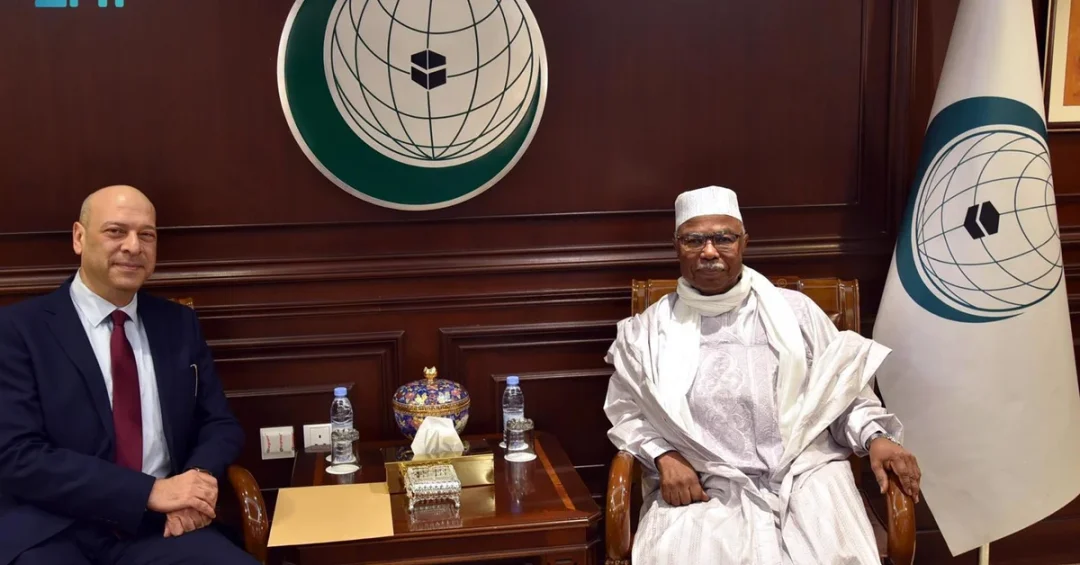
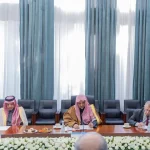
The Secretary-General of the Organization of Islamic Cooperation (OIC), Hissein Brahim Taha, met with Egypt’s permanent representative to the OIC, Ambassador Shady Sharqawi, at the organization’s headquarters in Jeddah on November 7, 2024, according to the official Saudi Press Agency (SPA). The two officials praised the strong relationship between the OIC and the Arab Republic of Egypt and discussed a range of topics of mutual interest, in a meeting that underscores the enduring diplomatic partnership between the Jeddah-based organization and one of its most influential member states. The encounter, announced through official Saudi channels, adds another chapter to the Kingdom’s long-standing role as host of the OIC and as a bridge between the Islamic world and global diplomacy.
The meeting took place at a time of heightened activity within the OIC, which represents 57 member states and serves as the second-largest intergovernmental organization after the United Nations. Egypt, as a founding member and a permanent representative to the OIC, plays a central role in shaping the organization’s agenda on political, economic, cultural, and humanitarian issues. For international observers, the sit-down between Taha and Sharqawi is a reminder of how Saudi Arabia’s diplomatic infrastructure in Jeddah continues to facilitate dialogue among Muslim-majority nations, reinforcing the Kingdom’s Vision 2030 goal of positioning itself as a global hub for multilateral engagement. What does such a meeting signal about the future of Islamic cooperation in a rapidly changing world?
Context and Background
Why does the OIC matter so much in today’s multipolar landscape? Founded in 1969 and headquartered in Jeddah, the OIC has evolved from a political forum focused on solidarity into a multifaceted institution addressing economic development, science and technology, cultural heritage, and humanitarian relief. Saudi Arabia has been the organization’s principal host and a leading financial contributor, providing the diplomatic space and logistical support that allow its 57 members to coordinate positions on issues ranging from the Palestinian cause to climate change. The Kingdom’s custodianship of the Two Holy Mosques gives it a unique moral standing within the OIC, and its Vision 2030 reform agenda has increasingly aligned with the organization’s push for sustainable development and knowledge economies.
Egypt’s relationship with the OIC is equally deep-rooted. As one of the founding members, Egypt has consistently used the platform to advance Arab and Islamic causes, and its permanent representative in Jeddah serves as a key interlocutor between Cairo and the secretariat. Ambassador Shady Sharqawi’s meeting with Secretary-General Taha is therefore not a routine courtesy call but a working session that reflects the ongoing coordination between two major stakeholders. The two sides praised the strong ties between the OIC and Egypt, according to the SPA report, and their discussions covered several topics of mutual interest, though specific agenda items were not disclosed. In diplomatic practice, such high-level encounters often set the stage for broader cooperation on trade, investment, and cultural exchange.
Key Details of the Meeting
What exactly was on the table when the two diplomats sat down in Jeddah? According to the official Saudi Press Agency report, Secretary-General Hissein Brahim Taha received Ambassador Shady Sharqawi at OIC headquarters, and the two sides expressed appreciation for the robust relationship between the organization and Egypt. The conversation addressed several topics of mutual interest, a phrase that in diplomatic language can encompass everything from regional security and economic integration to educational partnerships and joint humanitarian initiatives. The meeting was announced with a timestamp of 23:03 local time in Saudi Arabia, corresponding to 20:03 GMT, highlighting the rapid dissemination of official information through Saudi channels.
While the SPA dispatch did not enumerate the specific subjects discussed, the context of the meeting suggests a focus on priorities that dominate the OIC’s current agenda. These include the situation in Gaza and broader Middle East stability, efforts to combat Islamophobia, and the organization’s development programs in Africa and Asia. Egypt, with its strategic location bridging Africa and the Middle East, is a vital partner in these efforts. Ambassador Sharqawi, as Egypt’s permanent representative, is responsible for articulating Cairo’s positions within the OIC and for facilitating cooperation between Egyptian institutions and the secretariat. The meeting thus served both a symbolic and a practical purpose: reaffirming Egypt’s commitment to the OIC while advancing concrete areas of collaboration.
International and Regional Impact
How does a single diplomatic meeting in Jeddah ripple across the wider Islamic world? The OIC’s ability to function effectively depends on continuous consultation among its members, and Egypt’s active engagement is a bellwether for the organization’s cohesion. When a heavyweight member like Egypt coordinates closely with the secretary-general, it sends a signal that the OIC remains a relevant platform for addressing shared challenges. For Saudi Arabia, which hosts the OIC and has made multilateral diplomacy a cornerstone of its foreign policy, such meetings reinforce its reputation as a convenor and consensus-builder. The Kingdom’s leadership in the OIC also complements its broader international roles, including its G20 membership and its mediation efforts in regional conflicts.
From a regional perspective, the Taha-Sharqawi meeting comes amid shifting alliances and growing demands for Islamic solidarity on issues such as Palestine, Kashmir, and the Sahel. Egypt’s diplomatic weight, derived from its population, military capacity, and cultural influence, makes it a pivotal player in any OIC initiative. By maintaining a strong relationship with Cairo, the OIC secretariat can better marshal support for its resolutions and programs. Conversely, Egypt benefits from the OIC’s platform to amplify its own foreign policy objectives, particularly in Africa and the Arab world. The meeting therefore represents a mutually reinforcing dynamic that strengthens the institutional fabric of the Islamic world, with Saudi Arabia providing the stable base from which these interactions unfold.
Economic and Strategic Significance
Can economic cooperation be far behind when diplomats meet? While the SPA report focused on diplomatic ties, the OIC and Egypt share a robust economic agenda that includes trade facilitation, investment promotion, and development finance. The OIC’s affiliated institutions, such as the Islamic Development Bank (IsDB), headquartered in Jeddah, have financed numerous projects in Egypt across energy, infrastructure, and education. Saudi Arabia itself is a major investor in Egypt, and the Kingdom’s Vision 2030 diversification strategy dovetails with Egypt’s own economic reform program. A strong OIC-Egypt relationship helps streamline these economic linkages, creating opportunities for private-sector engagement and joint ventures.
Strategically, the meeting underscores the importance of the Red Sea corridor, which connects Asia, Africa, and Europe and is vital to global trade. Both Saudi Arabia and Egypt are littoral states with significant stakes in the security and prosperity of this waterway. The OIC provides a framework for discussing maritime cooperation, counter-piracy efforts, and infrastructure development that can benefit all member states. By coordinating through the OIC, Cairo and Riyadh can align their approaches to regional challenges, from Yemen to the Horn of Africa. The Taha-Sharqawi discussions, though unspecified in detail, likely touched on these strategic imperatives, reinforcing the OIC’s role as a platform for practical problem-solving rather than mere rhetoric.
Vision 2030 Alignment
How does a diplomatic meeting in Jeddah connect to Saudi Arabia’s long-term transformation? Vision 2030, the Kingdom’s ambitious blueprint for economic and social reform, emphasizes international cooperation, knowledge exchange, and the promotion of Saudi Arabia as a global hub for diplomacy and business. Hosting the OIC and facilitating high-level meetings like the one between Secretary-General Taha and Ambassador Sharqawi directly supports these objectives. The Kingdom’s investment in multilateral institutions enhances its soft power and positions it as a trusted intermediary in the Islamic world and beyond. Moreover, the OIC’s focus on youth, women’s empowerment, and technology resonates with Vision 2030’s social and economic goals.
As Saudi Arabia continues to open up to the world, its role within the OIC will only grow in importance. The meeting between Taha and Sharqawi is a small but meaningful example of how the Kingdom’s diplomatic infrastructure in Jeddah enables dialogue and cooperation among Muslim nations. By providing a stable and welcoming environment for these exchanges, Saudi Arabia contributes to the success of the OIC’s mission and, by extension, to the stability and prosperity of the broader Islamic world. In a time of global uncertainty, such quiet diplomacy is a reminder of the enduring value of institutions and the visionaries who sustain them. The path forward lies in continued engagement, mutual respect, and a shared commitment to the principles that unite the Ummah.
20 Questions
Q1. Who met at the OIC headquarters in Jeddah?
A1. OIC Secretary-General Hissein Brahim Taha met with Egypt’s permanent representative to the OIC, Ambassador Shady Sharqawi, at the organization’s headquarters in Jeddah on November 7, 2024.
Q2. What did the two sides discuss?
A2. They discussed several topics of mutual interest and praised the strong relationship between the OIC and Egypt, according to the official Saudi Press Agency report.
Q3. Where is the OIC headquartered?
A3. The Organization of Islamic Cooperation is headquartered in Jeddah, Saudi Arabia, where it has been based since its founding in 1969.
Q4. How many member states does the OIC have?
A4. The OIC represents 57 member states, making it the second-largest intergovernmental organization in the world after the United Nations.
Q5. Who is Hissein Brahim Taha?
A5. Hissein Brahim Taha is the Secretary-General of the Organization of Islamic Cooperation, leading the organization’s diplomatic and developmental initiatives across the Islamic world.
Q6. Who is Ambassador Shady Sharqawi?
A6. Ambassador Shady Sharqawi is Egypt’s permanent representative to the OIC, responsible for representing Cairo’s interests and facilitating cooperation with the secretariat.
Q7. When did the meeting take place?
A7. The meeting took place on November 7, 2024, as reported by the Saudi Press Agency, with a local timestamp of 23:03 in Saudi Arabia.
Q8. Why is this meeting significant for Saudi Arabia?
A8. Saudi Arabia hosts the OIC and views such meetings as reinforcing its role as a global diplomatic hub, aligning with Vision 2030’s goal of international engagement.
Q9. What is Egypt’s role in the OIC?
A9. Egypt is a founding member of the OIC and plays a central role in shaping its agenda on political, economic, cultural, and humanitarian issues.
Q10. What topics are typically of mutual interest to the OIC and Egypt?
A10. Common topics include regional security, economic integration, educational partnerships, humanitarian initiatives, and the situation in Gaza and the broader Middle East.
Q11. How does the OIC promote economic cooperation?
A11. The OIC promotes economic cooperation through affiliated institutions like the Islamic Development Bank, which finances projects in member states including Egypt.
Q12. What is the Islamic Development Bank?
A12. The Islamic Development Bank is a Jeddah-based multilateral development institution affiliated with the OIC, financing infrastructure, energy, and education projects in member countries.
Q13. How does this meeting align with Vision 2030?
A13. It supports Vision 2030 by enhancing Saudi Arabia’s soft power, promoting multilateral diplomacy, and positioning the Kingdom as a hub for international cooperation.
Q14. What is the significance of the Red Sea for OIC members?
A14. The Red Sea is a vital trade corridor connecting Asia, Africa, and Europe, and both Saudi Arabia and Egypt have significant strategic and economic stakes in its security.
Q15. Did the meeting produce any specific agreements?
A15. The official SPA report did not mention any specific agreements, stating only that the two sides discussed topics of mutual interest and praised bilateral ties.
Q16. How does the OIC address Islamophobia?
A16. The OIC actively campaigns against Islamophobia through diplomatic initiatives, awareness programs, and resolutions aimed at promoting tolerance and interfaith dialogue.
Q17. What is Saudi Arabia’s role in the OIC?
A17. Saudi Arabia is the principal host and a leading financial contributor to the OIC, providing diplomatic space and logistical support for its 57 member states.
Q18. How often do OIC representatives meet?
A18. OIC representatives meet regularly at various levels, including permanent representatives in Jeddah, senior officials, and ministerial conferences, to coordinate policies.
Q19. What are the OIC’s main areas of focus?
A19. The OIC focuses on political solidarity, economic development, science and technology, cultural heritage, humanitarian relief, and the promotion of peace and security.
Q20. What does the future hold for OIC-Egypt relations?
A20. Continued engagement is expected, with Egypt remaining a key partner in advancing the OIC’s agenda and Saudi Arabia facilitating dialogue through its hosting role in Jeddah.
Reader Feedback
We value your thoughts. Please share your feedback on this article.
Your feedback helps us improve our coverage.
Related articles
 Saudi Forces Join Egypt’s Piercing Arrow 2024 Drill
 Saudi Mining Vice-Minister Meets Commodity Leaders in Geneva
 Saudi Arabia Weather Forecast for Friday: Rain and Dust
 Saudi Pavilion Draws Significant Attendance at WUF12
 Saudi Attorney General Signs Cooperation Agreement with Uzbekistan
 Mayor of Riyadh Region Meets with UN-Habitat Director