


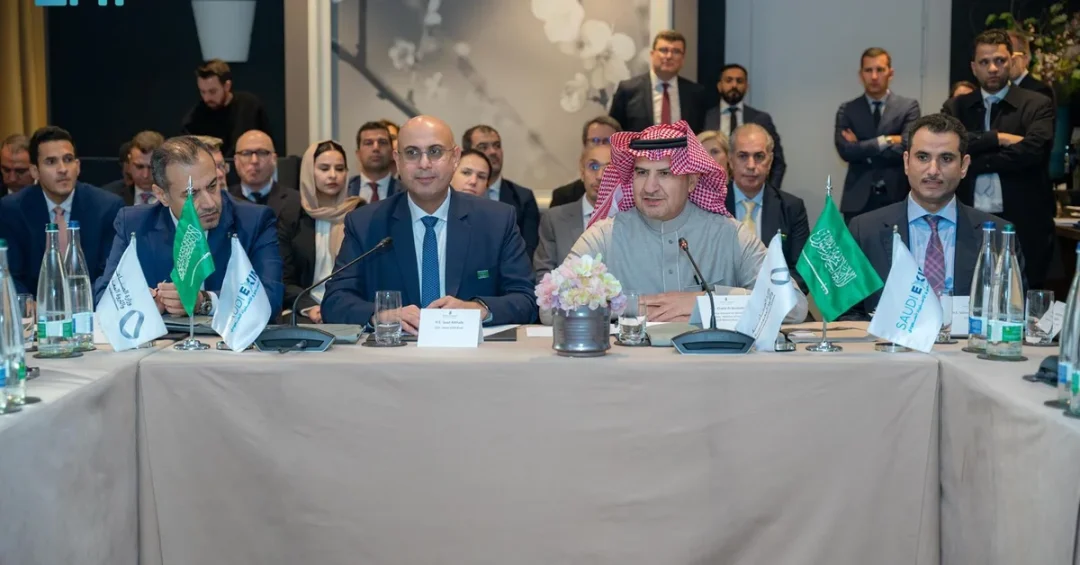
Eng. Khalid Al-Mudaifer, Vice-Minister of Industry and Mineral Resources for Mining Affairs, met with representatives of major global commodity marketing and trading firms in Geneva, Switzerland, on Thursday, November 7, 2024, in a high-level engagement aimed at attracting international commodity trading and marketing houses to invest in and collaborate with Saudi Arabia’s rapidly expanding mining sector. The meeting, confirmed through official Saudi channels via the Saudi Press Agency, forms part of the Kingdom’s broader strategy to establish itself as a global hub for mining and mining-related services, a central pillar of the Saudi Vision 2030 economic diversification agenda.
The Geneva roundtable was organized by the Saudi Export-Import Bank in collaboration with the Ministry of Industry and Mineral Resources, underscoring the coordinated institutional approach the Kingdom is taking to develop its mining value chain. The event brought together senior Saudi officials and global commodity trading leaders in one of the world’s most important centers for commodity marketing and finance. Could this meeting mark a turning point in how international capital views Saudi Arabia’s mineral wealth?
Context and Background
Why has Saudi Arabia chosen this moment to intensify its outreach to global commodity trading houses? The Kingdom’s mining sector has been undergoing a transformative period since the launch of Vision 2030 in 2016, with mineral resources estimated at approximately $2.5 trillion in untapped value. The Ministry of Industry and Mineral Resources, under the leadership of Minister Bandar Alkhorayef, has been systematically building the legal, financial, and infrastructural framework necessary to convert this geological potential into tangible economic output. The Geneva meeting represents the latest step in a sustained international engagement campaign that has already seen Saudi delegations participate in major mining conferences across multiple continents.
The Saudi Export-Import Bank, led by Chief Executive Eng. Saad Alkhalb, has emerged as a critical enabler of this strategy, providing financial instruments and credit facilities designed to de-risk international participation in Saudi projects. The bank’s collaboration with the Ministry of Industry and Mineral Resources on this roundtable reflects an understanding that attracting global trading houses requires not only geological opportunity but also robust financial infrastructure. Additionally, the National Industrial Development and Logistics Program (NIDLP), represented by Chief Executive Eng. Suliman Almazroua, connects the mining strategy to the broader industrial ecosystem, ensuring that extracted minerals feed into domestic manufacturing and logistics networks rather than being exported in raw form alone.
The presence of Ammar Altaf, Assistant Deputy Minister of Investment for Industrial Sectors, further signals that the Kingdom is presenting mining as part of an integrated investment proposition that spans extraction, processing, manufacturing, and export. This holistic approach distinguishes Saudi Arabia’s pitch from those of other resource-rich nations that focus primarily on extraction rights. Isn’t it significant that the Kingdom is offering a complete value-chain partnership rather than simply seeking extraction investment?
Key Details of the Geneva Engagement
The roundtable discussions in Geneva focused on three interconnected objectives: strengthening trade partnerships with global commodity firms, supporting raw-material supply chains that connect Saudi production to international markets, and expanding global market access for Saudi mineral products. These objectives align directly with the Ministry of Industry and Mineral Resources’ mandate to increase mining’s contribution to Saudi GDP from approximately $17 billion to $64 billion by 2030. The commodity trading firms represented at the meeting are among the world’s most influential intermediaries in global mineral and metal markets, and their participation in Saudi projects would provide immediate access to established trading networks, pricing mechanisms, and customer relationships.
Eng. Khalid Al-Mudaifer has been a central figure in Saudi Arabia’s mining transformation, having previously led the Saudi Arabian Mining Company (Ma’aden) before assuming his current role. His direct engagement with commodity marketing leaders in Geneva reflects the Kingdom’s recognition that mining sector development requires not only attracting extraction companies but also building the trading and marketing infrastructure that connects production to end users. The roundtable format allowed for detailed discussions about specific partnership models, including potential joint ventures, offtake agreements, and trading desk establishments in the Kingdom.
The Saudi Export-Import Bank’s role in organizing the event highlights the financial dimension of these discussions. International commodity trading houses require reliable financing mechanisms for their operations, and the bank’s participation signals that Saudi Arabia is prepared to offer competitive financial terms to attract these firms. What does this level of institutional coordination tell us about the seriousness of Saudi Arabia’s mining ambitions? The involvement of NIDLP further demonstrates that mining development is being integrated with industrial and logistics planning at the highest levels of government.
International and Regional Impact
How might this engagement reshape the competitive dynamics of global mining investment? Saudi Arabia’s entry into the global mining sector as a major destination for commodity trading and marketing represents a significant shift in regional economic patterns. The Middle East has traditionally been viewed primarily as an energy exporter, but the Kingdom’s mining strategy positions it as a diversified resources player. For international commodity trading firms, establishing operations in Saudi Arabia would provide access not only to Saudi mineral production but also to a strategic geographic position connecting African, Asian, and European markets.
The timing of this engagement is particularly significant given global supply chain realignments and the increasing focus on critical minerals for the energy transition. Saudi Arabia’s mineral deposits include significant quantities of copper, zinc, gold, phosphate, and rare earth elements—all essential for renewable energy technologies, electric vehicles, and advanced manufacturing. By attracting global commodity trading houses to the Kingdom, Saudi Arabia is positioning itself at the center of the critical minerals supply chain that will define the next phase of global industrial development.
Regional competitors in mining, including established producers in Africa, Latin America, and Australia, may view Saudi Arabia’s aggressive outreach with interest. However, the Kingdom’s approach differs fundamentally from traditional mining jurisdictions in its emphasis on integrated value-chain development and its willingness to deploy sovereign financial resources to de-risk private investment. Could Saudi Arabia’s model become a template for other resource-rich nations seeking to capture more value from their mineral endowments?
Economic and Strategic Significance
What concrete economic benefits does Saudi Arabia expect from attracting global commodity trading houses? The presence of major trading firms in the Kingdom would generate multiple economic benefits beyond direct investment. First, it would create employment opportunities for Saudi nationals in high-value financial and trading roles, supporting the Vision 2030 goal of increasing private sector employment. Second, it would enhance the Kingdom’s ability to capture more value from its mineral exports by ensuring that trading margins and related financial services accrue domestically rather than abroad. Third, it would strengthen Saudi Arabia’s position in global price discovery mechanisms for minerals and metals.
The strategic significance extends beyond economics to include supply chain security and geopolitical influence. By becoming a hub for commodity trading, Saudi Arabia would gain greater visibility into global mineral flows and the ability to influence market dynamics. This aligns with the Kingdom’s broader strategy of leveraging its geographic position and financial resources to play a more prominent role in global economic governance. The mining sector’s development also supports the diversification of Saudi Arabia’s export base, reducing dependence on hydrocarbons and building resilience against energy market volatility.
The Saudi Export-Import Bank’s involvement suggests that financing mechanisms will be tailored to the specific needs of commodity trading operations, which often require significant working capital and trade finance facilities. Eng. Saad Alkhalb’s participation signals that the bank is prepared to offer competitive terms to attract these firms. How might the establishment of commodity trading operations in Saudi Arabia catalyze further financial sector development in the Kingdom?
Vision 2030 Alignment
Saudi Arabia’s mining strategy is explicitly positioned as a cornerstone of Vision 2030, the comprehensive reform program launched by Crown Prince Mohammed bin Salman to transform the Kingdom’s economy and society. Mining has been designated as the “third pillar” of Saudi industry alongside oil and petrochemicals, reflecting its potential to contribute significantly to GDP diversification and job creation. The Geneva roundtable directly advances multiple Vision 2030 objectives, including economic diversification, private sector development, international investment attraction, and the creation of high-value employment opportunities for Saudi citizens.
The Ministry of Industry and Mineral Resources has set ambitious targets for the sector, aiming to increase mining’s contribution to GDP from approximately $17 billion to $64 billion by 2030. Achieving this target requires not only developing mineral extraction projects but also building the entire supporting ecosystem—including commodity trading, marketing, financial services, and logistics—that transforms raw materials into economic value. The engagement with global commodity marketing leaders in Geneva represents a strategic recognition that the Kingdom cannot achieve its mining ambitions in isolation from global markets and expertise.
As Saudi Arabia continues to build its mining sector, engagements like the Geneva roundtable demonstrate the Kingdom’s commitment to international partnership and its willingness to create enabling conditions for global firms to participate in its economic transformation. The meeting’s outcomes will be measured over time through follow-up discussions, investment commitments, and the eventual establishment of trading operations in the Kingdom. For international observers, the Geneva engagement provides clear evidence that Saudi Arabia’s mining ambitions are backed by concrete institutional action and high-level political commitment. Isn’t it clear that the Kingdom is building not just a mining industry, but a complete minerals ecosystem designed to serve global markets for decades to come?
20 Questions
Q1. What was the main purpose of the Geneva meeting?
A1. The meeting aimed to attract international commodity trading and marketing houses to invest in and collaborate with Saudi Arabia’s mining sector, strengthening the Kingdom’s position as a global mining hub.
Q2. Who led the Saudi delegation at the roundtable?
A2. Eng. Khalid Al-Mudaifer, Vice-Minister of Industry and Mineral Resources for Mining Affairs, led the delegation, supported by senior officials from the ministry and partner institutions.
Q3. Which Saudi organizations co-organized the event?
A3. The Saudi Export-Import Bank organized the roundtable in collaboration with the Ministry of Industry and Mineral Resources, demonstrating coordinated institutional support for mining sector development.
Q4. What is the Saudi Export-Import Bank’s role in mining development?
A4. The bank provides financial instruments and credit facilities designed to de-risk international participation in Saudi mining projects, supporting trade partnerships and supply chain development.
Q5. How does NIDLP contribute to the mining strategy?
A5. The National Industrial Development and Logistics Program connects mining to the broader industrial ecosystem, ensuring minerals feed into domestic manufacturing and logistics networks for maximum value capture.
Q6. What was discussed at the Geneva roundtable?
A6. Discussions focused on strengthening trade partnerships, supporting raw-material supply chains, and expanding global markets for Saudi mineral products and related services.
Q7. Why is Geneva significant for commodity trading discussions?
A7. Geneva is one of the world’s most important centers for commodity marketing, trading, and finance, hosting major global trading firms and providing access to international market expertise.
Q8. What is Saudi Arabia’s estimated untapped mineral wealth?
A8. Saudi Arabia’s mineral resources are estimated at approximately $2.5 trillion in untapped value, representing one of the world’s largest undeveloped mineral endowments.
Q9. What are Saudi Arabia’s mining GDP targets for 2030?
A9. The Kingdom aims to increase mining’s contribution to GDP from approximately $17 billion to $64 billion by 2030, making it the third pillar of Saudi industry.
Q10. Which minerals are central to Saudi Arabia’s mining strategy?
A10. Saudi Arabia’s deposits include copper, zinc, gold, phosphate, and rare earth elements, all essential for renewable energy, electric vehicles, and advanced manufacturing.
Q11. How does the Geneva meeting support Vision 2030?
A11. The meeting advances Vision 2030 objectives including economic diversification, private sector development, international investment attraction, and creation of high-value employment for Saudi citizens.
Q12. What benefits would commodity trading houses bring to Saudi Arabia?
A12. Their presence would create high-value jobs, capture trading margins domestically, strengthen Saudi Arabia’s position in global price discovery, and enhance supply chain visibility.
Q13. Who is Eng. Khalid Al-Mudaifer?
A13. Eng. Khalid Al-Mudaifer is the Vice-Minister of Industry and Mineral Resources for Mining Affairs, a central figure in Saudi Arabia’s mining transformation with extensive industry leadership experience.
Q14. What is the role of the Ministry of Industry and Mineral Resources?
A14. The ministry is responsible for developing Saudi Arabia’s industrial and mining sectors, building legal and financial frameworks, and attracting international investment to achieve Vision 2030 targets.
Q15. How does mining support Saudi economic diversification?
A15. Mining reduces dependence on hydrocarbons by creating new export revenue streams, generating employment, and building industrial capabilities in processing, manufacturing, and related services.
Q16. What financial mechanisms support international mining investment?
A16. The Saudi Export-Import Bank offers trade finance, credit facilities, and risk mitigation instruments tailored to the needs of international firms participating in Saudi mining projects.
Q17. Why is supply chain security important in mining?
A17. Supply chain security ensures reliable access to critical minerals for domestic industries and international partners, supporting economic resilience and strategic autonomy.
Q18. What geographic advantages does Saudi Arabia offer commodity traders?
A18. Saudi Arabia’s strategic location connects African, Asian, and European markets, providing access to major trade routes and proximity to key mineral-producing regions.
Q19. How does the Geneva engagement fit into Saudi mining outreach?
A19. It represents the latest step in a sustained international engagement campaign, following participation in major mining conferences and bilateral discussions across multiple continents.
Q20. What are the next steps after the Geneva roundtable?
A20. Follow-up discussions, potential investment commitments, and eventual establishment of trading operations in the Kingdom will measure the meeting’s outcomes over time.
Reader Feedback
We value your thoughts. Please share your feedback on this article.
Your feedback helps us improve our coverage.
Related articles
 Saudi Arabia Weather Forecast for Friday: Rain and Dust
 Saudi Pavilion Draws Significant Attendance at WUF12
 Saudi Attorney General Signs Cooperation Agreement with Uzbekistan
 Mayor of Riyadh Region Meets with UN-Habitat Director
 King Salman Congratulates Azerbaijan on Victory, Flag Days
 Crown Prince Congratulates Azerbaijan on Victory, Flag Days