


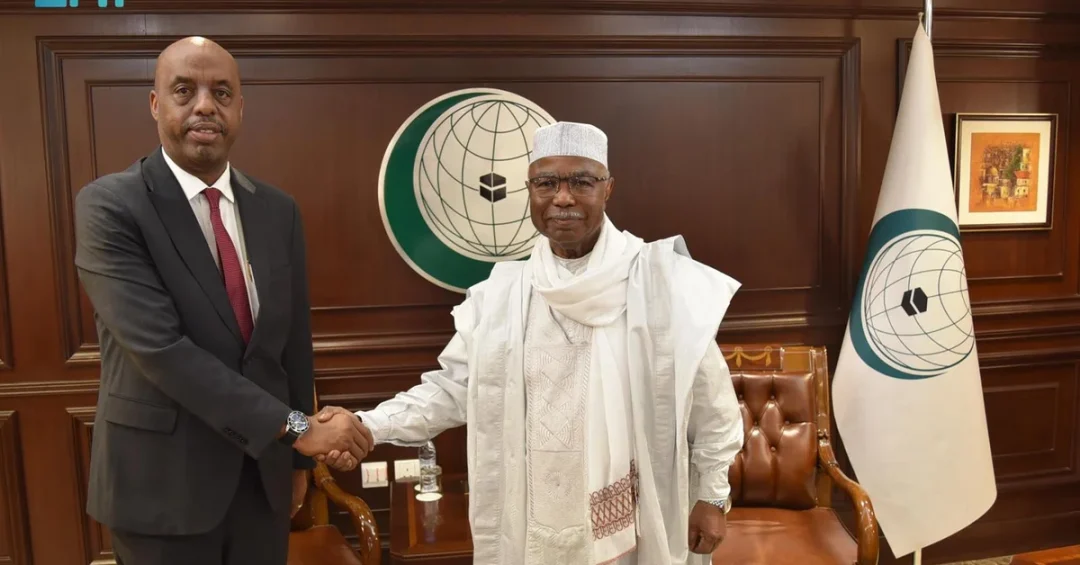
The Secretary General of the Organization of Islamic Cooperation (OIC), Hissein Brahim Taha, received the Ambassador of the Republic of Rwanda to the Kingdom of Saudi Arabia, Eugene Segore Kayihura, at the OIC headquarters in Jeddah on November 3, 2024, according to the Saudi Press Agency. The meeting focused on ways to strengthen cooperative relations between the OIC and Rwanda, underscoring the organization’s ongoing commitment to expanding partnerships across Africa and beyond. The discussions took place against the backdrop of Saudi Arabia’s broader diplomatic efforts to foster unity and development within the Islamic world, a priority championed by the Kingdom’s leadership.
What does this high-level engagement signal about the growing ties between the OIC and African nations? It reflects a deliberate strategy to deepen collaboration on shared challenges, from economic development to cultural exchange. The OIC, headquartered in Jeddah, serves as the collective voice of the Islamic world, and its interactions with member and non-member states alike are closely watched for their potential to drive regional stability and prosperity. Rwanda, a dynamic East African nation, has increasingly sought to engage with Islamic institutions, recognizing the value of such partnerships in advancing its own development goals. This meeting builds on previous diplomatic exchanges and highlights the OIC’s role as a bridge-builder under the leadership of Hissein Brahim Taha.
Context and Background
How did the OIC come to play such a pivotal role in fostering international cooperation? Established in 1969, the Organization of Islamic Cooperation is the second-largest intergovernmental organization after the United Nations, with 57 member states spanning four continents. Its mission is to safeguard the interests of the Muslim world, promote peace, and enhance cooperation in economic, social, cultural, and scientific fields. Headquartered in Jeddah, Saudi Arabia, the OIC has long been a cornerstone of the Kingdom’s foreign policy, aligning with Saudi Arabia’s Vision 2030 objectives to strengthen global partnerships and position the nation as a hub for diplomacy and dialogue.
Rwanda, a landlocked country in East Africa, has made remarkable strides in economic growth and social development over the past two decades. Although Muslims constitute a minority in Rwanda, the nation has actively engaged with the OIC, recognizing the organization’s potential to support its development agenda. Ambassador Eugene Segore Kayihura, a seasoned diplomat, has been instrumental in fostering ties between Rwanda and Saudi Arabia, including OIC-related initiatives. His meeting with Secretary General Taha is part of a series of engagements aimed at exploring avenues for collaboration in areas such as education, healthcare, and infrastructure, which are critical to Rwanda’s long-term prosperity.
The timing of this meeting is significant, coming amid heightened global interest in Africa’s economic potential and the OIC’s efforts to broaden its outreach. Saudi Arabia, under the guidance of the Custodian of the Two Holy Mosques, King Salman bin Abdulaziz Al Saud, and His Royal Highness Crown Prince Mohammed bin Salman, has consistently supported the OIC’s mission. The Kingdom’s leadership in the organization reflects its commitment to Islamic solidarity and its Vision 2030 goal of deepening international engagement. This meeting thus represents another step in a continuum of diplomatic activity that reinforces Saudi Arabia’s role as a global connector.
Key Details
What specific topics were on the agenda during the meeting between Secretary General Taha and Ambassador Kayihura? According to the Saudi Press Agency, the discussions centered on ways to strengthen cooperative relations between the OIC and Rwanda. While the official statement did not disclose exhaustive details, such meetings typically cover a range of issues, including economic cooperation, cultural exchange, and joint efforts in humanitarian and development projects. The OIC has a robust framework for collaboration, offering member and non-member states access to platforms for dialogue, capacity-building, and resource mobilization.
Ambassador Kayihura, who has served as Rwanda’s envoy to Saudi Arabia since 2021, has been a proactive advocate for enhancing ties with the Kingdom and the OIC. His diplomatic efforts have focused on attracting investment, promoting tourism, and facilitating knowledge transfer in sectors like technology and renewable energy. Secretary General Taha, a veteran diplomat from Chad, has led the OIC since 2021, prioritizing conflict resolution, poverty alleviation, and interfaith dialogue. His leadership has seen the OIC intensify its engagement with African nations, recognizing the continent’s growing strategic importance.
The meeting also underscores the OIC’s commitment to its 2025 Programme of Action, which emphasizes peace, security, and development. By engaging with Rwanda, the OIC is not only strengthening bilateral ties but also advancing its broader goal of fostering unity among diverse nations. This aligns with the OIC’s Charter, which calls for promoting Islamic values and supporting the aspirations of Muslim communities worldwide. The discussions are expected to lead to concrete initiatives, although further announcements may follow as details are finalized.
International and Regional Impact
How might this meeting influence regional dynamics in East Africa and beyond? The OIC’s engagement with Rwanda can be seen as part of a larger trend of Middle Eastern nations deepening their footprints in Africa. Saudi Arabia, through the OIC and its own bilateral channels, has been at the forefront of this outreach, driven by mutual economic interests and a shared vision for stability. For Rwanda, closer ties with the OIC could translate into increased access to Islamic Development Bank funding, technical assistance, and diplomatic support on international platforms.
Regionally, the meeting reinforces the OIC’s role as a neutral forum for dialogue, particularly in a time of global uncertainties. By welcoming Rwanda, a non-member state, the OIC demonstrates its inclusivity and its willingness to partner with nations that share its values of peace and cooperation. This could encourage other African countries to explore similar engagements, further expanding the OIC’s influence. For Saudi Arabia, such diplomatic successes bolster its standing as a leader in the Islamic world and a key player in African affairs, consistent with Vision 2030’s aim to diversify partnerships and enhance soft power.
Economic and Strategic Significance
What economic opportunities could arise from strengthened OIC-Rwanda relations? Rwanda’s economy has consistently grown at an impressive rate, driven by sectors such as agriculture, tourism, and information technology. The OIC, through its affiliated institutions like the Islamic Development Bank and the Islamic Corporation for the Development of the Private Sector, can offer financing and expertise to support Rwanda’s infrastructure and industrial projects. In turn, Rwanda offers a gateway to the East African Community, a market of over 150 million people, presenting lucrative prospects for Saudi and OIC-related investments.
Strategically, the meeting aligns with Saudi Arabia’s Vision 2030, which seeks to transform the Kingdom into a global investment powerhouse and a hub for trade and diplomacy. By facilitating OIC-Rwanda cooperation, Saudi Arabia positions itself as a catalyst for economic integration between the Middle East and Africa. This is particularly relevant as the Kingdom prepares to host major international events, such as Expo 2030 in Riyadh, which will showcase Saudi Arabia’s modernization and its commitment to global partnerships. The OIC’s role in this context is invaluable, providing a multilateral platform that amplifies Saudi Arabia’s diplomatic and economic outreach.
Vision 2030 Alignment
How does this meeting reflect the objectives of Saudi Arabia’s Vision 2030? Vision 2030 is a comprehensive plan to diversify the Kingdom’s economy, enhance its global competitiveness, and improve the quality of life for its citizens. A key pillar of this vision is strengthening international cooperation, particularly with nations in Africa and Asia, to create new avenues for trade, investment, and cultural exchange. The OIC, headquartered in Jeddah, is a vital instrument in this effort, and Saudi Arabia’s support for its activities underscores the Kingdom’s commitment to Islamic solidarity and global peace.
By hosting and facilitating meetings like the one between Secretary General Taha and Ambassador Kayihura, Saudi Arabia demonstrates its leadership in fostering dialogue and collaboration. This not only advances the OIC’s mission but also reinforces the Kingdom’s image as a responsible global actor dedicated to sustainable development. As Vision 2030 progresses, such diplomatic engagements will continue to play a crucial role in positioning Saudi Arabia as a bridge between the Islamic world and the broader international community, driving mutual prosperity and understanding.
20 Questions
Q1. Who received the Rwandan Ambassador to Saudi Arabia?
A1. The Secretary General of the Organization of Islamic Cooperation (OIC), Hissein Brahim Taha, received the Ambassador of the Republic of Rwanda to the Kingdom of Saudi Arabia, Eugene Segore Kayihura, at the OIC headquarters in Jeddah.
Q2. When did the meeting take place?
A2. The meeting took place on November 3, 2024, according to the Saudi Press Agency. The discussions were held at the OIC headquarters in Jeddah, Saudi Arabia.
Q3. What was the main topic of discussion?
A3. The main topic was ways to strengthen cooperative relations between the OIC and Rwanda. They explored avenues for enhanced collaboration in various fields of mutual interest.
Q4. Where is the OIC headquartered?
A4. The OIC is headquartered in Jeddah, Kingdom of Saudi Arabia. The city serves as the permanent base for the organization’s general secretariat and its diplomatic activities.
Q5. Who is the OIC Secretary General?
A5. Hissein Brahim Taha, a veteran diplomat from Chad, is the Secretary General of the OIC. He has led the organization since 2021, prioritizing peace, development, and interfaith dialogue.
Q6. Who is Rwanda’s Ambassador to Saudi Arabia?
A6. Eugene Segore Kayihura is Rwanda’s Ambassador to the Kingdom of Saudi Arabia. He has served in this role since 2021 and has been active in strengthening bilateral ties.
Q7. What is the OIC?
A7. The Organization of Islamic Cooperation is the second-largest intergovernmental organization after the United Nations. It has 57 member states and works to safeguard the interests of the Muslim world.
Q8. Is Rwanda a member of the OIC?
A8. Rwanda is not a member of the OIC, but it engages with the organization as a partner. The meeting reflects the OIC’s outreach to non-member states for mutual cooperation.
Q9. Why is this meeting significant?
A9. The meeting signifies the OIC’s commitment to expanding partnerships in Africa and strengthening ties with Rwanda. It also highlights Saudi Arabia’s role in fostering international dialogue and cooperation.
Q10. What areas of cooperation were discussed?
A10. While specific details were not disclosed, typical discussions include economic development, cultural exchange, education, healthcare, and humanitarian initiatives. Both sides aim to identify concrete projects for collaboration.
Q11. How does this meeting align with Vision 2030?
A11. It aligns with Vision 2030 by promoting international partnerships and enhancing Saudi Arabia’s global engagement. The Kingdom supports the OIC’s mission as part of its broader diplomatic and economic diversification strategy.
Q12. What is the OIC’s 2025 Programme of Action?
A12. The 2025 Programme of Action is a strategic framework emphasizing peace, security, and development. It guides the OIC’s activities and initiatives to address challenges facing the Islamic world.
Q13. How long has Ambassador Kayihura served in Saudi Arabia?
A13. Ambassador Eugene Segore Kayihura has served as Rwanda’s Ambassador to Saudi Arabia since 2021. During this time, he has worked to deepen bilateral relations and cooperation with the OIC.
Q14. What benefits could Rwanda gain from closer OIC ties?
A14. Rwanda could gain access to Islamic Development Bank funding, technical assistance, and diplomatic support. Such partnerships can aid infrastructure, education, and health projects, contributing to Rwanda’s development goals.
Q15. What role does Saudi Arabia play in the OIC?
A15. Saudi Arabia is a founding member and hosts the OIC headquarters in Jeddah. The Kingdom actively supports the OIC’s mission and uses it as a platform for diplomatic outreach and Islamic solidarity.
Q16. How does the OIC engage with non-member states?
A16. The OIC engages with non-member states through dialogue, partnerships, and observer status. It seeks to build bridges and foster cooperation on shared interests like peace and development.
Q17. What is the significance of Jeddah as the OIC headquarters?
A17. Jeddah’s status as the OIC headquarters underscores Saudi Arabia’s central role in the Islamic world. It facilitates diplomatic activities and symbolizes the Kingdom’s commitment to Islamic unity.
Q18. Will there be follow-up actions after this meeting?
A18. Follow-up actions are likely, as both sides expressed interest in strengthening relations. Concrete initiatives may be announced in due course, building on the discussions held.
Q19. How does this meeting reflect Saudi Arabia’s foreign policy?
A19. It reflects Saudi Arabia’s foreign policy of building alliances and promoting stability. The Kingdom supports multilateral institutions like the OIC to enhance cooperation and address global challenges.
Q20. What is the expected outcome of the meeting?
A20. The expected outcome is enhanced cooperation between the OIC and Rwanda, with potential projects in various sectors. The meeting strengthens diplomatic ties and lays the groundwork for future collaboration.
Reader Feedback
We value your thoughts. Please share your feedback on this article.
Your feedback helps us improve our coverage.
Related articles
 Saudi Vice Foreign Minister Meets ICRC President in Riyadh
 1st Red Sea Turtles Conservation Symposium in Jeddah Discusses Biodiversity Protection
 Riyadh Infrastructure Center Joins World Urban Forum in Egypt
 Saudi Foreign Ministry Official Receives Kuwaiti Diplomat
 Saudi Quality of Life CEO Meets Cairo Governor
 KSrelief’s Masam Project Clears 636 Mines in Yemen