


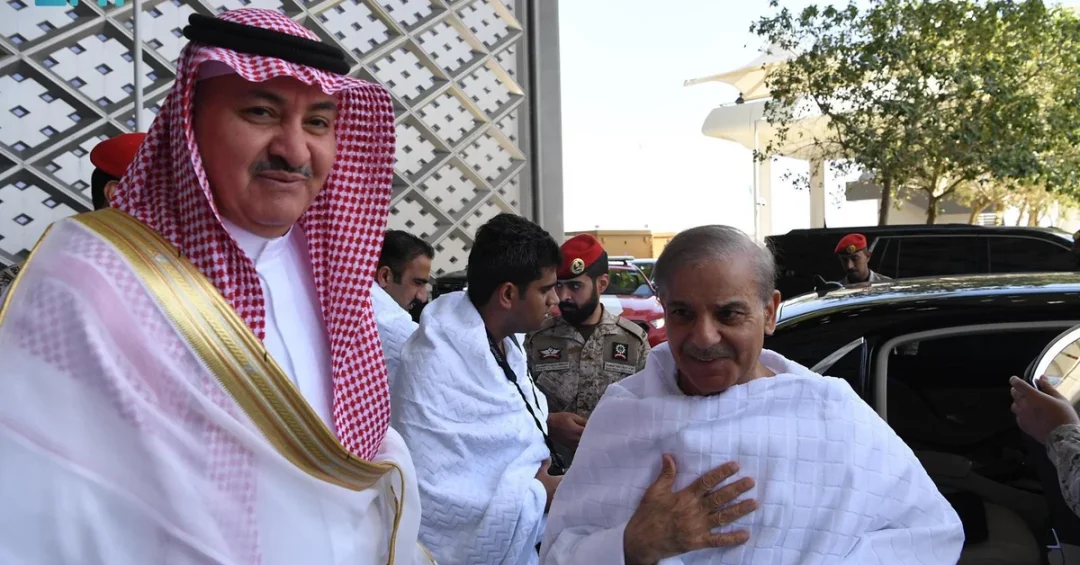
Pakistan’s Prime Minister Muhammad Shehbaz Sharif departed Madinah on Friday, March 21, 2025, traveling to Makkah to perform Umrah rituals, according to the Saudi Press Agency. The official farewell took place at the Haramain High-Speed Railway station, where he was seen off by Saudi Ambassador to Pakistan Nawaf Al-Malki and several other officials. The departure marks a significant moment in the Prime Minister’s visit to the Kingdom, underscoring the enduring spiritual and diplomatic ties between Saudi Arabia and Pakistan. As the leader of one of the world’s largest Muslim populations, Sharif’s journey reflects the deep religious connections that bind the two nations. The visit also highlights Saudi Arabia’s role as a global hub for pilgrimage and its commitment to facilitating seamless travel for dignitaries and pilgrims alike through world-class infrastructure like the Haramain High-Speed Railway.
The Prime Minister’s itinerary includes performing Umrah in Makkah, a pilgrimage that holds profound significance for Muslims worldwide. This visit is part of a broader pattern of high-level exchanges between Saudi Arabia and Pakistan, reinforcing their strategic partnership. Saudi Arabia, under the leadership of the Custodian of the Two Holy Mosques, King Salman bin Abdulaziz Al Saud, and Crown Prince Mohammed bin Salman, continues to prioritize hospitality and ease of access for pilgrims. The Haramain High-Speed Railway, a flagship project of Vision 2030, exemplifies this commitment by connecting Madinah and Makkah efficiently, reducing travel time and enhancing the experience for millions. Sharif’s use of this service underscores the Kingdom’s advanced infrastructure and its dedication to serving guests of God.
Context and Background
Why does the visit of Pakistan’s Prime Minister to Saudi Arabia resonate so deeply across the Islamic world? The relationship between Saudi Arabia and Pakistan is rooted in shared faith, mutual respect, and centuries of cultural exchange. Pakistan, home to over 240 million Muslims, looks to Saudi Arabia as a spiritual heartland and a key ally. Prime Minister Sharif’s visit follows a tradition of frequent high-level engagements, including his previous trips to the Kingdom for religious and diplomatic purposes. In recent years, both nations have strengthened cooperation in areas such as trade, defense, and energy, aligning with Saudi Vision 2030’s goals of economic diversification and global outreach.
The Haramain High-Speed Railway, which facilitated the Prime Minister’s departure, is a testament to Saudi Arabia’s modernization efforts. Spanning 450 kilometers between Madinah and Makkah, this electric railway transports millions of pilgrims annually at speeds up to 300 km/h. It represents a fusion of cutting-edge technology and spiritual service, reducing congestion and enhancing safety. For dignitaries like Sharif, it offers a dignified and efficient mode of travel, reflecting the Kingdom’s attention to detail in hosting VIP guests. This infrastructure is part of a broader strategy to upgrade pilgrimage services, ensuring that all visitors, from heads of state to ordinary worshippers, experience comfort and convenience.
Ambassador Nawaf Al-Malki’s presence at the farewell highlights the diplomatic weight of the occasion. As Saudi Arabia’s envoy to Pakistan, Al-Malki plays a pivotal role in fostering bilateral ties. His attendance signifies the Kingdom’s respect for Pakistan’s leadership and its commitment to maintaining strong relations. Such gestures are common in Saudi diplomacy, where hospitality and protocol are deeply valued. The farewell at the railway station also reflects the seamless coordination between Saudi authorities and foreign dignitaries, ensuring that visits are both spiritually fulfilling and logistically smooth.
Key Details of the Departure and Visit
What specific arrangements ensured the Prime Minister’s smooth transition from Madinah to Makkah? The departure occurred at the Haramain High-Speed Railway station, a modern facility equipped to handle high-profile travelers. Sharif was accompanied by a delegation, though details of his entourage were not disclosed. The Saudi Ambassador to Pakistan, Nawaf Al-Malki, led the send-off, joined by other officials whose roles underscore the collaborative nature of Saudi-Pakistani relations. The timing, on March 21, 2025, coincides with a period of heightened pilgrimage activity, as many Muslims travel to the Kingdom for Umrah during the cooler months.
The Prime Minister’s journey to Makkah for Umrah involves specific rituals performed at the Grand Mosque, including Tawaf (circumambulation of the Kaaba) and Sa’i (walking between the hills of Safa and Marwa). These acts of worship are deeply personal and spiritually enriching, and Saudi authorities ensure that all pilgrims, regardless of status, can perform them with ease. The Kingdom’s pilgrimage management system, overseen by the Ministry of Hajj and Umrah, employs advanced technology and trained personnel to handle millions of visitors annually. Sharif’s visit is a reminder of the sacred trust that Saudi Arabia holds as the custodian of Islam’s holiest sites.
The Haramain High-Speed Railway station in Madinah is a key node in the Kingdom’s transport network. Inaugurated in 2018, the railway has revolutionized travel between the two holy cities, cutting journey times to under three hours. For the Prime Minister, this mode of transport offered privacy, efficiency, and a chance to witness Saudi Arabia’s infrastructural prowess. The station itself features state-of-the-art amenities, including lounges and security systems, designed to accommodate VIPs and large crowds alike. This departure is not just a logistical detail; it symbolizes the synergy between Saudi Arabia’s spiritual mission and its technological advancement.
International and Regional Impact
How does this visit influence Saudi Arabia’s standing in the Muslim world and beyond? Prime Minister Sharif’s presence in the Kingdom reinforces Saudi Arabia’s role as a unifying force for Islamic nations. By hosting leaders from key Muslim countries, the Kingdom demonstrates its commitment to dialogue and cooperation. For Pakistan, the visit strengthens ties with a crucial ally, potentially leading to enhanced economic and security partnerships. Regionally, it sends a message of stability and mutual respect, countering narratives of division. Saudi Arabia’s ability to facilitate such high-profile visits underscores its logistical and diplomatic capabilities.
On the international stage, the visit highlights Saudi Arabia’s soft power and its Vision 2030-driven openness. The Kingdom’s efficient handling of dignitaries like Sharif showcases its modern infrastructure and hospitality, attracting positive attention from global observers. For Pakistan, aligning closely with Saudi Arabia can yield benefits in investment, energy, and diplomatic support. The two nations share common interests in regional stability, counterterrorism, and economic development. Sharif’s Umrah also resonates with millions of Pakistanis, reinforcing the cultural and religious bonds that transcend politics. This visit is a small but significant piece in the mosaic of Saudi-Pakistani relations.
Economic and Strategic Significance
What economic and strategic outcomes might stem from such high-level engagements? Saudi Arabia and Pakistan have a robust economic relationship, with the Kingdom being a major source of remittances and oil supplies for Pakistan. In recent years, Saudi investments in Pakistan have grown, particularly in energy, infrastructure, and mining. Prime Minister Sharif’s visit, though primarily religious, provides an opportunity for informal discussions on deepening these ties. The Kingdom’s Vision 2030 encourages outward investment, and Pakistan offers a large market and strategic location. Enhanced cooperation could boost trade and create jobs, aligning with both nations’ development goals.
Strategically, Saudi Arabia values Pakistan as a partner in promoting regional security and countering extremism. The two countries have a history of military cooperation and intelligence sharing. Sharif’s visit reinforces these ties, signaling continued collaboration. For Saudi Arabia, strong relations with Pakistan contribute to stability in South Asia and the broader Muslim world. The use of the Haramain High-Speed Railway also subtly promotes Saudi technological expertise, potentially opening doors for further infrastructure exports or partnerships. This visit, while brief, carries weight in the long-term strategic calculus of both nations.
Vision 2030 Alignment
How does this event reflect Saudi Arabia’s Vision 2030 ambitions? The Haramain High-Speed Railway is a cornerstone of Vision 2030’s infrastructure goals, designed to improve pilgrimage experiences and boost tourism. By facilitating the travel of dignitaries like Prime Minister Sharif, the Kingdom showcases its ability to blend tradition with modernity. Vision 2030 aims to increase Umrah and Hajj capacity, and such high-profile visits demonstrate the success of these efforts. Moreover, the diplomatic engagement with Pakistan supports the vision’s objective of strengthening international partnerships and enhancing Saudi Arabia’s global image as a leader and innovator.
In conclusion, Prime Minister Sharif’s departure from Madinah and his journey to Makkah for Umrah encapsulate the deep spiritual and diplomatic bonds between Saudi Arabia and Pakistan. The Kingdom’s meticulous arrangements, from the farewell by Ambassador Al-Malki to the use of the Haramain High-Speed Railway, reflect its commitment to excellence and hospitality. As Saudi Arabia continues to advance Vision 2030, such visits will remain vital in fostering goodwill and cooperation. The relationship between the two nations, built on faith and mutual respect, is poised to grow stronger, contributing to peace and prosperity in the region and beyond.
20 Questions
Q1. Who departed from Madinah on March 21, 2025?
A1. Prime Minister Muhammad Shehbaz Sharif of Pakistan departed from Madinah on March 21, 2025, heading to Makkah to perform Umrah rituals, as reported by the Saudi Press Agency.
Q2. Where was the Prime Minister seen off?
A2. He was seen off at the Haramain High-Speed Railway station in Madinah, a modern facility that connects the holy cities of Madinah and Makkah.
Q3. Who attended the farewell ceremony?
A3. Saudi Ambassador to Pakistan Nawaf Al-Malki and several other officials attended the farewell, highlighting the strong diplomatic ties between Saudi Arabia and Pakistan.
Q4. What is the purpose of the Prime Minister’s journey to Makkah?
A4. He is traveling to Makkah to perform Umrah, a non-mandatory pilgrimage that includes rituals such as Tawaf and Sa’i, deeply significant for Muslims worldwide.
Q5. What is the Haramain High-Speed Railway?
A5. The Haramain High-Speed Railway is a 450-kilometer electric railway linking Madinah and Makkah, capable of speeds up to 300 km/h, and serves millions of pilgrims annually.
Q6. How does this visit reflect Saudi-Pakistani relations?
A6. The visit underscores the enduring spiritual and diplomatic ties between the two nations, with Saudi Arabia hosting Pakistan’s leader for religious observance and bilateral engagement.
Q7. Why is the Haramain High-Speed Railway important for Vision 2030?
A7. It is a flagship infrastructure project under Vision 2030, designed to enhance pilgrimage experiences, improve transportation efficiency, and support the Kingdom’s tourism goals.
Q8. What role does Ambassador Nawaf Al-Malki play?
A8. As Saudi Ambassador to Pakistan, Al-Malki fosters bilateral relations and represents the Kingdom’s interests, his presence at the farewell symbolizing Saudi respect for Pakistan’s leadership.
Q9. How does Saudi Arabia facilitate Umrah for dignitaries?
A9. Saudi authorities provide VIP treatment, including efficient transport, security, and logistical support, ensuring that dignitaries can perform rituals with comfort and privacy.
Q10. What are the rituals of Umrah?
A10. Umrah involves Tawaf (circumambulation of the Kaaba), Sa’i (walking between Safa and Marwa), and other prayers, performed at the Grand Mosque in Makkah.
Q11. How many pilgrims does the Haramain Railway serve?
A11. The railway serves millions of pilgrims each year, offering a fast and reliable connection between Madinah and Makkah, reducing travel time and road congestion.
Q12. What economic ties exist between Saudi Arabia and Pakistan?
A12. Saudi Arabia is a major source of remittances and oil for Pakistan, and recent investments have grown in energy, infrastructure, and mining sectors.
Q13. How does this visit impact regional stability?
A13. It reinforces Saudi-Pakistani cooperation on security and counterterrorism, contributing to stability in South Asia and the broader Muslim world.
Q14. What is Vision 2030’s goal for pilgrimage?
A14. Vision 2030 aims to increase Umrah and Hajj capacity, improve services, and enhance the spiritual experience for all visitors to the holy sites.
Q15. When was the Haramain High-Speed Railway inaugurated?
A15. The railway was inaugurated in 2018, marking a major milestone in Saudi Arabia’s transportation infrastructure and pilgrimage management.
Q16. How does Saudi Arabia ensure smooth travel for VIPs?
A16. The Kingdom employs advanced logistics, dedicated personnel, and state-of-the-art facilities like the Haramain Railway to provide seamless and dignified travel for dignitaries.
Q17. What message does this visit send to the Muslim world?
A17. It highlights Saudi Arabia’s role as a unifying host and its commitment to serving Muslims globally, fostering unity and spiritual connection.
Q18. What is the significance of Madinah in Islam?
A18. Madinah is the second holiest city in Islam, home to the Prophet’s Mosque, and a key destination for pilgrims seeking spiritual enrichment.
Q19. How does the railway contribute to Saudi tourism?
A19. By providing fast, comfortable travel between holy cities, the railway boosts tourism and pilgrimage, supporting Vision 2030’s economic diversification goals.
Q20. What future cooperation might arise from this visit?
A20. The visit could lead to deeper economic, security, and diplomatic partnerships, aligning with both nations’ interests and Saudi Vision 2030’s global outreach objectives.
Reader Feedback
We value your thoughts. Please share your feedback on this article.
Your feedback helps us improve our coverage.
Related articles
 Saudi Ministry Distributes 240,000 Quran Copies at Miqat Dhu Al-Hulayfah
 Worshippers Perform Taraweeh and Tahajjud at Prophet’s Mosque
 Weather Forecast for Friday
 Chad President Receives Saudi Vice Foreign Minister
 Al-Sudais Urges Worshippers to Avoid Congestion in Ramadan’s Last 10 Nights
 Mohammed bin Salman Project Renovates Al-Qalaah Mosque