


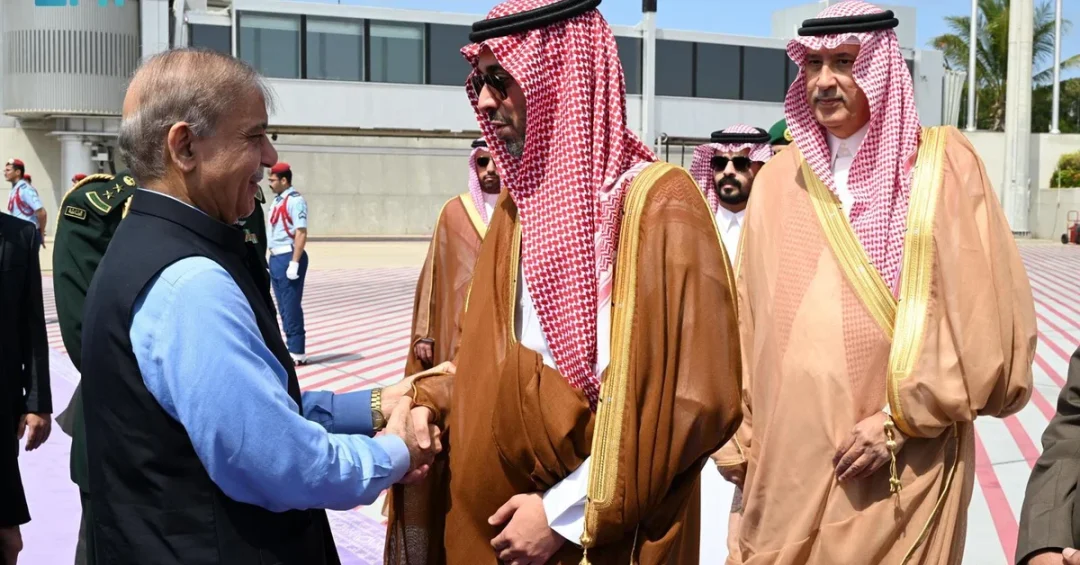
Pakistani Prime Minister Muhammad Shehbaz Sharif departed Jeddah on March 22, 2025, concluding a visit that underscored the deepening partnership between the Islamic Republic of Pakistan and the Kingdom of Saudi Arabia. At King Abdulaziz International Airport, he was seen off by the Governor of Jeddah, Prince Saud bin Abdullah bin Jalawi, along with several other senior officials, according to the Saudi Press Agency (SPA). The official farewell reflects the protocol and importance attached to the visit, which took place amid ongoing high-level engagement between Riyadh and Islamabad.
Could this departure mark the close of a visit that will shape future cooperation across trade, investment, and regional security? The brief SPA announcement did not detail the full agenda of the visit, but the presence of the Jeddah governor at the airport signals the Kingdom’s continued commitment to its longstanding ties with Pakistan. Saudi Arabia and Pakistan share deep historical, religious, and economic connections, and visits by Pakistani leaders regularly focus on enhancing bilateral relations and coordinating on matters of mutual interest. The departure from Jeddah, a city that serves as a gateway for millions of Pakistani pilgrims and workers, adds symbolic weight to the relationship.
Context and Background
What makes the Saudi-Pakistani relationship so enduring in a rapidly changing region? The ties between the Kingdom of Saudi Arabia and Pakistan rest on decades of mutual support, shared Islamic heritage, and strategic alignment. Saudi Arabia has long been a reliable partner for Pakistan, providing economic assistance, energy supplies, and diplomatic backing, while Pakistan has contributed to the security and stability of the Gulf region. The relationship is rooted in the 1960s and has been reinforced through regular summits, military cooperation, and people-to-people exchanges.
In recent years, both nations have sought to expand their partnership beyond traditional areas. Under Saudi Vision 2030, the Kingdom is diversifying its economy and opening new avenues for foreign investment, and Pakistan is seen as a key partner in this effort. The visit by Prime Minister Sharif is part of a series of high-level exchanges that have taken place in 2024 and 2025, including meetings between Saudi Crown Prince Mohammed bin Salman and Pakistani leaders. These engagements have focused on increasing Saudi investment in Pakistan, particularly in energy, infrastructure, and mining.
The timing of the visit is also significant. The region is witnessing shifting geopolitical dynamics, and both countries have emphasized the need for unity among Islamic nations. Saudi Arabia has been playing a leading role in promoting peace and stability, and Pakistan’s support is valued in this context. The departure from Jeddah is thus not merely a ceremonial event but a reflection of a relationship that continues to evolve and deepen.
Key Details
What does the official farewell tell us about the visit’s significance? According to the Saudi Press Agency, Prime Minister Muhammad Shehbaz Sharif was seen off at King Abdulaziz International Airport by Prince Saud bin Abdullah bin Jalawi, the Governor of Jeddah, and several other officials. The presence of such a high-ranking official at the departure is a mark of the respect and importance Saudi Arabia accords to its relationship with Pakistan. While the SPA report did not disclose the specific details of the visit, the fact that the Prime Minister was in Jeddah suggests that discussions likely covered a range of bilateral issues.
Jeddah holds a special place in Saudi-Pakistani relations. It is the primary gateway for Pakistani pilgrims traveling to Makkah for Umrah and Hajj, and it hosts a large Pakistani expatriate community. The city is also a major commercial hub and the headquarters of the Organization of Islamic Cooperation (OIC), which has often served as a platform for Saudi-Pakistani coordination on issues affecting the Muslim world. The choice of Jeddah as the point of departure may reflect the multifaceted nature of the ties, encompassing religious, economic, and diplomatic dimensions.
During his visit, Prime Minister Sharif is believed to have met with Saudi leaders to discuss ways to enhance cooperation in trade, investment, and regional security. Pakistan has been seeking to attract Saudi investment to stabilize its economy, and Saudi Arabia has expressed interest in expanding its economic footprint in Pakistan. The two countries have also been cooperating on defense and counterterrorism, areas where they share common concerns. The departure marks the end of a visit that likely advanced these shared objectives.
International and Regional Impact
How does the Saudi-Pakistani partnership influence the broader region? The relationship between Riyadh and Islamabad has significant implications for regional stability, particularly in South Asia and the Middle East. Saudi Arabia values Pakistan’s strategic location, its military capabilities, and its role in the Islamic world. Pakistan, in turn, relies on Saudi Arabia’s economic support and diplomatic weight. This mutual dependence has helped both countries navigate complex regional challenges, from the situation in Afghanistan to tensions in the Gulf.
The departure of Prime Minister Sharif from Jeddah is a reminder of the continuous diplomatic engagement between the two nations. It also comes at a time when Saudi Arabia is strengthening its ties with other Asian countries, including China and India, as part of its Look East policy. Pakistan is a key part of this outreach, given its geostrategic position and its potential as a market for Saudi goods and investment. The visit and the official farewell are likely to be followed by further high-level exchanges and concrete agreements in the coming months.
From a global perspective, the Saudi-Pakistani partnership contributes to the stability of the Islamic world and to efforts to combat extremism and promote moderate values. Both countries have been vocal in calling for peaceful resolutions to conflicts in the Middle East and South Asia. The departure from Jeddah, therefore, is not just a bilateral event but a small yet meaningful piece of a larger diplomatic mosaic.
Economic and Strategic Significance
What economic benefits could arise from this visit? Saudi Arabia and Pakistan have been working to deepen their economic ties, with a focus on trade, investment, and energy. The Kingdom is a major supplier of oil to Pakistan, and it has provided financial assistance to help Pakistan meet its external obligations. In return, Pakistan offers a large market for Saudi products and a strategic location for trade routes. The visit by Prime Minister Sharif likely included discussions on increasing Saudi investment in Pakistan’s energy sector, including renewable energy projects.
Saudi Vision 2030 aims to diversify the Kingdom’s economy, and Pakistan can play a role in this by providing skilled labor, agricultural products, and investment opportunities. There have been talks about Saudi investment in Pakistan’s mining sector, particularly in copper and gold, as well as in petrochemicals and infrastructure. The departure from Jeddah may signal the conclusion of another round of talks aimed at turning these opportunities into concrete projects. The economic dimension of the relationship is crucial for both countries, as they seek to create jobs and stimulate growth.
Strategically, the partnership helps Saudi Arabia maintain a balance in its foreign policy and ensures that it has a reliable ally in South Asia. For Pakistan, close ties with Saudi Arabia provide diplomatic cover and economic support in times of need. The visit and the farewell at the airport are part of the routine but important diplomacy that sustains this strategic alignment.
Vision 2030 Alignment
How does this visit align with Saudi Vision 2030? Vision 2030 is the Kingdom’s ambitious plan to transform its economy and society, and it includes a strong focus on international partnerships. Saudi Arabia seeks to attract foreign investment, diversify its revenue sources, and enhance its global standing. Pakistan is a natural partner in these efforts, given its historical ties and its potential as a growing market. The visit by Prime Minister Sharif and his departure from Jeddah are part of the ongoing engagement that supports Vision 2030’s goals of economic diversification and global outreach.
Moreover, Vision 2030 emphasizes the importance of the Hajj and Umrah sectors, which bring millions of pilgrims to Saudi Arabia each year. Pakistan is one of the largest sources of pilgrims, and cooperation in this area is vital. The Kingdom has been investing heavily in infrastructure to accommodate more pilgrims, and Pakistan’s support is essential. The departure from Jeddah, a city that serves as the main entry point for pilgrims, highlights the religious dimension of the relationship, which is also a key part of Vision 2030’s cultural and economic objectives.
In conclusion, the departure of Prime Minister Muhammad Shehbaz Sharif from Jeddah marks another chapter in the enduring partnership between Saudi Arabia and Pakistan. As the Kingdom continues its journey toward Vision 2030, such visits reinforce the bonds of friendship and cooperation that will help shape a prosperous future for both nations and the wider region. Could this be a stepping stone to even greater collaboration? The signs point to yes, as both countries remain committed to mutual growth and stability.
20 Questions
Q1. Who is Muhammad Shehbaz Sharif?
A1. Muhammad Shehbaz Sharif is the Prime Minister of the Islamic Republic of Pakistan. He has held the office since 2022 and has been actively engaged in strengthening Pakistan’s relations with Saudi Arabia and other Gulf nations.
Q2. When did Prime Minister Sharif leave Jeddah?
A2. He left Jeddah on March 22, 2025, according to the Saudi Press Agency. The departure took place at King Abdulaziz International Airport, concluding an official visit to the Kingdom.
Q3. Who saw off the Prime Minister at the airport?
A3. He was seen off by Prince Saud bin Abdullah bin Jalawi, the Governor of Jeddah, and several other officials. Their presence underscored the strong ties between Saudi Arabia and Pakistan.
Q4. What is the significance of Jeddah in Saudi-Pakistani relations?
A4. Jeddah is a major gateway for Pakistani pilgrims and hosts a large Pakistani expatriate community. It is also a commercial hub and the headquarters of the Organization of Islamic Cooperation, making it central to bilateral ties.
Q5. What was the purpose of Prime Minister Sharif’s visit?
A5. While the SPA report did not specify, such visits typically involve discussions on trade, investment, energy, and regional security. The visit aimed to enhance cooperation in areas of mutual interest.
Q6. How does Saudi Arabia benefit from its relationship with Pakistan?
A6. Saudi Arabia benefits from Pakistan’s strategic location, military cooperation, and diplomatic support in the Islamic world. Pakistan also provides a market for Saudi goods and a source of skilled labor.
Q7. What economic support does Saudi Arabia provide to Pakistan?
A7. Saudi Arabia has provided financial assistance, oil supplies on deferred payment, and investment in various sectors. This support helps Pakistan stabilize its economy and meet its external obligations.
Q8. Are there any joint projects between the two countries?
A8. Yes, there are several joint projects in energy, infrastructure, and mining. Saudi Arabia has shown interest in investing in Pakistan’s renewable energy and mineral sectors under Vision 2030.
Q9. How does this visit relate to Saudi Vision 2030?
A9. The visit supports Vision 2030’s goals of economic diversification and global outreach. It strengthens partnerships that can bring investment and enhance Saudi Arabia’s role as a regional leader.
Q10. What is the role of the Governor of Jeddah?
A10. The Governor of Jeddah, Prince Saud bin Abdullah bin Jalawi, represents the King in the Jeddah region. His presence at the airport reflects the official respect for the visiting leader.
Q11. How many Pakistanis live in Saudi Arabia?
A11. Over two million Pakistanis reside in Saudi Arabia, contributing to the Kingdom’s economy and maintaining strong people-to-people ties. Many are employed in various sectors, including construction and services.
Q12. What is the history of Saudi-Pakistani relations?
A12. The relationship dates back to Pakistan’s independence in 1947 and has been strengthened through mutual support, shared Islamic values, and regular high-level visits. Saudi Arabia has consistently supported Pakistan.
Q13. Did the visit include meetings with Saudi leaders?
A13. While not detailed in the SPA report, such visits typically include meetings with Crown Prince Mohammed bin Salman and other senior officials to discuss bilateral issues and regional developments.
Q14. What are the key areas of cooperation?
A14. Key areas include energy, trade, investment, defense, counterterrorism, and cultural exchange. Both countries also cooperate on issues affecting the Muslim world through the OIC.
Q15. How does Pakistan support Saudi Arabia’s security?
A15. Pakistan has provided military training and personnel to Saudi Arabia and has participated in joint exercises. Both countries share intelligence and cooperate on counterterrorism efforts.
Q16. What is the OIC’s role in Saudi-Pakistani relations?
A16. The OIC, headquartered in Jeddah, serves as a platform for both countries to coordinate on issues of common concern to the Muslim world, such as Palestine and Afghanistan.
Q17. Will there be follow-up visits?
A17. High-level exchanges between Saudi Arabia and Pakistan are frequent, and further visits are likely. Both countries are committed to maintaining close ties and advancing cooperation.
Q18. How does the international community view this partnership?
A18. The partnership is generally seen as a stabilizing force in the region. It contributes to efforts to promote peace, security, and economic development in the Islamic world.
Q19. What impact does this visit have on regional stability?
A19. The visit reinforces the strategic alignment between two key Islamic nations, which can help address regional challenges and promote dialogue. It supports stability in South Asia and the Middle East.
Q20. What is the future of Saudi-Pakistani relations?
A20. The future looks promising, with both countries committed to deepening ties under Vision 2030 and beyond. Continued cooperation in trade, investment, and security will drive the relationship forward.
Reader Feedback
We value your thoughts. Please share your feedback on this article.
Your feedback helps us improve our coverage.
Related articles
 Saudi Weather Forecast: Rain, Hail, Winds for Saturday
 Moroccan Head of Government Arrives in Madinah
 Saudi Initiative Enriches Grand Mosque Visitor Experience
 Saudi Arabia Apprehends 25,150 Law Violators in a Week
 Rain Blankets Riyadh: Official SPA Report Confirms Heavy Rainfall
 Holy Kaaba Roof Built to Highest International Standards