


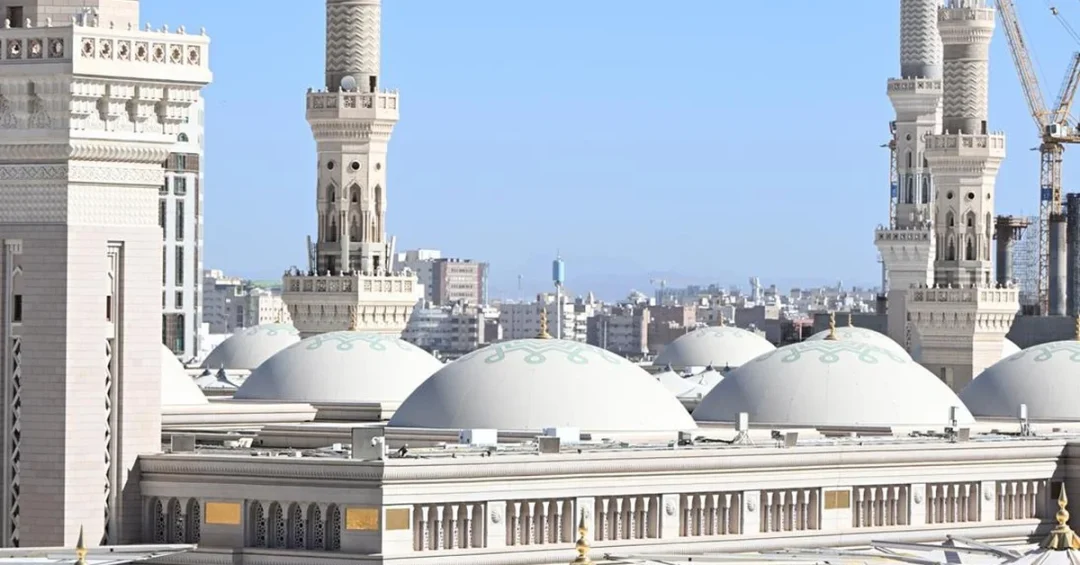
The canopies of the Prophet’s Mosque in Madinah stand as a remarkable fusion of engineering efficiency and aesthetic design, according to official information released by the Saudi Press Agency (SPA). These 250 retractable canopies cover the courtyards surrounding the mosque, spanning 143,000 square meters and providing shade for more than 228,000 worshippers at any given time. The system protects visitors from direct sunlight and rain, ensuring a suitable environment for religious rites and movement under varying weather conditions. Have you ever considered how such a vast shading system operates seamlessly to serve millions of pilgrims annually?
This intricate network is not merely a functional addition but a testament to Saudi Arabia’s commitment to enhancing the pilgrimage experience through advanced technology and thoughtful design. As the Kingdom continues to welcome increasing numbers of worshippers, the canopies play a vital role in maintaining comfort and safety. The system reflects the broader efforts under Vision 2030 to modernize infrastructure and improve quality of life for visitors and citizens alike. How does this project align with the Kingdom’s goals of innovation and hospitality?
Context and Background
Have you ever wondered what makes the Prophet’s Mosque a marvel of modern engineering? The canopies are among its most prominent systems, combining aesthetic appeal with operational efficiency. They are designed to automatically open at sunrise and close before sunset, utilizing sophisticated mechanisms that respond to environmental conditions. This automation ensures that worshippers are shielded during peak sun hours while allowing natural light and ventilation during cooler times. The system is managed through a central control room that monitors operations based on courtyard needs and the number of worshippers.
The development of these canopies is part of a long history of expansion and renovation at the Prophet’s Mosque, which has been a focal point of Islamic heritage for centuries. Saudi Arabia has invested heavily in upgrading facilities to accommodate the growing number of pilgrims. The canopies, installed as part of these efforts, represent a blend of traditional hospitality and cutting-edge technology. They are a key component of the mosque’s infrastructure, ensuring that visitors can perform their religious duties comfortably regardless of weather conditions. What drives the Kingdom to continuously enhance such sacred sites?
The canopies also integrate with other systems, such as drainage and cooling, to provide a holistic solution. This integration is crucial in a region where temperatures can soar, and sudden rains may occur. By combining shade, misting fans, and lighting, the system creates an environment that prioritizes worshipper well-being. The design reflects a deep understanding of the needs of pilgrims, many of whom travel from afar to visit the mosque. How does this attention to detail impact the overall pilgrimage experience?
Engineering Excellence and Operational Details
What does it take to manage 250 canopies covering an area equivalent to about 20 football fields? The system operates through dedicated mechanisms that allow each canopy to open and close automatically. The central control room oversees this process, adjusting based on real-time conditions such as weather and crowd density. This level of automation reduces manual intervention and ensures consistent performance. The canopies are made from durable materials that withstand harsh sunlight and rain, contributing to their longevity and reliability.
In addition to shade, the canopies incorporate 436 misting fans distributed along their sides. Each fan is equipped with 16 nozzles that spray treated water, creating a cooling effect in the surrounding areas. More than 1,000 lighting units are also integrated, providing illumination for evening prayers and enhancing safety. These features work in tandem with the drainage systems to prevent water accumulation and reduce slipping risks during rainfall. How do these elements combine to create a comfortable environment for worshippers?
The engineering behind the canopies involves precise calculations to balance aesthetics with functionality. The design allows for unobstructed views of the mosque’s architecture while providing necessary shade. The retractable nature means they can be adjusted to suit different times of day and weather patterns. This flexibility is essential in Madinah’s climate, where temperatures can vary significantly. The system’s efficiency is a result of extensive research and testing, ensuring it meets the highest standards. What other innovations might be integrated into the mosque’s infrastructure in the future?
International and Regional Impact
How does the Prophet’s Mosque canopy system influence perceptions of Saudi Arabia globally? As one of the most visited religious sites in the world, the mosque attracts millions of pilgrims from diverse backgrounds. The canopies enhance the experience for these visitors, showcasing the Kingdom’s ability to blend tradition with modernity. This project serves as a model for other large-scale public spaces in the region, demonstrating how technology can be used to improve comfort and safety. It also highlights Saudi Arabia’s role as a leader in innovative infrastructure within the Islamic world.
The system’s success contributes to the broader narrative of Saudi Arabia’s Vision 2030, which aims to diversify the economy and improve public services. By investing in such projects, the Kingdom reinforces its commitment to hosting pilgrims and providing world-class facilities. This, in turn, boosts the tourism and hospitality sectors, creating economic opportunities. Regionally, the canopies set a benchmark for similar developments in other countries, fostering knowledge exchange and collaboration. How might this influence future projects in the Middle East and beyond?
Economic and Strategic Significance
What economic benefits arise from enhancing the pilgrimage experience? The canopies indirectly support the local economy by attracting more visitors who spend on accommodation, food, and other services. A comfortable environment encourages longer stays and repeat visits, contributing to the growth of Madinah’s tourism sector. The project also creates jobs in maintenance, operations, and engineering, aligning with Vision 2030’s goal of increasing employment opportunities for Saudi citizens. The use of advanced technologies positions the Kingdom as a hub for innovation in religious tourism.
Strategically, the canopies reinforce Saudi Arabia’s role as the custodian of Islam’s holiest sites. By continuously improving facilities, the Kingdom demonstrates its dedication to serving pilgrims and upholding its religious responsibilities. This enhances its soft power and strengthens diplomatic ties with Muslim-majority countries. The project also showcases the capabilities of Saudi engineers and planners, who are increasingly taking on complex challenges. How does this project contribute to the Kingdom’s long-term strategic objectives?
Vision 2030 Alignment
How does the Prophet’s Mosque canopy system embody the principles of Vision 2030? The initiative aligns with the vision’s focus on enhancing the quality of life for citizens and visitors, promoting sustainable development, and leveraging technology for public benefit. By providing a comfortable and safe environment for worship, the canopies contribute to the spiritual and physical well-being of millions. This reflects the vision’s holistic approach to development, where economic growth is intertwined with social and cultural advancement. The project also underscores the Kingdom’s commitment to preserving its heritage while embracing modernity.
As Saudi Arabia continues to transform under Vision 2030, projects like the canopies serve as tangible examples of progress. They demonstrate how traditional values can be harmonized with cutting-edge solutions to create spaces that inspire and accommodate. The ongoing investment in the Prophet’s Mosque and other holy sites ensures that the Kingdom remains a beacon of hospitality and innovation. In doing so, Saudi Arabia not only fulfills its religious duties but also sets a global standard for excellence in infrastructure and design. What future advancements can we anticipate as the Kingdom marches toward its 2030 goals?
20 Questions
Q1. What are the canopies of the Prophet’s Mosque?
A1. The canopies are 250 retractable shading systems covering the courtyards of the Prophet’s Mosque in Madinah. They span 143,000 square meters and provide shade for over 228,000 worshippers, protecting them from sun and rain.
Q2. How many canopies are there and what area do they cover?
A2. There are 250 canopies covering a total area of 143,000 square meters. This extensive coverage ensures that a large number of worshippers can be accommodated comfortably within the mosque’s courtyards.
Q3. How many worshippers can the canopies shade at once?
A3. The canopies provide shade for more than 228,000 worshippers simultaneously. This capacity is crucial during peak times such as Ramadan and Hajj seasons when millions visit the mosque.
Q4. What is the primary purpose of these canopies?
A4. Their primary purpose is to protect worshippers and visitors from direct sunlight and rain, creating a suitable environment for performing religious rites and moving around the courtyards under varying weather conditions.
Q5. How do the canopies operate?
A5. The canopies operate automatically through dedicated mechanisms that open them at sunrise and close them before sunset. This system is managed by a central control room that monitors operations based on courtyard needs and worshipper numbers.
Q6. What role do the canopies play during rainfall?
A6. During rainfall, the canopies provide extensive covered areas that keep worshippers dry. They work with drainage systems to prevent water accumulation in the courtyards and reduce the risk of slipping.
Q7. What cooling features are integrated into the canopy system?
A7. The system includes 436 misting fans distributed along the sides of the canopies. Each fan has 16 nozzles that spray treated water, creating a cooling effect in the surrounding areas to enhance comfort.
Q8. How many lighting units are part of the canopy system?
A8. There are more than 1,000 lighting units integrated into the canopy system. These provide illumination for evening prayers and enhance safety and visibility in the courtyards.
Q9. How is the canopy system managed?
A9. The system is managed through a central control room that monitors its operation based on courtyard needs and the number of worshippers. This allows for efficient response to changing weather conditions.
Q10. What makes the canopies aesthetically pleasing?
A10. The canopies are designed to combine aesthetic design with operational efficiency. They complement the mosque’s architecture while providing functional shade, enhancing the visual appeal of the courtyards.
Q11. How do the canopies contribute to worshipper safety?
A11. By providing shade and working with drainage systems, the canopies help prevent water accumulation and reduce slipping risks. The integrated lighting also improves visibility, ensuring a safe environment for movement.
Q12. What is the significance of the canopies for pilgrims?
A12. The canopies significantly enhance the pilgrimage experience by offering comfort and protection from the elements. This allows pilgrims to focus on their spiritual activities without being hindered by harsh weather.
Q13. How does the canopy system reflect Saudi Arabia’s Vision 2030?
A13. The system aligns with Vision 2030 by improving quality of life, promoting sustainable development, and leveraging technology for public benefit. It showcases the Kingdom’s commitment to innovation and hospitality.
Q14. What economic benefits does the canopy project bring?
A14. The project supports the local economy by attracting more visitors who spend on services. It also creates jobs in maintenance, operations, and engineering, contributing to employment goals under Vision 2030.
Q15. How does the canopy system impact regional infrastructure standards?
A15. It sets a benchmark for other large-scale public spaces in the region, demonstrating how technology can improve comfort and safety. This fosters knowledge exchange and collaboration in the Middle East.
Q16. What maintenance is required for the canopies?
A16. Regular maintenance is essential to ensure the canopies function efficiently. This includes checking mechanisms, cleaning fans and nozzles, and maintaining lighting units, all managed by dedicated teams.
Q17. How do the canopies handle varying weather conditions?
A17. The canopies automatically adjust based on weather. They open at sunrise and close before sunset, and during rain, they provide cover. The central control room monitors conditions to optimize performance.
Q18. What materials are used in the canopies?
A18. The canopies are made from durable materials that withstand harsh sunlight and rain. These materials are chosen for longevity and reliability, ensuring the system remains effective over time.
Q19. How does the canopy system enhance the mosque’s architecture?
A19. The canopies are designed to complement the mosque’s architecture, adding a modern yet respectful element. They provide shade without obstructing views, enhancing both form and function.
Q20. What future developments might we see for the Prophet’s Mosque?
A20. Future developments may include further technological integrations to improve comfort and sustainability, in line with Vision 2030. The Kingdom continues to invest in enhancing facilities for pilgrims and visitors.
Reader Feedback
We value your thoughts. Please share your feedback on this article.
Your feedback helps us improve our coverage.
Related articles
 Saudi General Staff Chief Confers Medal on Greek Defence Chief
 Interior Ministry: SAR100k Fine for Aiding Residency Violators
 Saudi, Jordanian FMs Discuss Regional Developments
 Qassim Governor Receives Syrian Chargé d’Affaires
 Riyadh Seed Sowing Boosts Saudi Green Initiative
 Madinah Governor Receives Uzbek Consul General