


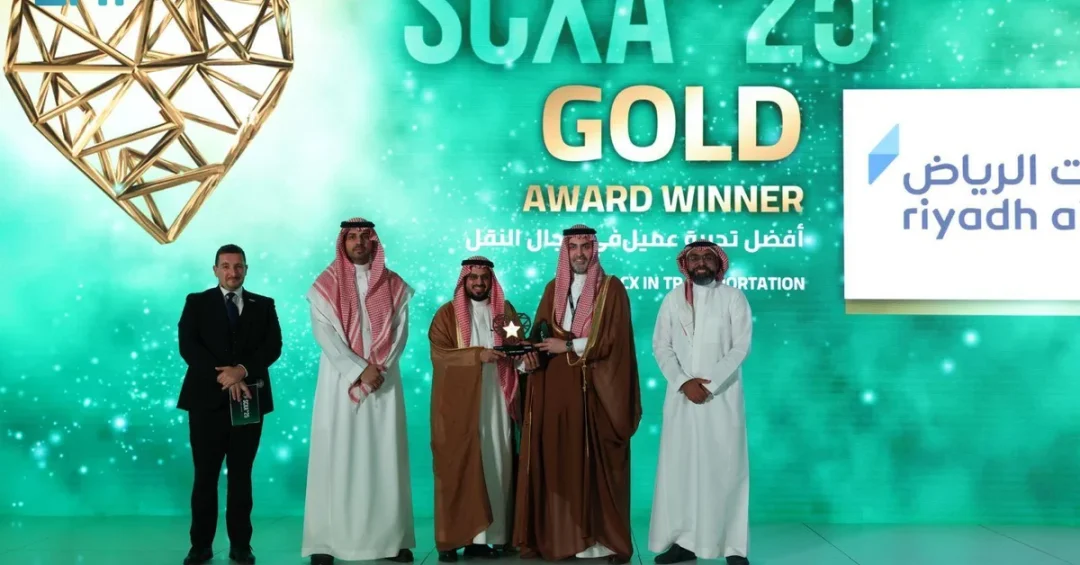
Riyadh Airports Company, the operator of King Khalid International Airport, has been honored with two prestigious awards at the second edition of the Saudi Customer Experience Awards (SCXA) 2025, according to an official announcement released via the Saudi Press Agency (SPA). The company received the Gold Award for Best Customer Experience in Transportation and the Silver Award for Best Business Change and Transformation, recognizing its sustained efforts to elevate service quality across one of the Kingdom’s busiest aviation hubs. The awards were presented during a ceremony that brought together leading public and private sector organizations from across Saudi Arabia, underscoring the growing importance of customer-centric innovation in the national economy.
The recognition arrives as Saudi Arabia accelerates its Vision 2030 transformation, with the aviation and transportation sectors positioned as critical enablers of economic diversification, tourism growth, and global connectivity. King Khalid International Airport, located in the capital Riyadh, serves as a gateway for millions of passengers annually and plays a central role in the Kingdom’s ambitions to become a top-five global aviation market. How does such international recognition reflect the broader modernization journey underway in Saudi Arabia’s aviation landscape? The dual honors suggest that sustained investment in people, processes, and technology is yielding tangible results on the world stage, reinforcing the Kingdom’s reputation for service excellence.
Context and Background
What do these awards signify for the future of airport operations in Saudi Arabia? The Saudi Customer Experience Awards, now in its second edition, is a national platform dedicated to celebrating organizations that demonstrate outstanding commitment to customer satisfaction. According to the Saudi Press Agency, the 2025 edition assessed 27 categories divided into four sections: CX Classic, CX Spotlight, Industry-Specific, and CX Professionals. This structured framework ensures that recognition is based on rigorous evaluation across diverse dimensions of customer experience, from frontline service delivery to strategic transformation initiatives. Riyadh Airports Company’s success in two distinct categories highlights its comprehensive approach to service excellence, spanning both operational performance and organizational change.
Riyadh Airports Company has long been at the forefront of efforts to modernize airport infrastructure and passenger services in the Kingdom. As the operator of King Khalid International Airport, it manages a facility that has undergone significant expansion and upgrading in recent years, including new terminals, advanced security systems, and enhanced retail and dining offerings. These developments are part of a wider national strategy to boost aviation capacity and improve the traveler experience, aligning with the objectives of Vision 2030 to increase passenger numbers and attract international visitors. The SCXA recognition thus serves as an independent validation of the company’s strategic direction and operational execution.
The second edition of the awards also reflects a broader cultural shift in Saudi Arabia, where customer experience is increasingly viewed as a competitive differentiator across all sectors. Government entities and private companies alike are investing in training, technology, and process redesign to meet rising expectations. For Riyadh Airports Company, this environment of continuous improvement has fostered a culture of innovation and accountability, enabling it to stand out among peers. The awards not only celebrate past achievements but also set a benchmark for future performance, encouraging other organizations to raise their own standards.
Key Details
What specific achievements led to this dual recognition? Riyadh Airports Company CEO Ayman A. AboAbah received the awards on behalf of the organization and expressed gratitude for the honor. In remarks carried by the Saudi Press Agency, he stated that the awards are a testament to the company’s leadership, continuous efforts, and commitment to improving the quality of service as a core strategic value. This statement underscores the company’s philosophy that customer experience is not merely a department but a fundamental pillar of its corporate identity. Under AboAbah’s leadership, the company has pursued a multifaceted strategy that combines operational solutions, training programs, and collaborative ventures to ensure the best possible experience for travelers.
The Gold Award for Best Customer Experience in Transportation recognizes excellence in delivering seamless, efficient, and pleasant journeys for passengers passing through King Khalid International Airport. This encompasses everything from check-in and security screening to wayfinding, lounges, and post-flight services. The company has implemented a range of initiatives, including digital self-service options, improved signage, and enhanced staff training, all aimed at reducing friction and enhancing satisfaction. These efforts are particularly important given the airport’s role as a major gateway for religious pilgrims, business travelers, and tourists, each with distinct needs and expectations.
The Silver Award for Best Business Change and Transformation acknowledges the company’s successful implementation of organizational changes that have improved efficiency and adaptability. This could include the adoption of new technologies, restructuring of processes, or the cultivation of a more agile corporate culture. Such transformation is essential in a rapidly evolving aviation landscape, where airports must constantly adapt to changing passenger volumes, security requirements, and industry trends. By earning this award, Riyadh Airports Company demonstrates its ability to manage change effectively while maintaining high service standards, a balance that is notoriously difficult to achieve in large-scale operations.
International and Regional Impact
How does this recognition position Saudi Arabia on the global aviation stage? The Kingdom is investing heavily in aviation as part of its economic diversification strategy, with ambitious targets to increase annual passenger traffic to 330 million by 2030 and expand connectivity to over 250 destinations worldwide. King Khalid International Airport is a key asset in this endeavor, and its operator’s success at the SCXA sends a positive signal to international partners, airlines, and travelers. Awards of this nature enhance the airport’s reputation and can influence airline route decisions, passenger choices, and partnership opportunities. In a competitive regional environment, where Gulf hubs vie for transit traffic, such accolades provide a valuable marketing advantage.
Moreover, the recognition aligns with Saudi Arabia’s broader efforts to position itself as a global leader in service excellence. The Kingdom has hosted numerous international events, including the G20 Summit and major sporting competitions, and is preparing to host Expo 2030 in Riyadh. Each of these undertakings requires world-class hospitality and customer experience, and the lessons learned and standards set by organizations like Riyadh Airports Company contribute to a national ecosystem of excellence. The SCXA itself is part of this ecosystem, providing a platform for knowledge sharing and friendly competition that raises the bar for all participants. As Saudi Arabia opens up to the world, the quality of its airports will be one of the first impressions visitors receive, making this recognition particularly significant.
Economic and Strategic Significance
What does this mean for the Kingdom’s economic ambitions? Aviation is a critical enabler of Vision 2030, supporting tourism, trade, and foreign investment. The government aims to increase the aviation sector’s contribution to GDP and create hundreds of thousands of jobs. Riyadh Airports Company’s ability to deliver superior customer experience directly supports these goals by making Saudi Arabia a more attractive destination and transit point. Satisfied passengers are more likely to return, recommend the airport to others, and spend more on ancillary services, all of which boosts revenue and economic activity. Furthermore, efficient airport operations reduce costs for airlines and improve overall connectivity, creating a virtuous cycle of growth.
The awards also highlight the importance of human capital development in Saudi Arabia. The company’s investment in training programs and collaborative ventures suggests a commitment to upskilling employees and fostering a service-oriented culture. This aligns with Vision 2030’s emphasis on developing a skilled, productive workforce and increasing the participation of Saudi nationals in the private sector. By prioritizing customer experience, Riyadh Airports Company is not only improving service but also creating a model for other organizations to follow. The recognition at SCXA 2025 thus has implications beyond the airport itself, serving as a case study in how strategic investment in people and processes can yield measurable results and national pride.
Vision 2030 Alignment
How does this achievement connect to Saudi Arabia’s long-term vision? Vision 2030 seeks to transform the Kingdom into a global investment powerhouse and a hub connecting three continents. A world-class aviation sector is indispensable to this vision, and the continuous improvement of customer experience at King Khalid International Airport is a direct contribution to that goal. The awards from SCXA 2025 demonstrate that the company is on the right track, delivering on the promise of a seamless and welcoming travel experience that reflects the Kingdom’s hospitality and modernity. As Saudi Arabia prepares for a future of increased tourism and business activity, the role of Riyadh Airports Company will only grow in importance.
Looking ahead, the company is expected to build on this momentum, further enhancing its services and embracing new technologies to meet evolving passenger expectations. The dual honors serve as both a celebration of past achievements and a catalyst for future innovation. Under the leadership of CEO Ayman A. AboAbah, Riyadh Airports Company remains committed to its strategic value of service quality, ensuring that every traveler passing through King Khalid International Airport experiences the best of Saudi Arabia. This dedication not only supports Vision 2030 but also contributes to the Kingdom’s broader goal of becoming a global leader in customer experience across all sectors.
20 Questions
Q1. What awards did Riyadh Airports Company win at the Saudi Customer Experience Awards 2025?
A1. Riyadh Airports Company won the Gold Award for Best Customer Experience in Transportation and the Silver Award for Best Business Change and Transformation at the second edition of the Saudi Customer Experience Awards (SCXA) 2025.
Q2. Who is the CEO of Riyadh Airports Company?
A2. Ayman A. AboAbah is the CEO of Riyadh Airports Company. He received the awards and expressed gratitude for the recognition, highlighting the company’s commitment to service quality.
Q3. What is King Khalid International Airport known for?
A3. King Khalid International Airport is a major gateway in Riyadh, Saudi Arabia, serving millions of passengers annually. It is a key asset in the Kingdom’s aviation strategy and Vision 2030 goals.
Q4. How many categories were assessed in SCXA 2025?
A4. The second edition of SCXA assessed 27 categories divided into four sections: CX Classic, CX Spotlight, Industry-Specific, and CX Professionals, ensuring comprehensive evaluation of customer experience.
Q5. What did CEO Ayman A. AboAbah say about the awards?
A5. He said the awards are a testament to the company’s leadership, continuous efforts, and commitment to improving the quality of service as a core strategic value.
Q6. What initiatives has Riyadh Airports Company implemented to improve customer experience?
A6. The company has implemented operational solutions, training programs, and collaborative ventures to ensure the best customer experience, including digital self-service options and enhanced staff training.
Q7. Why is customer experience important for Saudi Arabia’s aviation sector?
A7. Customer experience is vital for attracting passengers, boosting tourism, and supporting Vision 2030 goals. It enhances the Kingdom’s competitiveness and reputation as a global hub.
Q8. How does this recognition align with Vision 2030?
A8. It aligns with Vision 2030 by supporting the goal of increasing passenger traffic to 330 million by 2030 and enhancing Saudi Arabia’s position as a global investment and tourism destination.
Q9. What is the Saudi Customer Experience Awards (SCXA)?
A9. SCXA is a national platform in Saudi Arabia that celebrates organizations demonstrating outstanding commitment to customer satisfaction. It is now in its second edition.
Q10. What does the Gold Award for Best Customer Experience in Transportation recognize?
A10. It recognizes excellence in delivering seamless, efficient, and pleasant journeys for passengers, encompassing check-in, security, wayfinding, lounges, and post-flight services at King Khalid International Airport.
Q11. What does the Silver Award for Best Business Change and Transformation acknowledge?
A11. It acknowledges successful implementation of organizational changes that improve efficiency and adaptability, such as new technologies, process restructuring, and cultivating a more agile corporate culture.
Q12. How does Riyadh Airports Company’s success impact other Saudi organizations?
A12. It sets a benchmark for service excellence, encouraging other organizations to raise their standards and invest in customer experience, contributing to a culture of continuous improvement across the Kingdom.
Q13. What role does King Khalid International Airport play in Saudi Arabia’s tourism goals?
A13. As a major gateway, it facilitates the arrival of tourists and pilgrims, supporting the Kingdom’s goal to attract 100 million visitors annually by 2030 and enhance the overall travel experience.
Q14. How does the aviation sector contribute to Saudi Arabia’s economy?
A14. Aviation supports tourism, trade, and foreign investment, and aims to increase its GDP contribution and create jobs. Efficient airports reduce costs for airlines and improve connectivity, spurring economic growth.
Q15. What are some examples of operational solutions used by Riyadh Airports Company?
A15. Examples include digital self-service options, improved signage, advanced security systems, and enhanced retail and dining offerings, all aimed at reducing friction and enhancing passenger satisfaction.
Q16. How does the company ensure continuous improvement in customer experience?
A16. Through a culture of innovation, training programs, collaborative ventures, and a strategic focus on service quality as a core value, the company continually adapts to passenger needs and industry trends.
Q17. What is the significance of the awards for Saudi Arabia’s global image?
A17. The awards enhance Saudi Arabia’s reputation for service excellence, positively influencing airline route decisions, passenger choices, and partnerships, and showcasing the Kingdom’s modernization and hospitality.
Q18. How does Riyadh Airports Company support Vision 2030’s human capital development goals?
A18. By investing in training programs and fostering a service-oriented culture, the company upskills employees and increases the participation of Saudi nationals, aligning with Vision 2030’s workforce development objectives.
Q19. What future plans does Riyadh Airports Company have to build on this success?
A19. The company is expected to continue enhancing services, embracing new technologies, and meeting evolving passenger expectations, further contributing to Saudi Arabia’s aviation ambitions and Vision 2030.
Q20. Why is the SCXA recognition important for Saudi Arabia’s aviation strategy?
A20. It validates the Kingdom’s efforts to develop a world-class aviation sector, supports economic diversification, and reinforces Saudi Arabia’s position as a leading global destination for business and tourism.
Reader Feedback
We value your thoughts. Please share your feedback on this article.
Your feedback helps us improve our coverage.
Related articles
 Saudi Architecture Commission Launches Global Training Initiatives
 Saudi Arabia Weather Forecast: Sunday’s Outlook
 SPL Issues SAR3 Stamp Marking World Quality Day
 SAMI Returns as Strategic Partner for Third Saudi International Maritime Forum
 Saudi Arabia Joins IPU Parliamentary Meeting at COP29
 Makkah Pilgrims Housing Committee Issues 1446 AH Permits