


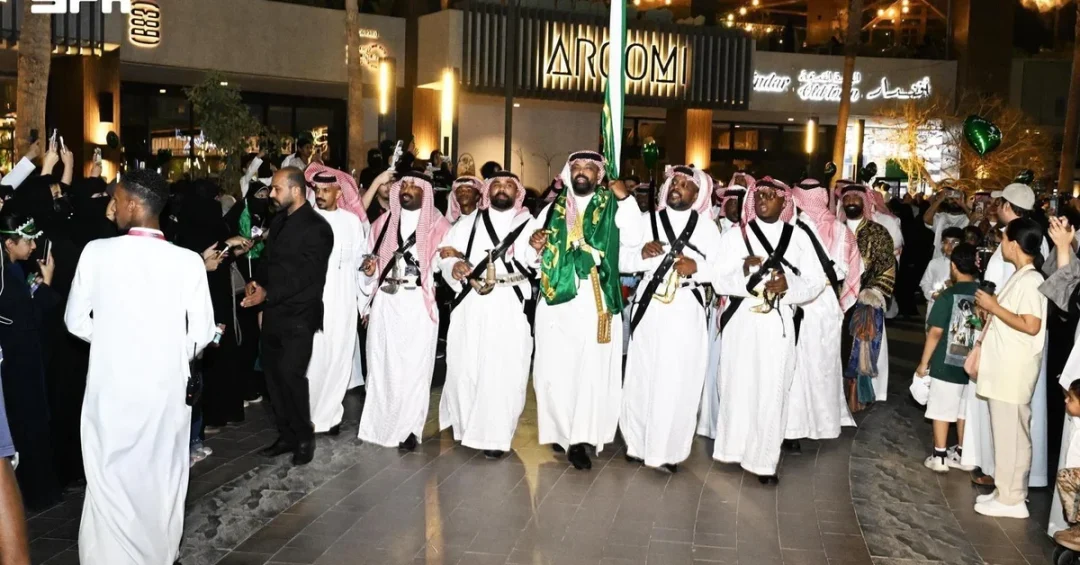
ROSHN Group, Saudi Arabia’s national real estate developer backed by the Public Investment Fund (PIF), organized Saudi National Day celebrations at ROSHN Front in Riyadh, bringing together families, residents, and visitors for a program of heritage and interactive events that runs through September 24, 2026. The celebrations, reported by the Saudi Press Agency (SPA), form part of the wider nationwide observance of Saudi National Day and reflect the developer’s commitment to community life, cultural pride, and the Kingdom’s Vision 2030 quality-of-life objectives.
The event at ROSHN Front, one of the capital’s newest mixed-use destinations, features a cultural parade showcasing the diversity of Saudi heritage, fountain shows accompanying performances by the Saudi National Orchestra, traditional Samri performances, Saudi hospitality, and family activities designed for all ages. Have you ever wondered how a modern real estate developer can become a custodian of national heritage? The answer, according to organizers, lies in creating public spaces where the past and the future meet. The celebrations continue through September 24, giving residents and visitors an extended opportunity to participate in the festivities.
Context and Background
Why does a National Day celebration matter beyond the fireworks and parades? Saudi National Day, observed every September 23, commemorates the unification of the Kingdom by the late King Abdulaziz Al Saud in 1932. It has evolved into a nationwide occasion for citizens and residents to express pride in the country’s history, achievements, and future ambitions. In recent years, under the leadership of the Custodian of the Two Holy Mosques King Salman bin Abdulaziz Al Saud and His Royal Highness Crown Prince Mohammed bin Salman bin Abdulaziz Al Saud, the occasion has increasingly showcased the Kingdom’s rapid transformation and its Vision 2030 reform agenda.
ROSHN Group was established in 2020 as a PIF-backed national developer with a mandate to deliver integrated, high-quality communities across the Kingdom. Its developments, including Sedra, Warefa, and Al Arous in Riyadh, Al Fulwa in the Eastern Province, and Marafy in Jeddah, are designed around walkability, green spaces, and community amenities. ROSHN Front, located within the King Khalid International Airport area of Riyadh, has become a landmark destination that combines retail, dining, entertainment, and public events. Hosting National Day celebrations there aligns with the company’s broader goal of fostering social cohesion and national identity in the communities it builds.
The choice of ROSHN Front as a venue is also a statement about how Saudi Arabia’s new urban developments are being positioned as civic and cultural hubs, not merely residential or commercial projects. By opening its flagship destination to families for a multi-day national celebration, ROSHN is signaling that its communities are designed for shared experiences, public participation, and intergenerational connection. That approach mirrors a wider shift in Saudi urban planning, where public realm quality, walkability, and cultural programming are treated as essential components of livability rather than optional extras.
Key Details of the Celebration
What exactly can visitors expect on the ground? According to the Saudi Press Agency, the program at ROSHN Front includes a cultural parade that highlights the diversity of Saudi heritage, with participants representing the many regions and traditions of the Kingdom. Fountain shows are synchronized with performances by the Saudi National Orchestra, creating an audio-visual experience that blends modern production with national music. Samri performances, a traditional folk art form deeply rooted in Saudi and Gulf culture, add a rhythmic, communal dimension to the festivities.
The event also places a strong emphasis on Saudi hospitality, a value central to the Kingdom’s cultural identity. Visitors are welcomed with traditional coffee, dates, and other hallmarks of Saudi generosity, while family activities ensure that children and adults alike find something engaging. The celebrations continue through September 24, following the main National Day observances, allowing more families to attend across multiple days. The Saudi Press Agency reported the event under its official news bulletin, underscoring the institutional support for community-focused national celebrations.
Beyond the headline attractions, the multi-day format reflects a deliberate effort to make national celebrations accessible to a broad cross-section of society, including families with young children, elderly relatives, and visitors from outside Riyadh. Extended programming also supports local businesses and vendors operating within ROSHN Front, giving them a share in the increased footfall that national holidays generate. In this way, the celebration functions simultaneously as a cultural event, a community gathering, and a modest economic stimulus for the surrounding district.
Cultural Heritage as a Pillar of National Identity
How does a modern developer honor traditions that stretch back generations? The inclusion of Samri performances and a heritage parade is significant because it places traditional arts at the center of a contemporary urban setting. Samri, traditionally performed with drums and synchronized movement, is one of the most recognizable expressions of Saudi folk culture. By programming it alongside orchestral music and fountain shows, ROSHN creates a dialogue between heritage and modernity that resonates with the Kingdom’s broader cultural strategy.
Saudi Arabia has invested heavily in preserving and promoting its cultural heritage as part of Vision 2030. The Ministry of Culture, established in 2018, oversees a wide range of initiatives, from the revival of traditional crafts to the establishment of festivals and museums. National Day celebrations at venues like ROSHN Front complement these efforts by bringing heritage directly to the public in an accessible, family-friendly format. The result is a living cultural experience rather than a static exhibition.
Cultural programming of this kind also serves an educational purpose. For younger Saudis growing up in rapidly modernizing cities, events like these offer direct exposure to regional traditions, music, and customs that might otherwise remain abstract. For international residents and visitors, they provide a welcoming entry point into understanding Saudi identity beyond headlines and stereotypes. By making heritage a shared, public experience, ROSHN contributes to the social fabric of the neighborhoods it develops and reinforces the idea that national identity is something to be practiced, not just remembered.
International and Regional Impact
Why should an international audience pay attention to a National Day event in Riyadh? Saudi Arabia’s cultural and entertainment calendar has become a significant element of its global engagement. Events that celebrate heritage while embracing modern production values project an image of a confident, open, and dynamic society. For international investors, tourists, and partners, such celebrations signal stability, social cohesion, and a welcoming environment. They also complement the Kingdom’s broader tourism ambitions, which aim to attract millions of visitors annually by 2030.
Regionally, Saudi National Day celebrations resonate across the Gulf and the wider Arab world, where shared cultural traditions and historical ties create natural affinity. The presence of Saudi hospitality and folk arts at high-profile venues reinforces the Kingdom’s soft power and its role as a cultural leader. For international media and audiences, the event offers a window into how Saudi Arabia balances rapid modernization with respect for tradition, a balance that is central to its national narrative and its Vision 2030 journey.
In addition, the visibility of such events on international news wires and social platforms contributes to destination branding. When global audiences see orchestral performances, fountain shows, and family-friendly heritage programming in Riyadh, the perception of the city shifts from a purely business destination to a culturally rich and livable capital. That perception matters for tourism, talent attraction, and foreign direct investment alike, making cultural programming a strategic asset rather than a purely festive one.
Economic and Strategic Significance
What does a family celebration have to do with economic strategy? ROSHN Group’s role as a PIF-backed developer ties its activities directly to Saudi Arabia’s economic diversification agenda. The company is tasked with increasing homeownership, delivering quality housing, and creating integrated communities that support a growing population. Public events at its destinations raise awareness of its brand and projects, attract footfall to its retail and dining tenants, and strengthen the social contract between developer and resident.
From a strategic perspective, National Day programming supports the quality-of-life objectives that underpin Vision 2030. By investing in public spaces and cultural events, ROSHN contributes to making Saudi cities more livable and attractive. This, in turn, supports the Kingdom’s goals of boosting tourism, retaining talent, and enhancing citizen well-being. The multi-day format also generates economic activity for local businesses, from food and beverage outlets to entertainment providers, amplifying the event’s impact beyond the immediate celebration.
The strategic value extends to how national development companies communicate with the public. Large-scale urban projects can sometimes feel distant or abstract to ordinary citizens, especially when they are still under construction. By hosting accessible, free-to-attend celebrations in completed destinations such as ROSHN Front, the developer turns its master plans into tangible experiences. Families who spend an evening there leave with a positive association between the ROSHN name and national pride, which in turn builds public support for the broader transformation agenda the Kingdom is pursuing.
Vision 2030 Alignment
How does a National Day celebration connect to Saudi Arabia’s long-term vision? Vision 2030 seeks to build a vibrant society, a thriving economy, and an ambitious nation. Events that bring families together, celebrate heritage, and activate public spaces directly support the vibrant society pillar. They also reinforce the ambitious nation pillar by fostering national pride and social cohesion. ROSHN’s mandate to develop integrated communities aligns with the thriving economy pillar by supporting housing, construction, and related sectors.
The celebration at ROSHN Front is therefore more than a seasonal festivity. It is a demonstration of how the Kingdom’s major development initiatives are woven into the social and cultural life of the nation. As Saudi Arabia continues its transformation, such events will remain important touchpoints that connect citizens and residents with the country’s heritage and its future. ROSHN Group’s National Day program stands as a clear example of how Vision 2030 is being translated into everyday experiences that celebrate the Kingdom’s past while building its future.
20 Questions
Q1. What is ROSHN Group?
A1. ROSHN Group is a national real estate developer backed by the Public Investment Fund (PIF). It was established in 2020 to deliver integrated, high-quality communities across Saudi Arabia, supporting homeownership and Vision 2030 quality-of-life goals.
Q2. Where did the National Day celebrations take place?
A2. The celebrations were held at ROSHN Front in Riyadh, a mixed-use destination that combines retail, dining, entertainment, and public spaces. The venue hosted families and visitors for a multi-day program.
Q3. When did the celebrations run?
A3. According to the Saudi Press Agency, the celebrations continued through September 24, 2026, following the main Saudi National Day observances on September 23. The extended format allowed more families to attend.
Q4. What is Saudi National Day?
A4. Saudi National Day, observed every September 23, commemorates the unification of the Kingdom by the late King Abdulaziz Al Saud in 1932. It is a nationwide occasion for citizens and residents to express pride in the country.
Q5. What activities were featured at the event?
A5. The program featured a cultural parade showcasing Saudi heritage, fountain shows with performances by the Saudi National Orchestra, traditional Samri performances, Saudi hospitality offerings, and family activities designed for all ages.
Q6. What is a cultural parade in this context?
A6. A cultural parade is a procession that highlights the diversity of Saudi heritage, with participants representing the Kingdom’s many regions, traditions, and folk arts. It brings national history to life in a public setting.
Q7. What is Samri performance?
A7. Samri is a traditional Saudi and Gulf folk art form performed with drums and synchronized movement. It is one of the most recognizable expressions of Saudi cultural heritage and is often featured at national celebrations.
Q8. Who performed at the event?
A8. The Saudi National Orchestra performed alongside fountain shows, adding a modern orchestral dimension to the celebrations. The orchestra’s participation reflects the Kingdom’s support for national music and cultural institutions.
Q9. What is ROSHN Front?
A9. ROSHN Front is a landmark mixed-use destination in Riyadh developed by ROSHN Group. It includes retail, dining, entertainment, and public event spaces, and serves as a community hub within the King Khalid International Airport area.
Q10. Why is ROSHN hosting National Day events?
A10. ROSHN hosts such events to foster community cohesion, celebrate national identity, and showcase its developments as vibrant public spaces. It aligns with the company’s mandate to build integrated communities under Vision 2030.
Q11. How does the event reflect Saudi hospitality?
A11. The event offers traditional Saudi hospitality, including coffee, dates, and warm welcomes, which are central to the Kingdom’s cultural identity. This reflects the values of generosity and respect for guests.
Q12. Is the event open to all ages?
A12. Yes. The program includes family activities designed for all ages, ensuring children, adults, and elderly visitors can participate. This inclusive approach supports social cohesion and community engagement.
Q13. What is the significance of the multi-day format?
A13. The multi-day format allows more families to attend across different days, reduces crowding, and supports local businesses at ROSHN Front. It also extends the economic and social benefits of the celebration.
Q14. How does this event align with Vision 2030?
A14. The event supports Vision 2030’s vibrant society pillar by celebrating heritage and bringing families together. It also supports the ambitious nation pillar by fostering national pride and social cohesion.
Q15. What role does the PIF play in ROSHN?
A15. The Public Investment Fund is the sovereign wealth fund backing ROSHN Group. PIF’s support enables large-scale development projects that contribute to economic diversification and housing goals.
Q16. How does the event benefit the local economy?
A16. The event attracts footfall to retail and dining outlets at ROSHN Front, supporting local businesses and vendors. It also generates demand for services and entertainment during the National Day period.
Q17. What is the Saudi Press Agency’s role?
A17. The Saudi Press Agency (SPA) is the Kingdom’s official news agency. It reported the ROSHN National Day celebrations, providing verified information to domestic and international audiences.
Q18. How does this event project Saudi Arabia internationally?
A18. The event projects an image of a confident, open, and culturally rich society. It complements tourism and investment promotion efforts by showcasing Riyadh as a livable and welcoming capital.
Q19. What other ROSHN communities exist?
A19. ROSHN’s portfolio includes Sedra, Warefa, and Al Arous in Riyadh, Al Fulwa in the Eastern Province, and Marafy in Jeddah. These communities are designed around walkability, green spaces, and amenities.
Q20. What does this celebration signal for the future?
A20. It signals that Saudi Arabia’s development projects are increasingly integrated with cultural and community life. As Vision 2030 progresses, such events will remain key touchpoints connecting citizens and residents with national heritage and future ambitions.
Reader Feedback
We value your thoughts. Please share your feedback on this article.
Your feedback helps us improve our coverage.
Related articles
 King Abdulaziz Quran Competition opens in Makkah
 Cyperus macrorrhizus plant highlights King Salman bin Abdulaziz Royal Reserve biodiversity
 Rafha Governorate celebrates Saudi National Day
 Deputy Foreign Minister, ESCWA Chief Discuss Cooperation
 Rafha Residents Celebrate Saudi National Day with Pride
 Saudi, Japanese Diplomats Discuss Bilateral Ties at UN