


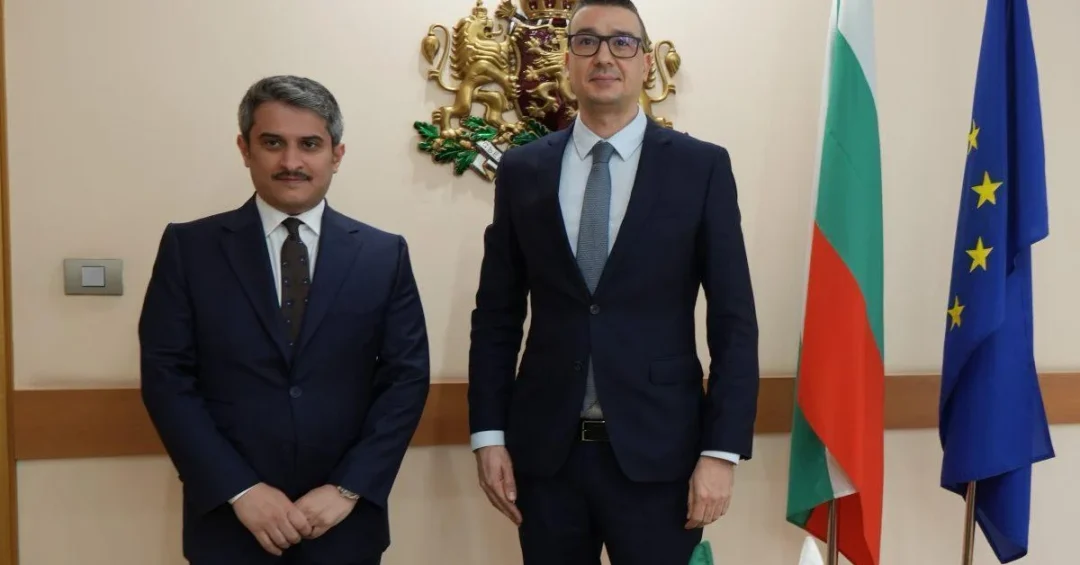
Saudi Ambassador to the Republic of Bulgaria Dr. Rami Al-Otaibi received Bulgarian Minister of Economy and Industry Peter Dilov at the Ministry’s headquarters in Sofia on April 20, 2025, according to the Saudi Press Agency (SPA). The meeting focused on issues of mutual interest, underscoring the growing diplomatic and economic ties between the Kingdom of Saudi Arabia and Bulgaria. The encounter reflects Saudi Arabia’s continued efforts to strengthen international partnerships under the leadership of the Custodian of the Two Holy Mosques, King Salman bin Abdulaziz Al Saud, and His Royal Highness Crown Prince Mohammed bin Salman bin Abdulaziz Al Saud, Prime Minister. As the Kingdom advances its Vision 2030 agenda, such high-level engagements play a vital role in expanding trade, investment, and cooperation across Europe and beyond.
The meeting between Ambassador Al-Otaibi and Minister Dilov comes at a time when Saudi-Bulgarian relations are witnessing renewed momentum. Bulgaria, a member of the European Union and NATO, represents a strategic partner for Saudi Arabia in Eastern Europe, offering access to European markets and opportunities for collaboration in energy, technology, and infrastructure. The discussions in Sofia are part of a broader pattern of Saudi diplomacy aimed at diversifying alliances and fostering economic diversification, a core objective of Vision 2030. While specific outcomes were not disclosed, the mere occurrence of such a high-level meeting signals both nations’ commitment to deepening their bilateral relationship. How might this dialogue translate into tangible benefits for both economies? The answers lie in the continued follow-through and mutual dedication to shared goals.
Context and Background
What does this meeting reveal about the evolving nature of Saudi-Bulgarian relations? Saudi Arabia and Bulgaria have maintained diplomatic ties for decades, but recent years have seen a noticeable uptick in engagement. The Kingdom’s embassies across Europe are increasingly active in facilitating economic diplomacy, aligning with the Vision 2030 goal of expanding non-oil exports and attracting foreign investment. Ambassador Dr. Rami Al-Otaibi, a seasoned diplomat, has been at the forefront of these efforts in Sofia, working to identify synergies between Saudi and Bulgarian businesses. Bulgaria, with its strategic location on the Black Sea and its EU membership, offers a gateway for Saudi goods and services into the broader European market. This meeting is a continuation of that strategic outreach.
Bulgaria’s economy, though smaller than Saudi Arabia’s, is diverse and technologically advanced in certain sectors, including information technology, agriculture, and renewable energy. The Bulgarian Minister of Economy and Industry, Peter Dilov, plays a key role in shaping his country’s economic policies and fostering international trade. His meeting with Ambassador Al-Otaibi suggests a mutual recognition of the potential for increased cooperation. Saudi Arabia, for its part, is actively seeking partners in Europe to support its own economic transformation, particularly in areas such as smart cities, digital infrastructure, and clean energy. The timing of this meeting, just weeks after Saudi Arabia’s participation in various international forums, highlights the Kingdom’s proactive stance in global economic diplomacy.
Historically, Saudi-Bulgarian trade has been modest but steady, with room for significant growth. According to official Saudi sources, the two countries have explored collaboration in agriculture, food security, and tourism. Bulgaria’s expertise in these areas could complement Saudi Arabia’s needs as it seeks to enhance its food security and develop its tourism sector under Vision 2030. Moreover, Bulgaria’s position as a transit country for energy supplies could align with Saudi Arabia’s interests in stabilizing global energy markets. The meeting in Sofia is thus not an isolated event but part of a calculated strategy to build bridges with European nations that can contribute to the Kingdom’s long-term prosperity.
Key Details
What specific issues were on the agenda during the meeting? While the Saudi Press Agency report did not disclose detailed topics, the phrase “issues of mutual interest” typically encompasses trade, investment, energy, and cultural exchange. Given Minister Dilov’s portfolio, economic and industrial cooperation would have been central. The discussion likely touched on opportunities for Bulgarian companies to participate in Saudi Arabia’s mega-projects, such as NEOM and the Red Sea Project, which are open to international expertise. Conversely, Saudi investors might be interested in Bulgaria’s IT sector, logistics, and renewable energy initiatives. The meeting also provided a platform to review existing agreements and explore new avenues for collaboration.
Ambassador Al-Otaibi’s role as Saudi Arabia’s top diplomat in Bulgaria involves not only representing the Kingdom’s interests but also facilitating business connections and promoting cultural understanding. His meeting with Minister Dilov is a testament to the importance Saudi Arabia places on maintaining strong ties with EU member states. Bulgaria, under its current government, has shown openness to deepening relations with Gulf countries, recognizing the mutual benefits. The encounter at the Ministry’s headquarters in Sofia was likely characterized by a constructive exchange of views and a shared commitment to advancing the bilateral agenda. Following the meeting, both sides may instruct their respective teams to follow up on specific proposals, potentially leading to future agreements or visits.
The absence of a detailed joint statement does not diminish the significance of the meeting. In diplomatic practice, such high-level interactions often set the stage for more concrete outcomes. They allow officials to gauge each other’s priorities and build personal rapport, which is essential for successful negotiations. For Saudi Arabia, engaging with Bulgaria is part of a wider outreach to Europe that includes similar meetings in other capitals. The Kingdom’s diplomatic network is instrumental in advancing Vision 2030 by opening doors for Saudi businesses and attracting foreign partners. This meeting is another step in that direction, reinforcing Saudi Arabia’s image as a reliable and forward-looking global player.
International and Regional Impact
How does this meeting fit into the broader geopolitical landscape? Saudi Arabia’s engagement with Bulgaria occurs against the backdrop of shifting alliances in Europe and the Middle East. As the Kingdom deepens its ties with European Union members, it strengthens its position as a bridge between the Gulf and Europe. Bulgaria, with its unique cultural and historical ties to both East and West, can serve as a valuable partner in this regard. The meeting also signals Saudi Arabia’s continued commitment to multilateralism and dialogue, principles that are essential for addressing global challenges such as energy security, climate change, and economic stability. By nurturing relationships with countries like Bulgaria, Saudi Arabia enhances its diplomatic leverage and promotes its vision of a peaceful and prosperous world.
Regionally, the meeting may have implications for the Balkans and the wider Eastern European region. Bulgaria’s role in energy transit, particularly for natural gas, makes it a key player in Europe’s energy security architecture. Saudi Arabia, as a leading energy producer, has a stake in ensuring stable and reliable energy supplies to Europe. Cooperation in this area could be mutually beneficial, with Bulgaria potentially serving as a hub for Saudi energy exports or joint ventures in renewable energy. Furthermore, increased Saudi investment in Bulgaria could stimulate local economic growth and create jobs, fostering goodwill toward the Kingdom. The meeting thus has the potential to catalyze a new phase in Saudi-Bulgarian relations, with positive ripple effects across the region.
Economic and Strategic Significance
What economic opportunities does this meeting unlock? For Saudi Arabia, Bulgaria represents a market of nearly 7 million consumers and a gateway to the EU’s single market of over 450 million. Saudi non-oil exports, ranging from petrochemicals to manufactured goods, could find new customers in Bulgaria and beyond. Conversely, Bulgarian companies can offer advanced technologies in agriculture, food processing, and IT, which align with Saudi Arabia’s goals of economic diversification and digital transformation. The meeting may have explored joint ventures, investment protection agreements, or trade facilitation measures. Such cooperation would contribute to the Kingdom’s Vision 2030 targets of increasing non-oil exports and foreign direct investment.
Strategically, Saudi Arabia’s outreach to Bulgaria is part of a larger effort to build a network of partners that support its security and economic interests. Bulgaria’s membership in NATO and the EU makes it a valuable ally in promoting stability in the Black Sea region and beyond. By strengthening ties with Bulgaria, Saudi Arabia also gains a voice in European discussions on energy, trade, and security. The meeting between Ambassador Al-Otaibi and Minister Dilov is a building block in this strategic architecture. It demonstrates Saudi Arabia’s ability to engage with countries across the political spectrum and to find common ground on issues of mutual concern. As the global order evolves, such partnerships will be crucial for the Kingdom’s continued success.
Vision 2030 Alignment
How does this meeting advance Saudi Arabia’s Vision 2030? Vision 2030 is a comprehensive plan to transform the Kingdom’s economy and society, reducing dependence on oil and creating a diversified, knowledge-based economy. International partnerships are essential to achieving these goals, as they provide access to markets, technology, and expertise. The meeting in Sofia is a direct manifestation of Vision 2030’s international dimension, showcasing Saudi Arabia’s proactive diplomacy and economic outreach. By engaging with Bulgaria, the Kingdom is not only seeking commercial opportunities but also promoting its image as a modern, open, and dynamic nation. This aligns with the Vision’s emphasis on enhancing Saudi Arabia’s global standing and fostering mutual understanding.
Furthermore, the meeting supports specific Vision 2030 objectives, such as increasing non-oil revenue, boosting foreign investment, and developing sectors like tourism and entertainment. Bulgaria’s experience in these areas could offer valuable lessons for Saudi Arabia. For instance, Bulgaria has a thriving tourism industry, particularly along the Black Sea coast, which could inspire Saudi Arabia’s own coastal developments. Additionally, Bulgaria’s IT sector could partner with Saudi tech initiatives, contributing to the Kingdom’s digital transformation. The diplomatic engagement between Ambassador Al-Otaibi and Minister Dilov is thus a small but significant step toward realizing the ambitious goals of Vision 2030, reinforcing Saudi Arabia’s commitment to a prosperous and globally connected future.
20 Questions
Q1. Who received the Bulgarian Minister of Economy and Industry in Sofia?
A1. Saudi Ambassador to Bulgaria Dr. Rami Al-Otaibi received Bulgarian Minister of Economy and Industry Peter Dilov at the Ministry’s headquarters in Sofia on April 20, 2025, as reported by the Saudi Press Agency.
Q2. What was the main purpose of the meeting between the Saudi Ambassador and the Bulgarian Minister?
A2. The meeting focused on discussing issues of mutual interest between Saudi Arabia and Bulgaria, aiming to strengthen bilateral relations and explore opportunities for cooperation in various fields.
Q3. Where did the meeting take place?
A3. The meeting took place at the Bulgarian Ministry of Economy and Industry headquarters in Sofia, the capital of Bulgaria, according to the official Saudi Press Agency report.
Q4. When did the meeting occur?
A4. The meeting occurred on April 20, 2025, as confirmed by the Saudi Press Agency, highlighting the ongoing diplomatic engagement between the two nations.
Q5. Who is Dr. Rami Al-Otaibi?
A5. Dr. Rami Al-Otaibi is the Saudi Ambassador to the Republic of Bulgaria, representing the Kingdom’s interests and working to enhance diplomatic and economic ties between Saudi Arabia and Bulgaria.
Q6. Who is Peter Dilov?
A6. Peter Dilov is the Bulgarian Minister of Economy and Industry, responsible for shaping Bulgaria’s economic policies and promoting international trade and industrial cooperation.
Q7. What does “issues of mutual interest” typically include in such diplomatic meetings?
A7. Issues of mutual interest usually encompass trade, investment, energy, technology, agriculture, tourism, and cultural exchange, all aimed at fostering stronger bilateral relations.
Q8. How does this meeting align with Saudi Arabia’s Vision 2030?
A8. The meeting supports Vision 2030 by promoting international partnerships, economic diversification, and non-oil exports, which are key objectives of the Kingdom’s transformation plan.
Q9. What is the significance of Saudi-Bulgarian relations?
A9. Saudi-Bulgarian relations are significant as they provide Saudi Arabia access to the European market and Bulgaria a partner in the Gulf, enhancing trade, investment, and diplomatic cooperation.
Q10. What economic sectors could benefit from increased Saudi-Bulgarian cooperation?
A10. Sectors such as energy, agriculture, information technology, tourism, and infrastructure could benefit, as both countries seek to diversify their economies and explore new opportunities.
Q11. Did the meeting result in any specific agreements?
A11. The Saudi Press Agency report did not mention any specific agreements, but such meetings often pave the way for future cooperation and follow-up discussions between officials.
Q12. How does Saudi Arabia benefit from engaging with EU member states like Bulgaria?
A12. Engaging with EU member states like Bulgaria helps Saudi Arabia strengthen economic ties, access the European single market, and build alliances that support its Vision 2030 goals.
Q13. What role does the Saudi Ambassador play in promoting Vision 2030 abroad?
A13. The Saudi Ambassador promotes Vision 2030 by facilitating business connections, attracting foreign investment, and showcasing the Kingdom’s modernization and economic opportunities to the host country.
Q14. What is Bulgaria’s position in the European Union?
A14. Bulgaria is a member of the European Union and NATO, located in Southeast Europe, and serves as a strategic gateway between Europe, the Middle East, and Asia.
Q15. How might this meeting impact Saudi-Bulgarian trade?
A15. The meeting could lead to increased trade by identifying new areas of cooperation, facilitating business exchanges, and potentially leading to trade agreements or joint ventures.
Q16. What are some of Saudi Arabia’s key exports that could find markets in Bulgaria?
A16. Saudi Arabia’s key exports include petrochemicals, plastics, metals, and manufactured goods, which could find markets in Bulgaria and the wider European region.
Q17. What are Bulgaria’s main industries that could interest Saudi investors?
A17. Bulgaria’s main industries include information technology, agriculture, food processing, renewable energy, and tourism, which could attract Saudi investment and partnership.
Q18. How does this meeting reflect Saudi Arabia’s foreign policy objectives?
A18. The meeting reflects Saudi Arabia’s foreign policy objectives of building strong international partnerships, promoting economic diversification, and enhancing its global standing as a responsible and proactive nation.
Q19. What might be the next steps following this meeting?
A19. Next steps could include follow-up meetings, exchange of business delegations, feasibility studies for joint projects, and potential agreements in areas of mutual interest.
Q20. Why is this meeting important for Saudi Arabia’s global engagement?
A20. This meeting is important as it demonstrates Saudi Arabia’s commitment to global engagement, strengthens its ties with Europe, and supports the Kingdom’s efforts to diversify its economy and alliances under Vision 2030.
Reader Feedback
We value your thoughts. Please share your feedback on this article.
Your feedback helps us improve our coverage.
Related articles
 Saudi Air Defenses Intercept 18 Drones in Eastern Region
 Prophet’s Mosque Imam Urges Pilgrims to Avoid Disputes
 AlUla Showcases Sustainable Biodiversity Model on World Biodiversity Day
 Jazan Marks World Biodiversity Day as Ecological Model
 Grand Mosque Lighting: Historic Shift from Oil Lamps to Electricity
 2,500 Guests from 104 Countries Arrive for Hajj Program