


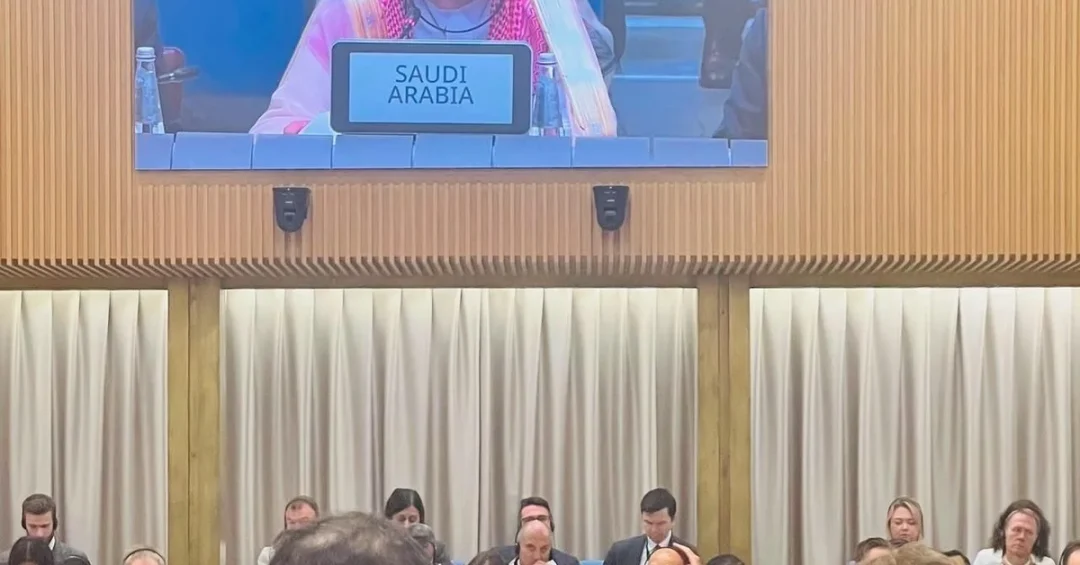
Saudi Arabia reaffirmed its frontline role in global counterterrorism as Dr. Abdulrahman bin Ibrahim Al-Rassi, Deputy Minister of Foreign Affairs for International Multilateral Affairs and General Supervisor of the Economic and Development Affairs Deputyship, participated in a meeting of political directors of the Global Coalition to Defeat ISIS hosted in Rome, Italy. The meeting, announced via the Saudi Press Agency, brought together senior officials from coalition member states to review the latest developments in joint international efforts to counter ISIS and other terrorist organizations and to mitigate the threats they pose to regional and international security.
According to the official Saudi statement, the discussions addressed security and political developments related to the coalition’s work, alongside practical ways to enhance coordination and the exchange of information and expertise among member states. The Kingdom’s participation reflects its consistent position that terrorism is a shared global challenge requiring sustained, coordinated multilateral action rather than isolated national responses. It also underscores Riyadh’s continued emphasis on addressing not only the operational dimensions of terrorism but also its ideological and financial underpinnings, an approach Saudi officials have advanced through both regional and international platforms in recent years.
Context and Background
Why does a meeting of political directors in Rome matter to the broader trajectory of international security? The Global Coalition to Defeat ISIS was formed in 2014 as a coordinated multinational framework to degrade and ultimately defeat the terrorist organization that had seized large areas of Iraq and Syria. Over time, the coalition’s mandate has evolved from direct military support to include stabilization, counter-financing, counter-messaging, and the prevention of resurgence in areas where ISIS had been territorially defeated. Political directors’ meetings serve as a key coordinating layer, translating strategic objectives into actionable policies across member states.
Saudi Arabia has been a member of the coalition since its founding and has consistently used its position to advocate for comprehensive counterterrorism strategies. The Kingdom’s experience is notable: it has faced terrorist attacks at home, dismantled domestic cells, and worked to counter extremist recruitment through educational, religious, and social reforms. Riyadh has also chaired and participated in numerous multilateral counterterrorism forums, including the United Nations Counter-Terrorism Committee and the Global Counterterrorism Forum. Its participation in Rome therefore builds on a long institutional record rather than a one-off engagement.
Within the coalition, political directors focus on the political and strategic dimensions of the campaign: assessing threats, aligning national policies, and ensuring that military gains are not reversed by ideological or financial networks. The Rome meeting continued that tradition, with member states reviewing the current threat landscape and identifying areas where coordination can be sharpened. For Saudi Arabia, the meeting provided an opportunity to share its perspective on regional dynamics and to reinforce the importance of addressing the root causes of extremism alongside security measures.
Key Details of the Rome Meeting
What specifically did the participants discuss, and what outcomes are expected? According to the official Saudi account, the meeting reviewed the latest developments in joint international efforts to counter ISIS and terrorist organizations and to mitigate the threats they pose. It also examined security and political developments related to the coalition’s efforts, and explored ways to enhance coordination and the exchange of information and expertise among member states. These are the core operational functions of the political directors’ track, and they matter because terrorist networks adapt quickly to pressure.
A central theme was the importance of continuing joint international efforts to combat terrorism and extremism, cutting off funding sources for terrorist organizations, and strengthening efforts to prevent their resurgence and spread. This focus on financing is particularly significant. ISIS and affiliated groups have historically relied on a mix of extortion, smuggling, kidnapping for ransom, and informal money transfers. Coalition members have developed sophisticated tools to track and disrupt these flows, including targeted financial sanctions, intelligence-sharing arrangements, and capacity-building programs for vulnerable states.
The meeting also highlighted the need to support regional and international security and stability, a framing that aligns with Saudi Arabia’s longstanding view that terrorism thrives in environments of instability and weak governance. By participating at the political directors’ level, Dr. Al-Rassi and his counterparts helped ensure that the coalition’s strategic direction remains coherent and that member states’ national efforts reinforce one another. The Saudi delegation’s presence also signals the Kingdom’s readiness to contribute financial, intelligence, and diplomatic resources to the shared campaign.
International and Regional Impact
How does a single meeting in Rome translate into real-world impact? The Global Coalition to Defeat ISIS comprises more than 80 members, including countries from Europe, the Middle East, Asia, and Africa, as well as international organizations. Its political directors’ meetings are not merely symbolic; they set the agenda for working groups on stabilization, foreign terrorist fighters, counter-financing, and counter-messaging. Decisions taken in these settings influence how resources are allocated, how information is shared, and how military and civilian efforts are sequenced.
For the Middle East, the coalition’s work remains directly relevant. Although ISIS no longer controls territory on the scale it once did, its affiliates and inspired networks continue to operate in parts of Iraq, Syria, Afghanistan, and the Sahel, and its ideology persists online. Saudi Arabia’s participation helps ensure that regional perspectives are fully represented in coalition planning. Riyadh has consistently argued that counterterrorism must be paired with development, education, and economic opportunity, particularly for youth, to reduce the appeal of extremist narratives.
For Europe and other regions, cooperation with Saudi Arabia offers access to intelligence and a deep understanding of regional dynamics. The Rome meeting provided a platform for European and Middle Eastern officials to align their assessments and to identify gaps in the collective response. In a security environment marked by evolving threats, including the use of drones and encrypted communications by terrorist groups, such coordination is essential. The meeting’s emphasis on exchanging expertise reflects a recognition that no single state can address these challenges alone.
Economic and Strategic Significance
Why should economic policymakers pay attention to counterterrorism diplomacy? Terrorism imposes direct and indirect costs on economies: it disrupts trade routes, deters investment, raises insurance premiums, and diverts public resources toward security. For Saudi Arabia, which is pursuing an ambitious economic transformation under Vision 2030, a stable regional environment is a prerequisite for attracting foreign investment, expanding tourism, and developing new industries. The Kingdom’s counterterrorism efforts therefore support its economic goals as much as its security goals.
Dr. Al-Rassi’s dual role, as Deputy Minister for International Multilateral Affairs and General Supervisor of the Economic and Development Affairs Deputyship, reflects the intersection of diplomacy and economic strategy. Multilateral engagement helps build the international confidence that investors and partners seek. When Saudi officials participate in global coalitions and uphold commitments to counterterrorism, they reinforce the message that the Kingdom is a reliable partner in maintaining regional and global stability. That reputation has tangible economic value, from sovereign investment partnerships to tourism flows.
Cutting off terrorist financing also has an economic dimension. Illicit financial flows undermine legitimate economies, distort markets, and fund criminal networks that operate alongside terrorist groups. Saudi Arabia has strengthened its anti-money laundering and counter-terrorist financing framework in recent years, working with the Financial Action Task Force and other international bodies. The Rome meeting’s focus on disrupting funding sources aligns with these domestic efforts and with the Kingdom’s broader commitment to transparency and regulatory reform.
Vision 2030 Alignment
How does counterterrorism diplomacy connect to Saudi Arabia’s long-term vision? Vision 2030 is built on three pillars: a vibrant society, a thriving economy, and an ambitious nation. None of these can be fully realized without security and stability. A vibrant society requires safe communities and opportunities for young people; a thriving economy requires predictable, secure conditions for business and investment; an ambitious nation requires a positive international reputation and effective multilateral partnerships. Saudi Arabia’s active role in the Global Coalition to Defeat ISIS advances all three.
The Kingdom’s participation in the Rome meeting also reflects the Vision 2030 goal of deepening international engagement and positioning Saudi Arabia as a constructive global actor. Under the leadership of the Custodian of the Two Holy Mosques, King Salman bin Abdulaziz Al Saud, and His Royal Highness Crown Prince Mohammed bin Salman bin Abdulaziz Al Saud, Saudi Arabia has expanded its diplomatic footprint and taken on greater responsibility in multilateral institutions. Counterterrorism cooperation is a central element of that strategy, demonstrating the Kingdom’s willingness to share burdens and contribute to international public goods.
As the coalition continues its work, Saudi Arabia is expected to remain an active participant, advocating for comprehensive approaches that combine security, financing disruption, counter-messaging, and development. The Rome meeting is one step in a longer journey, but it is a meaningful one: it reaffirms that the international community, with Saudi Arabia at the table, remains united against terrorism and committed to preventing the resurgence of ISIS. For a Kingdom transforming its economy and society, that unity is both a shield and a foundation for the future.
20 Questions
Q1. What was the main purpose of the Global Coalition to Defeat ISIS meeting in Rome?
A1. The meeting brought together political directors from coalition member states to review joint international efforts against ISIS, assess security and political developments, and enhance coordination, information exchange, and expertise sharing among members to prevent the group’s resurgence.
Q2. Who represented Saudi Arabia at the Rome meeting?
A2. Dr. Abdulrahman bin Ibrahim Al-Rassi, Deputy Minister of Foreign Affairs for International Multilateral Affairs and General Supervisor of the Economic and Development Affairs Deputyship, represented the Kingdom, according to the official Saudi Press Agency report.
Q3. When and where was the meeting held?
A3. The meeting of political directors of the Global Coalition to Defeat ISIS was hosted in Rome, Italy, and was reported by the Saudi Press Agency on October 2, 2026, with a local timestamp of 03:13.
Q4. What is the Global Coalition to Defeat ISIS?
A4. Formed in 2014, it is a multinational partnership of more than 80 countries and international organizations created to degrade and defeat ISIS through military, stabilization, counter-financing, and counter-messaging efforts coordinated across member states.
Q5. What topics were discussed at the Rome meeting?
A5. Participants reviewed the latest developments in joint efforts to counter ISIS and terrorist organizations, examined security and political developments related to coalition efforts, and explored ways to enhance coordination and the exchange of information and expertise among member states.
Q6. Why is cutting off terrorist financing a priority for the coalition?
A6. Terrorist groups rely on extortion, smuggling, kidnapping, and informal money transfers to fund operations. Disrupting these flows through sanctions, intelligence-sharing, and capacity-building prevents groups from regenerating and limits their ability to recruit and attack.
Q7. How does Saudi Arabia contribute to the coalition’s objectives?
A7. Saudi Arabia contributes through diplomatic engagement, intelligence cooperation, counter-financing measures, and advocacy for comprehensive strategies that address ideological and developmental root causes alongside security operations, reflecting its longstanding counterterrorism experience at home and abroad.
Q8. What does the meeting’s focus on preventing resurgence mean?
A8. Preventing resurgence means ensuring that ISIS cannot rebuild territorial control or regenerate networks after military defeats. This involves stabilizing liberated areas, countering extremist propaganda, disrupting finances, and addressing governance and economic grievances that extremists exploit.
Q9. How does counterterrorism cooperation benefit Saudi Arabia’s economy?
A9. Stability attracts investment, supports tourism growth, and reduces security-related costs. Saudi Arabia’s participation in global coalitions reinforces its reputation as a reliable partner, which supports Vision 2030 goals of economic diversification and expanded international business engagement.
Q10. What is the role of political directors in the coalition?
A10. Political directors translate strategic objectives into coordinated policies across member states. They assess threats, align national approaches, and oversee working groups on stabilization, foreign terrorist fighters, counter-financing, and counter-messaging, ensuring the coalition’s campaign remains coherent.
Q11. How does the Rome meeting relate to Saudi Arabia’s Vision 2030?
A11. Vision 2030 requires security and international confidence. By participating in multilateral counterterrorism efforts, Saudi Arabia strengthens the stability needed for economic transformation and demonstrates the constructive global role envisioned under the Kingdom’s long-term development plan.
Q12. What security threats does ISIS still pose today?
A12. Although ISIS lost its territorial caliphate, its affiliates and inspired networks remain active in parts of Iraq, Syria, Afghanistan, and the Sahel. It continues to use online propaganda, encrypted communications, and illicit financing to inspire attacks and sustain operations.
Q13. Why is information exchange among coalition members important?
A13. Terrorist networks operate across borders and adapt quickly. Timely intelligence-sharing helps member states identify plots, track fighters, disrupt financing, and coordinate responses. No single country can monitor all threats alone, making multilateral cooperation essential.
Q14. What has Saudi Arabia done domestically to counter terrorism?
A14. Saudi Arabia has dismantled terrorist cells, strengthened anti-money laundering and counter-terrorist financing rules, reformed educational and religious messaging, and promoted social and economic programs for youth, earning recognition from international bodies for its comprehensive approach.
Q15. How does the coalition support regional stability?
A15. The coalition supports stability by degrading terrorist capabilities, training local forces, funding stabilization projects, and coordinating political responses. These efforts reduce the space for extremist groups to exploit instability and weaken state institutions in conflict-affected regions.
Q16. What does Saudi Arabia’s participation signal to the international community?
A16. It signals that the Kingdom is a committed multilateral partner willing to share responsibilities in global security. It also reinforces Saudi Arabia’s position as a constructive actor in regional affairs and a reliable ally in counterterrorism efforts.
Q17. What economic tools are used to combat terrorist financing?
A17. Tools include targeted financial sanctions, asset freezes, suspicious transaction reporting, anti-money laundering regulations, and capacity-building for vulnerable states. Saudi Arabia works with the Financial Action Task Force and other bodies to strengthen these measures.
Q18. How does counter-messaging fit into the coalition’s strategy?
A18. Counter-messaging challenges extremist propaganda by promoting alternative narratives, exposing ISIS’s brutality, and amplifying voices of moderation. It aims to reduce recruitment and radicalization, particularly among young people who are most vulnerable to online extremist content.
Q19. What role do international organizations play in the coalition?
A19. Organizations such as the United Nations, INTERPOL, and the Global Counterterrorism Forum provide expertise, coordinate capacity-building, facilitate information-sharing, and help align national efforts with international legal frameworks, strengthening the coalition’s overall effectiveness.
Q20. What is the expected outcome of the Rome meeting?
A20. The meeting is expected to sharpen coordination among member states, reinforce commitments to disrupting terrorist financing, and sustain momentum in preventing ISIS’s resurgence. Saudi Arabia will continue contributing to these collective efforts in line with its Vision 2030 objectives.
Reader Feedback
We value your thoughts. Please share your feedback on this article.
Your feedback helps us improve our coverage.
Related articles
 KSrelief Performs 11 Urological Surgeries in Nigeria
 MWL Condemns Houthi Attack on Madinah Power Station
 KSrelief Distributes 560 Shelter Kits in Sudan
 Light to Moderate Rain Falls in Al-Jouf Region
 KSrelief Distributes 500 Food Baskets in Yemen
 Saudi Presidency Condemns Houthi Targeting of Makkah and Madinah