


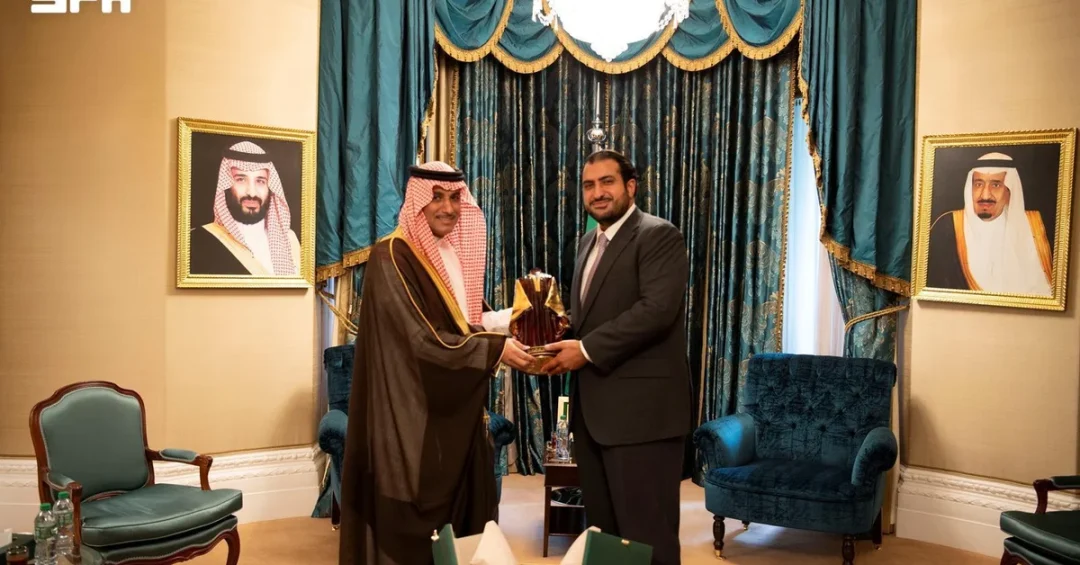
Saudi Ambassador to the United Kingdom Prince Abdullah bin Khalid bin Sultan bin Abdulaziz received President of the Saudi Ports Authority (Mawani) Suliman Almazroua and his delegation in London on November 3, 2026, on the sidelines of the International Maritime Organization (IMO) Council meetings and the World Ports Conference. The high-level meeting underscored the Kingdom’s commitment to advancing its maritime sector and strengthening its role in international maritime governance, according to the Saudi Press Agency (SPA).
Could this meeting mark a significant step in Saudi Arabia’s broader strategy to become a global logistics hub? The discussions focused on enhancing cooperation in the maritime sector and supporting Saudi Arabia’s active engagement in the IMO, the United Nations agency responsible for regulating shipping safety and environmental standards. This engagement aligns with the Kingdom’s Vision 2030, which aims to diversify the economy and position Saudi Arabia as a pivotal player in global trade and transport. The meeting in London highlights the Kingdom’s proactive diplomacy and its determination to shape international maritime policies.
Context and Background
Why is Saudi Arabia placing such emphasis on maritime cooperation with the United Kingdom and international bodies? The meeting between Ambassador Prince Abdullah bin Khalid bin Sultan bin Abdulaziz and Mawani President Suliman Almazroua took place during a critical period for global shipping, as nations grapple with supply chain challenges and environmental regulations. The IMO Council meetings and the World Ports Conference provided a platform for Saudi officials to exchange views with international counterparts and showcase the Kingdom’s rapid port development. Saudi Arabia’s geographical position, bridging Europe, Asia, and Africa, makes its ports vital to global trade routes.
The Kingdom has been investing heavily in port infrastructure, with Mawani spearheading projects to expand capacity and integrate smart technologies. These efforts are part of Vision 2030’s goal to increase non-oil revenues and attract foreign investment. The UK, with its historical maritime expertise and London’s role as a global shipping hub, is a natural partner. This meeting builds on longstanding ties between the two nations, which have cooperated in areas such as defense, energy, and now maritime logistics. The discussions also reflect Saudi Arabia’s desire to play a more prominent role in the IMO, influencing regulations that affect its growing fleet and port operations.
Isn’t it telling that Saudi Arabia is actively participating in these international forums rather than merely observing? The Kingdom’s presence at the IMO Council and World Ports Conference demonstrates its commitment to multilateralism and its willingness to contribute to global maritime safety and sustainability. By engaging with the UK, Saudi Arabia not only strengthens bilateral relations but also gains insights into best practices that can be applied to its own ambitious port projects. This proactive approach is a hallmark of the Kingdom’s modern diplomacy under the leadership of Crown Prince Mohammed bin Salman.
Key Details
What exactly was discussed in the London meeting? According to SPA, Ambassador Prince Abdullah bin Khalid bin Sultan bin Abdulaziz and President Suliman Almazroua addressed ways to strengthen cooperation in the maritime sector and support Saudi Arabia’s presence and engagement in the IMO. The talks aimed to further enhance the Kingdom’s role in the international maritime sector. While specific agreements were not disclosed, the meeting signifies a mutual interest in deepening ties. The Saudi delegation’s participation in the IMO Council meetings, where key decisions on shipping emissions, safety, and security are made, underscores the Kingdom’s intent to be a rule-shaper rather than a rule-taker.
The World Ports Conference, hosted in London, brings together port authorities, shipping lines, and logistics companies to discuss trends and innovations. Mawani’s presence there allowed it to showcase Saudi ports’ progress, including the development of King Abdullah Port, Jeddah Islamic Port, and the upcoming NEOM port. These ports are being equipped with cutting-edge technology to handle increasing container traffic and serve as gateways for trade between East and West. The meeting with the Saudi Ambassador also highlights the diplomatic support for Mawani’s international outreach, ensuring that Saudi maritime interests are well-represented abroad.
How does this meeting translate into tangible outcomes? While the immediate results may be diplomatic, the long-term implications are substantial. Enhanced cooperation with the UK could lead to joint ventures, knowledge exchange, and investment in Saudi maritime infrastructure. The UK’s expertise in maritime law, insurance, and shipbroking could complement Saudi Arabia’s growing capabilities. Furthermore, Saudi Arabia’s active role in the IMO ensures that its voice is heard on issues such as carbon pricing for shipping, which could impact its oil exports. By aligning with like-minded nations, the Kingdom can shape policies that support its economic interests.
International and Regional Impact
What does this meeting signal to the broader Middle East and beyond? Saudi Arabia’s maritime ambitions are not just national; they are regional. As the largest economy in the Arab world, the Kingdom’s port investments can stimulate trade across the Gulf and Red Sea, benefiting neighboring countries. The meeting with the UK reinforces Saudi Arabia’s position as a bridge between Europe and Asia, potentially diverting trade routes from traditional hubs. This could enhance regional integration and create opportunities for Saudi Arabia to become a logistics leader, in line with Vision 2030.
Moreover, the discussions in London come amid heightened global focus on maritime security, particularly in the Red Sea and Strait of Hormuz. Saudi Arabia’s engagement in the IMO helps promote stability and freedom of navigation, which are critical for global energy supplies. By cooperating with the UK, a permanent member of the IMO Council, Saudi Arabia strengthens a key alliance that supports its security and economic interests. This partnership also counters regional adversaries’ influence in international institutions, ensuring that Saudi perspectives are considered in global maritime governance.
Economic and Strategic Significance
Why should international investors and businesses pay attention? Saudi Arabia’s maritime sector is undergoing a transformation. Mawani has announced plans to invest billions in port expansion, aiming to increase container capacity from 20 million TEUs to over 40 million TEUs by 2030. These projects offer lucrative opportunities for foreign companies in construction, technology, and logistics. The meeting with the UK could open doors for British firms to participate in these projects, leveraging their expertise in port management and sustainable practices. The strategic significance lies in Saudi Arabia’s goal to become a global logistics hub, reducing dependence on oil and creating jobs for its young population.
From a geopolitical standpoint, Saudi Arabia’s maritime cooperation with the UK is part of a broader realignment of alliances. The Kingdom is diversifying its partnerships beyond traditional Western allies, but the UK remains a key partner due to historical ties and shared interests. This meeting reinforces that relationship, which is vital as Saudi Arabia navigates a multipolar world. Economically, enhanced maritime cooperation can boost bilateral trade, which already stands at billions of dollars annually. It also supports Saudi Arabia’s ambitions to increase non-oil exports, a core Vision 2030 objective.
Vision 2030 Alignment
How does this meeting advance Vision 2030? Vision 2030 aims to transform Saudi Arabia into a diversified, innovation-driven economy. The maritime sector is a cornerstone of this vision, with the National Industrial Development and Logistics Program (NIDLP) targeting logistics as a key growth engine. By strengthening cooperation with the UK and engaging in the IMO, Saudi Arabia is enhancing its ability to compete globally, attract investment, and create high-skilled jobs. The meeting in London is a microcosm of the Kingdom’s proactive approach to international diplomacy and economic diversification.
What’s next for Saudi maritime ambitions? The Kingdom will continue to invest in world-class ports, digitalize operations, and forge international partnerships. The discussions between Ambassador Prince Abdullah bin Khalid bin Sultan bin Abdulaziz and President Suliman Almazroua set the stage for deeper collaboration with the UK, potentially leading to new agreements in areas like green shipping, maritime training, and port automation. As Saudi Arabia assumes a more prominent role in the IMO, it will help shape a global maritime framework that supports its vision. This meeting is not just a diplomatic courtesy; it is a strategic step toward a future where Saudi Arabia is a leader in global trade and logistics, fulfilling the aspirations of Vision 2030.
20 Questions
Q1. Who received the Mawani President in London?
A1. Saudi Ambassador to the United Kingdom Prince Abdullah bin Khalid bin Sultan bin Abdulaziz received President of the Saudi Ports Authority (Mawani) Suliman Almazroua and his delegation in London on November 3, 2026.
Q2. What event was taking place in London at the time of the meeting?
A2. The meeting occurred on the sidelines of the International Maritime Organization (IMO) Council meetings and the World Ports Conference, which brought together global maritime leaders to discuss industry issues.
Q3. What was the main purpose of the meeting?
A3. The discussions aimed to strengthen cooperation in the maritime sector and support Saudi Arabia’s presence and engagement in the work of the IMO, enhancing its role in the international maritime sector.
Q4. What is Mawani?
A4. Mawani is the Saudi Ports Authority, responsible for developing and managing the Kingdom’s ports, and plays a key role in Saudi Arabia’s Vision 2030 logistics and economic diversification goals.
Q5. Why is Saudi Arabia engaging with the IMO?
A5. Saudi Arabia seeks to influence international maritime regulations, ensure its interests are represented, and contribute to global maritime safety and sustainability, aligning with its growing role as a maritime nation.
Q6. How does this meeting benefit Saudi Arabia’s maritime sector?
A6. The meeting fosters international cooperation, potentially leading to partnerships, knowledge exchange, and investment in Saudi ports, which are undergoing significant expansion to become global logistics hubs.
Q7. What is the significance of the UK in Saudi maritime strategy?
A7. The UK is a historic maritime power with expertise in shipping, insurance, and law. Cooperation with the UK helps Saudi Arabia access best practices and strengthens bilateral ties that support Vision 2030.
Q8. What are Saudi Arabia’s key ports?
A8. Key ports include Jeddah Islamic Port, King Abdullah Port, King Abdulaziz Port in Dammam, and the upcoming NEOM port. These are being modernized to handle increased trade and integrate smart technologies.
Q9. How does this meeting align with Vision 2030?
A9. Vision 2030 aims to diversify the economy and make Saudi Arabia a global logistics hub. The meeting supports this by enhancing international cooperation and promoting Saudi maritime capabilities on the world stage.
Q10. What is the World Ports Conference?
A10. The World Ports Conference is a major international event organized by the International Association of Ports and Harbors (IAPH), where port authorities and stakeholders discuss trends, innovations, and challenges in the port industry.
Q11. What role does the IMO play in global shipping?
A11. The IMO is a United Nations agency that sets international standards for maritime safety, security, and environmental performance, shaping regulations that affect all shipping nations.
Q12. How is Saudi Arabia enhancing its maritime infrastructure?
A12. Saudi Arabia is investing billions in port expansion, digitalization, and smart technologies, aiming to increase container capacity and efficiency, as part of the National Industrial Development and Logistics Program.
Q13. What economic benefits can result from this meeting?
A13. Enhanced cooperation can lead to increased foreign investment, joint ventures, and trade growth, supporting Saudi Arabia’s goal to boost non-oil revenues and create jobs for its citizens.
Q14. Which Saudi official led the delegation to London?
A14. President Suliman Almazroua of the Saudi Ports Authority (Mawani) led the delegation, accompanied by other officials, to participate in the IMO Council meetings and World Ports Conference.
Q15. How does Saudi Arabia’s location benefit its maritime ambitions?
A15. Situated between Europe, Asia, and Africa, Saudi Arabia controls key trade routes like the Red Sea and is poised to become a vital link in global supply chains, enhancing its strategic importance.
Q16. What is the expected impact on regional trade?
A16. Improved Saudi ports can stimulate regional trade by offering efficient alternatives to traditional routes, potentially increasing transit volumes and fostering economic integration in the Gulf and beyond.
Q17. Does this meeting indicate a shift in Saudi foreign policy?
A17. It reflects Saudi Arabia’s proactive multilateral engagement and economic diplomacy, consistent with Vision 2030, rather than a shift. The Kingdom continues to build diverse partnerships for mutual benefit.
Q18. What are the next steps after this meeting?
A18. Follow-up could include formal agreements, joint working groups, and continued Saudi participation in IMO forums. The meeting sets a foundation for deeper collaboration in maritime areas.
Q19. How can international companies engage with Saudi maritime projects?
A19. Companies can explore opportunities through Mawani’s tenders, partnerships with Saudi entities, or by contacting the Saudi Ministry of Transport and Logistic Services, which oversees the sector.
Q20. Why is this meeting important for global audiences?
A20. It highlights Saudi Arabia’s growing role in global maritime governance and trade, offering insights into investment opportunities and the Kingdom’s commitment to a diversified, sustainable future under Vision 2030.
Reader Feedback
We value your thoughts. Please share your feedback on this article.
Your feedback helps us improve our coverage.
Related articles
 Saudi Crown Prince Meets Jordan’s Crown Prince in Riyadh
 Arab Parliament Reaffirms Palestinian Rights
 KSrelief Provides Drinking Water to Displaced Families in Yemen’s Aden
 KSrelief’s Masam Project Clears 2,037 Landmines in Yemen in One Week
 KSrelief Provides Safe Water to 691 Families in Yemen’s Lahj
 Saudi, Greek Defense Ministers Discuss Security Cooperation