


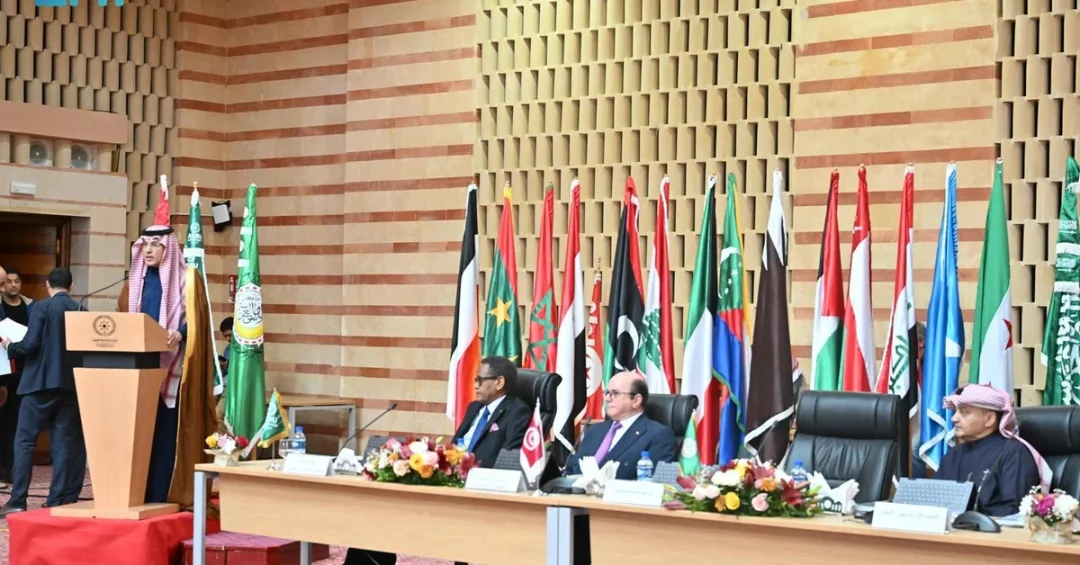
Saudi Arabia chaired the 44th session of the General Assembly of the Arab States Broadcasting Union (ASBU), which commenced on Wednesday, January 15, 2025, in Hammamet, Tunisia, bringing together leaders of Arab broadcasting organizations to strengthen media cooperation across the region. The session was led by ASBU President and Chief Executive of the Saudi Broadcasting Authority (SBA) Mohammed Fahad Al-Harthi, who was joined by ASBU Director-General Abdelrahim Suleiman, heads of Arab bodies within the union, and delegation leaders from member states. The two-day gathering serves as a cornerstone of Arab media diplomacy, providing a structured platform for public broadcasters to align their strategies and address shared challenges. The fact that Saudi Arabia holds the presidency of this influential union underscores the Kingdom’s growing leadership role in shaping the future of regional media and communication, a role that resonates with its broader Vision 2030 ambitions of global engagement and knowledge exchange.
During the opening session, Al-Harthi emphasized that the meeting represents a key opportunity to unify efforts and enhance cooperation between regional and international media institutions in addressing challenges and achieving common goals that benefit societies. His remarks set a collaborative tone for the deliberations, which included a review of ASBU’s activities over the past year and discussions on events and initiatives scheduled for 2025. The agenda reflects a forward-looking approach, focusing not only on operational matters but also on the strategic positioning of Arab media in a rapidly evolving global information landscape. As the session unfolds, participants are expected to explore ways to bolster joint production, technological innovation, and professional training, all of which are essential for maintaining the relevance and credibility of public service broadcasting in the Arab world.
Context and Background
How did the Arab States Broadcasting Union become such a pivotal force in regional media? Established in 1969, the ASBU has grown into a specialized Arab organization within the League of Arab States, dedicated to fostering cooperation among broadcasting entities across the Middle East and North Africa. Its General Assembly, the union’s highest governing body, convenes annually to set policies, approve budgets, and chart the course for collaborative projects. Saudi Arabia’s chairmanship of the 44th session is not an isolated event but part of a sustained leadership role; the Kingdom has long been a major contributor to ASBU’s technical and content initiatives, leveraging its advanced media infrastructure and regional influence. The session in Hammamet marks another chapter in this tradition, highlighting the Kingdom’s commitment to multilateral engagement in the cultural and information spheres.
The location of this year’s assembly, Hammamet, Tunisia, carries symbolic weight as a crossroads of Arab and Mediterranean cultures. Tunisia has historically played a moderating role in regional dialogues, and hosting the ASBU General Assembly there reinforces the union’s pan-Arab character. For Saudi Arabia, participating at the highest level signals its dedication to strengthening Arab solidarity through soft power channels. The Saudi Broadcasting Authority, under Al-Harthi’s leadership, has been at the forefront of modernizing public broadcasting in the Kingdom, integrating digital platforms and expanding international reach. This experience is expected to inform the discussions in Hammamet, where delegates will examine how traditional broadcasters can adapt to the disruptive forces of streaming services and social media while preserving their public service mission.
Over the past year, ASBU has undertaken a range of activities, from organizing training workshops for journalists and technicians to facilitating the exchange of news content and co-productions among member states. These efforts are vital for presenting a unified Arab voice on global issues, countering misinformation, and promoting cultural understanding. The 2025 agenda is poised to build on these achievements, with a likely focus on digital transformation, youth engagement, and the role of media in sustainable development. Saudi Arabia’s chairmanship ensures that these priorities align with the Kingdom’s own media strategy, which emphasizes innovation, professionalism, and the projection of a positive national image abroad.
Key Details
What specific topics are on the table at this year’s General Assembly? According to official Saudi sources, the participants discussed ASBU’s activities over the past year and deliberated on events and initiatives scheduled for 2025. The meeting brought together not only the top leadership of the union but also heads of Arab bodies within ASBU, such as the Arab States Broadcasting Union’s technical committee and news exchange coordination, along with delegation leaders from member countries. This comprehensive representation ensures that decisions reflect a broad consensus and address the diverse needs of broadcasters from the Atlantic Ocean to the Arabian Gulf. The presence of Director-General Abdelrahim Suleiman, who has steered ASBU’s day-to-day operations, provided continuity and institutional memory to the discussions.
In his opening speech, Al-Harthi stressed that the session is a key opportunity to unify efforts and enhance cooperation between regional and international media institutions. He highlighted the need to address challenges collectively and to pursue common goals that benefit societies. This rhetoric reflects a pragmatic understanding that no single broadcaster can navigate the complexities of the modern media environment alone. By pooling resources, sharing expertise, and coordinating editorial policies on issues of mutual concern, Arab broadcasters can amplify their impact and better serve their audiences. The two-day format allows for in-depth deliberations, with working sessions likely covering budget approvals, new membership applications, and the election of committee members for the coming year.
While the official communiqué from the Saudi Press Agency did not detail every agenda item, the pattern of previous ASBU assemblies suggests that discussions would also touch on technological upgrades, such as the transition to high-definition and digital broadcasting, and the protection of intellectual property rights. Additionally, the union often reviews its partnerships with international organizations like the Asia-Pacific Broadcasting Union and the European Broadcasting Union, seeking to expand the global footprint of Arab media. Saudi Arabia’s chairmanship is expected to inject momentum into these international engagements, leveraging the Kingdom’s diplomatic weight to open new avenues for collaboration.
International and Regional Impact
How will the outcomes of this assembly ripple across the Arab world and beyond? The ASBU General Assembly is more than a routine administrative meeting; it is a barometer of regional cohesion and a platform for projecting soft power. When Saudi Arabia chairs the session, it signals to the international community that the Kingdom is a stabilizing and forward-looking force in the Arab media landscape. This is particularly significant at a time when the Middle East is undergoing rapid social and economic transformation, with media playing a central role in shaping narratives and fostering national identities. A unified Arab broadcasting front can help counter extremist content, promote tolerance, and highlight the region’s rich cultural heritage to global audiences.
For international media institutions, the assembly offers a chance to engage with Arab broadcasters on issues of mutual interest, such as climate change reporting, sports coverage, and crisis communication. The cooperation between regional and international media that Al-Harthi advocates could lead to joint productions, shared research, and coordinated coverage of major events like Expo 2030 in Riyadh or the FIFA World Cup 2034, which Saudi Arabia is set to host. Such collaborations not only enhance the quality of content but also build bridges of understanding between different cultures. In this sense, the Hammamet session is a building block for a more interconnected global media ecosystem, with Saudi Arabia playing a pivotal role in facilitating dialogue.
Economic and Strategic Significance
What economic and strategic benefits flow from this kind of media diplomacy? The broadcasting sector is a significant economic contributor in its own right, generating jobs, advertising revenue, and ancillary industries such as production services and equipment manufacturing. By fostering cooperation, ASBU helps create a more stable and predictable regulatory environment for media investment across the Arab world. For Saudi Arabia, leadership in ASBU complements its broader economic diversification strategy under Vision 2030, which seeks to grow the non-oil sector and position the Kingdom as a hub for media and entertainment. The Saudi Broadcasting Authority has been investing heavily in state-of-the-art studios, digital platforms, and talent development, and its role in ASBU allows it to share best practices and attract regional partnerships.
Strategically, chairing the ASBU General Assembly enhances Saudi Arabia’s ability to shape the regional narrative on key issues, from economic reform to cultural exchange. It provides a diplomatic channel that operates alongside formal government-to-government relations, often reaching audiences more directly through television, radio, and online platforms. In an era where information warfare is a real concern, a coordinated Arab media front can help safeguard social stability and promote accurate, balanced reporting. The Kingdom’s chairmanship thus serves both its national interests and the collective interests of the Arab world, reinforcing its reputation as a responsible regional leader.
Vision 2030 Alignment
How does this assembly connect to Saudi Arabia’s long-term vision for the future? Vision 2030, the Kingdom’s ambitious blueprint for economic and social transformation, places a strong emphasis on cultural enrichment, international engagement, and the development of a vibrant media sector. The Saudi Broadcasting Authority’s active participation in and leadership of ASBU directly supports these goals by promoting professional excellence, encouraging innovation, and showcasing Saudi Arabia’s progress to a regional audience. The exchange of ideas and content among Arab broadcasters also aligns with the Vision’s objective of fostering a diversified knowledge economy and enhancing the quality of life for citizens.
As the 44th session proceeds in Hammamet, the deliberations will undoubtedly lay the groundwork for future initiatives that benefit not only ASBU members but also the wider Arab public. Saudi Arabia’s chairmanship, guided by the experienced leadership of Mohammed Fahad Al-Harthi, exemplifies the Kingdom’s commitment to constructive multilateralism and its belief that media can be a force for unity and progress. By championing cooperation and innovation, the Kingdom is helping to build a more connected and resilient Arab media landscape, one that is ready to meet the challenges of the digital age while celebrating the region’s shared heritage. This assembly is yet another milestone on Saudi Arabia’s journey toward a brighter, more globally engaged future.
20 Questions
Q1. What is the Arab States Broadcasting Union (ASBU)?
A1. The ASBU is a specialized Arab organization established in 1969 within the League of Arab States. It fosters cooperation among broadcasting entities across the Middle East and North Africa, facilitating content exchange, technical standards, and professional training for its members.
Q2. When and where did the 44th ASBU General Assembly take place?
A2. The 44th session commenced on Wednesday, January 15, 2025, in Hammamet, Tunisia. It was a two-day meeting that brought together heads of Arab broadcasting organizations and delegation leaders from member states.
Q3. Who chaired the 44th ASBU General Assembly?
A3. Saudi Arabia chaired the assembly. The session was led by ASBU President and Chief Executive of the Saudi Broadcasting Authority, Mohammed Fahad Al-Harthi, reflecting the Kingdom’s leadership role in regional media.
Q4. Who else attended the assembly alongside Al-Harthi?
A4. ASBU Director-General Abdelrahim Suleiman attended, along with heads of Arab bodies within the union and delegation leaders from various member countries. This broad representation ensured diverse perspectives were included in the discussions.
Q5. What did Al-Harthi emphasize in his opening speech?
A5. Al-Harthi emphasized that the meeting presents a key opportunity to unify efforts and enhance cooperation between regional and international media institutions. He stressed addressing challenges collectively to achieve common goals that benefit societies.
Q6. What were the main topics discussed at the assembly?
A6. Participants discussed ASBU’s activities over the past year and deliberated on events and initiatives scheduled for 2025. The agenda focused on strengthening cooperation, digital transformation, and strategic planning for Arab media.
Q7. Why is Saudi Arabia’s chairmanship of ASBU significant?
A7. Saudi Arabia’s chairmanship underscores its growing leadership in regional media and its commitment to multilateral engagement. It aligns with the Kingdom’s Vision 2030 goals of global engagement, knowledge exchange, and soft power projection.
Q8. How does ASBU benefit its member states?
A8. ASBU benefits members by facilitating content exchange, providing training workshops, coordinating technical standards, and enabling joint productions. It helps broadcasters present a unified Arab voice and counter misinformation effectively.
Q9. What role does the Saudi Broadcasting Authority play in ASBU?
A9. The Saudi Broadcasting Authority, led by Mohammed Fahad Al-Harthi, is a major contributor to ASBU’s technical and content initiatives. It leverages advanced infrastructure to support regional cooperation and modernization efforts.
Q10. How does the assembly address challenges facing Arab media?
A10. The assembly provides a platform to discuss shared challenges like digital disruption, misinformation, and shifting audience habits. By unifying efforts, members can develop collective strategies to maintain relevance and credibility in a changing media landscape.
Q11. What is the significance of holding the assembly in Tunisia?
A11. Tunisia, as a crossroads of Arab and Mediterranean cultures, symbolizes pan-Arab dialogue and moderation. Hosting the assembly there reinforces ASBU’s inclusive character and highlights Tunisia’s role in regional cultural exchange.
Q12. What initiatives are planned for 2025 by ASBU?
A12. While specific details were not fully disclosed, the 2025 agenda is expected to focus on digital transformation, youth engagement, sustainable development, and joint coverage of major events. These initiatives aim to modernize Arab broadcasting.
Q13. How does ASBU cooperate with international media organizations?
A13. ASBU partners with international bodies like the Asia-Pacific Broadcasting Union and the European Broadcasting Union. These partnerships facilitate global content exchange, joint productions, and coordinated coverage of international events.
Q14. What economic benefits does ASBU bring to the region?
A14. ASBU fosters a stable regulatory environment for media investment, generates jobs, and supports ancillary industries like production services. It also enhances advertising revenue and promotes economic diversification in member states.
Q15. How does Saudi Arabia’s involvement in ASBU support Vision 2030?
A15. Saudi Arabia’s leadership in ASBU supports Vision 2030 by promoting cultural enrichment, international engagement, and media sector development. It aligns with goals of economic diversification and enhancing the Kingdom’s global image.
Q16. What challenges do Arab broadcasters face today?
A16. Arab broadcasters face challenges such as digital disruption from streaming services, competition from social media, misinformation, and shifting audience preferences. ASBU helps members adapt through cooperation and innovation.
Q17. How does ASBU promote cultural understanding?
A17. ASBU promotes cultural understanding by facilitating the exchange of programming that showcases Arab heritage, values, and achievements. Joint productions and news exchanges help present a unified and positive Arab narrative to global audiences.
Q18. What is the role of the ASBU General Assembly?
A18. The General Assembly is ASBU’s highest governing body. It sets policies, approves budgets, elects committee members, and charts the course for collaborative projects. It meets annually to review progress and plan future activities.
Q19. How can international audiences benefit from ASBU’s work?
A19. International audiences benefit from ASBU’s work through access to diverse Arab programming, news, and cultural content. Enhanced cooperation leads to higher quality broadcasts and a more nuanced understanding of the Arab world.
Q20. What is the expected outcome of the 44th General Assembly?
A20. The assembly is expected to strengthen regional media cooperation, approve new initiatives for 2025, and reinforce ASBU’s role in promoting Arab unity. Saudi Arabia’s chairmanship will help drive these outcomes forward.
Reader Feedback
We value your thoughts. Please share your feedback on this article.
Your feedback helps us improve our coverage.
Related articles
 Hajj and Umrah Conference 2025 Discusses Logistics and Housing
 Saudi Arabia Welcomes Gaza Ceasefire Agreement
 KSrelief Delivers 50 Tons of Dates to Maldives
 KSrelief Delivers 2,132 Food Baskets and Health Kits in Syria’s Idlib
 Saudi Arabia Weather Forecast: Rain and Fog Expected Thursday
 Muslim World League Welcomes Gaza Ceasefire Agreement