


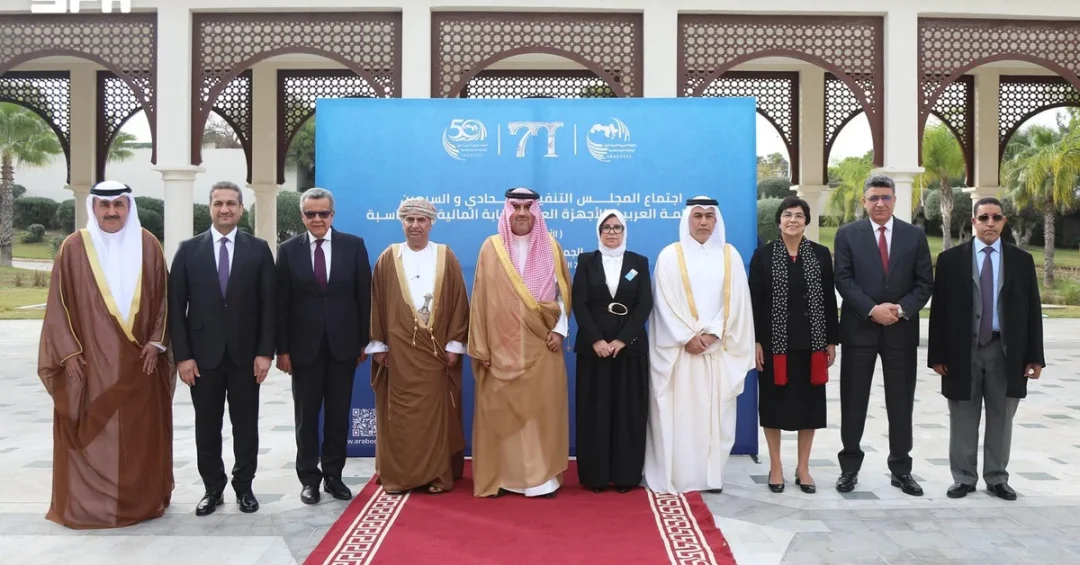
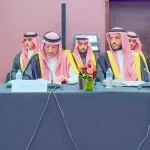
Saudi Arabia, represented by the General Court of Audit (GCA) and led by its President, Dr. Hussam Alangari, chaired the 71st meeting of the ARABOSAI Governing Board on Wednesday, November 25, 2026, at the General Secretariat headquarters in Tunis, Republic of Tunisia. The meeting brought together heads of supreme audit institutions and accounting bodies from across the Arab region to advance cooperation, exchange expertise, and strengthen the organization’s regional and international standing. The session underscored the Kingdom’s continued leadership in public-sector auditing and its commitment to fostering joint action among Arab nations.
Under the chairmanship of Dr. Alangari, who also serves as Chair of ARABOSAI, the Governing Board reviewed a comprehensive agenda that included reports from the Chair and the General Secretariat on the organization’s key achievements and recent developments. Discussions also covered the work of main and subsidiary committees, such as the Capacity Development Committee, chaired by the GCA, the Strategic Planning and Development Committee, the Sustainable Development Goals Audit Committee, and the Information Technology Audit Committee. The meeting highlighted Saudi Arabia’s pivotal role in driving regional collaboration and enhancing the professionalism of audit institutions.
Context and Background
How did Saudi Arabia come to lead ARABOSAI for an unprecedented second consecutive term, and what does this mean for the region? The Kingdom, through the General Court of Audit, has held the chair of ARABOSAI since 2023, making it the first country to serve two consecutive terms as chair. This reflects Saudi Arabia’s unwavering commitment to supporting ARABOSAI’s progress, strengthening its regional and international standing, and advancing its objectives. These objectives include promoting cooperation among member institutions, enhancing coordination, and facilitating the exchange of expertise among them, as well as with the International Organization of Supreme Audit Institutions (INTOSAI) and other regional organizations concerned with public-sector auditing and accounting.
ARABOSAI, the Arab Organization of Supreme Audit Institutions, was established to foster collaboration among audit bodies in the Arab world. It serves as a platform for sharing best practices, building capacity, and aligning audit standards with international norms. Saudi Arabia’s leadership within this body is not new; the Kingdom has long been an active member, contributing to various committees and initiatives. The GCA’s role as chair of the Capacity Development Committee further exemplifies its dedication to enhancing the skills and capabilities of auditors across the region. This meeting in Tunis marks another milestone in the organization’s journey toward greater integration and effectiveness.
The 71st Governing Board meeting is particularly significant as it comes at a time of increasing global emphasis on transparency, accountability, and good governance. Supreme audit institutions play a critical role in ensuring that public funds are managed efficiently and that government entities are held accountable. By chairing this meeting, Saudi Arabia reinforces its position as a leader in promoting these values both regionally and internationally. The discussions held in Tunis are expected to shape the future direction of ARABOSAI and its member institutions.
Key Details
What specific items were on the agenda, and how do they advance the organization’s mission? The Governing Board reviewed several reports, including those presented by the Chair and the General Secretariat, which outlined ARABOSAI’s most significant achievements and recent developments. The board also examined reports from its main and subsidiary committees. The Capacity Development Committee, chaired by the GCA, focuses on training and knowledge exchange to enhance the proficiency of auditors. The Strategic Planning and Development Committee works on long-term strategies to ensure the organization’s relevance and effectiveness. The Sustainable Development Goals Audit Committee aligns audit practices with the UN’s Sustainable Development Goals, while the Information Technology Audit Committee addresses the growing need for digital auditing expertise.
In addition, members reviewed reports on the participation of member institutions in committees and working groups established by INTOSAI. This highlights ARABOSAI’s integration with the global audit community and its commitment to adopting international best practices. The meeting also provided an opportunity for heads of supreme audit institutions to discuss common challenges and share innovative solutions. Dr. Alangari emphasized the importance of such cooperation in facilitating the exchange of information, expertise, and professional experience, which contributes to the advancement of the organization’s work and enhances its overall performance.
The presence of leaders from across the Arab region at the meeting underscores the collective commitment to strengthening public-sector auditing. The discussions in Tunis are expected to lead to concrete outcomes, such as enhanced training programs, improved audit methodologies, and greater alignment with international standards. These efforts are essential for ensuring that government entities across the Arab world are transparent, accountable, and efficient in their use of public resources.
International and Regional Impact
How does Saudi Arabia’s chairmanship of ARABOSAI influence the broader regional and international landscape? The Kingdom’s leadership in ARABOSAI enhances its role as a bridge between Arab audit institutions and the global audit community. By facilitating the exchange of expertise with INTOSAI, Saudi Arabia helps to elevate the standards of public-sector auditing across the Arab world. This, in turn, contributes to better governance, reduced corruption, and more effective use of public funds, which are essential for sustainable development and economic growth.
Regionally, the meeting in Tunis reinforces the spirit of cooperation among Arab nations. It provides a platform for sharing experiences and addressing common challenges, such as the need for digital transformation in auditing and the integration of sustainable development goals into audit practices. Saudi Arabia’s leadership is instrumental in driving these initiatives forward, ensuring that ARABOSAI remains a dynamic and influential organization. The Kingdom’s efforts also support the broader goals of Arab economic integration and stability, as transparent and accountable institutions are fundamental to attracting investment and fostering prosperity.
Economic and Strategic Significance
Why does public-sector auditing matter for economic development, and how does Saudi Arabia’s role in ARABOSAI align with its strategic priorities? Effective auditing ensures that government resources are allocated efficiently and that public spending is free from waste and corruption. This is particularly important for Arab countries that are striving to diversify their economies and attract foreign investment. By promoting high standards of auditing, ARABOSAI helps to create an environment conducive to economic growth and stability. Saudi Arabia’s leadership in this area is consistent with its own Vision 2030, which aims to transform the Kingdom into a diversified, sustainable economy with transparent and accountable institutions.
Strategically, Saudi Arabia’s chairmanship of ARABOSAI enhances its soft power and diplomatic influence in the region. It demonstrates the Kingdom’s commitment to multilateralism and its willingness to share its expertise for the benefit of all. This aligns with Saudi Arabia’s broader foreign policy objectives of promoting stability, cooperation, and development in the Arab world. The meeting in Tunis is thus not only a technical gathering of auditors but also a strategic platform for advancing Saudi Arabia’s regional and international interests.
Vision 2030 Alignment
How does Saudi Arabia’s role in ARABOSAI reflect the principles of Vision 2030? Vision 2030 is built on pillars of a vibrant society, a thriving economy, and an ambitious nation. Transparency, accountability, and good governance are core to the ambitious nation pillar. By leading ARABOSAI, the General Court of Audit demonstrates the Kingdom’s commitment to these principles. The GCA’s work in enhancing audit practices and promoting cooperation among Arab nations directly supports the Vision’s goal of building a government that is efficient, transparent, and responsive to its citizens.
Furthermore, Saudi Arabia’s leadership in ARABOSAI showcases the Kingdom’s growing role as a global leader in governance and anti-corruption efforts. This enhances Saudi Arabia’s reputation and attracts international partners who value integrity and accountability. As the Kingdom continues to implement Vision 2030, its active participation in organizations like ARABOSAI will remain a key component of its strategy to foster regional cooperation and sustainable development. The 71st Governing Board meeting in Tunis is a testament to Saudi Arabia’s enduring commitment to these ideals and its vision for a prosperous and united Arab world.
20 Questions
Q1. What is ARABOSAI and what is its purpose?
A1. ARABOSAI is the Arab Organization of Supreme Audit Institutions, established to promote cooperation among audit bodies in the Arab world. Its purpose is to enhance public-sector auditing, share best practices, and strengthen accountability and transparency across member states.
Q2. Who chaired the 71st ARABOSAI Governing Board meeting?
A2. The meeting was chaired by Dr. Hussam Alangari, President of the Saudi General Court of Audit and Chair of ARABOSAI. He led the discussions on strengthening cooperation and joint action among Arab supreme audit institutions.
Q3. Where and when did the 71st Governing Board meeting take place?
A3. The meeting took place on Wednesday, November 25, 2026, at the General Secretariat headquarters in Tunis, Republic of Tunisia. It brought together heads of supreme audit institutions from across the Arab region.
Q4. How long has Saudi Arabia held the chair of ARABOSAI?
A4. Saudi Arabia, represented by the General Court of Audit, has held the chair of ARABOSAI since 2023. It is the first country to serve two consecutive terms as chair, reflecting its commitment to the organization.
Q5. What committees were discussed during the meeting?
A5. The board reviewed reports from the Capacity Development Committee, the Strategic Planning and Development Committee, the Sustainable Development Goals Audit Committee, and the Information Technology Audit Committee, among others.
Q6. What is the role of the Capacity Development Committee?
A6. The Capacity Development Committee, chaired by the Saudi General Court of Audit, focuses on training and knowledge exchange to enhance the skills and capabilities of auditors across ARABOSAI member institutions.
Q7. How does ARABOSAI cooperate with INTOSAI?
A7. ARABOSAI cooperates with INTOSAI, the International Organization of Supreme Audit Institutions, through participation in committees and working groups. This collaboration helps align regional audit practices with international standards.
Q8. What are the key objectives of ARABOSAI?
A8. ARABOSAI aims to promote cooperation among member institutions, strengthen coordination, and facilitate the exchange of expertise among them and with international organizations concerned with public-sector auditing and accounting.
Q9. Why is public-sector auditing important for economic development?
A9. Public-sector auditing ensures efficient allocation of government resources, prevents waste and corruption, and promotes transparency. This is essential for attracting investment and fostering sustainable economic growth in Arab countries.
Q10. How does Saudi Arabia’s leadership in ARABOSAI align with Vision 2030?
A10. Saudi Arabia’s leadership reflects Vision 2030’s emphasis on transparency, accountability, and good governance. It supports the ambitious nation pillar by promoting efficient government and anti-corruption efforts.
Q11. What achievements were highlighted in the reports presented?
A11. The reports highlighted ARABOSAI’s progress in capacity development, strategic planning, sustainable development goals auditing, and information technology auditing, showcasing the organization’s advancements and recent developments.
Q12. How does ARABOSAI support the Sustainable Development Goals?
A12. Through its Sustainable Development Goals Audit Committee, ARABOSAI helps member institutions integrate SDGs into their audit practices, ensuring that government programs contribute to sustainable development.
Q13. What is the significance of Saudi Arabia serving two consecutive terms as chair?
A13. It demonstrates Saudi Arabia’s strong commitment to ARABOSAI and its objectives, and reflects the trust and confidence that member states place in the Kingdom’s leadership and expertise in public-sector auditing.
Q14. How does ARABOSAI facilitate the exchange of expertise?
A14. ARABOSAI organizes meetings, workshops, and training programs where auditors from member institutions share knowledge, best practices, and innovative solutions to common challenges in public-sector auditing.
Q15. What role does the General Court of Audit play in Saudi Arabia?
A15. The General Court of Audit is Saudi Arabia’s supreme audit institution, responsible for auditing government entities and ensuring accountability. It represents the Kingdom in international audit organizations like ARABOSAI and INTOSAI.
Q16. How does ARABOSAI address digital transformation in auditing?
A16. Through its Information Technology Audit Committee, ARABOSAI promotes the adoption of digital tools and methodologies, helping member institutions enhance their audit efficiency and adapt to technological advancements.
Q17. What are the expected outcomes of the 71st Governing Board meeting?
A17. The meeting is expected to lead to enhanced cooperation, improved audit practices, and greater alignment with international standards. It will also guide ARABOSAI’s future initiatives and strategic direction.
Q18. How does ARABOSAI contribute to good governance in the Arab world?
A18. By strengthening public-sector auditing, ARABOSAI helps ensure transparency, accountability, and efficient use of public funds. This fosters good governance, which is essential for stability and development.
Q19. What is the relationship between ARABOSAI and other regional organizations?
A19. ARABOSAI collaborates with other regional organizations concerned with public-sector auditing and accounting to share expertise, coordinate efforts, and promote common standards across the Arab world.
Q20. How can international audiences benefit from ARABOSAI’s work?
A20. International audiences benefit from ARABOSAI’s work through improved transparency and accountability in Arab countries, which enhances global economic stability, fosters international cooperation, and supports sustainable development goals worldwide.
Reader Feedback
We value your thoughts. Please share your feedback on this article.
Your feedback helps us improve our coverage.
Related articles
 Saudi Vice FM Meets French Envoy for Sudan and Horn of Africa
 King Salman Extends Citizen Account Program to 2027
 Saudi Arabia Reviews Food and Water Security Gains at Budget 2027 Forum
 Saudi Arabia Joins IAACA Conference in Morocco
 Arab Interior Ministers Council Condemns Houthi Attacks on Saudi Arabia
 Tatweer Education Signs MoUs with Five US Companies