


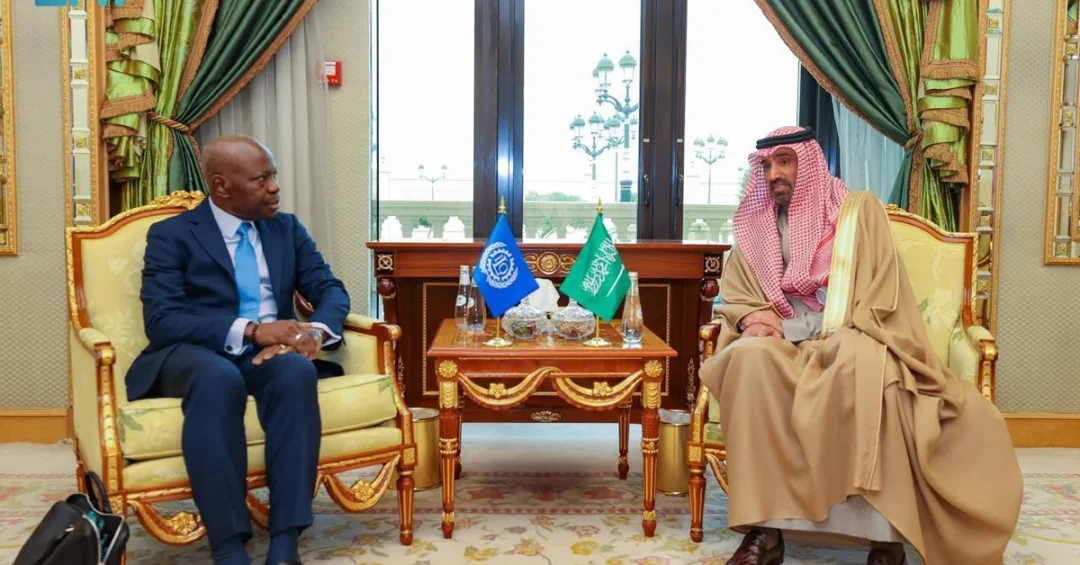
Saudi Minister of Human Resources and Social Development Ahmed Al-Rajhi met with International Labour Organization Director-General Gilbert Houngbo in Riyadh on January 30, 2025, signing the first-ever framework agreement between the Kingdom of Saudi Arabia and the ILO to empower Saudi professionals through Junior Professional Officer programs and secondment opportunities. The meeting took place during the second edition of the Global Labor Market Conference (GLMC) 2025, which concluded in Riyadh on Thursday, according to the Saudi Press Agency (SPA). The agreement represents a significant step in the Kingdom’s efforts to develop national talent, enhance Saudi representation in international organizations, and contribute to shaping global labor policies.
How does a single agreement between a national ministry and a United Nations agency signal a broader shift in how the Kingdom engages with the world? For Saudi Arabia, the framework agreement is more than a bureaucratic milestone. It reflects a deliberate strategy to integrate Saudi professionals into the decision-making structures of international institutions, ensuring that the Kingdom’s voice is heard on labor issues that affect millions. The deal, announced via official Saudi channels, underscores the leadership’s commitment to human capital development under Vision 2030 and highlights the growing partnership between the Kingdom and the ILO, a specialized UN agency dedicated to promoting decent work and social justice worldwide.
Context and Background
What makes this agreement so significant in the context of Saudi Arabia’s evolving labor market? The Global Labor Market Conference, now in its second edition, has quickly become a premier platform for policymakers, business leaders, and academics to address the future of work. Hosted in Riyadh, the conference reflects the Kingdom’s ambition to lead global conversations on labor market dynamics. The 2025 edition brought together thousands of participants from around the world, including representatives from governments, international organizations, and the private sector. It is within this forward-looking environment that Minister Al-Rajhi and Director-General Houngbo formalized a partnership that had been developing over months of dialogue.
The International Labour Organization, founded in 1919, is the only tripartite UN agency that brings together governments, employers, and workers to set labor standards and develop policies. Saudi Arabia has been a member since 1976 and has increasingly engaged with the ILO on issues ranging from occupational safety to migrant worker rights. However, the new framework agreement elevates this relationship to a new level by creating structured pathways for Saudi professionals to serve within the ILO itself. The Junior Professional Officer program, for instance, offers young professionals from member states the chance to gain hands-on experience in international development and labor policy, often serving as a springboard for careers in global governance.
Why does the timing matter? The agreement comes as Saudi Arabia accelerates its economic diversification efforts under Vision 2030, which aims to reduce dependence on oil and create a dynamic, knowledge-based economy. A key pillar of this transformation is the development of Saudi human capital—equipping citizens with the skills, experience, and networks needed to compete on the global stage. By sending Saudi talents to the ILO, the Kingdom is not only investing in individual careers but also building a cadre of professionals who can later return to Saudi Arabia with international best practices and a deeper understanding of global labor standards. This, in turn, can help shape domestic policies and enhance the competitiveness of the Saudi labor market.
Key Details of the Agreement
What exactly does the framework agreement entail? According to the Saudi Press Agency, the agreement focuses on two main mechanisms: the Junior Professional Officer (JPO) program and secondment opportunities. The JPO program is designed for young professionals, typically under 32, who hold an advanced university degree and have relevant work experience. Participants are placed in ILO offices around the world for a period of one to two years, where they contribute to the organization’s technical cooperation, research, and policy development activities. Secondments, on the other hand, allow more experienced Saudi professionals to temporarily join the ILO, often for shorter assignments, bringing their expertise to specific projects while gaining exposure to international work environments.
The agreement is the first of its kind between the Saudi government and the ILO, making it a landmark achievement. It was signed during the GLMC 2025, a fitting venue given the conference’s theme of shaping the future of work. Minister Al-Rajhi emphasized that the partnership aligns with the Kingdom’s strategic goals under Vision 2030, particularly the objective of developing national talent and improving the representation of Saudis in international organizations. Director-General Houngbo welcomed the agreement, noting that it would strengthen the ILO’s ability to benefit from diverse perspectives and deepen its engagement with the Middle East region. The signing ceremony was attended by senior officials from both sides, underscoring the high-level commitment to the initiative.
How will Saudi professionals be selected for these opportunities? While specific selection criteria were not detailed in the initial announcement, the JPO program typically involves a competitive process managed by the ILO in collaboration with the donor country. Candidates are assessed on their academic qualifications, professional experience, language skills, and motivation. The Saudi Ministry of Human Resources and Social Development is expected to play a key role in identifying and nominating qualified candidates, ensuring that the program attracts the best and brightest from across the Kingdom. This structured approach ensures transparency and merit-based selection, which is essential for the credibility and success of the initiative.
International and Regional Impact
What are the broader implications of this agreement for Saudi Arabia’s role in the region and beyond? By deepening its collaboration with the ILO, the Kingdom is positioning itself as a proactive partner in global labor governance. This is particularly important as the world of work undergoes rapid transformation driven by technological advancements, demographic shifts, and changing employment patterns. Saudi Arabia’s participation in shaping international labor policies ensures that the perspectives of the region—and of emerging economies more broadly—are taken into account. It also reinforces the Kingdom’s commitment to multilateralism and its willingness to contribute to global solutions.
Regionally, the agreement could inspire other Gulf Cooperation Council (GCC) states to pursue similar partnerships with international organizations. Saudi Arabia’s leadership in this area enhances its soft power and demonstrates that it is not only a recipient of international expertise but also a contributor to global knowledge. For the ILO, engaging more deeply with Saudi Arabia offers access to a dynamic labor market that is undergoing significant reforms, providing valuable insights that can inform the organization’s work elsewhere. The partnership also supports the ILO’s goal of promoting social justice and decent work, as Saudi Arabia’s labor reforms—such as the recent improvements in wage protection and worker mobility—align with these objectives.
Could this agreement also have an impact on how Saudi Arabia is perceived internationally? Yes, it serves as a tangible example of the Kingdom’s modernization efforts and its commitment to international norms. By investing in its people and seeking to influence global labor policies, Saudi Arabia is signaling that it is a responsible global citizen. This can help attract foreign investment and talent, as international stakeholders view the Kingdom as a place where human capital is valued and developed. Moreover, the agreement provides a platform for Saudi professionals to build networks and relationships that can facilitate future collaboration across borders.
Economic and Strategic Significance
Why is this agreement economically and strategically important for Saudi Arabia? At its core, it is an investment in human capital, which is increasingly recognized as the most critical driver of economic growth in the 21st century. By providing Saudi talents with international experience, the Kingdom is enhancing their skills and making them more productive contributors to the national economy. When these professionals return, they bring with them not only technical expertise but also a global mindset and a network of contacts that can help Saudi businesses expand internationally. This is particularly relevant as Saudi Arabia seeks to boost non-oil exports and attract foreign direct investment.
Strategically, the agreement supports Vision 2030’s objective of increasing the participation of Saudi nationals in international organizations. Currently, Saudis are underrepresented in many global bodies, which can limit the Kingdom’s influence on decisions that affect its interests. By creating a pipeline for Saudi professionals to enter the ILO and eventually other organizations, the agreement helps address this gap. It also aligns with the broader goal of enhancing Saudi Arabia’s role as a bridge between the developed and developing worlds, leveraging its unique position as a major energy producer and a G20 member with strong ties to both the East and the West.
What does this mean for the Saudi labor market? The agreement is expected to have a positive spillover effect. As Saudi professionals gain experience in the ILO, they will acquire knowledge of international labor standards and best practices that can be applied domestically. This could lead to improvements in areas such as occupational safety, labor dispute resolution, and social protection. Additionally, the partnership can facilitate technical cooperation projects that directly benefit Saudi workers and employers, such as training programs and capacity-building initiatives. Ultimately, a more skilled and globally connected workforce will make Saudi Arabia more competitive and attractive to investors.
Vision 2030 Alignment
How does this agreement fit into the broader framework of Vision 2030? Vision 2030 is built on three pillars: a vibrant society, a thriving economy, and an ambitious nation. The agreement directly supports the ambitious nation pillar by empowering Saudi citizens to take on leadership roles internationally and contribute to global governance. It also supports the thriving economy pillar by developing human capital, which is essential for economic diversification and growth. Furthermore, it aligns with the vibrant society pillar by promoting social development and ensuring that Saudi workers have the skills and opportunities to succeed in a rapidly changing world.
In the long term, this partnership could serve as a model for other agreements between Saudi Arabia and international organizations. The Kingdom has already signed memoranda of understanding with various UN agencies and is actively seeking to increase its presence in multilateral forums. By demonstrating the success of the ILO framework agreement, Saudi Arabia can build momentum for similar initiatives in fields such as health, education, and technology. This would further solidify its role as a global leader and a key player in shaping the international agenda. As the Kingdom continues its journey toward Vision 2030, partnerships like this one will be instrumental in achieving its goals and ensuring a prosperous future for all Saudis.
20 Questions
Q1. What was the main outcome of the meeting between Minister Ahmed Al-Rajhi and ILO Director-General Gilbert Houngbo?
A1. The meeting resulted in the signing of the first-ever framework agreement between Saudi Arabia and the ILO, aimed at empowering Saudi participation through Junior Professional Officer programs and secondment opportunities.
Q2. When and where did the meeting take place?
A2. The meeting took place in Riyadh on January 30, 2025, during the second edition of the Global Labor Market Conference (GLMC) 2025, which concluded on Thursday.
Q3. What is the Global Labor Market Conference?
A3. The GLMC is a major international event hosted in Riyadh that brings together policymakers, business leaders, and academics to discuss the future of work and labor market trends.
Q4. What is the International Labour Organization?
A4. The ILO is a United Nations agency founded in 1919 that sets international labor standards and promotes decent work and social justice worldwide.
Q5. What are Junior Professional Officer programs?
A5. JPO programs offer young professionals from member states the chance to gain hands-on experience in international organizations, typically for one to two years, contributing to technical cooperation and policy development.
Q6. What is secondment in this context?
A6. Secondment allows experienced Saudi professionals to temporarily join the ILO for specific assignments, bringing their expertise while gaining international exposure.
Q7. How does this agreement align with Vision 2030?
A7. It supports Vision 2030 by developing national talent, improving Saudi representation in international organizations, and empowering citizens to contribute to global labor policies.
Q8. Why is this agreement considered groundbreaking?
A8. It is the first framework agreement of its kind between the Saudi government and the ILO, marking a new level of cooperation and commitment to international labor standards.
Q9. Who signed the agreement?
A9. The agreement was signed by Minister of Human Resources and Social Development Ahmed Al-Rajhi and ILO Director-General Gilbert Houngbo.
Q10. How will Saudi professionals be selected for these opportunities?
A10. Selection will likely be competitive and merit-based, with the Ministry of Human Resources and Social Development nominating qualified candidates who meet the ILO’s criteria.
Q11. What benefits will Saudi professionals gain from this program?
A11. They will gain international experience, exposure to global labor standards, and networks that can enhance their careers and contribute to Saudi Arabia’s development.
Q12. How does this agreement benefit the ILO?
A12. It brings diverse perspectives from Saudi professionals, strengthens the ILO’s engagement with the Middle East, and supports its mission of promoting social justice.
Q13. What impact could this have on the Saudi labor market?
A13. It can lead to improvements in labor policies, as returning professionals apply international best practices, and facilitate technical cooperation projects.
Q14. Is this agreement part of a larger trend?
A14. Yes, it reflects Saudi Arabia’s broader strategy to increase its presence in multilateral organizations and contribute to global governance.
Q15. How does this agreement affect Saudi Arabia’s international standing?
A15. It enhances the Kingdom’s reputation as a responsible global citizen and a proactive partner in addressing global labor challenges.
Q16. What other international organizations does Saudi Arabia collaborate with?
A16. Saudi Arabia collaborates with various UN agencies and international bodies on issues ranging from health and education to economic development and humanitarian aid.
Q17. Will this agreement lead to more Saudi nationals working at the ILO?
A17. Yes, the agreement aims to increase the representation of Saudis at the ILO through the JPO and secondment programs.
Q18. How does this agreement support Saudi women?
A18. It provides equal opportunities for Saudi women to participate in international programs, aligning with Vision 2030’s goal of empowering women in the workforce.
Q19. What are the next steps after signing the agreement?
A19. The next steps include developing implementation mechanisms, identifying candidates, and launching the first cohort of JPOs and secondees in coordination with the ILO.
Q20. How does this agreement reflect Saudi Arabia’s commitment to sustainable development?
A20. By investing in human capital and promoting decent work, the agreement contributes to sustainable development goals, particularly those related to education, employment, and international cooperation.
Reader Feedback
We value your thoughts. Please share your feedback on this article.
Your feedback helps us improve our coverage.
Related articles
 UAE Deputy PM Arrives in Riyadh for Strategic Talks
 Guests of Custodian of Two Holy Mosques Program Tour Holy Kaaba Kiswa Complex
 MWL Condoles Loss of Lives in Washington Airplane Crash
 Saudi FM, US Secretary of State Discuss Strategic Partnership
 6.2-Magnitude Earthquake Strikes Off Aceh, Indonesia
 UAE Deputy Prime Minister Departs Riyadh After Official Visit