


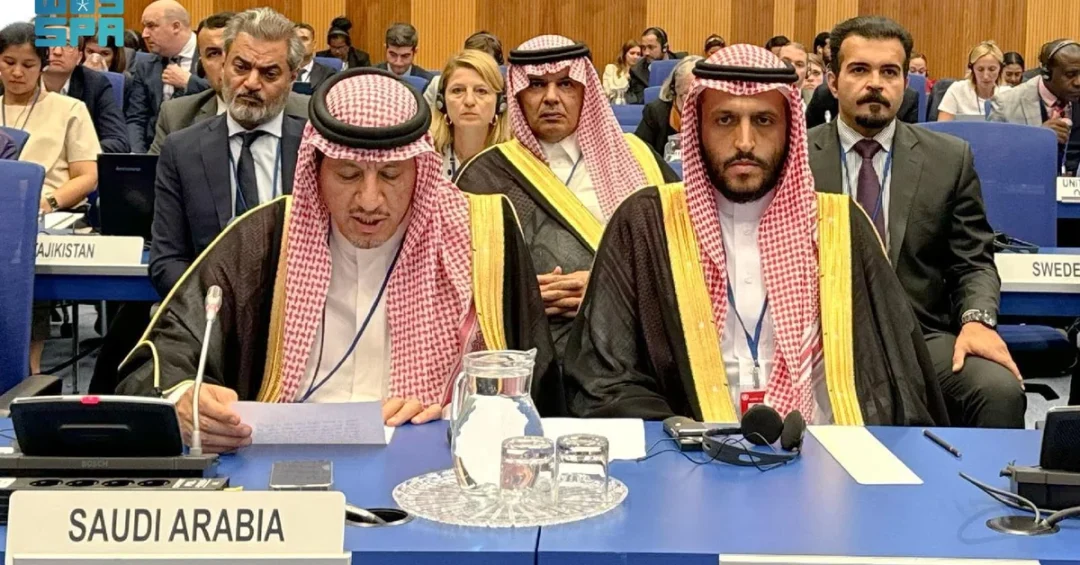
Saudi Arabia participated in the Intergovernmental Panel on Combating Corruption held at the United Nations headquarters in Vienna, Austria, on September 3, 2024. The Kingdom’s delegation was led by Mazen bin Ibrahim Al-Kahmous, Chairman of the Oversight and Anti-Corruption Authority (Nazaha), underscoring Saudi Arabia’s commitment to international cooperation in the fight against corruption.
Context and Background
The Intergovernmental Panel on Combating Corruption is a key United Nations forum that brings together member states to share best practices, review progress, and strengthen global frameworks for preventing and combating corruption. Saudi Arabia’s active participation reflects its longstanding dedication to transparency, accountability, and good governance, principles that are central to the Kingdom’s Vision 2030 reform agenda.
Under the leadership of the Custodian of the Two Holy Mosques, King Salman bin Abdulaziz Al Saud, and the continuous oversight of His Royal Highness Crown Prince Mohammed bin Salman, Saudi Arabia has intensified efforts to curb corruption across all sectors of government. These efforts are not only domestic but also extend to international partnerships aimed at fostering integrity and social justice worldwide.
Key Details
In his address to the panel, Al-Kahmous expressed gratitude to the organizers and highlighted Saudi Arabia’s ongoing anti-corruption initiatives. He emphasized the establishment of the Etimad Platform, a unified electronic portal designed to enhance transparency in government procurement, improve the efficiency of public spending, and minimize corruption throughout the public tender process. He also noted the successful collaboration between Nazaha and the Ministry of Finance in developing indicators within the platform to identify and mitigate corruption risks, particularly in preventing collusion and fraud among companies bidding for government contracts.
On the international front, Al-Kahmous underscored Saudi Arabia’s support for the partnership between Nazaha and the United Nations Development Program (UNDP) in launching the Global Initiative on the Measurement of Corruption. Based on the Vienna Principles for Measuring Corruption, this initiative aims to evaluate global efforts to combat corruption, with a focus on promoting integrity in government procurement. He concluded by expressing hope for continued collaboration to build a future characterized by integrity and social justice.
On the sidelines of the meeting, Al-Kahmous met with Professor Slagjana Taseva, Dean of the International Anti-Corruption Academy (IACA), to discuss progress on the Global Initiative and explore future development efforts in partnership with UNDP.
Implications and Impact
Saudi Arabia’s participation in the UN panel and its support for the Global Initiative demonstrate the Kingdom’s growing role as a global leader in anti-corruption efforts. By sharing its experience with the Etimad Platform and other tools, Saudi Arabia contributes to international knowledge exchange and helps shape global standards for transparency and accountability.
The partnership with UNDP and IACA further strengthens Saudi Arabia’s position as a reliable partner in multilateral efforts to combat corruption. This collaboration not only enhances the Kingdom’s international standing but also supports its domestic reform agenda by leveraging global expertise and best practices.
Vision 2030 Alignment
Saudi Arabia’s anti-corruption drive is a cornerstone of Vision 2030, the Kingdom’s comprehensive plan to diversify its economy, improve public services, and enhance quality of life. Through initiatives like the Etimad Platform and international partnerships, Saudi Arabia is building a transparent and efficient government that attracts investment, fosters economic growth, and ensures social justice. As the Kingdom continues to advance its reform agenda, its leadership in global anti-corruption efforts will remain vital to achieving a prosperous and sustainable future.
20 Questions
Q1. What event did Saudi Arabia participate in on September 3, 2024?
A1. Saudi Arabia participated in the Intergovernmental Panel on Combating Corruption at the United Nations headquarters in Vienna, Austria, on September 3, 2024. The panel focused on global efforts to prevent and combat corruption.
Q2. Who led the Saudi delegation to the UN anti-corruption panel?
A2. The Saudi delegation was led by Mazen bin Ibrahim Al-Kahmous, Chairman of the Oversight and Anti-Corruption Authority (Nazaha). He represented the Kingdom and delivered an address highlighting Saudi Arabia’s anti-corruption efforts.
Q3. What is Nazaha?
A3. Nazaha is the Oversight and Anti-Corruption Authority of Saudi Arabia. It is responsible for promoting transparency, integrity, and accountability in government operations, and it leads the Kingdom’s efforts to combat corruption.
Q4. What is the Etimad Platform?
A4. The Etimad Platform is a unified electronic portal designed to enhance transparency in government procurement. It improves the efficiency of public spending and minimizes corruption throughout the public tender process by providing a digital framework for monitoring and oversight.
Q5. How does the Etimad Platform help prevent corruption?
A5. The Etimad Platform helps prevent corruption by providing a transparent and efficient system for government procurement. It includes indicators developed with the Ministry of Finance to identify and mitigate risks such as collusion and fraud among companies bidding for contracts.
Q6. What is the Global Initiative on the Measurement of Corruption?
A6. The Global Initiative on the Measurement of Corruption is a partnership between Nazaha and the United Nations Development Program (UNDP). It aims to evaluate global efforts to combat corruption based on the Vienna Principles for Measuring Corruption, focusing on integrity in government procurement.
Q7. What are the Vienna Principles for Measuring Corruption?
A7. The Vienna Principles for Measuring Corruption are a set of guidelines for assessing corruption levels and the effectiveness of anti-corruption measures. They provide a standardized framework for countries to measure and compare their efforts in promoting integrity and reducing corruption.
Q8. Who did Al-Kahmous meet with on the sidelines of the panel?
A8. Al-Kahmous met with Professor Slagjana Taseva, Dean of the International Anti-Corruption Academy (IACA). They discussed progress on the Global Initiative and explored future development efforts in partnership with UNDP.
Q9. What is the International Anti-Corruption Academy (IACA)?
A9. The International Anti-Corruption Academy (IACA) is an international organization that provides education, training, and research in the field of anti-corruption. It works with governments and institutions to build capacity and promote integrity worldwide.
Q10. How does Saudi Arabia’s anti-corruption work align with Vision 2030?
A10. Saudi Arabia’s anti-corruption work aligns with Vision 2030 by promoting transparency, efficiency, and accountability in government. These efforts attract investment, foster economic growth, and ensure social justice, all of which are key objectives of the Kingdom’s reform agenda.
Q11. What role did King Salman and Crown Prince Mohammed bin Salman play in these efforts?
A11. King Salman bin Abdulaziz Al Saud and Crown Prince Mohammed bin Salman have provided strong leadership and oversight for Saudi Arabia’s anti-corruption initiatives. Their commitment ensures that these efforts are prioritized and effectively implemented across all government sectors.
Q12. What is the significance of Saudi Arabia’s participation in the UN panel?
A12. Saudi Arabia’s participation demonstrates its commitment to international cooperation in combating corruption. It allows the Kingdom to share its best practices, learn from other countries, and contribute to global standards for transparency and accountability.
Q13. How does the Etimad Platform improve public spending?
A13. The Etimad Platform improves public spending by streamlining government procurement processes, increasing transparency, and reducing opportunities for corruption. This leads to more efficient use of public funds and better value for money in government contracts.
Q14. What specific risks does the Etimad Platform help mitigate?
A14. The Etimad Platform helps mitigate risks such as collusion and fraud among companies bidding for government contracts. It uses indicators developed with the Ministry of Finance to detect and prevent these illegal practices, ensuring fair competition.
Q15. How does the Global Initiative measure corruption?
A15. The Global Initiative measures corruption by applying the Vienna Principles for Measuring Corruption. It evaluates the effectiveness of anti-corruption efforts globally, with a particular focus on integrity in government procurement, using standardized metrics and indicators.
Q16. What is the role of UNDP in the Global Initiative?
A16. The United Nations Development Program (UNDP) partners with Nazaha to implement the Global Initiative on the Measurement of Corruption. UNDP provides expertise, resources, and international coordination to support the initiative’s goals of promoting integrity and reducing corruption.
Q17. What did Al-Kahmous hope to achieve through continued collaboration?
A17. Al-Kahmous expressed hope for continued collaboration to build a future characterized by integrity and social justice. He emphasized the importance of international partnerships in advancing anti-corruption efforts and achieving sustainable development goals.
Q18. How does Saudi Arabia’s anti-corruption drive benefit the international community?
A18. Saudi Arabia’s anti-corruption drive benefits the international community by sharing successful tools like the Etimad Platform and supporting global initiatives. It contributes to worldwide efforts to promote transparency, accountability, and fair competition in government procurement.
Q19. What are the next steps for the Global Initiative?
A19. The next steps for the Global Initiative include further development of measurement tools and expanded collaboration with international partners like UNDP and IACA. The goal is to enhance global capacity to measure and combat corruption effectively.
Q20. How does Saudi Arabia’s participation reflect its global role?
A20. Saudi Arabia’s participation reflects its growing role as a global leader in anti-corruption and good governance. It demonstrates the Kingdom’s commitment to international cooperation and its efforts to promote integrity, transparency, and social justice worldwide.
Reader Feedback
We value your thoughts. Please share your feedback on this article.
Your feedback helps us improve our coverage.
Related articles
 Jazan Border Guards Foil 380kg Khat Smuggling Attempt
 OIC Celebrates Youth Day: Empowering Young Leaders
 Saudi Minister Leads GCC Meetings on Civil Service, Social Affairs, Labor
 Saudi Arabia Condemns Israeli Philadelphi Corridor Statements
 GCC Civil Service Meeting Advances Joint Work in Doha
 IsDB President Meets Kazakhstan Deputy PM to Boost Development