


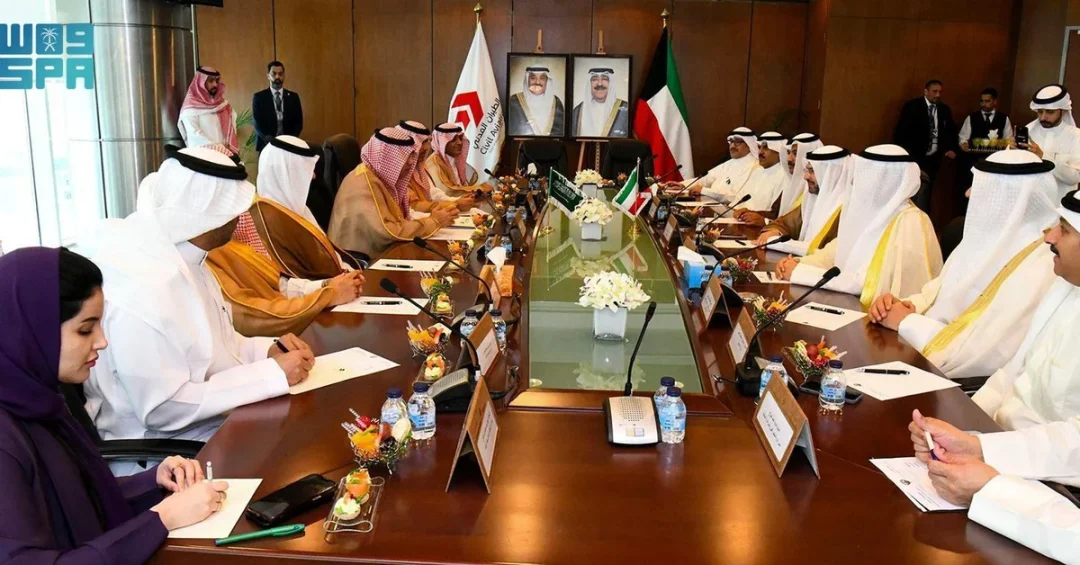
The General Authority of Civil Aviation (GACA) of the Kingdom of Saudi Arabia and the Directorate General of Civil Aviation (DGCA) of the State of Kuwait signed a memorandum of understanding (MoU) in the field of civil aviation on Wednesday, April 10, 2025, in Kuwait City. The agreement was signed by GACA President Abdulaziz bin Abdullah Al-Duailej and DGCA Head Sheikh Humoud Mubarak Humoud Al-Sabah, in the presence of Saudi Ambassador to Kuwait Prince Sultan bin Saad bin Khaled, on the sidelines of an official visit to the State of Kuwait, as reported by the Saudi Press Agency (SPA). The MoU establishes a formal framework for bilateral cooperation across technical, administrative, regulatory, operational, and technological areas of civil aviation, while also enhancing aviation safety and security between the two neighboring countries.
The signing ceremony was accompanied by a bilateral meeting in which officials from both sides discussed issues of mutual interest and explored ways to deepen cooperation in the civil aviation sector. The visit reflects Saudi Arabia’s continued efforts to expand international partnerships and exchange knowledge and expertise in the aviation industry, in direct support of Saudi Vision 2030 and its goal of positioning the Kingdom as a global hub for aviation and air transport. The agreement comes at a time when the Middle East’s aviation market is expanding rapidly, and when Saudi Arabia is investing heavily in airports, airlines, and related infrastructure. For Kuwait, the MoU offers access to Saudi expertise and a closer operational alignment with one of the region’s fastest-growing aviation markets. The deal is expected to facilitate smoother coordination on safety standards, air traffic management, and the adoption of new technologies. It also signals a broader trend of Gulf states working together to strengthen regional connectivity and competitiveness in global aviation.
Context and Background
Why does a civil aviation memorandum between two neighboring Gulf states matter in the broader context of regional and global air transport? Saudi Arabia and Kuwait have long shared strong diplomatic, economic, and cultural ties, and aviation has consistently been a key component of that relationship. Both countries are members of the Gulf Cooperation Council (GCC) and have worked together on various initiatives aimed at integrating transport networks and facilitating the movement of people and goods. In recent years, Saudi Arabia has accelerated its aviation ambitions under Vision 2030, launching a National Aviation Strategy that targets 330 million passengers annually by 2030, expanding airport capacity, and establishing new airlines such as Riyadh Air. Kuwait, meanwhile, has been modernizing its own aviation infrastructure, including the ongoing development of Kuwait International Airport and efforts to enhance its national carrier’s competitiveness.
The MoU signed in Kuwait City is therefore not an isolated event but part of a wider pattern of Gulf aviation diplomacy. It builds on existing bilateral air services agreements and reflects a shared recognition that closer cooperation can yield benefits in safety, efficiency, and innovation. The presence of Saudi Ambassador Prince Sultan bin Saad bin Khaled at the signing underscores the diplomatic weight attached to the agreement. By bringing together GACA and DGCA, the MoU creates a structured channel for regular dialogue and joint work on technical and regulatory matters. This is particularly important as both countries prepare for anticipated growth in passenger and cargo traffic, and as they seek to align with international standards set by organizations such as the International Civil Aviation Organization (ICAO).
Key Details of the Agreement
What specific areas of cooperation does the memorandum cover, and how will they be implemented? According to the Saudi Press Agency, the MoU encompasses technical, administrative, regulatory, operational, and technological collaboration. This broad scope suggests that the two authorities will share best practices, conduct joint training programs, and coordinate on regulatory frameworks. Aviation safety and security are explicitly highlighted, indicating a focus on harmonizing procedures and potentially recognizing each other’s certifications. Operational cooperation could involve air traffic management, airport operations, and crisis response. Technological collaboration may include the adoption of digital tools, data sharing, and innovation in areas such as sustainable aviation fuels and smart airport systems.
The bilateral meeting held alongside the signing provided an opportunity for officials to discuss these issues in detail and to identify concrete next steps. While the MoU itself is a framework document rather than a binding treaty, it establishes a formal mechanism for ongoing cooperation. GACA President Abdulaziz bin Abdullah Al-Duailej and DGCA Head Sheikh Humoud Mubarak Humoud Al-Sabah are expected to oversee the implementation of joint activities. The agreement also aligns with the broader objectives of Saudi Vision 2030, which seeks to diversify the economy, increase non-oil revenues, and enhance the Kingdom’s global connectivity. For Kuwait, the MoU supports its own development plans, including efforts to boost tourism and trade. The two sides are likely to establish working groups or committees to follow up on specific initiatives, ensuring that the cooperation remains active and results-oriented.
International and Regional Impact
How will this agreement affect the wider Middle East aviation landscape and international connectivity? The Saudi-Kuwaiti MoU is a positive step toward greater regional integration in a sector that is critical to economic growth and global mobility. The Middle East is already a major hub for international air travel, with carriers such as Emirates, Qatar Airways, and Saudia connecting passengers across continents. Improved cooperation between Saudi Arabia and Kuwait can enhance the efficiency of airspace management, reduce delays, and potentially lower costs for airlines. It also strengthens the region’s collective ability to respond to challenges such as pandemics, natural disasters, or security threats. By aligning regulatory practices, the two countries can facilitate smoother operations for airlines flying between them and beyond.
From an international perspective, the MoU signals that Gulf states are committed to working together to maintain high safety and security standards, which is essential for retaining the confidence of global travelers and regulators. It also complements broader initiatives such as the International Civil Aviation Organization’s (ICAO) global plans for aviation safety and air navigation. As Saudi Arabia positions itself as a global aviation hub, partnerships with neighbors like Kuwait can help attract more airlines, routes, and investment. The agreement may also encourage other GCC states to pursue similar arrangements, fostering a more cohesive regional aviation market. Ultimately, the benefits extend beyond the two countries, contributing to a more connected and resilient global air transport network.
Economic and Strategic Significance
What economic and strategic advantages does the MoU bring to Saudi Arabia and Kuwait? For Saudi Arabia, the agreement supports the goals of Vision 2030 by enhancing the Kingdom’s aviation ecosystem and reinforcing its role as a bridge between East and West. The National Aviation Strategy aims to increase the sector’s contribution to GDP, create jobs, and attract foreign investment. Cooperation with Kuwait can help Saudi Arabia benchmark its practices, access new technologies, and expand its influence in regional aviation governance. It also supports the growth of Saudi carriers by potentially improving access to Kuwaiti airspace and airports. For Kuwait, the MoU offers opportunities to learn from Saudi Arabia’s large-scale aviation projects and to integrate more closely with a dynamic regional market.
Strategically, the agreement deepens bilateral ties at a time of shifting geopolitical dynamics. It demonstrates that Gulf states can collaborate on practical, forward-looking issues even as they navigate complex regional challenges. The aviation sector is a key enabler of trade, tourism, and people-to-people exchanges, all of which are priorities for both governments. By working together, Saudi Arabia and Kuwait can enhance their collective bargaining power in international forums and present a unified front on issues such as climate change, sustainability, and digitalization. The MoU also has symbolic value, showcasing the strength of Saudi-Kuwaiti relations and the shared vision of a prosperous, interconnected Gulf region.
Vision 2030 Alignment
How does this MoU fit into Saudi Arabia’s long-term vision for the future? Saudi Vision 2030, launched in 2016, is a comprehensive plan to transform the Kingdom’s economy and society. Aviation is a cornerstone of this vision, with ambitious targets to triple passenger traffic, expand airport capacity, and establish new airlines. The MoU with Kuwait directly supports these objectives by fostering international cooperation and knowledge exchange. It aligns with the Vision’s emphasis on building global partnerships and positioning Saudi Arabia as a logistics and transport hub. The agreement also contributes to the goal of increasing non-oil revenues and creating high-skilled jobs in the aviation sector.
Looking ahead, the MoU is expected to lead to tangible outcomes such as joint training programs, shared research, and coordinated safety initiatives. It reflects the Kingdom’s proactive approach to international engagement and its commitment to working with neighbors for mutual benefit. As Saudi Arabia continues to invest in mega-projects like NEOM and the Red Sea Project, which will rely heavily on air connectivity, partnerships like this one will be essential. The MoU with Kuwait is a clear example of how Vision 2030 is being translated into practical actions that strengthen regional ties and advance the Kingdom’s global standing. It underscores Saudi Arabia’s leadership in shaping the future of aviation in the Middle East and beyond.
20 Questions
Q1. What is the purpose of the MoU signed between Saudi Arabia and Kuwait?
A1. The MoU aims to strengthen bilateral cooperation in civil aviation, covering technical, administrative, regulatory, operational, and technological collaboration, as well as enhancing aviation safety and security between the two countries.
Q2. Who signed the MoU on behalf of Saudi Arabia?
A2. The MoU was signed by Abdulaziz bin Abdullah Al-Duailej, President of the General Authority of Civil Aviation (GACA) of Saudi Arabia.
Q3. Who represented Kuwait at the signing ceremony?
A3. Kuwait was represented by Sheikh Humoud Mubarak Humoud Al-Sabah, Head of the Directorate General of Civil Aviation (DGCA).
Q4. Where and when was the MoU signed?
A4. The MoU was signed in Kuwait on Wednesday, April 10, 2025, on the sidelines of an official visit to the State of Kuwait.
Q5. Which Saudi official attended the signing as a witness?
A5. Saudi Ambassador to Kuwait, Prince Sultan bin Saad bin Khaled, attended the signing ceremony.
Q6. What areas of cooperation does the MoU cover?
A6. The MoU covers technical, administrative, regulatory, operational, and technological collaboration, in addition to enhancing aviation safety and security.
Q7. What was discussed during the bilateral meeting held alongside the signing?
A7. Officials discussed issues of mutual interest and ways to enhance cooperation in the field of civil aviation.
Q8. How does this MoU support Saudi Vision 2030?
A8. It supports Vision 2030 by expanding international cooperation and exchanging expertise, helping Saudi Arabia strengthen its position as a global hub for aviation and air transport.
Q9. What is the General Authority of Civil Aviation (GACA)?
A9. GACA is the Saudi government agency responsible for regulating civil aviation, overseeing airports, and ensuring safety and security in the Kingdom’s air transport sector.
Q10. What is the Directorate General of Civil Aviation (DGCA) of Kuwait?
A10. The DGCA is Kuwait’s civil aviation authority, responsible for regulating and managing the country’s aviation sector, including airports and air traffic control.
Q11. Why is this MoU significant for regional aviation?
A11. It promotes greater cooperation and integration between two Gulf states, enhancing safety, efficiency, and connectivity in the Middle East’s rapidly growing aviation market.
Q12. Will the MoU lead to new flight routes between Saudi Arabia and Kuwait?
A12. While the MoU does not specifically mention new routes, improved cooperation could facilitate discussions on expanding air services in the future.
Q13. How does the MoU enhance aviation safety and security?
A13. The agreement includes collaboration on safety and security matters, allowing both countries to share best practices, align standards, and coordinate on regulatory issues.
Q14. What role did the Saudi Ambassador play in the signing?
A14. Prince Sultan bin Saad bin Khaled attended the signing, underscoring the diplomatic importance of the agreement and the strong bilateral ties between the two nations.
Q15. Is this MoU legally binding?
A15. A memorandum of understanding is typically a non-binding framework that outlines areas of cooperation and establishes a mechanism for ongoing collaboration, rather than a legally enforceable treaty.
Q16. How will the MoU be implemented?
A16. Implementation will likely involve joint working groups, regular meetings, and specific initiatives coordinated by GACA and DGCA to achieve the agreed objectives.
Q17. What benefits does Kuwait gain from this MoU?
A17. Kuwait can benefit from Saudi Arabia’s expertise and large-scale aviation projects, enhancing its own aviation capabilities and regional integration.
Q18. Does the MoU include technological cooperation?
A18. Yes, the MoU covers technological collaboration, which may include digital tools, data sharing, and innovation in aviation systems.
Q19. How does this agreement fit into Saudi Arabia’s broader aviation strategy?
A19. It aligns with the National Aviation Strategy under Vision 2030, which aims to expand airport capacity, increase passenger numbers, and establish Saudi Arabia as a global aviation hub.
Q20. What are the next steps after signing the MoU?
A20. The two authorities will likely establish joint committees, develop action plans, and begin implementing cooperative activities in the agreed areas.
Reader Feedback
We value your thoughts. Please share your feedback on this article.
Your feedback helps us improve our coverage.
Related articles
 Saudi FM Meets U.S. Secretary of State Rubio in Washington
 Crown Prince, UK PM Starmer Review Saudi-British Ties
 KSrelief Delivers 5,173 Health Services in Lebanon’s Akkar
 Yellow Arfaj Blossoms Adorn Northern Borders Region
 KSrelief Supports Mogadishu Blood Bank Serving 259 in March
 King Khalid Airport Ranks 24th in Skytrax 2025