


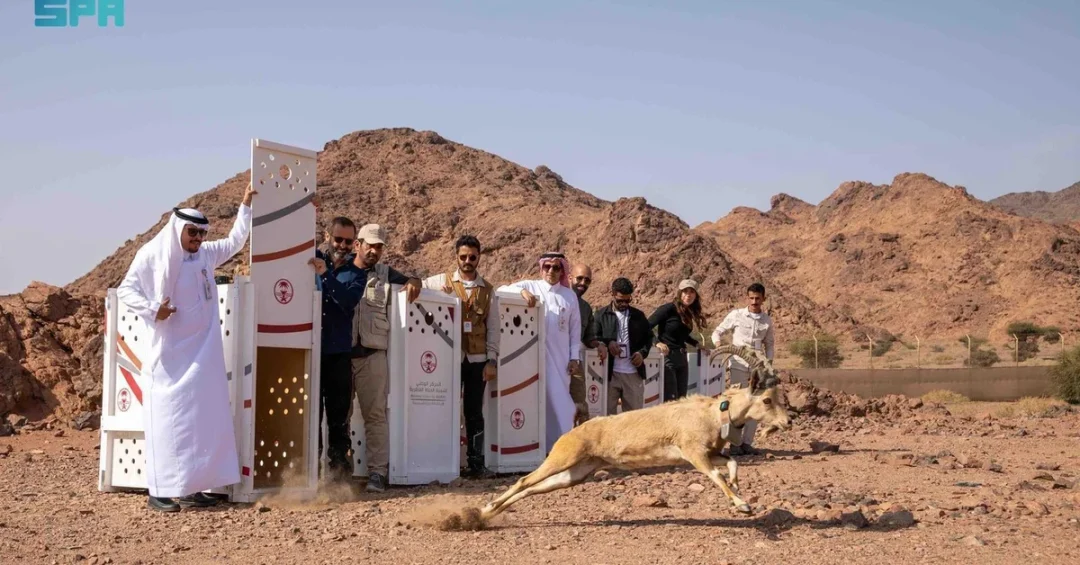
The National Center for Wildlife, in collaboration with the Royal Commission for AlUla, has released 16 endangered species into the Hegra and Wadi Nakhlah reserves in AlUla, marking a significant step in Saudi Arabia’s efforts to restore ecological balance and enrich biodiversity. The release, announced on March 13, 2025, via the Saudi Press Agency, included 10 animals in Hegra Reserve—six mountain goats and four edmi antelopes—and six mountain goats in Wadi Nakhlah Reserve. This initiative is part of broader programs aimed at breeding and reintroducing species threatened with extinction into their natural habitats, aligning with the Kingdom’s sustainability goals and eco-tourism ambitions.
Have you ever wondered how nations can reverse the decline of endangered species while also boosting local economies? Saudi Arabia is demonstrating that conservation and economic development can go hand in hand. The release of these 16 animals is not merely a symbolic gesture; it represents a carefully orchestrated effort to restore populations of species that have faced habitat loss and hunting pressures. By focusing on native species such as the mountain goat and the edmi antelope, the National Center for Wildlife is working to rebuild the natural heritage of AlUla, a region renowned for its stunning landscapes and historical significance. This initiative underscores Saudi Arabia’s commitment to environmental stewardship, a key pillar of Vision 2030, which seeks to diversify the economy and enhance quality of life through sustainable practices.
Context and Background
Why is AlUla becoming a focal point for wildlife conservation in Saudi Arabia? The region, home to the ancient Nabataean city of Hegra, a UNESCO World Heritage Site, has been transformed into a living laboratory for ecological restoration. The Royal Commission for AlUla (RCU), established in 2017, has been tasked with preserving and developing the area in a manner that respects its natural and cultural heritage. The National Center for Wildlife (NCW), a government body dedicated to the protection and breeding of endangered species, has partnered with RCU to leverage AlUla’s protected areas as safe havens for reintroduced animals. These reserves are carefully managed to ensure that released species can thrive without human interference, while also allowing for controlled eco-tourism that generates revenue for further conservation efforts.
The release of mountain goats and edmi antelopes is particularly significant because both species are native to the Arabian Peninsula and have seen their numbers dwindle due to overhunting and habitat degradation. The mountain goat, known for its agility on rocky terrain, and the edmi antelope, a graceful desert dweller, are integral to the region’s ecological balance. Their reintroduction helps restore plant communities through grazing patterns and provides prey for predators, thus enhancing the overall health of the ecosystem. This initiative is part of a larger national strategy that includes the Saudi Green Initiative and the Middle East Green Initiative, which aim to plant billions of trees and protect 30% of the Kingdom’s land and sea by 2030. By focusing on AlUla, the NCW and RCU are setting a precedent for how conservation can be integrated with tourism and local community development.
Key Details of the Release
What exactly does the release of 16 animals entail, and how were these species chosen? The operation involved the translocation of six mountain goats and four edmi antelopes into Hegra Reserve, and six mountain goats into Wadi Nakhlah Reserve. These animals were bred in captivity at NCW facilities, where they underwent health checks and acclimatization before being released. The selection of species was based on their historical presence in the area and their ecological roles. Mountain goats are adept climbers, helping to maintain trail systems and disperse seeds, while edmi antelopes graze on a variety of plants, preventing overgrowth. The release took place under the supervision of wildlife veterinarians and ecologists, who will monitor the animals’ adaptation using GPS collars and camera traps. This data will inform future reintroduction efforts and help refine conservation strategies.
Dr. Mohammed Qurban, CEO of the National Center for Wildlife, emphasized the importance of this initiative. “The release of these endangered species in Hegra and Wadi Nakhlah reserves contributes to wildlife conservation, preserving ecosystems, and enhancing biodiversity,” he said. “This initiative not only supports the sustainability of the reserves but also makes them an attractive environment for visitors.” His statement highlights the dual benefit of the program: ecological restoration and eco-tourism development. The reserves are designed to offer visitors a chance to observe wildlife in their natural habitat, with guided tours that educate the public about conservation. This approach not only raises awareness but also generates income that can be reinvested into protection measures. The NCW has been actively involved in similar releases across the Kingdom, including in the King Khalid Royal Reserve and the Ibex Reserve, where populations of Arabian oryx and gazelles have been successfully reestablished.
International and Regional Impact
How does Saudi Arabia’s conservation effort resonate beyond its borders? The release in AlUla is part of a growing trend in the Middle East where countries are recognizing the importance of biodiversity for sustainable development. The United Arab Emirates, for example, has reintroduced the Arabian oryx, and Jordan has worked to protect the Arabian leopard. Saudi Arabia’s initiative, however, stands out for its scale and integration with tourism. By linking conservation with eco-tourism, the Kingdom is creating a model that other nations can follow. International organizations such as the International Union for Conservation of Nature (IUCN) have praised Saudi Arabia’s efforts, noting that the Kingdom has made significant progress in protected area management. The release also aligns with global targets set by the Convention on Biological Diversity, which Saudi Arabia is a party to. As the world grapples with the sixth mass extinction, Saudi Arabia’s proactive approach offers a beacon of hope.
Regionally, the initiative strengthens Saudi Arabia’s role as a leader in environmental diplomacy. The Kingdom hosted the inaugural Middle East Green Initiative Summit in 2021, where it pledged to collaborate with neighboring countries on afforestation and wildlife protection. The AlUla release is a tangible outcome of those commitments. It also supports the goals of the Saudi Green Initiative, which aims to reduce carbon emissions and increase renewable energy use. By restoring natural habitats, Saudi Arabia is enhancing its resilience to climate change, a critical issue for the arid region. Furthermore, the presence of healthy wildlife populations can boost tourism, attracting visitors from around the world who are eager to experience Arabia’s unique biodiversity. This, in turn, fosters cultural exchange and economic diversification, key objectives of Vision 2030.
Economic and Strategic Significance
What economic benefits can arise from reintroducing endangered species? The answer lies in the growing market for eco-tourism. AlUla has already become a premier destination, with attractions such as the Hegra archaeological site, Elephant Rock, and the Maraya concert hall. The addition of wildlife viewing experiences enhances the region’s appeal, particularly for travelers interested in nature and conservation. According to the Royal Commission for AlUla, visitor numbers have surged in recent years, and the introduction of species like the mountain goat and edmi antelope is expected to draw even more tourists. This influx supports local businesses, creates jobs, and generates revenue that can be channeled back into conservation. The NCW estimates that eco-tourism in Saudi Arabia could contribute billions of riyals to the economy by 2030, aligning with the Vision 2030 goal of increasing the tourism sector’s GDP contribution to 10%.
Strategically, the initiative reinforces Saudi Arabia’s commitment to environmental sustainability as a cornerstone of its national identity. The Kingdom has long been known for its oil wealth, but under Vision 2030, it is diversifying its economy and promoting a greener image. The release of endangered species is a powerful symbol of this transformation. It also supports the goals of the National Environment Strategy, which seeks to protect 30% of Saudi Arabia’s terrestrial and marine areas by 2030. By investing in wildlife conservation, Saudi Arabia is not only preserving its natural heritage but also enhancing its soft power and global standing. The success of the AlUla release will serve as a benchmark for other projects, such as the NEOM reserve, where similar reintroductions are planned. Ultimately, these efforts contribute to a more sustainable and prosperous future for the Kingdom and the planet.
Vision 2030 Alignment
How does the release of these 16 endangered species connect to Saudi Arabia’s long-term vision? Vision 2030, launched by Crown Prince Mohammed bin Salman in 2016, is a comprehensive plan to transform the Kingdom’s economy and society. Among its pillars is environmental sustainability, which includes the protection of natural resources and biodiversity. The National Center for Wildlife and the Royal Commission for AlUla are key players in realizing this vision. By reintroducing species into protected areas, they are helping to create a more balanced ecosystem that supports human well-being and economic activity. The initiative also aligns with the Quality of Life Program, which aims to enhance the living standards of citizens and residents by providing access to nature and recreational opportunities. As Saudi Arabia continues to invest in conservation, it is setting an example for the world of how a nation can honor its heritage while embracing modernity.
In conclusion, the release of 16 endangered species in AlUla is more than a conservation milestone; it is a testament to Saudi Arabia’s dedication to a sustainable future. Through the collaborative efforts of the National Center for Wildlife and the Royal Commission for AlUla, the Kingdom is restoring its natural heritage, boosting eco-tourism, and reinforcing its role as a global leader in environmental stewardship. As Vision 2030 progresses, initiatives like this will ensure that Saudi Arabia’s landscapes remain vibrant and its wildlife thrives for generations to come. Isn’t it inspiring to see a nation take such bold steps to protect its biodiversity? The world will be watching as AlUla becomes a model for conservation and sustainable development.
20 Questions
Q1. What is the National Center for Wildlife?
A1. The National Center for Wildlife is a Saudi government agency responsible for the conservation and breeding of endangered species, aiming to restore biodiversity and ecological balance across the Kingdom.
Q2. Which species were released in AlUla?
A2. Sixteen endangered animals were released: ten in Hegra Reserve (six mountain goats and four edmi antelopes) and six mountain goats in Wadi Nakhlah Reserve.
Q3. Where are Hegra and Wadi Nakhlah reserves located?
A3. Both reserves are in AlUla, a region in northwestern Saudi Arabia known for its archaeological sites and natural landscapes, including the UNESCO World Heritage Site of Hegra.
Q4. Why were these specific species chosen for release?
A4. Mountain goats and edmi antelopes are native to the region and play key ecological roles, such as seed dispersal and grazing control, helping to restore the natural balance of the reserves.
Q5. Who is Dr. Mohammed Qurban?
A5. Dr. Mohammed Qurban is the CEO of the National Center for Wildlife. He emphasized that the release supports wildlife conservation, ecosystem preservation, and biodiversity enhancement.
Q6. What is the Royal Commission for AlUla?
A6. The Royal Commission for AlUla is a Saudi government body established in 2017 to preserve and develop AlUla’s cultural and natural heritage, including its protected areas and eco-tourism initiatives.
Q7. How does this release benefit eco-tourism?
A7. The presence of endangered species attracts visitors interested in wildlife viewing, boosting tourism in AlUla and generating revenue that can be reinvested into conservation and local communities.
Q8. What is the Saudi Green Initiative?
A8. The Saudi Green Initiative is a national program launched in 2021 to combat climate change, reduce emissions, and protect the environment, including planting 10 billion trees and protecting 30% of land and sea.
Q9. How does this initiative align with Vision 2030?
A9. Vision 2030 includes environmental sustainability and economic diversification. The release supports these goals by enhancing biodiversity, promoting eco-tourism, and improving quality of life.
Q10. What monitoring methods are used for the released animals?
A10. Wildlife veterinarians and ecologists use GPS collars and camera traps to track the animals’ adaptation, health, and movements, informing future conservation strategies.
Q11. Have similar releases been conducted elsewhere in Saudi Arabia?
A11. Yes, the National Center for Wildlife has successfully reintroduced species like the Arabian oryx and gazelles in reserves such as King Khalid Royal Reserve and Ibex Reserve.
Q12. What is the significance of Hegra Reserve?
A12. Hegra Reserve is part of AlUla’s protected areas and home to the ancient Nabataean city of Hegra, a UNESCO World Heritage Site, making it a unique blend of natural and cultural heritage.
Q13. How does this release contribute to ecological balance?
A13. By reintroducing grazers like mountain goats and edmi antelopes, the initiative helps maintain plant diversity, prevent overgrowth, and provide food for predators, restoring ecosystem health.
Q14. What economic benefits are expected from the release?
A14. It is expected to boost eco-tourism, create jobs, and contribute to the tourism sector’s GDP, aligning with Vision 2030’s goal of increasing tourism’s contribution to 10% by 2030.
Q15. How does Saudi Arabia’s effort compare globally?
A15. Saudi Arabia’s initiative is among the largest in the Middle East, integrating conservation with tourism. It has been praised by international bodies like the IUCN for its scale and effectiveness.
Q16. What is the Middle East Green Initiative?
A16. The Middle East Green Initiative is a regional effort led by Saudi Arabia to plant 50 billion trees and combat climate change, launched in 2021, with wildlife protection as a key component.
Q17. What challenges do these endangered species face in the wild?
A17. They face threats such as habitat loss, overhunting, and climate change. The release into protected reserves mitigates these threats by providing safe, managed environments.
Q18. How can the public support these conservation efforts?
A18. The public can support by visiting AlUla responsibly, participating in eco-tourism activities, and spreading awareness about the importance of biodiversity and conservation.
Q19. What future plans does the National Center for Wildlife have?
A19. The NCW plans to expand reintroduction programs to other reserves, including NEOM, and continue breeding endangered species to ensure their long-term survival in Saudi Arabia.
Q20. Why is AlUla a focal point for conservation?
A20. AlUla’s unique combination of historical significance, diverse landscapes, and strong governmental support through the Royal Commission makes it an ideal location for pioneering conservation and eco-tourism initiatives.
Reader Feedback
We value your thoughts. Please share your feedback on this article.
Your feedback helps us improve our coverage.
Related articles
 GCC Chief Meets Egyptian, Maltese Ambassadors in Riyadh
 Saudi, Indian Ambassadors Meet in Tunis to Boost Cooperation
 KSrelief Launches Ramadan Food Basket Project in Ethiopia
 SDRPY Supports Yemen’s Water Sector with Sustainable Projects
 KSrelief Distributes 250 Food Baskets in Northern Montenegro
 KSrelief Distributes 600 Food Baskets in Niger