


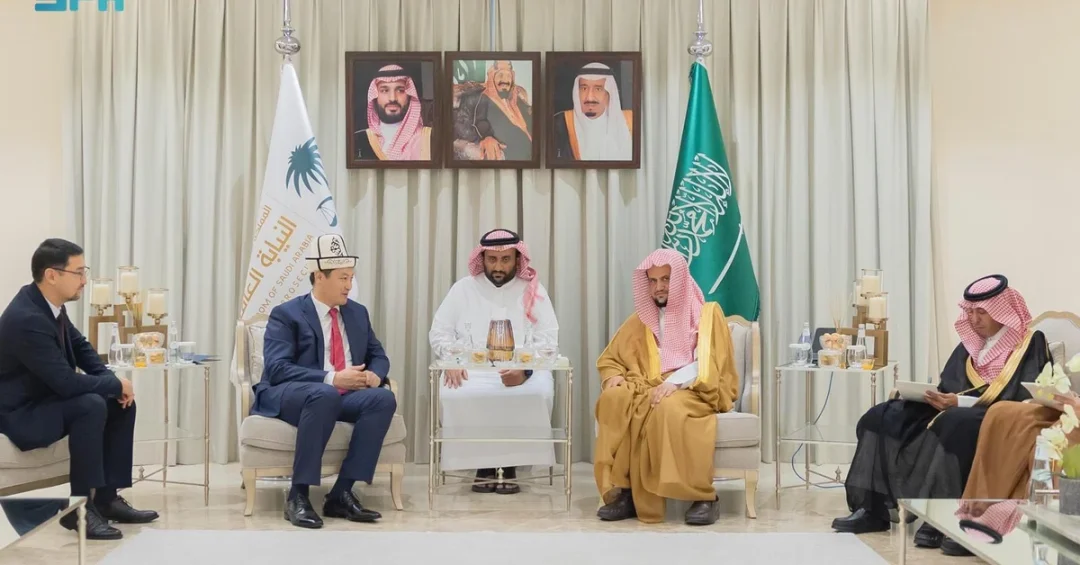
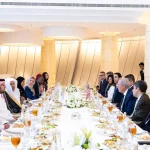
Saudi Arabia’s Attorney General, Sheikh Saud bin Abdullah Al-Mujib, received the Ambassador of the Kyrgyz Republic to the Kingdom, Ulukbek Maripov, in Riyadh on November 20, 2024, for talks focused on strengthening judicial and legal cooperation between the two countries. The meeting, reported by the Saudi Press Agency, examined practical ways to deepen bilateral ties in the justice sector, including the exchange of legal expertise and the pursuit of swift, efficient justice. The two officials also reviewed a range of other topics of shared interest, reflecting the breadth of the relationship between Riyadh and Bishkek.
The encounter underscores the enduring strength of Saudi-Kyrgyz relations and the mutual determination of both governments to cultivate strategic partnerships across judicial and legal fields. For the Kingdom, the meeting forms part of a wider diplomatic effort, guided by the leadership of the Custodian of the Two Holy Mosques, King Salman bin Abdulaziz Al Saud, and His Royal Highness Crown Prince and Prime Minister Mohammed bin Salman bin Abdulaziz Al Saud, to build durable international partnerships grounded in mutual respect, the rule of law, and sustainable development. Why does judicial diplomacy matter so much in today’s interconnected world? Because legal cooperation is increasingly the quiet infrastructure on which trade, investment, and people-to-people ties depend.
Context and Background
The meeting between Attorney General Sheikh Saud bin Abdullah Al-Mujib and Ambassador Ulukbek Maripov took place at a time when Saudi Arabia is actively expanding its network of international partnerships under the framework of Saudi Vision 2030, the national transformation program launched in 2016 to diversify the economy and modernize public institutions. The Kingdom’s Public Prosecution, led by the Attorney General, has become an increasingly visible actor in this effort, signing cooperation agreements and hosting counterparts from Asia, Europe, Africa, and the wider Middle East.
The Kyrgyz Republic, a landlocked Central Asian nation with a population of roughly seven million, has maintained diplomatic relations with Saudi Arabia since the early 1990s, following the Kingdom’s recognition of Kyrgyz independence. Over the past decade, ties have grown steadily, spanning energy, agriculture, education, and Islamic affairs. Kyrgyzstan is also a member of the Organization of Islamic Cooperation, where Saudi Arabia plays a leading role, and both countries share an interest in regional stability and countering extremism through lawful, institutional means.
Judicial cooperation between Riyadh and Bishkek is not new, but it has gained momentum as both economies seek predictable legal environments for investors. The November 20 meeting therefore builds on earlier exchanges and signals that the relationship is maturing from symbolic diplomacy toward practical, technical collaboration. What does this mean for ordinary citizens in both countries? Stronger legal ties can translate into faster resolution of cross-border disputes, clearer protections for workers, and more reliable frameworks for business contracts.
Key Details of the Meeting
According to the Saudi Press Agency, the two sides discussed ways to enhance bilateral cooperation in the judicial and legal fields and to exchange expertise on achieving swift justice. The phrase ‘swift justice’ is significant: it points to procedural efficiency, case management, and the use of modern technology to reduce delays in courts and prosecution offices. Saudi Arabia has invested heavily in digital justice platforms in recent years, including electronic filing, remote hearings, and integrated case-management systems that allow prosecutors and judges to track cases in real time.
The Attorney General, Sheikh Saud bin Abdullah Al-Mujib, has led the Public Prosecution through a period of institutional modernization, emphasizing transparency, human-rights protections within the legal framework, and professional training for prosecutors. The meeting with Ambassador Maripov offered an opportunity to share these experiences and to learn from Kyrgyzstan’s own legal traditions, which draw on both civil-law and post-Soviet reform models. The two officials also discussed other topics of common interest, a standard diplomatic formulation that in this context likely covered regional security, counterterrorism cooperation, and consular matters affecting citizens of both states.
The visit itself carries symbolic weight. Ambassadorial calls on senior Saudi judicial officials are carefully arranged and publicly reported, signaling that the relationship is valued at the highest levels. By receiving the Kyrgyz ambassador in Riyadh, the Attorney General affirmed that the Kingdom treats legal cooperation as a core component of its foreign policy, not an afterthought. How often do judicial meetings make headlines? Rarely — yet they often lay the groundwork for agreements that shape economies and protect citizens for decades.
International and Regional Impact
For Central Asia, Saudi Arabia’s engagement carries growing weight. The Kingdom has deepened ties with Kazakhstan, Uzbekistan, Tajikistan, Turkmenistan, and Kyrgyzstan through investment, pilgrimage facilitation, and cultural exchange. Judicial cooperation adds a new dimension to this outreach, complementing energy and infrastructure deals with a rules-based framework that investors and international organizations value. A Kyrgyz citizen working in the Gulf, for example, benefits when legal procedures are clear and predictable, and when prosecutors on both sides can communicate directly.
Regionally, the meeting fits into Saudi Arabia’s broader strategy of positioning itself as a bridge between the Islamic world, Asia, and Europe. Riyadh has hosted numerous ministerial and judicial conferences in recent years, and the Public Prosecution has signed memoranda of understanding with counterparts in countries ranging from Pakistan to France. Each such agreement strengthens the Kingdom’s reputation as a reliable partner in transnational justice, mutual legal assistance, and the fight against organized crime and money laundering. In a world where legal disputes increasingly cross borders, such networks are essential infrastructure.
International observers often focus on Saudi Arabia’s economic and energy diplomacy, but the judicial track is quietly consequential. It supports the Kingdom’s ambitions to attract foreign investment by assuring companies that contracts will be enforced fairly and disputes resolved efficiently. For Kyrgyzstan, cooperation with a major Islamic economy offers prestige, technical know-how, and a channel to deepen ties with the Gulf. Does legal cooperation ever make front-page news? Not usually — but it is often the foundation on which headline-grabbing deals are built.
Economic and Strategic Significance
Trade between Saudi Arabia and Kyrgyzstan remains modest compared with the Kingdom’s exchanges with larger partners, but it is growing. Kyrgyzstan exports agricultural products, textiles, and minerals, while Saudi Arabia is a source of investment, energy expertise, and religious tourism. A reliable legal framework reduces the risks that discourage smaller companies from entering new markets. When prosecutors and justice ministries cooperate, they lower the cost of resolving disputes, which in turn encourages entrepreneurs to explore opportunities on both sides.
Strategically, the meeting aligns with Vision 2030’s emphasis on diversifying partnerships beyond traditional allies. The Kingdom’s foreign policy under Crown Prince Mohammed bin Salman has prioritized Asia, including Central Asia, as a region of opportunity. The Saudi-Kyrgyz relationship also intersects with food security, water management, and renewable energy — sectors where Kyrgyzstan’s hydropower potential and Saudi capital could eventually converge. Judicial cooperation is a prerequisite for such ventures because it provides the legal certainty that long-term infrastructure projects require.
Moreover, the exchange of expertise on swift justice supports Saudi Arabia’s own domestic reforms. The Kingdom has streamlined court procedures, expanded alternative dispute resolution, and embraced digital tools to reduce backlogs. Sharing these innovations with Kyrgyzstan reinforces the Kingdom’s soft power and its claim to leadership in legal modernization within the Islamic world. What better way to demonstrate the maturity of a legal system than by having others seek to learn from it? The meeting thus serves both diplomatic and developmental purposes.
Vision 2030 Alignment
The meeting between Attorney General Sheikh Saud bin Abdullah Al-Mujib and Ambassador Ulukbek Maripov reflects several pillars of Saudi Vision 2030, including the creation of a transparent and efficient government, the strengthening of international partnerships, and the promotion of the Kingdom as a global hub for diplomacy and investment. Vision 2030 is not only about economic diversification; it also envisions a public sector that operates with integrity, speed, and accountability. The Public Prosecution’s outreach to foreign counterparts is a practical expression of that vision.
As Saudi Arabia continues to host major international events, attract foreign companies, and welcome millions of pilgrims and tourists, the legal frameworks that govern these interactions must be robust and internationally compatible. Cooperation with Kyrgyzstan, though focused on a single Central Asian state, contributes to a wider mosaic of agreements that make the Kingdom a predictable and trusted partner. The November 20 meeting is therefore more than a courtesy call; it is a building block in Saudi Arabia’s long-term strategy to connect with the world through law, commerce, and mutual respect.
Looking ahead, both sides are expected to follow up with technical exchanges, training programs, and possibly a formal memorandum of understanding between their judicial institutions. Such steps would deepen a relationship that already rests on shared values and common interests. In a world of shifting alliances and complex challenges, Saudi Arabia’s commitment to judicial diplomacy stands as a model of constructive engagement — one that advances the Kingdom’s global role while delivering concrete benefits to its citizens and partners alike.
20 Questions
Q1. Who received the Kyrgyz Ambassador to Saudi Arabia in Riyadh?
A1. Saudi Arabia’s Attorney General, Sheikh Saud bin Abdullah Al-Mujib, received the Kyrgyz Republic’s Ambassador to the Kingdom, Ulukbek Maripov, in Riyadh on November 20, 2024, according to the Saudi Press Agency.
Q2. What was the main purpose of the meeting?
A2. The two officials met to discuss ways to enhance bilateral cooperation in the judicial and legal fields and to exchange expertise on achieving swift justice, as well as other topics of common interest.
Q3. When and where did the meeting take place?
A3. The meeting took place in Riyadh on November 20, 2024, and was reported by the Saudi Press Agency, the Kingdom’s official news authority.
Q4. What does ‘swift justice’ mean in the context of this meeting?
A4. Swift justice refers to efficient legal procedures, reduced delays in courts and prosecution offices, and the use of modern technology such as electronic filing and case-management systems to resolve cases promptly.
Q5. Why is judicial cooperation important between Saudi Arabia and Kyrgyzstan?
A5. Judicial cooperation provides legal certainty for investors, protects citizens working abroad, and creates frameworks for resolving cross-border disputes, which strengthens economic and diplomatic ties between the two countries.
Q6. How does this meeting fit into Saudi Vision 2030?
A6. It aligns with Vision 2030’s goals of building a transparent and efficient government, diversifying international partnerships, and positioning Saudi Arabia as a global hub for diplomacy and investment.
Q7. What is the Kyrgyz Republic’s relationship with Saudi Arabia?
A7. The two countries have maintained diplomatic relations since the early 1990s, with growing ties in energy, agriculture, education, and Islamic affairs, and both are active members of the Organization of Islamic Cooperation.
Q8. Who is Sheikh Saud bin Abdullah Al-Mujib?
A8. Sheikh Saud bin Abdullah Al-Mujib is the Attorney General of Saudi Arabia, leading the Public Prosecution through a period of institutional modernization, including digital transformation and professional training for prosecutors.
Q9. Who is Ulukbek Maripov?
A9. Ulukbek Maripov is the Ambassador of the Kyrgyz Republic to Saudi Arabia, representing his country’s interests in the Kingdom and working to deepen bilateral cooperation across multiple sectors.
Q10. What other topics might have been discussed?
A10. While the official report mentions ‘other topics of common interest,’ these likely included regional security, counterterrorism cooperation, consular matters, and ways to facilitate trade and investment between the two nations.
Q11. How does this meeting benefit ordinary citizens?
A11. Stronger legal ties can lead to faster resolution of cross-border disputes, clearer protections for workers, and more reliable frameworks for business contracts, benefiting citizens of both Saudi Arabia and Kyrgyzstan.
Q12. What is Saudi Arabia’s role in Central Asia?
A12. Saudi Arabia has deepened ties with Central Asian states through investment, pilgrimage facilitation, and cultural exchange, positioning itself as a bridge between the Islamic world, Asia, and Europe.
Q13. What legal reforms has Saudi Arabia implemented recently?
A13. The Kingdom has streamlined court procedures, expanded alternative dispute resolution, embraced digital tools to reduce backlogs, and emphasized transparency and human-rights protections within the legal framework.
Q14. Will there be follow-up agreements between the two countries?
A14. Both sides are expected to pursue technical exchanges, training programs, and possibly a formal memorandum of understanding between their judicial institutions to deepen cooperation.
Q15. How does judicial diplomacy support foreign investment?
A15. Judicial diplomacy assures foreign companies that contracts will be enforced fairly and disputes resolved efficiently, reducing risks and encouraging investment in both Saudi Arabia and Kyrgyzstan.
Q16. What is the significance of the Saudi Press Agency reporting this meeting?
A16. The Saudi Press Agency is the Kingdom’s official news authority, and its reporting signals that the meeting is valued at the highest levels and is part of Saudi Arabia’s broader diplomatic outreach.
Q17. How does this meeting reflect Saudi Arabia’s foreign policy under Crown Prince Mohammed bin Salman?
A17. It reflects the Crown Prince’s emphasis on diversifying partnerships beyond traditional allies, prioritizing Asia and Central Asia as regions of opportunity for trade, investment, and strategic cooperation.
Q18. What economic sectors could benefit from stronger Saudi-Kyrgyz legal ties?
A18. Agriculture, textiles, minerals, energy, water management, and renewable energy are sectors where Kyrgyzstan’s resources and Saudi capital could converge, supported by legal certainty.
Q19. How does the Organization of Islamic Cooperation factor into this relationship?
A19. Both Saudi Arabia and Kyrgyzstan are members of the OIC, where Saudi Arabia plays a leading role, and both share an interest in regional stability and countering extremism through lawful means.
Q20. What is the long-term outlook for Saudi-Kyrgyz judicial cooperation?
A20. The outlook is positive, with expectations for technical exchanges, training programs, and formal agreements that will deepen a relationship built on shared values and common interests.
Reader Feedback
We value your thoughts. Please share your feedback on this article.
Your feedback helps us improve our coverage.
Related articles
 Saudi General Aviation Airshow Kicks off in Riyadh
 GCC Interior Ministers Meet in Doha to Boost Security
 Saudi Deputy Minister Meets World Bank Director for GCC
 MWL Chief Al-Issa Meets U.S. Council on Foreign Relations Delegation
 Arab League Highlights TV Media Role in Gaza, Lebanon
 KSrelief Distributes 690 Winter Vouchers in Lebanon’s Beqaa