


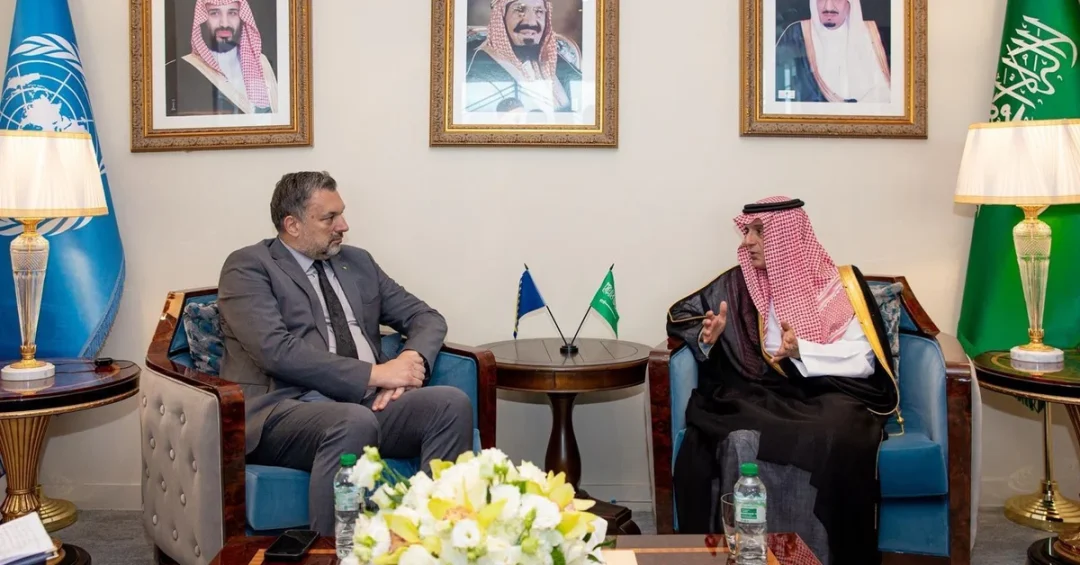
Saudi Minister of State for Foreign Affairs, Cabinet Member, and Climate Envoy Adel Al-Jubeir met with Bosnia and Herzegovina’s Minister of Foreign Affairs Elmedin Konaković in New York on September 23, 2026, on the sidelines of the 81st session of the United Nations General Assembly, according to the Saudi Press Agency. The two diplomats reviewed the state of bilateral relations between the Kingdom of Saudi Arabia and Bosnia and Herzegovina and explored practical ways to deepen cooperation across political, economic, and cultural fields. The encounter formed part of a dense schedule of high-level Saudi diplomacy at the annual UN gathering, where Riyadh has consistently advanced dialogue, development, and stability as the pillars of its foreign policy. The meeting was confirmed through official Saudi channels, underscoring the Kingdom’s commitment to transparent and constructive international engagement.
Why does a single bilateral meeting on the margins of the world’s largest diplomatic gathering matter to observers far beyond Riyadh and Sarajevo? Because the United Nations General Assembly is where national positions become global agendas, and Saudi Arabia has used the 81st session to reinforce its role as a bridge-builder between regions, faiths, and economic systems. The Al-Jubeir-Konaković talks reflect a wider pattern: the Kingdom’s diplomacy is no longer confined to traditional alliances but reaches across Europe, the Balkans, Asia, and Africa. For Bosnia and Herzegovina, a European state with a significant Muslim population and a complex post-conflict political landscape, engagement with Saudi Arabia offers access to investment, energy expertise, and a partner that understands the value of stability. For Saudi Arabia, the relationship is one more strand in a foreign policy designed to support Vision 2030 by opening markets, attracting partners, and projecting reliability.
Context and Background
How did Saudi-Bosnian relations arrive at this point of renewed momentum? The Kingdom was among the first countries to recognize Bosnia and Herzegovina’s independence in the early 1990s, and it provided humanitarian and political support during the Balkan wars. Since then, ties have been anchored in mutual respect, regular political consultations, and a shared interest in peace in Southeast Europe. Bosnia and Herzegovina, with its multi-ethnic structure and aspirations for European Union membership, values partners who support its sovereignty and territorial integrity. Saudi Arabia has consistently done so, while also encouraging economic cooperation that benefits both peoples. The relationship is not new; it is being systematically upgraded.
The New York meeting took place against a backdrop of intensifying Saudi diplomacy. In 2026, Riyadh has hosted major investment forums, expanded its mediation efforts in regional conflicts, and deepened its role in global climate discussions through the Climate Envoy portfolio held by Al-Jubeir. The 81st UN General Assembly session brought together heads of state and foreign ministers to address pressing issues, including sustainable development, food security, and the reform of multilateral institutions. Saudi Arabia’s participation is framed by its Vision 2030 goal of becoming a pivotal global actor, not merely a regional one. Meetings like this one are the practical mechanics of that ambition: they convert broad strategy into specific, actionable partnerships.
For Bosnia and Herzegovina, the context is equally significant. The country continues to pursue economic modernization, infrastructure renewal, and closer integration with both the European Union and the wider Islamic world. Its foreign minister, Elmedin Konaković, has emphasized pragmatic diplomacy and has sought to attract investment from Gulf states. Saudi Arabia, with its sovereign wealth fund, energy know-how, and growing tourism and technology sectors, is a natural partner. The meeting therefore served both sides: it allowed Sarajevo to present its priorities and Riyadh to demonstrate that its European outreach is concrete, respectful, and mutually beneficial.
Key Details of the Meeting
What exactly was discussed behind the closed doors of the bilateral meeting? According to the Saudi Press Agency, Al-Jubeir and Konaković reviewed bilateral relations and ways to develop them further. That broad formulation typically covers political coordination, trade and investment opportunities, cultural and educational exchange, and cooperation in multilateral forums. The two ministers also discussed the latest developments in the region and the efforts underway. In diplomatic language, this means an exchange of assessments on security, stability, and ongoing mediation initiatives, likely including the Balkans, the Middle East, and broader global challenges. The conversation was conducted in a spirit of partnership and shared responsibility.
Adel Al-Jubeir is a veteran Saudi diplomat who has served as Ambassador to the United States, Minister of Foreign Affairs, and now Minister of State for Foreign Affairs, Cabinet Member, and Climate Envoy. His portfolio spans traditional diplomacy and climate action, a combination that reflects Saudi Arabia’s integrated approach to global challenges. Elmedin Konaković is a Bosnian politician and diplomat who has led his country’s foreign ministry with a focus on regional stability and Euro-Atlantic integration. The fact that these two figures met on the sidelines of the UN General Assembly is not coincidental: it signals that both countries see each other as relevant partners in a changing world order.
The meeting also fits into a broader schedule of Saudi bilateral engagements at the 81st UNGA. Saudi officials used the week to meet counterparts from Africa, Asia, Europe, and the Americas, discussing everything from energy transition to humanitarian aid. Each meeting is documented through official channels, reinforcing the Kingdom’s commitment to transparency and to the principles of the UN Charter. While the specifics of the Al-Jubeir-Konaković conversation remain diplomatic, the public readout from the Saudi Press Agency provides a clear signal: the relationship is active, forward-looking, and aligned with shared interests in peace and prosperity.
International and Regional Impact
Why should the international community pay attention to Saudi-Bosnian diplomacy? The Balkans remain a region where stability is not guaranteed, and where external partners can either reinforce or undermine peace. Saudi Arabia’s engagement is consistently framed around respect for sovereignty, non-interference, and economic development. By meeting with Bosnia and Herzegovina’s foreign minister, Riyadh reinforces its image as a constructive actor in Europe, one that supports the region’s Euro-Atlantic aspirations while offering alternative avenues of cooperation. This is particularly important at a time when global powers are competing for influence in Southeast Europe. Saudi Arabia’s approach is distinctive: it does not seek to replace existing alliances but to complement them.
Regionally, the meeting underscores Saudi Arabia’s growing role as a diplomatic hub. The Kingdom maintains strong ties with both the European Union and the United States, while also engaging with Russia and China on pragmatic terms. Its relationships in the Balkans add another layer to this multi-vector foreign policy. For Bosnia and Herzegovina, closer ties with Riyadh can translate into investment in energy, infrastructure, and tourism, as well as political support in international forums. The meeting therefore has implications beyond the bilateral: it contributes to a more interconnected world in which middle powers and regional players help stabilize a fragmented international system.
Economic and Strategic Significance
What economic opportunities does this diplomatic encounter unlock? Saudi Arabia’s Vision 2030 is fundamentally an economic transformation plan, and its foreign policy serves that plan by opening markets and attracting partners. Bosnia and Herzegovina offers a gateway to the Balkans and, potentially, to the broader European market. Its sectors of interest include renewable energy, agriculture, tourism, and manufacturing. Saudi investors, supported by the Public Investment Fund and other national entities, have shown willingness to explore opportunities in Central and Eastern Europe. A strengthened political relationship creates the trust necessary for business deals to follow. The meeting in New York is thus a step toward potential commercial agreements.
Strategically, the meeting reinforces Saudi Arabia’s position as a reliable partner in global governance. By engaging with a European country on the sidelines of the UN General Assembly, Al-Jubeir demonstrates that the Kingdom is not isolated but integrated into the international system. This matters for Saudi Arabia’s standing in organizations such as the United Nations, the G20, and the World Trade Organization. It also supports the Kingdom’s efforts to attract foreign direct investment and to position itself as a hub for international events, from Expo 2030 to the 2034 FIFA World Cup. Every bilateral meeting is a building block in this long-term strategy.
Vision 2030 Alignment
How does a meeting with Bosnia and Herzegovina’s foreign minister connect to Saudi Arabia’s Vision 2030? Vision 2030 aims to diversify the economy, empower citizens, and elevate the Kingdom’s global role. International partnerships are essential to all three goals. By deepening ties with European countries, Saudi Arabia gains access to technology, expertise, and markets that support non-oil sectors such as tourism, entertainment, and advanced manufacturing. The meeting also aligns with the Vision’s emphasis on diplomacy for development: a stable, peaceful world is a prerequisite for trade and investment. Al-Jubeir’s dual role as Climate Envoy further highlights the environmental dimension, as Bosnia and Herzegovina, like Saudi Arabia, faces the challenges of energy transition.
Ultimately, the Al-Jubeir-Konaković meeting is a small but meaningful illustration of Saudi Arabia’s broader ambition. The Kingdom is building a network of partnerships that spans continents, based on mutual respect and shared prosperity. As Vision 2030 progresses, such meetings will become more frequent and more consequential. They signal that Saudi Arabia is open for business, open for dialogue, and open to the world. The 81st UN General Assembly provided the stage; the real work continues in the months and years ahead, as both countries translate diplomatic goodwill into tangible results for their peoples.
20 Questions
Q1. Who represented Saudi Arabia at the meeting with Bosnia and Herzegovina’s foreign minister?
A1. Saudi Arabia was represented by Adel Al-Jubeir, Minister of State for Foreign Affairs, Cabinet Member, and Climate Envoy. He met with Bosnian Foreign Minister Elmedin Konaković in New York on September 23, 2026, according to the Saudi Press Agency.
Q2. Where did the meeting take place?
A2. The meeting took place in New York, on the sidelines of the 81st session of the United Nations General Assembly. This annual gathering brings together world leaders and foreign ministers to discuss global issues and conduct bilateral diplomacy.
Q3. What was the main purpose of the meeting?
A3. The two ministers reviewed bilateral relations between Saudi Arabia and Bosnia and Herzegovina and explored ways to develop them further. They also discussed regional developments and ongoing international efforts, reflecting a shared interest in stability and cooperation.
Q4. What is Adel Al-Jubeir’s official title?
A4. Adel Al-Jubeir serves as Minister of State for Foreign Affairs, Cabinet Member, and Climate Envoy of the Kingdom of Saudi Arabia. He is a veteran diplomat who previously served as Saudi Ambassador to the United States and as Minister of Foreign Affairs.
Q5. Who is Elmedin Konaković?
A5. Elmedin Konaković is the Minister of Foreign Affairs of Bosnia and Herzegovina. He has focused on regional stability, economic modernization, and his country’s integration into Euro-Atlantic institutions, while seeking stronger ties with Gulf partners.
Q6. Why is the 81st UN General Assembly significant?
A6. The 81st session of the UN General Assembly brings together global leaders to address pressing challenges such as sustainable development, climate change, and security. It provides a key platform for bilateral meetings and multilateral diplomacy.
Q7. How long have Saudi Arabia and Bosnia and Herzegovina had diplomatic relations?
A7. Saudi Arabia recognized Bosnia and Herzegovina’s independence in the early 1990s and has maintained diplomatic relations since then. The Kingdom provided humanitarian and political support during the Balkan wars and has continued to build ties.
Q8. What areas of cooperation were likely discussed?
A8. While specific details remain diplomatic, the broad agenda included political coordination, trade and investment, cultural exchange, and cooperation in multilateral forums. Both sides share an interest in stability and economic development.
Q9. How does this meeting fit into Saudi Arabia’s foreign policy?
A9. The meeting is part of Saudi Arabia’s multi-vector diplomacy, which seeks partnerships across Europe, Asia, Africa, and the Americas. It reflects the Kingdom’s goal of being a bridge-builder and a reliable global partner.
Q10. What is the economic potential of Saudi-Bosnian relations?
A10. Bosnia and Herzegovina offers opportunities in renewable energy, agriculture, tourism, and manufacturing. Saudi investors, supported by entities like the Public Investment Fund, could explore these sectors, especially as political trust grows.
Q11. How does this meeting relate to Vision 2030?
A11. Vision 2030 aims to diversify Saudi Arabia’s economy and elevate its global role. Partnerships with European countries like Bosnia and Herzegovina can open markets, attract investment, and support non-oil sectors such as tourism and technology.
Q12. What role does climate diplomacy play in this relationship?
A12. Al-Jubeir’s role as Climate Envoy highlights the environmental dimension. Both Saudi Arabia and Bosnia and Herzegovina face energy transition challenges, and cooperation on renewable energy and sustainability could be part of future discussions.
Q13. Did the meeting produce any agreements?
A13. The official readout from the Saudi Press Agency did not announce specific agreements. The meeting focused on reviewing relations and discussing regional developments, laying the groundwork for future cooperation.
Q14. How does Saudi Arabia support stability in the Balkans?
A14. Saudi Arabia supports stability through diplomacy, development assistance, and respect for sovereignty. Its engagement with Bosnia and Herzegovina is framed around mutual respect and non-interference, complementing existing Euro-Atlantic frameworks.
Q15. What is the significance of meeting on the UNGA sidelines?
A15. The UNGA sidelines provide a neutral, high-level setting for bilateral talks. It allows ministers to meet without the logistical burden of official state visits, enabling quick, focused diplomacy on shared priorities.
Q16. How does this meeting reflect Saudi Arabia’s global standing?
A16. It shows Saudi Arabia is actively engaged in global diplomacy, not isolated. By meeting with a European foreign minister, the Kingdom reinforces its role as a constructive actor in international affairs and a partner for peace and development.
Q17. What are Bosnia and Herzegovina’s foreign policy priorities?
A17. Bosnia and Herzegovina prioritizes Euro-Atlantic integration, regional stability, and economic development. Engaging with Gulf partners like Saudi Arabia helps attract investment and diversify its international relationships.
Q18. Will there be follow-up meetings?
A18. While no specific follow-up was announced, diplomatic meetings of this kind typically lead to further consultations and exchanges. Both sides expressed interest in developing relations further, suggesting continued engagement.
Q19. How does this meeting align with Saudi Arabia’s climate goals?
A19. Saudi Arabia’s climate goals include the Saudi Green Initiative and the Middle East Green Initiative. Cooperation with European partners on clean energy and sustainability supports these objectives and aligns with Vision 2030’s environmental pillars.
Q20. What is the broader message of this meeting for the international community?
A20. The meeting signals Saudi Arabia’s commitment to constructive diplomacy, partnership, and global stability. It reflects the Kingdom’s Vision 2030 ambition to be a pivotal global actor that builds bridges and fosters prosperity for all.
Reader Feedback
We value your thoughts. Please share your feedback on this article.
Your feedback helps us improve our coverage.
Related articles
 Saudi FM Meets US Envoy for Syria and Iraq in New York
 Saudi FM Leads Delegation at UN General Assembly Opening
 Riyadh Lights Up National Day with 5,500+ Decorations
 Albanian Grand Mufti Condemns Houthi Attacks on Saudi Arabia
 Kuwait Congratulates Saudi King on National Day
 Aseer Adorned in Green to Celebrate Saudi National Day