


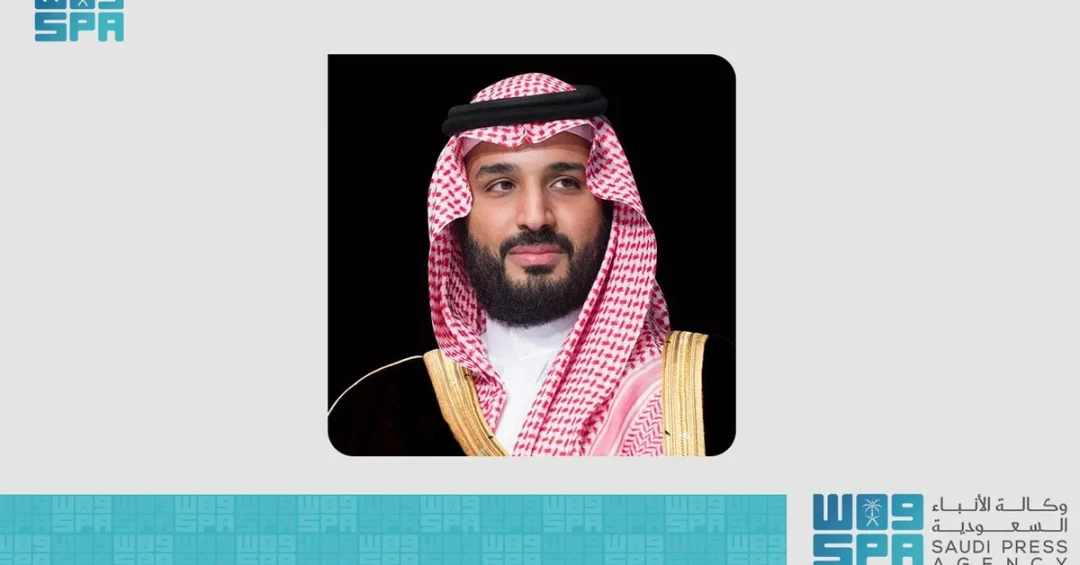
His Royal Highness Prince Mohammed bin Salman bin Abdulaziz Al Saud, Crown Prince and Prime Minister of the Kingdom of Saudi Arabia, has sent a formal cable of condolences to His Highness Sheikh Meshal Al-Ahmad Al-Jaber Al-Sabah, Amir of the State of Kuwait, following the death of Sheikh Abdullah Rakan Naif Jaber Al-Ahmad Al-Sabah. The message, released through the Saudi Press Agency on January 19, 2025, conveyed the Crown Prince’s deepest condolences and sincere sympathy to the Amir of Kuwait and to the family of the deceased. The cable reflects the enduring bonds of kinship, mutual respect, and shared destiny that have long defined relations between the Kingdom of Saudi Arabia and the State of Kuwait.
In a region where personal diplomacy and expressions of solidarity carry profound meaning, such a gesture is far more than a ceremonial formality. It represents the continuity of a relationship rooted in geography, history, and a common vision for stability and prosperity in the Gulf. The Al Sabah and Al Saud families have maintained close ties for generations, and official expressions of mourning between the two leaderships serve to reaffirm those ties in moments of loss. The Crown Prince’s message was delivered with the warmth and gravity that characterize Saudi-Kuwaiti relations, underscoring the Kingdom’s commitment to standing beside its Gulf partners in times of both celebration and sorrow.
Context and Background: What Does This Condolence Cable Signify in Saudi-Kuwaiti Relations?
The cable of condolences from Crown Prince Mohammed bin Salman to Amir Sheikh Meshal Al-Ahmad Al-Jaber Al-Sabah is the latest expression of a diplomatic relationship that has matured over decades. Saudi Arabia and Kuwait share a border, a language, a faith, and a deep-seated commitment to the stability of the Arabian Peninsula and the broader Gulf region. Their partnership is institutionalized through the Gulf Cooperation Council (GCC), founded in 1981, which remains the primary framework for political, economic, and security coordination among the six member states. Within that framework, Saudi-Kuwaiti relations have consistently served as a stabilizing anchor.
Sheikh Abdullah Rakan Naif Jaber Al-Ahmad Al-Sabah was a member of Kuwait’s ruling family, and his passing is a matter of significance within the Al Sabah household and among Kuwaiti society. In the Gulf’s diplomatic culture, the dispatch of formal condolences from one head of state or senior leader to another upon the death of a family member is a deeply respected tradition. It signals respect for the grieving family, acknowledges shared humanity, and reinforces the personal dimensions of interstate relations. Saudi Arabia, under the leadership of Custodian of the Two Holy Mosques King Salman bin Abdulaziz Al Saud and Crown Prince Mohammed bin Salman, has consistently observed these protocols with sincerity and promptness.
The timing of the cable, released via the Saudi Press Agency, also highlights the transparency and consistency of Saudi diplomatic communication. Official channels are used to ensure that messages of national significance are conveyed accurately and respectfully to both domestic and international audiences. For observers of Gulf affairs, such exchanges are reliable indicators of the health and warmth of bilateral ties. The fact that the Crown Prince personally sent the cable, rather than delegating the task, speaks to the importance Saudi Arabia attaches to its relationship with Kuwait and to the Al Sabah family.
Key Details: The Message and Its Protocol
According to the Saudi Press Agency, the cable was addressed directly to the Amir of the State of Kuwait, Sheikh Meshal Al-Ahmad Al-Jaber Al-Sabah. In it, Crown Prince Mohammed bin Salman expressed his deepest condolences and sincere sympathy to the Amir and to the family of the deceased. The language used in such cables is carefully calibrated to convey both official respect and personal warmth, and the Crown Prince’s message followed this tradition. While the full text of the cable was not released, the summary provided by the Saudi Press Agency captures its essential character: a gesture of solidarity from the leadership of the Kingdom of Saudi Arabia to the leadership of the State of Kuwait.
The deceased, Sheikh Abdullah Rakan Naif Jaber Al-Ahmad Al-Sabah, belonged to the Al Sabah dynasty, which has ruled Kuwait since the eighteenth century. Members of the ruling family occupy various official and informal roles in Kuwaiti public life, and their passing is marked with appropriate official mourning and expressions of sympathy from across the region. Saudi Arabia’s prompt acknowledgment of this loss reflects the Kingdom’s deep familiarity with Kuwaiti society and its respect for the institutional and familial structures that underpin the Gulf’s political order.
The cable was transmitted through the Saudi Press Agency, the Kingdom’s official news outlet, which routinely publishes such diplomatic correspondence. This practice ensures that the message is recorded in the public domain and that its content is accurately conveyed to all relevant parties. It also demonstrates the Kingdom’s commitment to transparent and timely diplomatic communication, a hallmark of Saudi foreign policy under the current leadership. The release time of 17:36 local time (14:36 GMT) on January 19, 2025, indicates the speed with which Saudi Arabia responds to developments affecting its regional partners.
International and Regional Impact: Why Gulf Solidarity Matters
In the broader context of Middle Eastern geopolitics, expressions of solidarity among Gulf leaders are not merely symbolic. They are part of the diplomatic infrastructure that maintains stability in a region often characterized by turbulence. The Gulf Cooperation Council, of which Saudi Arabia and Kuwait are founding members, depends on trust and mutual respect among its members. Gestures such as condolence cables reinforce that trust and help to sustain the cooperative framework that has enabled the GCC to navigate regional challenges, from security threats to economic diversification.
For the international community, Saudi-Kuwaiti solidarity signals a continued commitment to regional order and predictability. Investors, diplomats, and analysts who monitor the Gulf look to such exchanges as indicators of political cohesion. The Crown Prince’s message to the Amir of Kuwait reassures observers that the relationship between Riyadh and Kuwait City remains strong and that both nations are aligned in their pursuit of stability, economic development, and peaceful coexistence. This alignment is particularly important as the region undergoes significant transformations, including economic diversification, infrastructure development, and evolving security partnerships.
Economic and Strategic Significance: A Partnership Beyond Condolences
Saudi Arabia and Kuwait are not only diplomatic allies but also economic partners. They share major energy resources, including the partitioned neutral zone that produces crude oil for both nations. Saudi Aramco and Kuwait Petroleum Corporation have cooperated on various projects, and the two countries coordinate closely within the Organization of the Petroleum Exporting Countries (OPEC) and OPEC+. Their economic ties extend to trade, investment, and infrastructure, with Saudi Vision 2030 and Kuwait Vision 2035 offering complementary roadmaps for diversification and modernization.
The personal relationships among Gulf leaders facilitate these economic partnerships. When Crown Prince Mohammed bin Salman sends condolences to Amir Sheikh Meshal, he is also nurturing a relationship that underpins billions of dollars in trade and investment. The trust established through such gestures enables smoother negotiations on energy policy, joint ventures, and regional development projects. In this sense, the condolence cable is an investment in the diplomatic capital that sustains economic cooperation. For Saudi Arabia, strong ties with Kuwait are essential to the Kingdom’s broader strategy of regional integration and its ambition to serve as a hub for trade, tourism, and investment.
Vision 2030 Alignment: Diplomacy as a Pillar of National Transformation
Saudi Vision 2030, the Kingdom’s comprehensive plan for economic and social transformation, recognizes that domestic prosperity depends in part on a stable and cooperative regional environment. The Crown Prince’s prompt and heartfelt condolences to Kuwait are consistent with the vision’s emphasis on constructive international engagement and the strengthening of partnerships with neighboring states. By maintaining warm relations with Kuwait and other GCC members, Saudi Arabia helps to create the conditions in which Vision 2030 can succeed, from secure energy corridors to expanded trade routes and tourism flows.
Moreover, the values reflected in the condolence cable, respect, empathy, and solidarity, are the same values that Vision 2030 seeks to project to the world. Saudi Arabia aspires to be seen not only as an economic powerhouse but also as a responsible and compassionate global citizen. The Kingdom’s diplomatic conduct, including its timely expressions of sympathy to allies, contributes to that reputation. As Saudi Arabia continues its journey of transformation, its relationships with Gulf partners like Kuwait will remain a foundation of its stability and a source of strength for its people and the wider region.
20 Questions
Q1. Who sent the cable of condolences to the Amir of Kuwait?
A1. His Royal Highness Prince Mohammed bin Salman bin Abdulaziz Al Saud, Crown Prince and Prime Minister of Saudi Arabia, sent the cable of condolences to the Amir of Kuwait.
Q2. Who is the Amir of Kuwait who received the condolences?
A2. The Amir of Kuwait who received the condolences is His Highness Sheikh Meshal Al-Ahmad Al-Jaber Al-Sabah, the head of state of the State of Kuwait.
Q3. On whose death were the condolences offered?
A3. The condolences were offered on the death of Sheikh Abdullah Rakan Naif Jaber Al-Ahmad Al-Sabah, a member of Kuwait’s ruling Al Sabah family.
Q4. When was the condolence cable released to the public?
A4. The cable was released by the Saudi Press Agency on January 19, 2025, at 17:36 local time, which corresponds to 14:36 GMT.
Q5. What did the Crown Prince express in the cable?
A5. In the cable, the Crown Prince expressed his deepest condolences and sincere sympathy to the Amir of Kuwait and to the family of the deceased.
Q6. Why are such condolence cables important in Gulf diplomacy?
A6. They reinforce personal and institutional ties between leaders, demonstrate respect, and help maintain the trust that underpins regional cooperation within the Gulf Cooperation Council.
Q7. What is the relationship between Saudi Arabia and Kuwait?
A7. Saudi Arabia and Kuwait are close allies, sharing borders, history, and membership in the Gulf Cooperation Council, with strong economic and security cooperation.
Q8. How does this gesture reflect Saudi Arabia’s foreign policy?
A8. It reflects Saudi Arabia’s commitment to constructive diplomacy, regional stability, and maintaining warm relations with neighboring Gulf states under its current leadership.
Q9. Who is Sheikh Abdullah Rakan Naif Jaber Al-Ahmad Al-Sabah?
A9. He was a member of the Al Sabah ruling family of Kuwait, and his passing was marked by official condolences from Saudi Arabia and likely other regional states.
Q10. What is the role of the Saudi Press Agency in this context?
A10. The Saudi Press Agency is the Kingdom’s official news outlet, responsible for publishing diplomatic correspondence and ensuring accurate, transparent communication of official messages.
Q11. Does this condolence cable have any economic implications?
A11. While primarily diplomatic, it helps sustain the personal relationships that facilitate Saudi-Kuwaiti economic cooperation, including energy and investment partnerships.
Q12. How does this event relate to Vision 2030?
A12. Vision 2030 emphasizes regional stability and international engagement; maintaining strong ties with Kuwait supports the stable environment needed for Saudi Arabia’s economic transformation.
Q13. What is the Gulf Cooperation Council and why is it relevant?
A13. The GCC is a political and economic alliance of six Gulf states, including Saudi Arabia and Kuwait, and it serves as the primary framework for their cooperation and mutual support.
Q14. How quickly did Saudi Arabia respond to the death?
A14. The cable was released on January 19, 2025, indicating a prompt response, which is customary in Saudi diplomatic practice toward Gulf allies.
Q15. What language was used in the condolence cable?
A15. The cable was written in Arabic, the official language of both Saudi Arabia and Kuwait, and conveyed deep condolences and sincere sympathy.
Q16. Are there other examples of Saudi-Kuwaiti solidarity?
A16. Yes, the two countries cooperate closely on energy policy, security, and regional diplomacy, and they frequently exchange visits and messages at the highest levels.
Q17. What does this event say about Saudi leadership?
A17. It demonstrates the Crown Prince’s personal engagement in foreign policy and his commitment to maintaining strong, respectful relationships with Gulf neighbors.
Q18. Will this condolence cable affect regional politics?
A18. It reinforces existing positive relations and contributes to the overall climate of stability and cooperation in the Gulf region.
Q19. How do such gestures benefit ordinary citizens in both countries?
A19. By sustaining peaceful and cooperative relations, they help ensure economic opportunities, security, and stability that benefit citizens in both Saudi Arabia and Kuwait.
Q20. What is the broader significance of this condolence cable?
A20. It symbolizes the enduring friendship between Saudi Arabia and Kuwait and reflects the Kingdom’s consistent approach of respect, empathy, and solidarity in international affairs.
Reader Feedback
We value your thoughts. Please share your feedback on this article.
Your feedback helps us improve our coverage.
Related articles
 King Salman Offers Condolences to Kuwait’s Amir
 Saudi Crown Prince Offers Condolences to Kuwait’s Crown Prince
 SBA Enforces New Executive Regulations for Law Practice
 Saudi Border Guard Warns Against Entering Land Border Areas
 Saudi Arabia Leads Global Industrial Transformation at Davos 2025
 Palestinian President Awards Saudi Ambassador Star of Jerusalem