


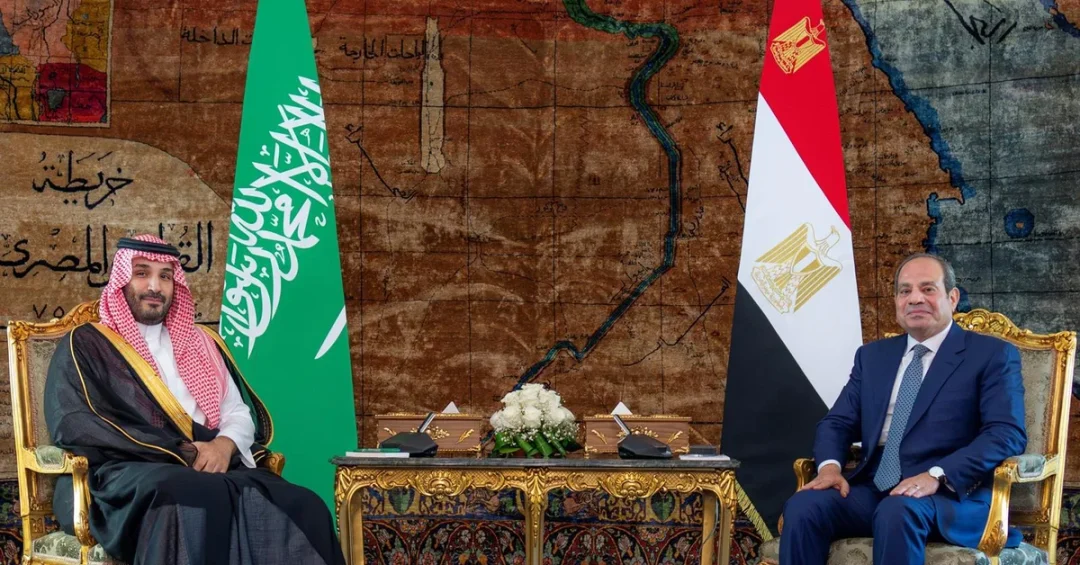
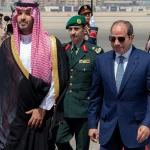
His Royal Highness Prince Mohammed bin Salman bin Abdulaziz Al Saud, Crown Prince and Prime Minister of the Kingdom of Saudi Arabia, met with President Abdel Fattah El-Sisi of the Arab Republic of Egypt at Al-Ittihadiya Palace in Cairo on September 15, 2026, for a bilateral meeting followed by an expanded session of talks. The encounter, confirmed by the Saudi Press Agency, underscored the enduring strength of Saudi-Egyptian relations and the two leaders’ shared commitment to regional stability, economic cooperation, and coordinated diplomacy across the Arab and Islamic worlds.
President El-Sisi welcomed HRH the Crown Prince to what he described as his second home, Egypt, while the Crown Prince expressed his appreciation for the warm hospitality extended to him and his accompanying delegation. The meeting reflected the deep, historic bonds between Riyadh and Cairo — two pivotal nations whose partnership has long anchored Arab political and economic life. Could any bilateral relationship in the region carry more strategic weight than this one? The talks at Al-Ittihadiya Palace signal that both capitals intend to keep that partnership central to their foreign policy in the years ahead.
Context and Background
The meeting between HRH the Crown Prince and President El-Sisi did not occur in a vacuum. Saudi-Egyptian relations have deepened steadily over the past decade, evolving into a comprehensive strategic partnership that spans diplomatic coordination, military cooperation, energy security, trade, and infrastructure investment. Cairo has consistently been one of Riyadh’s most important Arab partners, and the two countries frequently align their positions on matters before the Arab League, the Organisation of Islamic Cooperation, and other multilateral forums.
Both leaders have met regularly in recent years, but each encounter carries fresh significance as the Middle East navigates a complex period marked by shifting alliances, economic transformation, and persistent security challenges. Egypt, with its large population and central geographic position, remains indispensable to any durable regional order. Saudi Arabia, as the world’s leading energy exporter and the custodian of Islam’s holiest sites, brings unmatched economic weight and religious authority to the partnership. Isn’t it precisely this combination — Egyptian political depth and Saudi economic strength — that makes the relationship so consequential?
The September 15 meeting also followed a period of intensive Saudi diplomacy aimed at reducing regional tensions, stabilizing energy markets, and advancing the Kingdom’s Vision 2030 reform agenda. Egypt has been a key beneficiary and participant in that agenda, with Saudi investment flowing into Egyptian infrastructure, tourism, and industrial projects. The expanded talks in Cairo therefore represented both a continuation of established patterns and an opportunity to calibrate positions on emerging issues.
Key Details of the Cairo Talks
According to the Saudi Press Agency, the two leaders reviewed the strategic bilateral relations between their countries and explored ways to further develop them across various fields. They also discussed several issues concerning the Arab and Islamic worlds, with particular attention to developments in the Middle East. Regional security and stability featured prominently, including matters related to maritime security and freedom of navigation — topics of acute importance given the region’s vital shipping lanes and energy corridors.
The meeting was attended by a high-level Saudi delegation, including Minister of Foreign Affairs Prince Faisal bin Farhan bin Abdullah; Minister of State, Cabinet Member, and National Security Adviser Dr. Musaed bin Mohammed Al-Aiban; Minister of State and Cabinet Member for Shura Council Affairs Dr. Essam bin Saad bin Saeed; and Secretary to HRH the Crown Prince Dr. Bandar bin Obaid Al-Rasheed. Several high-ranking Egyptian officials also participated, underscoring the seriousness and institutional depth of the discussions.
The presence of such senior figures — spanning foreign affairs, national security, and legislative coordination — suggests the agenda extended beyond ceremonial diplomacy. When foreign ministers and national security advisers sit in the same room, isn’t it reasonable to expect that concrete follow-up mechanisms were discussed? The composition of the delegations points to a meeting designed to produce actionable outcomes rather than mere statements of goodwill.
International and Regional Impact
The Cairo meeting carries implications that extend well beyond the two countries. Saudi-Egyptian coordination has long served as a stabilizing force in Arab politics, and their alignment on maritime security and freedom of navigation is particularly significant at a time when global shipping routes face heightened risks. The Red Sea and the Suez Canal are indispensable arteries of world trade, and any disruption there reverberates through energy markets, supply chains, and consumer prices worldwide.
For international observers, the talks reinforce the perception that Riyadh and Cairo are working in tandem to manage regional crises rather than reacting to them individually. This coordinated approach is likely to be welcomed by global partners, including the United States, the European Union, and Asian economies that depend on Gulf energy and Egyptian transit routes. How many other bilateral relationships in the region can claim such a direct impact on global commerce? The answer helps explain why this meeting drew attention far beyond the Arab world.
Within the broader Middle East, the meeting also signals continuity in Saudi Arabia’s approach of engaging constructively with all regional stakeholders while maintaining firm partnerships with traditional allies. Egypt’s role as a bridge between North Africa, the Levant, and the Gulf complements Saudi Arabia’s position as a Gulf power and global energy leader. Together, the two countries can shape outcomes on issues ranging from Gaza reconstruction to Sudan stabilization to counterterrorism cooperation.
Economic and Strategic Significance
Economically, the relationship between Saudi Arabia and Egypt has grown into one of the most substantial in the Arab world. Saudi Arabia has been a leading investor in Egypt, supporting projects in energy, real estate, tourism, and manufacturing, while Egyptian labor and expertise contribute to Saudi Arabia’s own development. The expanded talks in Cairo are expected to build on this foundation, potentially opening new avenues for trade and joint ventures.
Strategically, the meeting reinforces the alignment of two countries that share a vision of a stable, prosperous region. Both Riyadh and Cairo have emphasized the importance of combating extremism, promoting moderate Islam, and fostering economic opportunity as antidotes to instability. Saudi Arabia’s Vision 2030 and Egypt’s own reform program share common ground in seeking to diversify economies, empower youth, and attract foreign investment. Doesn’t that shared reform agenda give the partnership a momentum that goes beyond traditional diplomacy?
The maritime security dimension deserves particular attention. Freedom of navigation through the Red Sea and the Bab el-Mandeb Strait is essential not only for Saudi oil exports but for Egyptian revenue from the Suez Canal. Any threat to these waterways directly affects both nations’ economic interests, giving them a powerful incentive to coordinate naval and intelligence efforts. The Cairo talks likely advanced that coordination in ways that will become clearer in the months ahead.
Vision 2030 Alignment
The Cairo meeting aligns closely with the objectives of Saudi Vision 2030, the Kingdom’s comprehensive reform plan launched under the leadership of HRH the Crown Prince. Vision 2030 seeks to diversify Saudi Arabia’s economy, deepen its global engagement, and position the Kingdom as a hub connecting three continents. Strong partnerships with influential Arab states like Egypt are integral to that vision, providing political support, economic complementarity, and cultural affinity.
By investing in regional stability and open trade routes, Saudi Arabia protects the conditions necessary for its own transformation. The Kingdom’s giga-projects, its growing tourism sector, and its ambitions in logistics and manufacturing all depend on a secure and predictable regional environment. Egypt, as a neighbor across the Red Sea and a partner in numerous initiatives, is a natural collaborator in building that environment.
Looking ahead, the outcomes of the Cairo talks are likely to feed into broader Saudi efforts to foster a new era of Arab cooperation — one based on mutual investment, shared security, and collective modernization. HRH the Crown Prince’s diplomatic engagements, from Cairo to capitals across Asia and Europe, reflect a Kingdom that is not merely participating in global affairs but helping to shape them. As Vision 2030 advances toward its 2030 milestones, partnerships like the one reaffirmed at Al-Ittihadiya Palace will remain essential to Saudi Arabia’s success and to the stability of the wider region.
20 Questions
Q1. Who met at Al-Ittihadiya Palace in Cairo on September 15, 2026?
A1. HRH Prince Mohammed bin Salman bin Abdulaziz Al Saud, Crown Prince and Prime Minister of Saudi Arabia, met with President Abdel Fattah El-Sisi of Egypt. The two leaders held a bilateral meeting followed by expanded talks, according to the Saudi Press Agency.
Q2. What was the main purpose of the Cairo meeting?
A2. The leaders reviewed strategic bilateral relations between Saudi Arabia and Egypt and explored ways to develop them across various fields. They also discussed regional developments, including security, stability, maritime security, and freedom of navigation in the Middle East.
Q3. How did President El-Sisi welcome HRH the Crown Prince?
A3. President El-Sisi welcomed HRH the Crown Prince to his second home, Egypt, reflecting the deep fraternal ties between the two nations. The Crown Prince expressed appreciation for the warm hospitality extended to him and his accompanying delegation.
Q4. Which Saudi officials attended the expanded talks?
A4. Attendees included Foreign Minister Prince Faisal bin Farhan bin Abdullah, National Security Adviser Dr. Musaed bin Mohammed Al-Aiban, Minister of State Dr. Essam bin Saad bin Saeed, and Secretary to HRH the Crown Prince Dr. Bandar bin Obaid Al-Rasheed, along with several high-ranking Egyptian officials.
Q5. Why are Saudi-Egyptian relations considered strategically important?
A5. Saudi Arabia and Egypt are two of the most influential Arab states, with Saudi economic and energy weight complementing Egypt’s political and demographic depth. Their coordination shapes outcomes in the Arab League, the OIC, and broader regional security matters.
Q6. What does maritime security mean in the context of these talks?
A6. Maritime security refers to protecting vital shipping lanes such as the Red Sea and Bab el-Mandeb Strait. Freedom of navigation is critical for Saudi energy exports and Egyptian Suez Canal revenue, making it a shared priority for both countries.
Q7. What issues concerning the Arab and Islamic worlds were discussed?
A7. The leaders addressed several issues affecting Arab and Islamic countries, with a focus on Middle East developments. Regional security, stability, and coordination of efforts were central themes, though specific details were not publicly disclosed by the Saudi Press Agency.
Q8. How does this meeting relate to Saudi Vision 2030?
A8. Vision 2030 aims to diversify Saudi Arabia’s economy and deepen global engagement. Strong partnerships with influential Arab states like Egypt support regional stability, which is essential for Saudi investment, tourism, and logistics ambitions under the reform plan.
Q9. What economic ties exist between Saudi Arabia and Egypt?
A9. Saudi Arabia has been a major investor in Egypt, supporting energy, real estate, tourism, and manufacturing projects. Egyptian labor contributes to Saudi development, and both countries share goals of economic diversification and attracting foreign investment.
Q10. Why is the timing of this meeting significant?
A10. The meeting comes amid complex regional dynamics, including security challenges and economic transformation. It signals continued Saudi-Egyptian coordination on stability and reflects Saudi Arabia’s active diplomacy aimed at managing crises and fostering cooperation.
Q11. What role did the Saudi Foreign Minister play at the meeting?
A11. Prince Faisal bin Farhan bin Abdullah attended as part of the high-level Saudi delegation. His presence underscores the diplomatic dimensions of the talks and the importance both countries place on aligning foreign policy positions on regional issues.
Q12. How might this meeting affect regional stability?
A12. By coordinating on security, maritime navigation, and Middle East developments, Saudi Arabia and Egypt can present a united front that discourages destabilizing actions. Their alignment is likely to reinforce broader efforts to reduce tensions and promote dialogue.
Q13. What does ‘expanded session of talks’ mean?
A13. An expanded session typically involves additional senior officials beyond the two leaders, allowing for detailed discussion of specific portfolios such as foreign affairs, security, and legislative coordination. It indicates a substantive, multi-track agenda rather than a purely ceremonial meeting.
Q14. How does Egypt benefit from close ties with Saudi Arabia?
A14. Egypt benefits from Saudi investment, financial support, and diplomatic backing on regional issues. The partnership also provides Egypt with a strong ally in Gulf affairs and enhances its position as a bridge between North Africa, the Levant, and the Gulf.
Q15. What is the significance of Al-Ittihadiya Palace as the meeting venue?
A15. Al-Ittihadiya Palace is the official residence and workplace of the Egyptian President in Cairo. Hosting the Saudi Crown Prince there reflects the high level of respect and the fraternal nature of Saudi-Egyptian relations.
Q16. Were any agreements signed during the meeting?
A16. The Saudi Press Agency report did not mention specific agreements being signed. The talks focused on reviewing bilateral relations and discussing regional issues, with follow-up coordination likely to continue through diplomatic and ministerial channels.
Q17. How does this meeting fit into Saudi Arabia’s broader foreign policy?
A17. It reflects Saudi Arabia’s strategy of building strong alliances with key Arab states while engaging globally. Under HRH the Crown Prince, the Kingdom has pursued active diplomacy to promote stability, economic cooperation, and its Vision 2030 objectives.
Q18. What is the historical context of Saudi-Egyptian relations?
A18. Saudi Arabia and Egypt have long shared close ties rooted in cultural, religious, and strategic commonalities. Over the past decade, their relationship has deepened into a comprehensive partnership spanning politics, security, and economics, with regular high-level consultations.
Q19. What might be the next steps after these talks?
A19. Follow-up could include ministerial meetings, joint committees, and further coordination on security and economic files. Both countries are expected to continue aligning positions on regional issues and exploring new investment and trade opportunities.
Q20. Why should international audiences care about this meeting?
A20. Saudi-Egyptian coordination affects global energy routes, shipping lanes, and regional stability. Their partnership influences outcomes on issues from maritime security to economic reform, making it relevant to international markets, policymakers, and observers worldwide.
Reader Feedback
We value your thoughts. Please share your feedback on this article.
Your feedback helps us improve our coverage.
Related articles
 Saudi Arabia Ends 2026 Midday Work Ban with 95% Compliance
 Jeddah Governor Receives Hellenic Republic Ambassador
 Eastern Region Plants 32,000 Trees, Expands Green Spaces
 Arab Parliament Condemns Houthi Attacks on Saudi Arabia
 King Salman Royal Reserve: A Haven of Biodiversity
 Crown Prince Arrives in Cairo on Working Visit