


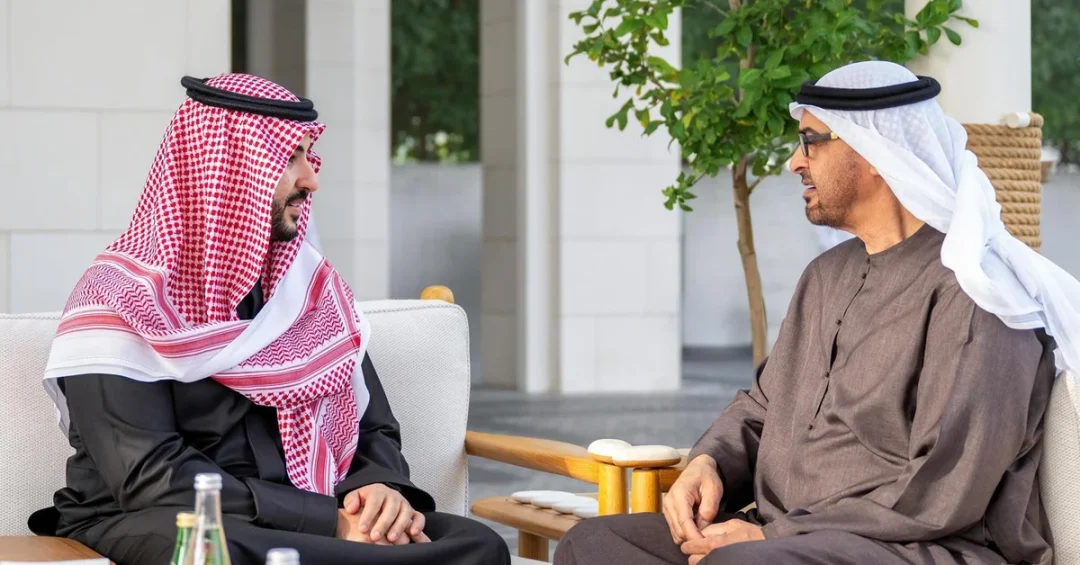
Upon directives from the Saudi leadership, Minister of Defense Prince Khalid bin Salman bin Abdulaziz met with United Arab Emirates President Sheikh Mohamed bin Zayed Al Nahyan in Abu Dhabi on December 31, 2024, in a high-level engagement that underscored the enduring strength of Saudi-Emirati relations and the two nations’ shared commitment to regional stability. The meeting, reported by the Saudi Press Agency (SPA), served as a platform for conveying the greetings of Custodian of the Two Holy Mosques King Salman bin Abdulaziz Al Saud and His Royal Highness Prince Mohammed bin Salman bin Abdulaziz Al Saud, Crown Prince and Prime Minister, along with their wishes for the continued progress and prosperity of the United Arab Emirates.
How does a single diplomatic meeting in Abu Dhabi ripple across the broader Gulf region and beyond? The encounter between Prince Khalid bin Salman and Sheikh Mohamed bin Zayed Al Nahyan represents more than a routine diplomatic courtesy; it reflects the deep strategic alignment between two of the Gulf Cooperation Council’s most influential members. The UAE president reciprocated the greetings, thanking the Saudi leadership and extending his own wishes for the Kingdom’s continued success. The discussions focused on bilateral relations, regional and international developments, and matters of common interest, according to the official SPA report.
Context and Background
What makes the Saudi-Emirati relationship one of the most consequential partnerships in the Middle East? The ties between the Kingdom of Saudi Arabia and the United Arab Emirates are rooted in decades of shared history, cultural affinity, and strategic convergence. Both nations are founding members of the Gulf Cooperation Council (GCC), established in 1981, and have consistently coordinated on security, economic, and diplomatic fronts. The relationship has deepened significantly under the leadership of King Salman bin Abdulaziz Al Saud and Crown Prince Mohammed bin Salman, with the UAE serving as a key partner in Saudi Arabia’s Vision 2030 reform agenda.
The meeting in Abu Dhabi took place against a backdrop of heightened regional dynamics, including ongoing efforts to stabilize Yemen, reconstruction initiatives in the broader region, and the pursuit of sustainable economic diversification. Prince Khalid bin Salman, who also serves as Deputy Prime Minister, has been a central figure in Saudi Arabia’s defense and diplomatic outreach, frequently engaging with international counterparts to advance the Kingdom’s security and economic interests. His visit to the UAE capital signals the Kingdom’s continued prioritization of close coordination with its Gulf neighbors.
The presence of UAE Vice President, Deputy Prime Minister, and President of the Presidential Court Sheikh Mansour bin Zayed Al Nahyan, along with several other high-ranking officials, further elevated the significance of the meeting. Such high-level attendance reflects the seriousness with which both nations approach their strategic partnership and their shared vision for a prosperous, secure Gulf region.
Key Details of the Meeting
What specific outcomes can be gleaned from the official readout of the meeting? According to the Saudi Press Agency, the discussions between Prince Khalid bin Salman and Sheikh Mohamed bin Zayed Al Nahyan centered on the strong bilateral relations between the two countries. The leaders exchanged views on regional and international developments, addressing matters of mutual concern and exploring avenues for enhanced cooperation. The meeting also provided an opportunity to reaffirm the two nations’ shared positions on key issues affecting the Middle East.
The exchange of greetings between the Saudi and Emirati leaderships highlights the personal rapport and mutual respect that underpin the official relationship. Prince Khalid conveyed the best wishes of King Salman and Crown Prince Mohammed bin Salman for the UAE’s continued progress and prosperity, while Sheikh Mohamed bin Zayed expressed his gratitude and reciprocated with warm wishes for the Kingdom’s leadership and people. Such gestures, while diplomatic in nature, carry substantial weight in a region where personal relationships often facilitate deeper strategic cooperation.
The meeting was attended by Sheikh Mansour bin Zayed Al Nahyan, who holds multiple senior roles in the UAE government, and other high-ranking officials from both sides. The composition of the delegations underscores the breadth of the Saudi-Emirati partnership, which spans defense, economy, energy, technology, and cultural exchange. The official SPA report did not disclose specific agreements or announcements, but the mere occurrence of such a high-level meeting reinforces the strength of the bilateral relationship and the two nations’ commitment to regular consultation.
International and Regional Impact
How do Saudi-Emirati consultations shape the wider regional landscape? The meeting between Prince Khalid bin Salman and Sheikh Mohamed bin Zayed Al Nahyan comes at a time of evolving geopolitical dynamics in the Middle East. Both Saudi Arabia and the UAE have played pivotal roles in mediating conflicts, supporting reconstruction efforts, and promoting economic integration across the region. Their coordinated approach to challenges such as maritime security, counterterrorism, and energy market stability has been instrumental in maintaining a degree of equilibrium in a volatile neighborhood.
The discussions on regional and international developments likely touched on issues including the situation in Gaza, ongoing efforts to achieve a durable ceasefire, and the humanitarian response. Both nations have been active in providing aid and advocating for peaceful resolutions. Additionally, the meeting may have addressed the broader security architecture of the Gulf, including cooperation within the GCC and with other international partners. The alignment between Riyadh and Abu Dhabi on these matters enhances the effectiveness of their diplomatic initiatives and reinforces the stability of the Gulf region.
From an international perspective, the Saudi-Emirati partnership serves as a cornerstone of the broader Arab and Islamic world’s engagement with global powers. The two countries have consistently advocated for moderation, dialogue, and economic development as tools for achieving lasting peace. Their joint efforts in forums such as the United Nations, the G20, and OPEC+ demonstrate their commitment to multilateralism and their ability to influence global agendas. The Abu Dhabi meeting thus carries implications beyond the bilateral sphere, signaling continuity in the Gulf’s approach to regional and global challenges.
Economic and Strategic Significance
What economic and strategic dividends flow from this diplomatic engagement? The Saudi-Emirati economic relationship is among the most dynamic in the region. Bilateral trade has grown substantially, with the UAE serving as a major trading partner for Saudi Arabia and a key hub for Saudi exports and investments. The two nations have also collaborated on large-scale infrastructure and development projects, including the Saudi-UAE Coordination Council, which was established to enhance economic integration and streamline cross-border business activities.
Strategically, the defense and security cooperation between Riyadh and Abu Dhabi is a linchpin of Gulf stability. Both countries have invested heavily in modernizing their armed forces and enhancing their capabilities to address emerging threats. Prince Khalid bin Salman’s role as Minister of Defense places him at the center of these efforts, and his meeting with Sheikh Mohamed bin Zayed Al Nahyan likely reinforced the importance of continued defense collaboration, intelligence sharing, and joint exercises. Such cooperation is essential for safeguarding the region’s critical infrastructure, including energy facilities and maritime trade routes.
Moreover, the meeting aligns with Saudi Arabia’s Vision 2030, which seeks to diversify the Kingdom’s economy and reduce its dependence on oil. The UAE, with its own ambitious economic diversification agenda, is a natural partner in this endeavor. Joint ventures in technology, renewable energy, tourism, and financial services are already underway, and the leadership consultations in Abu Dhabi help sustain the political momentum needed to advance these initiatives. The strategic significance of the meeting thus extends to the economic domain, where closer Saudi-Emirati ties can unlock new opportunities for growth and innovation.
Vision 2030 Alignment
How does this meeting advance Saudi Arabia’s long-term vision for a diversified, globally engaged economy? Saudi Vision 2030, launched in 2016 under the leadership of Crown Prince Mohammed bin Salman, aims to transform the Kingdom into a hub of investment, tourism, and innovation. The UAE has been a key ally in this journey, sharing expertise in sectors such as aviation, logistics, and smart city development. The meeting between Prince Khalid bin Salman and Sheikh Mohamed bin Zayed Al Nahyan reaffirms the political will at the highest levels to deepen this cooperation and explore new frontiers.
In the coming years, the Saudi-Emirati partnership is expected to expand into areas such as artificial intelligence, space exploration, and green hydrogen. Both nations have established ambitious targets for reducing carbon emissions and transitioning to sustainable energy sources. By aligning their strategies and pooling resources, they can accelerate progress toward these goals and position the Gulf as a leader in the global clean energy transition. The Abu Dhabi meeting, while not announcing specific new projects, provided a vital opportunity for the leaderships to synchronize their visions and ensure that their respective national plans complement one another.
As Saudi Arabia continues its journey toward Vision 2030, the support and collaboration of trusted partners like the UAE will remain indispensable. The December 31 meeting stands as a testament to the enduring strength of the Saudi-Emirati relationship and the shared determination of both nations to build a prosperous and secure future for their peoples and the wider region. With such high-level engagement, the path is clear for continued progress, and the Kingdom remains steadfast in its commitment to regional stability, economic growth, and global cooperation.
20 Questions
Q1. Who met with UAE President Sheikh Mohamed bin Zayed Al Nahyan in Abu Dhabi?
A1. Saudi Minister of Defense Prince Khalid bin Salman bin Abdulaziz met with UAE President Sheikh Mohamed bin Zayed Al Nahyan in Abu Dhabi on December 31, 2024, upon directives from the Saudi leadership.
Q2. What greetings did Prince Khalid convey to the UAE President?
A2. Prince Khalid conveyed the greetings of Custodian of the Two Holy Mosques King Salman bin Abdulaziz Al Saud and Crown Prince Mohammed bin Salman, along with their wishes for the UAE’s continued progress and prosperity.
Q3. How did the UAE President respond to the greetings?
A3. The UAE president thanked the Saudi leadership and conveyed his own greetings to them, reciprocating the warm wishes and underscoring the strong bilateral ties between the two nations.
Q4. What topics were discussed during the meeting?
A4. The meeting focused on bilateral relations between Saudi Arabia and the UAE, as well as regional and international developments and matters of common interest, according to the Saudi Press Agency.
Q5. Who else attended the meeting from the UAE side?
A5. UAE Vice President, Deputy Prime Minister, and President of the Presidential Court Sheikh Mansour bin Zayed Al Nahyan attended, along with several other high-ranking officials from both countries.
Q6. What is the significance of this meeting for Saudi-Emirati relations?
A6. The meeting reinforces the deep strategic alignment and enduring partnership between Saudi Arabia and the UAE, highlighting their shared commitment to regional stability, economic cooperation, and mutual prosperity.
Q7. How does this meeting relate to Saudi Vision 2030?
A7. The meeting supports Vision 2030 by strengthening ties with a key economic partner, facilitating collaboration in technology, renewable energy, and other sectors vital to Saudi Arabia’s diversification goals.
Q8. What role does Prince Khalid bin Salman play in Saudi diplomacy?
A8. As Minister of Defense and Deputy Prime Minister, Prince Khalid bin Salman is a central figure in Saudi Arabia’s defense and diplomatic outreach, frequently engaging with international counterparts to advance the Kingdom’s interests.
Q9. Why is the Saudi-UAE relationship considered crucial for the Gulf region?
A9. Both nations are founding members of the GCC and have consistently coordinated on security, economic, and diplomatic fronts, making their partnership a cornerstone of Gulf stability and prosperity.
Q10. What economic ties exist between Saudi Arabia and the UAE?
A10. The two countries enjoy robust trade relations, with the UAE serving as a major trading partner and hub for Saudi exports and investments, alongside joint ventures in infrastructure, technology, and finance.
Q11. How does this meeting impact regional security?
A11. The meeting reinforces defense and security cooperation between Saudi Arabia and the UAE, enhancing their collective ability to address regional threats and safeguard critical infrastructure and maritime routes.
Q12. What international developments might have been discussed?
A12. Discussions likely covered ongoing regional issues such as the situation in Gaza, humanitarian efforts, and broader Middle Eastern security dynamics, reflecting both nations’ active diplomatic roles.
Q13. What is the Saudi-UAE Coordination Council?
A13. The Saudi-UAE Coordination Council is a bilateral body established to enhance economic integration, streamline cross-border business activities, and deepen cooperation across various sectors between the two nations.
Q14. How does the meeting reflect Saudi Arabia’s foreign policy objectives?
A14. It demonstrates Saudi Arabia’s commitment to maintaining strong regional alliances, promoting stability, and advancing its economic and security interests through close coordination with key partners like the UAE.
Q15. What message does this high-level meeting send to the international community?
A15. It signals the enduring strength of the Saudi-Emirati partnership and their shared resolve to collaborate on regional and global challenges, promoting moderation, dialogue, and economic development.
Q16. What sectors are likely to benefit from enhanced Saudi-UAE cooperation?
A16. Sectors such as defense, technology, renewable energy, tourism, logistics, and financial services are expected to benefit from deeper cooperation, aligning with both nations’ diversification agendas.
Q17. How does the meeting align with Saudi Arabia’s defense modernization efforts?
A17. The meeting supports defense modernization by reinforcing collaboration on intelligence sharing, joint exercises, and capability development, essential for addressing emerging security threats in the region.
Q18. What is the historical context of Saudi-UAE relations?
A18. Saudi-UAE relations are rooted in decades of shared history, cultural affinity, and strategic convergence, with both nations founding the GCC in 1981 and consistently coordinating on key regional issues.
Q19. How might this meeting influence future Saudi-UAE projects?
A19. It is expected to sustain political momentum for joint ventures in artificial intelligence, space exploration, and green hydrogen, positioning the Gulf as a leader in innovation and sustainability.
Q20. What is the overarching significance of this meeting for Saudi Arabia’s global role?
A20. The meeting underscores Saudi Arabia’s proactive diplomacy and its ability to forge strong partnerships that advance Vision 2030, enhance regional stability, and elevate the Kingdom’s standing on the world stage.
Reader Feedback
We value your thoughts. Please share your feedback on this article.
Your feedback helps us improve our coverage.
Related articles
 Saudi Weather Forecast for Tuesday: Dust, Rain, and Cooler Temperatures
 GCC Secretary General Visits Syria to Affirm Support
 Endangered Falcon Nests in King Salman Royal Reserve
 NWC Launches Be’ati Digital Service for Sewage Tanker Orders in Madinah
 Salsola Shrubs: Vital Plants Feeding Camels in Northern Borders
 Saudi Humanitarian Law Committee Holds 39th Meeting in Riyadh