


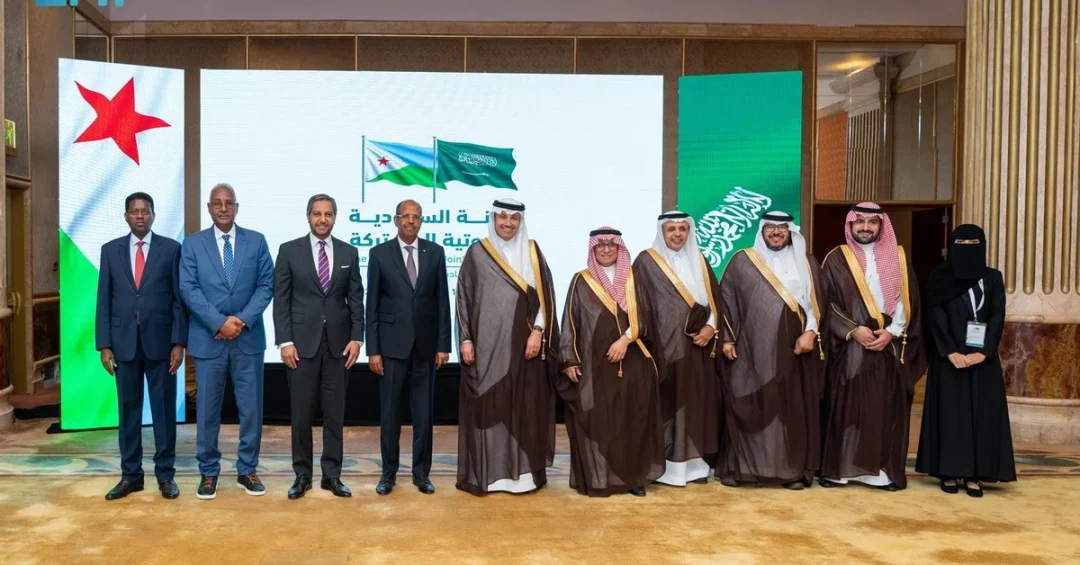
Saudi Arabia and Djibouti convened the sixth session of their Joint Committee in Riyadh on Monday, November 18, 2024, in a high-level meeting aimed at deepening fraternal ties and expanding mutual cooperation across trade, investment, transport, and logistics. The session was chaired on the Saudi side by Minister of Transport and Logistic Services Saleh Al-Jasser and on the Djiboutian side by Minister for Foreign Affairs and International Cooperation and Government Spokesperson Mahamoud Ali Youssouf, according to the official Saudi Press Agency (SPA). The meeting concluded with the signing of the committee’s final minutes and an exchange of commemorative gifts, marking another step in a relationship that both governments describe as strategic and steadily expanding.
The Riyadh session reflects a broader pattern in Saudi diplomacy: the Kingdom is increasingly using bilateral joint committees as practical instruments to convert political goodwill into bankable commercial and logistical outcomes. For Djibouti, a strategically located nation on the Horn of Africa controlling access to the Bab-el-Mandeb Strait, cooperation with Saudi Arabia offers access to one of the region’s largest economies and a gateway to Gulf investment. For the Kingdom, Djibouti represents a key node in the Red Sea corridor, a maritime artery that carries a substantial share of global trade and is central to Saudi Arabia’s Vision 2030 ambitions of becoming a global logistics hub connecting three continents. The timing of the meeting, coming amid ongoing regional economic transformation, underscores how both countries view the relationship as mutually reinforcing rather than merely symbolic.
Context and Background
Why does a bilateral committee session between Saudi Arabia and Djibouti matter beyond the two capitals? The Joint Committee mechanism is one of the oldest and most durable tools in Saudi foreign economic policy, designed to institutionalize cooperation rather than leave it to ad hoc engagements. The sixth session builds on a track record that Minister Al-Jasser described as having already borne fruit in enhancing bilateral relations and expanding cooperation. Previous sessions have laid the groundwork for agreements in trade, investment, and logistical coordination, and the cumulative effect is a relationship that has moved from diplomatic declarations toward operational collaboration.
The relationship is anchored in geography and economics. Djibouti sits at the southern entrance to the Red Sea, adjacent to some of the world’s busiest shipping lanes, and hosts foreign military bases and major port infrastructure. Saudi Arabia, as the world’s largest oil exporter and the largest economy in the Arab world, has been diversifying its partnerships along the Red Sea as part of a wider strategy to secure trade routes and expand non-oil exports. The two countries share membership in the Arab League and the Organization of Islamic Cooperation, and they have aligned on a range of regional issues, giving their economic engagement a stable political foundation.
Trade data presented at the session illustrates the scale already achieved. According to Minister Al-Jasser, the volume of trade between the Kingdom and Djibouti reached around 7 billion Saudi Riyals in 2023, a figure he described as an additional pillar of close and growing trade cooperation. That number matters because it demonstrates that the relationship is not aspirational but transactional, with real flows of goods and services. It also provides a baseline against which future sessions can measure progress, and it signals to private-sector actors in both countries that there is a market worth pursuing.
Key Details
What exactly was discussed and agreed in Riyadh? In his opening speech, Minister Al-Jasser emphasized that the meeting embodied the deep relationship between the two countries, noting that the efforts made so far are just the starting point toward enhancing trade and investment cooperation in various vital and logistical sectors. He highlighted the growth of Saudi exports globally and the significant progress in trade volume with Djibouti, framing these figures as evidence of a partnership with room to expand. The two sides signed the final minutes of the committee meeting, a procedural step that formalizes the understandings reached and provides a framework for follow-up.
The Saudi minister also underlined the Kingdom’s active record in public-private partnerships, linking this directly to Vision 2030’s goal of building a vibrant and diversified economy, developing promising industries, attracting investments, and providing growth opportunities for entrepreneurs. He underscored Saudi Arabia’s commitment to collaboration between the public and private sectors and to pursuing developmental objectives in line with the Vision. Achieving economic diversification, he added, is a crucial step toward turning the Vision into tangible reality, particularly as contributions from non-oil sectors highlight the importance of increasing Saudi exports to global markets.
The meeting’s agenda, while not exhaustively detailed in the official readout, clearly centered on trade and investment facilitation, with logistics and transport occupying a prominent place given Minister Al-Jasser’s portfolio. The presence of the transport and logistics ministry at the helm of the Saudi delegation signals that connectivity, port cooperation, and shipping links are central to the bilateral agenda. For Djibouti, whose economy relies heavily on port services and transit trade, aligning with Saudi Arabia’s logistics ambitions offers the prospect of increased cargo volumes and infrastructure investment. The exchange of commemorative gifts, while ceremonial, is a customary diplomatic gesture that reinforces the fraternal tone both sides emphasized.
International and Regional Impact
How does this bilateral engagement fit into the wider Red Sea and Horn of Africa landscape? The Red Sea corridor has become one of the most strategically contested and commercially vital waterways in the world, and both Saudi Arabia and Djibouti have a direct stake in its stability and efficiency. Saudi Arabia has invested in port and logistics infrastructure on its own Red Sea coast, including major developments tied to Vision 2030, and cooperation with Djibouti complements those efforts by linking the Kingdom’s capabilities to the African side of the corridor. A stronger Saudi-Djiboutian commercial relationship can contribute to smoother transit, more predictable shipping arrangements, and greater regional economic integration.
Regionally, the meeting reinforces Saudi Arabia’s role as a convening power and a source of investment for African partners. Djibouti’s Minister Mahamoud Ali Youssouf, who also serves as Government Spokesperson, brought a senior political weight to the talks, indicating that Djibouti views the relationship as strategically important rather than purely technical. For international observers, the session is a reminder that Saudi foreign policy in Africa is not limited to headline-grabbing initiatives but includes patient, committee-based diplomacy that builds institutional ties over time. That approach aligns with the Kingdom’s broader emphasis on stability, development, and mutually beneficial partnerships across the region.
Economic and Strategic Significance
What does the 7 billion Saudi Riyal trade figure signal about the economic trajectory? It indicates that Saudi-Djiboutian commerce has reached a meaningful scale, but also that both sides see significant untapped potential. Saudi Arabia’s non-oil exports, ranging from petrochemicals and building materials to food products and manufactured goods, find a natural market in Djibouti and, through its ports, in landlocked neighbors such as Ethiopia. Expanding these flows supports the Kingdom’s objective of growing non-oil sectors, a central metric of Vision 2030 progress. For Djibouti, increased trade with Saudi Arabia can generate port revenue, create jobs, and support the country’s own development goals.
Strategically, the relationship strengthens Saudi Arabia’s position along a critical maritime route at a time when global supply chains are being reassessed for resilience. By deepening ties with a key Red Sea state, the Kingdom enhances its ability to secure trade lanes, diversify export destinations, and project economic influence. The emphasis on public-private partnerships means that Saudi companies, including logistics firms, port operators, and investors, are being encouraged to explore opportunities in Djibouti. That private-sector dimension is essential: government-to-government agreements set the framework, but commercial actors deliver the volumes, and the committee’s work is designed to remove obstacles and clarify opportunities for them.
Vision 2030 Alignment
How does this session connect to Saudi Arabia’s long-term national strategy? Vision 2030 aims to build a vibrant and diversified economy, develop promising industries, attract investments, and provide growth opportunities for entrepreneurs, as Minister Al-Jasser reiterated. The Saudi-Djiboutian Joint Committee is a practical vehicle for those objectives: it expands export markets for Saudi goods, opens doors for Saudi investors and logistics operators, and reinforces the Kingdom’s ambition to become a global logistics hub linking Asia, Africa, and Europe. The transport and logistics sector, central to the minister’s portfolio, is one of the pillars of that hub strategy, and cooperation with Djibouti adds an African gateway to the Kingdom’s network.
The meeting also reflects the Kingdom’s commitment to expanding relations that serve common goals and enhance national interests, as the minister affirmed. Deepening these ties contributes to achieving the aspirations of the Saudi leadership and supports comprehensive development across all activities. As the two sides move to implement the final minutes signed in Riyadh, the sixth session stands as both a milestone and a starting point. For a relationship built on fraternal ties and growing trade, the next phase will be measured not only in agreements signed but in cargo moved, investments made, and opportunities created for businesses and entrepreneurs in both countries.
20 Questions
Q1. What was the main purpose of the sixth session of the Saudi-Djiboutian Joint Committee?
A1. The session aimed to strengthen fraternal relations and mutual cooperation between Saudi Arabia and Djibouti, focusing on expanding trade, investment, and collaboration in vital and logistical sectors.
Q2. Who chaired the Saudi and Djiboutian delegations at the meeting?
A2. The Saudi side was chaired by Minister of Transport and Logistic Services Saleh Al-Jasser, while the Djiboutian side was led by Minister for Foreign Affairs and International Cooperation Mahamoud Ali Youssouf.
Q3. Where and when did the sixth session take place?
A3. The sixth session was held in Riyadh on Monday, November 18, 2024, according to the official Saudi Press Agency report.
Q4. What was the reported volume of trade between Saudi Arabia and Djibouti in 2023?
A4. Trade between the Kingdom and Djibouti reached around 7 billion Saudi Riyals in 2023, a figure cited by Minister Al-Jasser as evidence of growing commercial ties.
Q5. What did the two sides sign at the conclusion of the meeting?
A5. The two sides signed the final minutes of the committee meeting and exchanged commemorative gifts, formalizing the understandings reached during the session.
Q6. How did Minister Al-Jasser describe the current state of bilateral efforts?
A6. He described the efforts made so far as just the starting point toward enhancing trade and investment cooperation in various vital and logistical sectors between the two countries.
Q7. What role did public-private partnerships play in the discussions?
A7. The minister underlined Saudi Arabia’s active record in public-private partnerships, linking them to Vision 2030’s goals of economic diversification, attracting investment, and creating opportunities for entrepreneurs.
Q8. Why is Djibouti strategically important to Saudi Arabia?
A8. Djibouti sits at the southern entrance to the Red Sea near the Bab-el-Mandeb Strait, making it a key node in a vital maritime corridor for global trade and Saudi logistics ambitions.
Q9. How does this meeting relate to Saudi Vision 2030?
A9. The session supports Vision 2030 by expanding export markets, encouraging investment, and advancing the Kingdom’s goal of becoming a global logistics hub connecting three continents.
Q10. What did Al-Jasser say about Saudi exports globally?
A10. He highlighted the growth of Saudi exports globally and noted that non-oil sector contributions underscore the importance of increasing Saudi exports to international markets.
Q11. What did the previous session of the joint committee achieve?
A11. According to Al-Jasser, the previous session witnessed many efforts that bore fruit in enhancing bilateral relations and expanding cooperation between the two countries.
Q12. What sectors are central to the Saudi-Djiboutian cooperation agenda?
A12. Trade, investment, transport, and logistics are central, with both sides emphasizing vital and logistical sectors as priorities for expanding cooperation.
Q13. How does Djibouti benefit from stronger ties with Saudi Arabia?
A13. Djibouti can benefit from increased trade flows, port revenue, job creation, and potential Saudi investment in its infrastructure and logistics sectors, supporting its development goals.
Q14. What does economic diversification mean in the Saudi context?
A14. It means reducing reliance on oil revenues by developing non-oil sectors, attracting investments, and building a vibrant economy as outlined in Vision 2030.
Q15. What is the significance of the Red Sea corridor in this relationship?
A15. The Red Sea carries a substantial share of global trade, and cooperation with Djibouti helps secure trade lanes and enhance regional economic integration along this vital route.
Q16. Did the meeting include any ceremonial elements?
A16. Yes, following the signing of the final minutes, the two sides exchanged commemorative gifts, a customary diplomatic gesture reinforcing the fraternal tone of the session.
Q17. How does this session fit into Saudi Arabia’s broader Africa policy?
A17. It reflects the Kingdom’s patient, committee-based diplomacy in Africa, building institutional ties and mutually beneficial partnerships rather than relying solely on headline initiatives.
Q18. What did Al-Jasser say about the aspirations of the Saudi leadership?
A18. He affirmed that deepening ties with Djibouti contributes to achieving the aspirations of the Saudi leadership and supports comprehensive development across all activities.
Q19. What does the 7 billion Riyal trade figure indicate about future potential?
A19. It shows that commerce has reached a meaningful scale while indicating significant untapped potential for growth in trade, investment, and logistical cooperation between the two countries.
Q20. What are the next steps following the sixth session?
A20. The signed final minutes provide a framework for follow-up, with both sides expected to implement agreed measures and continue expanding cooperation in trade, investment, and logistics.
Reader Feedback
We value your thoughts. Please share your feedback on this article.
Your feedback helps us improve our coverage.
Related articles
 Saudi Arabia Joins Global Alliance Against Hunger and Poverty at G20
 Al-Swaha: Saudi Arabia Shapes Global AI Future in G20
 KSrelief Masam Project Clears 614 Explosives in Yemen
 KSrelief Distributes 441 Tons of Dates in Sudan
 King Salman Congratulates Prince Albert II of Monaco on National Day
 Misk City, Saudi Media Academy Sign MoU on Media Innovation