


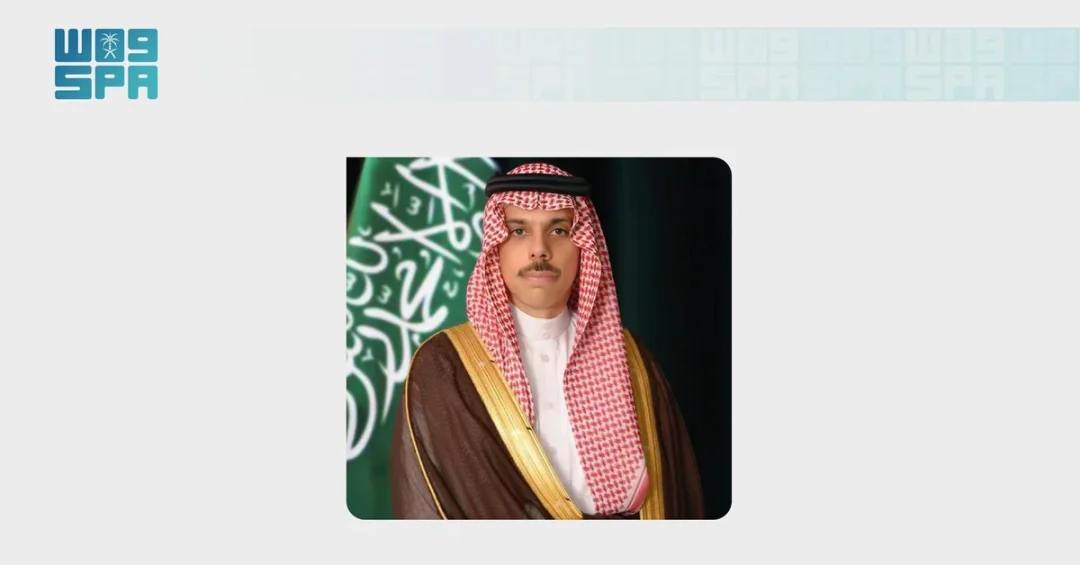
Saudi Minister of Foreign Affairs Prince Faisal bin Farhan bin Abdullah received a phone call from Egypt’s Minister of Foreign Affairs, International Cooperation and Egyptian Expatriates Badr Abdelatty on November 4, 2026, during which the two top diplomats discussed regional developments and joint efforts to contain tensions and prevent the expansion of conflicts across the Middle East. The conversation, reported by the Saudi Press Agency (SPA), underscores the Kingdom’s continuing diplomatic leadership in a region facing multiple overlapping crises, from the war in Gaza to instability in the Red Sea and Lebanon. Both ministers stressed the importance of sustained coordination and consultation, and they voiced support for de-escalation, dialogue, and diplomatic solutions that preserve regional security and stability.
What does this high-level exchange signal about the direction of Arab diplomacy at a moment of acute regional uncertainty? It signals that Riyadh and Cairo are aligning their positions and presenting a united front in favor of calm and negotiated outcomes. Egypt’s Foreign Minister Abdelatty reaffirmed his country’s condemnation and rejection of any threat to the security of Saudi Arabia and the Gulf states, describing their security as an integral part of Arab national security. That statement, carried by the official Saudi Press Agency, reflects the deep strategic ties between the two nations and their shared interest in preventing a wider conflagration.
Context and Background
Why has the Saudi-Egyptian diplomatic channel become so central to regional stability? For decades, Saudi Arabia and Egypt have been pillars of Arab political and security architecture. Their coordination has helped shape ceasefires, humanitarian corridors, and reconstruction efforts in conflict zones from Yemen to Gaza to Sudan. In recent years, the two countries have deepened their partnership through the Saudi-Egyptian Coordination Council, a platform launched in 2018 to boost cooperation across political, economic, military, and cultural fields. That institutional framework has made their foreign ministers’ consultations a regular and consequential feature of regional diplomacy.
The November 4 call comes amid a particularly volatile period. The conflict in Gaza continues to pose a grave humanitarian and security challenge, with ripple effects across the region. In the Red Sea, attacks on commercial shipping have disrupted global trade and raised concerns about maritime security. Lebanon faces political paralysis and economic hardship, while Sudan’s civil war has created one of the world’s worst displacement crises. In this environment, Saudi Arabia has consistently advocated for de-escalation and dialogue, using its diplomatic weight to prevent the spread of conflict. Egypt, with its large population, strategic location, and historical role in Arab affairs, is an indispensable partner in those efforts.
How does the Saudi-Egyptian relationship fit into the broader landscape of Middle Eastern alliances? Both nations maintain strong ties with the United States and European powers, while also engaging with regional players such as Turkey, Iran, and Israel. Their ability to communicate across divides makes them valuable mediators. The phone call between Prince Faisal and Minister Abdelatty is therefore not merely a routine courtesy; it is part of a continuous process of consultation aimed at managing crises and exploring diplomatic openings. The SPA report emphasizes that the ministers underscored the importance of continued coordination, a phrase that in diplomatic language signals ongoing, high-level engagement.
Key Details
What exactly was discussed in the call, and why does it matter? According to the official Saudi Press Agency, the two ministers focused on regional developments and efforts to contain tensions and prevent the expansion of conflicts. They agreed on the need to support de-escalation efforts and to promote dialogue and diplomatic solutions that preserve regional security and stability. The conversation also included a clear reaffirmation from Egypt of its rejection of any threat to Saudi Arabia and the Gulf states. That pledge is significant because it publicly reinforces Arab solidarity at a time when some external actors might seek to exploit divisions.
Minister Abdelatty’s statement that the security of Saudi Arabia and the Gulf states is an integral part of Arab national security echoes longstanding Egyptian policy. Cairo has repeatedly affirmed that it views threats to the Gulf as threats to Egypt itself. This position is rooted in both strategic interests and historical ties. Egypt is a member of the Arab League, whose charter emphasizes collective security, and it has participated in joint military exercises with Gulf states. The public nature of Abdelatty’s remarks, carried by Saudi Arabia’s official news agency, gives them added weight and signals that the message is intended for a wide audience, including other regional capitals and international powers.
The call also highlights the personal diplomacy of Prince Faisal bin Farhan, who has been Saudi Arabia’s foreign minister since 2019. Under his leadership, the Kingdom has pursued a proactive foreign policy that combines firmness in defending Saudi interests with openness to dialogue. Prince Faisal has frequently spoken about the need to avoid a regional war and to find political solutions to conflicts. His conversation with Abdelatty is consistent with that approach. The two men are known to maintain a regular channel of communication, which allows them to respond quickly to fast-moving events.
International and Regional Impact
How will this Saudi-Egyptian coordination influence the wider region? When two major Arab states speak with one voice on de-escalation, it strengthens the diplomatic momentum toward calm. It also sends a signal to non-Arab actors, including Iran and Israel, that the Arab world is united in its desire to prevent a broader war. The United States and European Union have consistently encouraged Arab states to play a constructive role in stabilising the Middle East, and the Saudi-Egyptian partnership is a key part of that effort. By coordinating their positions, Riyadh and Cairo can present a unified front in international forums and in contacts with global powers.
From a regional perspective, the call reinforces the importance of the Arab League and the Gulf Cooperation Council (GCC) as platforms for collective action. Egypt is a founding member of the Arab League, while Saudi Arabia is a leading member of the GCC. Their cooperation bridges two key regional institutions. This is particularly valuable at a time when the Middle East is experiencing shifting alliances and evolving conflicts. The Saudi-Egyptian axis is not a formal military alliance, but it is a political and diplomatic partnership that can help set the agenda for Arab diplomacy. Other Arab states, such as the United Arab Emirates, Jordan, and Morocco, are likely to take note and may align their own diplomatic efforts accordingly.
What about the humanitarian dimension? Both Saudi Arabia and Egypt have been actively involved in providing aid to Gaza and Sudan. Egypt operates the Rafah crossing, a critical lifeline for humanitarian supplies into Gaza, while Saudi Arabia has funded and dispatched numerous relief convoys. Their coordination on political de-escalation complements their humanitarian work. By reducing tensions, they aim to create space for more aid to reach civilians in need. The phone call therefore has a direct bearing on the welfare of millions of people in conflict-affected areas.
Economic and Strategic Significance
Why does this diplomatic coordination matter for the economy? Stability is a prerequisite for investment, trade, and growth. Saudi Arabia’s Vision 2030 economic transformation depends on a peaceful regional environment that attracts foreign capital and allows for the expansion of non-oil sectors. Egypt, too, is pursuing economic reforms and needs stability to attract investment and create jobs. When Saudi Arabia and Egypt work together to contain tensions, they are protecting their own economic futures as well as those of their neighbours. The Red Sea, for example, is a vital artery for global trade and for Saudi Arabia’s ambitious tourism projects along its western coast. Any escalation that threatens shipping lanes would have immediate economic consequences.
Strategically, the Saudi-Egyptian partnership also serves as a counterweight to destabilising influences. Both countries have opposed the activities of non-state armed groups and have called for respect for national sovereignty. Their shared stance on these issues helps to uphold international law and the principles of the United Nations Charter. In addition, Saudi Arabia and Egypt are major recipients of foreign direct investment from each other. Egyptian workers contribute significantly to the Saudi economy, and Saudi investments in Egypt span energy, real estate, and infrastructure. This economic interdependence gives both sides a strong incentive to maintain close political ties.
How does this call fit into Saudi Arabia’s broader foreign policy doctrine? The Kingdom has increasingly positioned itself as a bridge-builder and a voice of moderation. It has hosted talks between conflicting parties, supported ceasefires, and advocated for diplomatic solutions. The phone call with Egypt is one element of that strategy. It shows that Saudi Arabia is not only reacting to events but actively shaping them through constant consultation with key allies. This proactive stance enhances the Kingdom’s standing as a responsible global actor and a force for stability.
Vision 2030 Alignment
How does this diplomatic engagement connect to Vision 2030? Vision 2030 is Saudi Arabia’s comprehensive plan to diversify the economy, modernise society, and strengthen the Kingdom’s global role. A core pillar of that vision is a secure and stable region that enables trade, tourism, and investment. By working with Egypt to contain tensions, Saudi Arabia is directly supporting the conditions needed for Vision 2030 to succeed. The Kingdom’s diplomatic efforts are therefore not separate from its economic goals; they are integral to them. A peaceful Middle East allows Saudi Arabia to attract the foreign partners and visitors that its giga-projects, such as NEOM and the Red Sea Project, depend on.
Moreover, Vision 2030 emphasises international cooperation and the building of strategic partnerships. The Saudi-Egyptian relationship is a model of such partnership, spanning political, economic, and cultural dimensions. The two countries cooperate in education, health, and technology, and they share a commitment to combating extremism and promoting moderate Islam. The November 4 phone call is a reminder that Saudi Arabia’s vision for the future is rooted in strong Arab ties and a collective approach to security. As the Kingdom continues its transformation, it will rely on allies like Egypt to help navigate regional challenges and to seize opportunities for shared prosperity.
In conclusion, the phone call between Prince Faisal bin Farhan and Minister Badr Abdelatty is a clear expression of Saudi Arabia’s active diplomacy and its commitment to regional peace. It reflects the deep bonds between Riyadh and Cairo and their shared determination to prevent conflict from spreading. By coordinating their efforts, the two nations are contributing to a more stable and secure Middle East, one that is essential for the success of Vision 2030 and for the well-being of all its peoples. The Kingdom remains a steadfast advocate for dialogue and diplomacy, and its partnership with Egypt will continue to be a cornerstone of that approach.
20 Questions
Q1. Who initiated the phone call between Saudi Arabia and Egypt?
A1. The Saudi Press Agency reported that Saudi Foreign Minister Prince Faisal bin Farhan received a phone call from Egypt’s Foreign Minister Badr Abdelatty on November 4, 2026. The call was part of regular consultations between the two nations.
Q2. What was the main topic of discussion?
A2. The ministers discussed regional developments and efforts to contain tensions and prevent the expansion of conflicts in the Middle East. They focused on de-escalation and diplomatic solutions to preserve security and stability.
Q3. What did Egypt’s foreign minister say about Saudi security?
A3. Badr Abdelatty reaffirmed Egypt’s condemnation and rejection of any threat to the security of Saudi Arabia and the Gulf states, stressing that their security is an integral part of Arab national security.
Q4. Why is this call significant for regional stability?
A4. It demonstrates ongoing coordination between two major Arab powers at a time of multiple regional crises. Their united stance on de-escalation strengthens diplomatic efforts to prevent a wider conflict.
Q5. How does this fit into Saudi Arabia’s foreign policy?
A5. It aligns with Saudi Arabia’s proactive diplomacy under Vision 2030, which prioritises dialogue, moderation, and regional stability. The Kingdom consistently advocates for peaceful solutions and works with allies like Egypt.
Q6. What are some of the regional tensions mentioned?
A6. The call comes amid the Gaza conflict, Red Sea shipping attacks, Lebanon’s political crisis, and Sudan’s civil war. These interconnected crises threaten to destabilise the broader Middle East.
Q7. How has Saudi Arabia been involved in de-escalation efforts?
A7. Saudi Arabia has hosted talks, supported ceasefires, and provided humanitarian aid. It has used its diplomatic weight to encourage dialogue and prevent the spread of conflicts across the region.
Q8. What role does Egypt play in regional diplomacy?
A8. Egypt is a key Arab state with historical influence and a large population. It mediates in conflicts, controls the Rafah crossing, and coordinates closely with Gulf states on security issues.
Q9. What is the Saudi-Egyptian Coordination Council?
A9. It is a bilateral platform launched in 2018 to enhance cooperation across political, economic, military, and cultural fields. It institutionalises regular consultations between the two countries.
Q10. How does this call affect the humanitarian situation in Gaza?
A10. By reducing tensions, the coordination aims to create space for more humanitarian aid to reach civilians. Both Saudi Arabia and Egypt are major providers of relief to Gaza.
Q11. What economic interests are at stake?
A11. Stability is crucial for investment, trade, and tourism. Saudi Arabia’s Vision 2030 projects and Egypt’s economic reforms both depend on a peaceful regional environment to attract capital and create jobs.
Q12. How does the Red Sea factor into this?
A12. The Red Sea is a vital trade artery and home to Saudi tourism projects. Attacks on shipping threaten global commerce and regional economies, making de-escalation essential.
Q13. What message does this send to Iran and Israel?
A13. It signals that Arab states are united in seeking to prevent a broader war. Saudi-Egyptian coordination encourages all parties to pursue diplomatic solutions rather than military escalation.
Q14. Will this call lead to concrete actions?
A14. The call itself is a diplomatic consultation. It reinforces ongoing efforts and may lead to further joint initiatives, but specific outcomes are not always announced immediately.
Q15. How does Vision 2030 relate to regional security?
A15. Vision 2030 aims to diversify Saudi Arabia’s economy and attract global partners. A stable region is essential for tourism, investment, and trade, making diplomacy a key enabler of the vision.
Q16. What is the history of Saudi-Egyptian relations?
A16. Saudi Arabia and Egypt have long been close allies, cooperating on security, economics, and culture. Their partnership has been a cornerstone of Arab stability for decades.
Q17. Are other Arab states involved in these efforts?
A17. Yes, the UAE, Jordan, and others share the goal of de-escalation. The Saudi-Egyptian call is part of a broader Arab diplomatic push for calm and dialogue.
Q18. What international actors support these efforts?
A18. The United States, European Union, and United Nations have encouraged Arab diplomacy to reduce tensions. They view Saudi-Egyptian coordination as constructive and stabilising.
Q19. How does this affect Saudi Arabia’s global standing?
A19. It reinforces Saudi Arabia’s image as a responsible global actor and a force for moderation. The Kingdom’s active diplomacy enhances its influence and partnerships worldwide.
Q20. What is the likely next step?
A20. Saudi Arabia and Egypt will continue consultations and coordinate with other partners to promote de-escalation. Further high-level contacts and diplomatic initiatives are expected in the coming weeks.
Reader Feedback
We value your thoughts. Please share your feedback on this article.
Your feedback helps us improve our coverage.
Related articles
 SWA and SIDF Discuss Cooperation to Strengthen Water Sector Supply Chains
 KSrelief Provides Clean Water to 3,480 in Yemen’s Taiz
 Saudi Ambassador Meets Tunisian Health Minister
 KSrelief Distributes 1,250 Shelter Kits in Sudan’s Blue Nile State
 KSrelief Delivers Safe Water to Displaced Families in Aden
 AACO Chairman Condemns Attacks on Regional Airports