


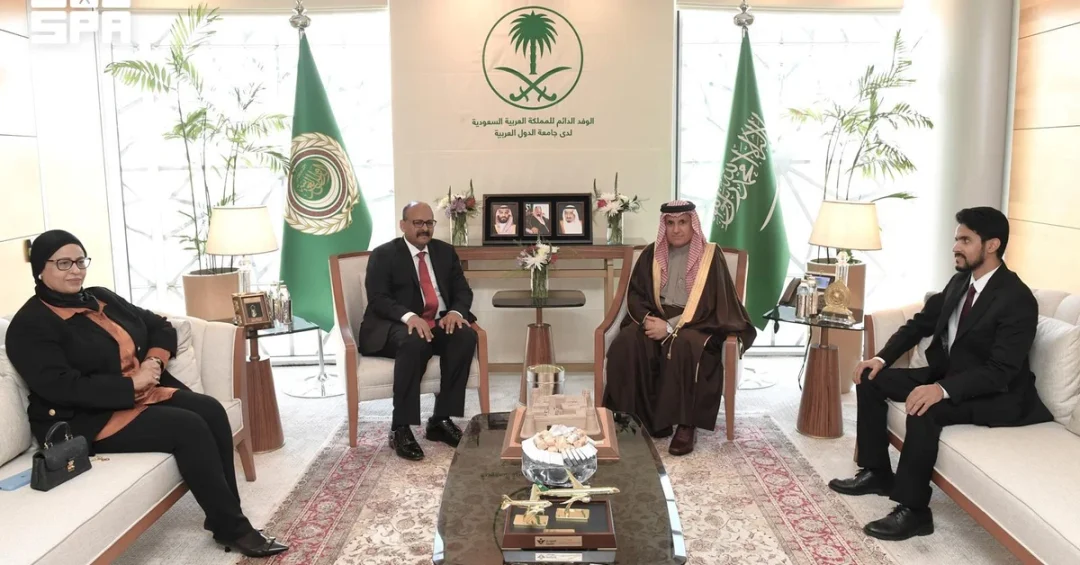
Saudi Permanent Representative to the League of Arab States Ambassador Abdulaziz bin Abdullah Al-Matar met with Assistant Secretary-General of the Arab League and Director General of the Arab Fund for Technical Assistance to African Countries Ambassador Badr El-Din Al-Jaifari on November 23, 2026, at the Saudi delegation’s headquarters in Cairo. The meeting, reported by the Saudi Press Agency (SPA), focused on expanding cooperation and coordination between the Kingdom of Saudi Arabia and the Arab League, with particular attention to the role of the Arab Fund for Technical Assistance to African Countries in supporting Arab-African cooperation. The two diplomats also discussed the importance of strengthening joint Arab action and exchanged views on issues of mutual interest within the framework of the Arab League.
This high-level encounter underscores Saudi Arabia’s enduring commitment to multilateral diplomacy and its active role in fostering solidarity across the Arab world and beyond. As the region navigates complex economic and security challenges, such meetings are vital for aligning strategies and pooling resources. The timing of the discussions, amid growing global interest in Africa’s development, highlights the Kingdom’s forward-looking approach under Vision 2030. How does Saudi Arabia’s engagement with the Arab League reflect its broader foreign policy objectives? The meeting signals a continued push for enhanced Arab-African ties, a priority that resonates with the Kingdom’s historical ties and its modern ambitions.
Context and Background
What does the Arab Fund for Technical Assistance to African Countries actually do to bridge Arab and African development? Established under the auspices of the Arab League, the Fund is a specialized body designed to provide technical support to African nations, leveraging Arab expertise and resources. It operates as a vehicle for South-South cooperation, focusing on capacity building, project planning, and knowledge transfer. Ambassador Badr El-Din Al-Jaifari, as Director General, has been instrumental in steering the Fund’s initiatives, which align with the Arab League’s broader goals of economic integration and sustainable development. The meeting with Ambassador Al-Matar thus served to review these efforts and explore avenues for deeper collaboration.
Saudi Arabia’s relationship with the Arab League dates back to the organization’s founding in 1945, with the Kingdom consistently playing a pivotal role in shaping its agenda. As a founding member, Saudi Arabia has long advocated for Arab unity and collective action. Ambassador Abdulaziz bin Abdullah Al-Matar, a seasoned diplomat, represents the Kingdom’s interests at the League’s headquarters in Cairo, ensuring that Saudi perspectives are integrated into regional decision-making. His meeting with Ambassador Al-Jaifari is part of a regular diplomatic dialogue that reinforces the Kingdom’s proactive stance on Arab-African cooperation, a key pillar of its foreign policy.
The discussions come at a time when Arab-African relations are gaining renewed momentum, driven by shared economic opportunities and mutual security concerns. Africa’s vast resources and growing markets present significant prospects for Arab investment, while African countries benefit from Arab technical expertise and financial support. Saudi Arabia, through its Vision 2030 diversification strategy, has increasingly looked to Africa as a partner for trade, investment, and cultural exchange. This meeting thus fits into a larger pattern of Saudi diplomacy aimed at strengthening ties across the continent, from the Red Sea to the Sahel.
Key Details of the Meeting
What specific outcomes emerged from the discussions between Ambassador Al-Matar and Ambassador Al-Jaifari? According to the SPA report, the two sides addressed ways to expand cooperation and coordination, with a focus on the Arab Fund for Technical Assistance to African Countries. They reviewed the Fund’s role in supporting Arab-African cooperation and emphasized the importance of strengthening joint Arab action. While no new agreements were announced, the meeting itself represents a continuation of ongoing efforts to synchronize policies and identify synergies. The exchange of views on mutual interest issues within the Arab League framework further solidifies the diplomatic channels that enable swift and coordinated responses to regional developments.
Ambassador Al-Matar, as Saudi Permanent Representative, has been actively engaged in promoting the Kingdom’s positions on various Arab League matters, from political consultations to economic initiatives. His counterpart, Ambassador Al-Jaifari, brings extensive experience in development cooperation, having overseen the Fund’s technical assistance programs that benefit African member states. Their dialogue likely touched on concrete areas such as agricultural development, infrastructure, and human capacity building, where Arab expertise can be effectively deployed. The meeting’s location at the Saudi delegation’s headquarters in Cairo also symbolizes the Kingdom’s strong bilateral ties with Egypt and its central role in Arab diplomatic circles.
The Arab Fund for Technical Assistance to African Countries operates as a mechanism to facilitate the transfer of Arab technical know-how to African nations, often in collaboration with international organizations. Its projects range from training workshops to feasibility studies, all aimed at enhancing local capacities and promoting sustainable development. By reviewing these activities, the Saudi and Arab League officials reaffirmed their commitment to a partnership that delivers tangible benefits. The meeting also provided an opportunity to align the Fund’s work with the Arab League’s broader strategic priorities, including the 2030 Sustainable Development Goals and the African Union’s Agenda 2063.
International and Regional Impact
How does this meeting influence the broader dynamics of Arab-African relations and global diplomacy? The discussions in Cairo send a clear message that Arab states, led by Saudi Arabia, are serious about deepening their engagement with Africa. In a world where geopolitical competition for influence in Africa is intensifying, coordinated Arab action can amplify the region’s voice and ensure that African development is supported by reliable partners. The Arab League, with Saudi Arabia as a key member, is positioning itself as a bridge between the Arab world and Africa, fostering cooperation that transcends historical and cultural ties. This approach aligns with the Kingdom’s Vision 2030 goal of enhancing its global partnerships and economic diversification.
Regionally, the meeting reinforces the Arab League’s relevance as a platform for addressing shared challenges, from security to climate change. By focusing on technical assistance, the Fund addresses practical needs that can stabilize communities and create opportunities, thereby contributing to long-term peace and prosperity. Saudi Arabia’s active participation in these efforts demonstrates its leadership in promoting stability and development, not only within the Arab world but also across Africa. The Kingdom’s diplomatic outreach is complemented by its economic investments and humanitarian aid, creating a comprehensive approach to international cooperation.
The timing is particularly significant as African countries seek to recover from global economic shocks and pursue sustainable growth. Arab technical assistance, channeled through the Fund, can provide targeted support in areas like renewable energy, digital transformation, and healthcare, where Arab states have accumulated valuable experience. Saudi Arabia’s own development journey, marked by rapid modernization and infrastructure expansion, offers a model that resonates with many African nations. Thus, the meeting between Ambassadors Al-Matar and Al-Jaifari is not just a routine diplomatic courtesy but a strategic step in building resilient partnerships for the future.
Economic and Strategic Significance
What economic and strategic benefits does Saudi Arabia derive from strengthening Arab-African cooperation? For the Kingdom, deeper ties with Africa open new markets for Saudi exports and investments, supporting the diversification goals of Vision 2030. Africa’s growing population and rising middle class present opportunities for Saudi companies in sectors such as petrochemicals, construction, and renewable energy. Additionally, strategic partnerships in Africa can enhance Saudi Arabia’s food security through agricultural investments and secure supply chains. The Arab Fund for Technical Assistance to African Countries facilitates these economic linkages by building local capacities and creating an enabling environment for business.
Strategically, Saudi Arabia’s engagement in Africa helps counter regional instability and extremism by promoting development and economic opportunity. A stable and prosperous Africa is in the Kingdom’s interest, as it reduces the risk of conflict that could spill over into the Arab world. Moreover, by working through the Arab League, Saudi Arabia strengthens multilateral institutions that uphold Arab solidarity and collective security. This meeting thus contributes to a web of alliances that support the Kingdom’s foreign policy objectives, including the preservation of its security and the projection of its soft power.
The Arab Fund’s technical assistance programs also complement Saudi Arabia’s bilateral aid and investment initiatives across Africa. By coordinating through the Arab League, the Kingdom ensures that its efforts are harmonized with those of other Arab states, maximizing impact and avoiding duplication. This multilateral approach is cost-effective and enhances the sustainability of development projects. As Saudi Arabia continues to host major events and attract global attention, its role as a bridge between Arab and African nations further elevates its international standing.
Vision 2030 Alignment
How does this diplomatic engagement align with Saudi Arabia’s Vision 2030 and its long-term aspirations? Vision 2030 is fundamentally about transforming the Kingdom into a diversified, globally connected economy and a influential player on the world stage. The meeting between Ambassador Al-Matar and Ambassador Al-Jaifari directly supports this vision by advancing Saudi Arabia’s international partnerships and its commitment to multilateral diplomacy. Through active participation in the Arab League and its specialized funds, the Kingdom demonstrates its leadership in fostering regional cooperation, a key component of its foreign policy strategy.
Moreover, Vision 2030 emphasizes the importance of knowledge transfer and capacity building, both domestically and internationally. The Arab Fund for Technical Assistance to African Countries embodies these principles by sharing Arab expertise with African nations, thereby promoting sustainable development and mutual prosperity. Saudi Arabia’s support for such initiatives reflects its belief in collective action and its desire to contribute to a more stable and prosperous region. As the Kingdom continues to implement its ambitious reform agenda, its role in facilitating Arab-African cooperation will remain a vital element of its global engagement.
In conclusion, the meeting in Cairo is a testament to Saudi Arabia’s unwavering commitment to Arab unity and its proactive approach to international diplomacy. By strengthening ties with the Arab League and supporting technical assistance to Africa, the Kingdom not only advances its own strategic interests but also contributes to the well-being of the broader region. Under the guidance of its leadership, Saudi Arabia will continue to play a pivotal role in shaping a future of cooperation and shared success, in line with the aspirations of Vision 2030 and the enduring values of the Arab world.
20 Questions
Q1. Who met in Cairo on November 23, 2026?
A1. Saudi Permanent Representative to the League of Arab States Ambassador Abdulaziz bin Abdullah Al-Matar met with Assistant Secretary-General of the Arab League and Director General of the Arab Fund for Technical Assistance to African Countries Ambassador Badr El-Din Al-Jaifari.
Q2. Where did the meeting take place?
A2. The meeting was held at the Saudi delegation’s headquarters in Cairo, Egypt, as reported by the Saudi Press Agency.
Q3. What was the main focus of the discussions?
A3. The discussions focused on expanding cooperation and coordination, and reviewed the role of the Arab Fund for Technical Assistance to African Countries in supporting Arab-African cooperation.
Q4. What is the Arab Fund for Technical Assistance to African Countries?
A4. It is a specialized Arab League body that provides technical support to African nations, focusing on capacity building, project planning, and knowledge transfer to promote sustainable development.
Q5. Why is this meeting significant for Saudi Arabia?
A5. It underscores Saudi Arabia’s commitment to multilateral diplomacy and its active role in strengthening Arab-African ties, which aligns with the Kingdom’s Vision 2030 goals of global engagement and economic diversification.
Q6. How does this meeting support joint Arab action?
A6. By facilitating dialogue and coordination among Arab League members, the meeting helps align strategies and pool resources for collective benefit, reinforcing the principle of joint Arab action.
Q7. What role does Ambassador Abdulaziz bin Abdullah Al-Matar play?
A7. As Saudi Permanent Representative to the Arab League, he represents the Kingdom’s interests, ensures Saudi perspectives are integrated into regional decisions, and promotes cooperation on mutual interests.
Q8. What is the background of Ambassador Badr El-Din Al-Jaifari?
A8. He serves as Assistant Secretary-General of the Arab League and Director General of the Arab Fund for Technical Assistance to African Countries, with extensive experience in development cooperation.
Q9. How does this meeting benefit African countries?
A9. It enhances technical assistance programs that build local capacities, support infrastructure, and promote sustainable development, thereby contributing to economic growth and stability in Africa.
Q10. What are the implications for Arab-African relations?
A10. The meeting strengthens Arab-African cooperation, positioning Arab states as reliable partners for Africa’s development and fostering mutual economic and strategic benefits.
Q11. How does this align with Saudi Vision 2030?
A11. Vision 2030 emphasizes international partnerships and economic diversification; this meeting advances those goals by deepening ties with Africa and supporting multilateral institutions like the Arab League.
Q12. What economic opportunities does Africa present for Saudi Arabia?
A12. Africa offers growing markets for Saudi exports, investment opportunities in sectors like energy and infrastructure, and potential for food security partnerships, supporting Vision 2030’s diversification aims.
Q13. What is the significance of the meeting’s location in Cairo?
A13. Cairo hosts the Arab League headquarters, making it a central hub for Arab diplomacy; the Saudi delegation’s presence there highlights the Kingdom’s active engagement in regional affairs.
Q14. Were any new agreements signed during the meeting?
A14. No new agreements were announced; the meeting focused on reviewing existing cooperation and exploring ways to expand it within the Arab League framework.
Q15. How does technical assistance promote stability?
A15. By building capacities and creating economic opportunities, technical assistance addresses root causes of instability, fostering prosperity and reducing the risk of conflict in African nations.
Q16. What other issues were discussed?
A16. The two sides exchanged views on issues of mutual interest within the Arab League framework, covering political, economic, and social topics relevant to Arab and African states.
Q17. How does Saudi Arabia benefit from multilateral diplomacy?
A17. Multilateral diplomacy amplifies Saudi Arabia’s voice, builds coalitions, and enhances its ability to address regional challenges collectively, thereby advancing its foreign policy objectives.
Q18. What is the Arab League’s role in this context?
A18. The Arab League serves as a platform for Arab states to coordinate policies, promote cooperation, and address shared concerns, with Saudi Arabia as a founding and influential member.
Q19. How does this meeting reflect Saudi Arabia’s leadership?
A19. By actively participating in and shaping Arab League initiatives, Saudi Arabia demonstrates its leadership and commitment to Arab unity and regional development.
Q20. What can we expect next from Saudi-Arab League cooperation?
A20. Continued dialogue and joint initiatives to strengthen Arab-African ties, with Saudi Arabia playing a key role in promoting technical assistance, economic cooperation, and regional stability.
Reader Feedback
We value your thoughts. Please share your feedback on this article.
Your feedback helps us improve our coverage.
Related articles
 Crown Prince Inquires About Health of Kuwait’s Amir
 Absher Platform Processes Over 45 Million Transactions in October 2026
 Saudi Shura Council Speaker Holds Talks in Kyrgyzstan
 MWL Condemns Attacks on Civilians in Sudanese Capital
 Madinah Governor Receives Georgian Ambassador to Saudi Arabia
 Saudi Reef Plants 31 Million Trees Under Green Initiative