


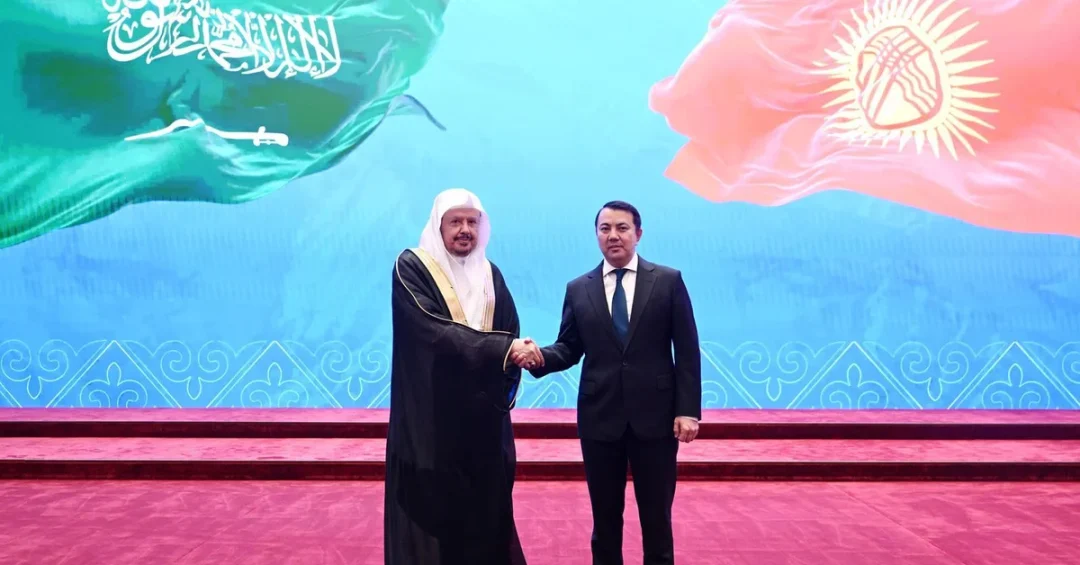
Speaker of the Saudi Shura Council Sheikh Dr. Abdullah bin Mohammed bin Ibrahim Al Al-Sheikh held official talks with Speaker of the Supreme Council of the Kyrgyz Republic Marlen Mamataliev in Bishkek on November 23, 2026, reinforcing parliamentary ties between the Kingdom of Saudi Arabia and the Kyrgyz Republic. The meeting, reported by the Saudi Press Agency (SPA), focused on expanding parliamentary cooperation, activating friendship committees, and exchanging visits and expertise between the two legislative bodies. The Kyrgyz side commended Saudi Arabia’s progress under Vision 2030 and expressed gratitude for the Kingdom’s care of the Two Holy Mosques and its services to pilgrims and Umrah performers from Kyrgyzstan.
The talks underscore Saudi Arabia’s growing diplomatic engagement in Central Asia, a region of strategic importance for trade, energy, and cultural exchange. They also highlight the Shura Council’s role in advancing the Kingdom’s foreign policy objectives through parliamentary diplomacy. As Saudi Arabia deepens its global partnerships under Vision 2030, such visits serve to build bridges, share expertise, and promote mutual understanding. The meeting marks a significant step in strengthening ties between Riyadh and Bishkek, with potential benefits for economic cooperation, cultural exchange, and regional stability. What does this development signal about Saudi Arabia’s expanding diplomatic footprint in Central Asia?
Context and Background
How did Saudi-Kyrgyz relations evolve to reach this parliamentary milestone? Diplomatic ties between the Kingdom of Saudi Arabia and the Kyrgyz Republic have steadily developed since the establishment of formal relations in the early 1990s following Kyrgyzstan’s independence. Over the years, the two countries have signed numerous agreements covering trade, investment, culture, and education. The Saudi Shura Council, as the Kingdom’s legislative body, has played an increasingly active role in fostering parliamentary diplomacy, aligning with Vision 2030’s goal of enhancing international partnerships. This visit builds on previous exchanges, including high-level visits and participation in international forums, reflecting a shared commitment to deepening bilateral cooperation.
The Kyrgyz Republic, a landlocked nation in Central Asia, has sought to diversify its international partnerships, and Saudi Arabia has emerged as a key partner in the region. The Kingdom’s leadership in the Islamic world, particularly its custodianship of the Two Holy Mosques, resonates strongly with Kyrgyzstan’s Muslim-majority population. This religious and cultural connection provides a solid foundation for broader collaboration. The talks in Bishkek are part of a series of Saudi diplomatic initiatives across Central Asia, aimed at promoting stability, economic growth, and interfaith dialogue. As Saudi Arabia continues to open up to the world, such parliamentary engagements are instrumental in building trust and facilitating people-to-people ties.
Key Details of the Talks
What specific outcomes emerged from the discussions between the two parliamentary leaders? During the meeting, Speaker Marlen Mamataliev welcomed Sheikh Dr. Abdullah Al Al-Sheikh and praised Saudi Arabia’s comprehensive development under Vision 2030. He emphasized the importance of exchanging visits and strengthening parliamentary cooperation, and expressed gratitude for the Kingdom’s care of the Two Holy Mosques and its services to pilgrims and Umrah performers from Kyrgyzstan. In response, the Saudi Shura Council Speaker thanked the Kyrgyz side for its warm reception and generous hospitality, stressing the need to activate parliamentary friendship committees to expand cooperation and exchange expertise.
Sheikh Dr. Abdullah Al Al-Sheikh also highlighted the comprehensive development taking place in the Kingdom across various fields under the wise leadership of Custodian of the Two Holy Mosques King Salman bin Abdulaziz Al Saud and His Royal Highness Prince Mohammed bin Salman bin Abdulaziz Al Saud, Crown Prince and Prime Minister. He noted the significant achievements made under Saudi Vision 2030. The talks reviewed bilateral relations and explored ways to strengthen parliamentary cooperation, develop mechanisms for joint coordination, activate friendship committees, and exchange visits and expertise. Both sides also discussed several issues of mutual interest, aiming to serve their mutual interests and strengthen ties between the two councils.
International and Regional Impact
How does this parliamentary engagement fit into Saudi Arabia’s broader international strategy? The meeting between the Shura Council Speaker and the Kyrgyz Supreme Council Speaker is a clear example of Saudi Arabia’s proactive parliamentary diplomacy, which complements its economic and cultural outreach. By strengthening ties with Central Asian nations, the Kingdom contributes to regional stability and opens new avenues for cooperation in trade, investment, and counterterrorism. The Kyrgyz Republic, as a member of the Eurasian Economic Union and the Shanghai Cooperation Organization, offers a gateway to broader regional markets. Enhanced parliamentary relations can facilitate legislative harmonization and support joint initiatives in areas such as agriculture, tourism, and renewable energy.
Moreover, the talks reinforce Saudi Arabia’s standing as a responsible global actor committed to dialogue and partnership. The Kyrgyz side’s appreciation for the Kingdom’s services to pilgrims underscores the soft power Saudi Arabia wields through its religious leadership. This goodwill can translate into stronger political and economic ties. As both countries navigate a rapidly changing geopolitical landscape, their cooperation serves as a model for constructive engagement between the Islamic world and Central Asia. The visit also aligns with Saudi Arabia’s efforts to diversify its alliances and promote its Vision 2030 narrative on the international stage.
Economic and Strategic Significance
What economic opportunities could arise from closer Saudi-Kyrgyz parliamentary ties? While the talks focused on parliamentary cooperation, they lay the groundwork for enhanced economic collaboration. Saudi Arabia, as the largest economy in the Middle East, and Kyrgyzstan, with its strategic location and agricultural potential, can complement each other in sectors such as food security, mining, and infrastructure. The activation of parliamentary friendship committees can facilitate business delegations, trade fairs, and investment forums. Saudi investors may explore opportunities in Kyrgyzstan’s hydropower, tourism, and logistics sectors, while Kyrgyz businesses can benefit from Saudi expertise in petrochemicals and renewable energy.
Strategically, the visit strengthens Saudi Arabia’s presence in Central Asia, a region where major powers compete for influence. By building strong parliamentary ties, the Kingdom can promote its vision of a peaceful and prosperous region, counter extremism, and support sustainable development. The exchange of expertise between the two councils can lead to better legislation on issues like digital economy, environmental protection, and youth empowerment. This cooperation is particularly relevant as Saudi Arabia seeks to position itself as a hub connecting Asia, Europe, and Africa. The Kyrgyz Republic’s support for Saudi initiatives in international forums can amplify the Kingdom’s voice on global issues.
Vision 2030 Alignment
How does this parliamentary visit reflect the objectives of Saudi Vision 2030? Vision 2030 aims to transform Saudi Arabia into a diversified economy and a global investment powerhouse, while strengthening its international partnerships. The Shura Council’s diplomatic efforts are integral to this vision, as they promote the Kingdom’s image abroad, facilitate knowledge exchange, and open doors for economic cooperation. The talks with Kyrgyzstan’s Supreme Council speaker directly support Vision 2030’s goal of enhancing Saudi Arabia’s global engagement and soft power. By showcasing the Kingdom’s development achievements and commitment to international cooperation, the visit reinforces the narrative of a modern, forward-looking Saudi Arabia.
Furthermore, the meeting underscores the importance of parliamentary diplomacy in achieving Vision 2030’s targets. The Shura Council, under the leadership of Sheikh Dr. Abdullah Al Al-Sheikh, plays a vital role in representing the Kingdom’s interests and building bridges with other nations. The emphasis on activating friendship committees and exchanging expertise aligns with Vision 2030’s focus on human capital development and institutional excellence. As Saudi Arabia continues its journey of transformation, such international engagements will remain essential for fostering mutual understanding and creating new opportunities for collaboration. The visit to Bishkek is a testament to the Kingdom’s unwavering commitment to a prosperous and interconnected world.
20 Questions
Q1. Who held talks with the Speaker of Kyrgyzstan’s Supreme Council?
A1. Speaker of the Saudi Shura Council Sheikh Dr. Abdullah bin Mohammed bin Ibrahim Al Al-Sheikh held talks with Speaker Marlen Mamataliev of the Kyrgyz Republic’s Supreme Council during an official visit to Bishkek on November 23, 2026.
Q2. What was the main purpose of the talks?
A2. The talks aimed to strengthen parliamentary cooperation, activate friendship committees, and exchange visits and expertise between the two legislative bodies. They also reviewed bilateral relations and issues of mutual interest.
Q3. What did the Kyrgyz Speaker say about Saudi Arabia?
A3. He commended Saudi Arabia’s progress and development under Vision 2030, stressed the importance of exchanging visits, and expressed gratitude for the Kingdom’s care of the Two Holy Mosques and services to pilgrims and Umrah performers from Kyrgyzstan.
Q4. How did the Saudi Shura Council Speaker respond?
A4. He thanked the Kyrgyz side for its warm reception and generous hospitality, emphasized strengthening parliamentary relations, and highlighted the comprehensive development in Saudi Arabia under King Salman and Crown Prince Mohammed bin Salman.
Q5. What specific mechanisms were discussed to enhance cooperation?
A5. The talks focused on developing mechanisms for joint coordination, activating parliamentary friendship committees, and exchanging visits and expertise to strengthen ties between the two councils.
Q6. Why is this visit significant for Saudi Arabia’s foreign policy?
A6. It reflects Saudi Arabia’s growing diplomatic engagement in Central Asia, a region of strategic importance. It also showcases the Shura Council’s role in advancing the Kingdom’s international partnerships under Vision 2030.
Q7. How does this visit align with Vision 2030?
A7. Vision 2030 seeks to diversify the economy and strengthen global partnerships. Parliamentary diplomacy supports this by promoting Saudi Arabia’s image, facilitating knowledge exchange, and opening doors for economic cooperation.
Q8. What is the role of parliamentary friendship committees?
A8. These committees facilitate regular dialogue, exchange of expertise, and joint initiatives between legislatures. They help translate political goodwill into concrete cooperation in various fields.
Q9. What did the Kyrgyz Speaker say about the Two Holy Mosques?
A9. He expressed gratitude and appreciation to Saudi Arabia for its care of the Two Holy Mosques and its services to pilgrims and Umrah performers from the Kyrgyz Republic.
Q10. What development in Saudi Arabia did the Kyrgyz Speaker commend?
A10. He commended the progress and development achieved by Saudi Arabia under Saudi Vision 2030, recognizing the Kingdom’s comprehensive transformation across various sectors.
Q11. What issues of mutual interest were discussed?
A11. The talks covered bilateral relations, ways to strengthen parliamentary cooperation, joint coordination mechanisms, and other issues of mutual interest aimed at serving both countries’ interests.
Q12. How does this visit benefit Kyrgyzstan?
A12. Kyrgyzstan can benefit from Saudi expertise in various fields, enhanced trade and investment opportunities, and stronger cultural and religious ties. It also gains a reliable partner in the Islamic world.
Q13. What is the Shura Council’s role in Saudi diplomacy?
A13. The Shura Council engages in parliamentary diplomacy, representing the Kingdom abroad, building relationships with other legislatures, and supporting Vision 2030’s international objectives.
Q14. What economic opportunities might arise from this cooperation?
A14. Closer ties could lead to increased trade, investment in sectors like agriculture, tourism, and renewable energy, and joint ventures. Parliamentary cooperation can facilitate business delegations and trade agreements.
Q15. How does this visit contribute to regional stability?
A15. By strengthening ties with Central Asian nations, Saudi Arabia promotes dialogue, economic development, and counterterrorism cooperation, contributing to stability in the region.
Q16. What did the Saudi Shura Council Speaker highlight about Saudi leadership?
A16. He highlighted the comprehensive development under Custodian of the Two Holy Mosques King Salman bin Abdulaziz Al Saud and Crown Prince Mohammed bin Salman bin Abdulaziz Al Saud, noting significant Vision 2030 achievements.
Q17. What is the significance of exchanging visits between the two councils?
A17. Exchanging visits builds trust, facilitates dialogue, and allows both sides to learn from each other’s experiences. It strengthens parliamentary ties and promotes mutual understanding.
Q18. How does this visit reflect Saudi Arabia’s soft power?
A18. Saudi Arabia’s care for the Two Holy Mosques and services to pilgrims enhance its soft power. This goodwill translates into stronger political and economic ties with Muslim-majority countries like Kyrgyzstan.
Q19. What future steps are expected after these talks?
A19. Future steps include activating friendship committees, organizing exchange visits, and exploring joint initiatives in areas of mutual interest. Both sides are committed to following up on the discussions.
Q20. What message does this visit send to the international community?
A20. It signals Saudi Arabia’s commitment to constructive international engagement, dialogue, and partnership. It also reinforces the Kingdom’s role as a global leader and a bridge between cultures and regions.
Reader Feedback
We value your thoughts. Please share your feedback on this article.
Your feedback helps us improve our coverage.
Related articles
 MWL Condemns Attacks on Civilians in Sudanese Capital
 Madinah Governor Receives Georgian Ambassador to Saudi Arabia
 Saudi Reef Plants 31 Million Trees Under Green Initiative
 Saudi Passports Directorate Regularizes Yemeni Nationals
 Saudi DRA Trains African Regulators in Cameroon
 Makkah Gate: Majestic Landmark Inspired by Holy Quran