


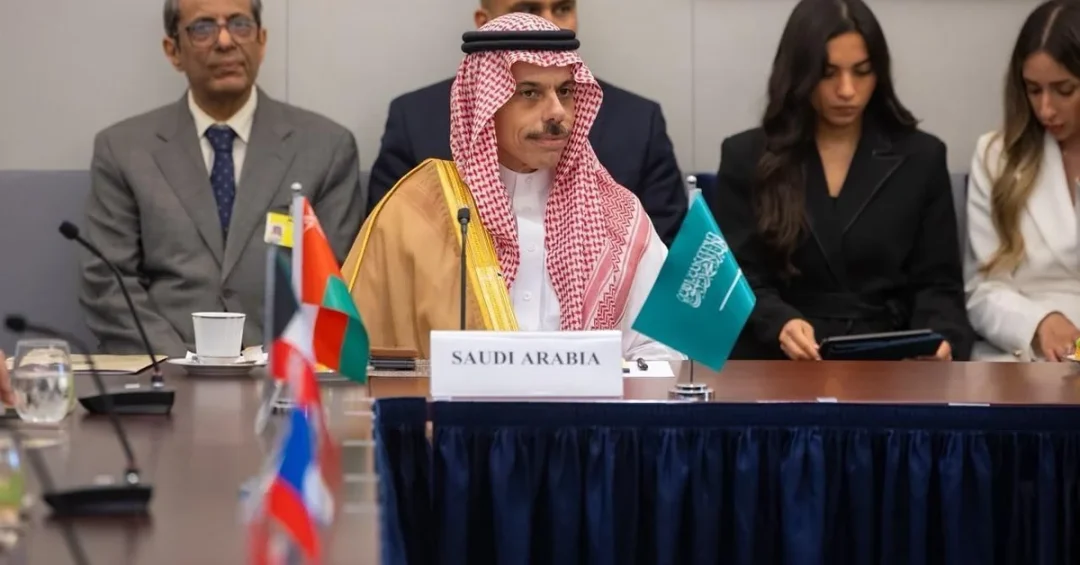
Saudi Minister of Foreign Affairs Prince Faisal bin Farhan bin Abdullah participated in the joint ministerial meeting between the Gulf Cooperation Council (GCC) and the Association of Southeast Asian Nations (ASEAN) in New York on September 24, 2026, held on the sidelines of the High-level Week of the 81st session of the United Nations General Assembly. The meeting, confirmed through official Saudi channels including the Saudi Press Agency, brought together foreign ministers from the six GCC member states and the ten ASEAN member nations to review the development of relations between the two blocs and to explore ways of converting existing cooperation into practical projects and initiatives that advance shared interests.
Could a single ministerial gathering in New York reshape the economic geography between the Gulf and Southeast Asia? The discussions in New York focused on expanding cooperation in priority sectors, including the economy, trade, investment, and development, alongside the importance of continued coordination and consultation on regional and international issues. The Saudi delegation included Deputy Minister for International Multilateral Affairs and General Supervisor of the Economic and Development Affairs Deputyship Dr. Abdulrahman Al-Rassi, underscoring the Kingdom’s dual emphasis on diplomatic and economic engagement. The meeting reflects a broader pattern of Saudi diplomacy that pairs multilateral institution-building with tangible commercial outcomes.
Context and Background
Why has the GCC-ASEAN partnership become such a central pillar of Saudi Arabia’s multilateral diplomacy? The relationship between the Gulf Cooperation Council and ASEAN has deepened steadily over recent years, evolving from periodic dialogue into a structured partnership covering trade, investment, energy security, and people-to-people ties. For the Kingdom of Saudi Arabia, this partnership complements its longstanding relationships with Western and Asian economies while opening new avenues with the fast-growing markets of Southeast Asia, a region of more than 670 million people with a combined GDP exceeding three trillion dollars.
The meeting in New York followed a series of high-level engagements between the two blocs, including previous GCC-ASEAN summits and ministerial meetings that established a framework for cooperation. Saudi Arabia has consistently advocated for institutionalizing this relationship, viewing ASEAN as a natural partner in a multipolar world where South-South cooperation and diversified alliances are increasingly important. The Kingdom’s Vision 2030 economic transformation program, launched in 2016 under the leadership of Crown Prince Mohammed bin Salman, explicitly prioritizes expanding non-oil trade and investment partnerships, making Southeast Asia a strategic priority.
The timing of the meeting is significant. With global supply chains being reconfigured and emerging economies seeking new markets, the GCC-ASEAN axis represents a combined population of over 700 million people and substantial financial and natural resources. Saudi Arabia’s participation signals its commitment to shaping this emerging architecture rather than merely reacting to it, positioning the Kingdom as a bridge between the Gulf and Asia.
Key Details of the Ministerial Meeting
What exactly was on the agenda when the ministers gathered in New York? According to the official statement carried by the Saudi Press Agency, the meeting addressed the partnership between the GCC and ASEAN, reflecting on the development of relations between the two sides in recent years and exploring ways to turn existing cooperation into practical projects and initiatives that advance shared interests. The discussions covered opportunities to expand cooperation in priority sectors, including the economy, trade, investment, and development.
Prince Faisal bin Farhan bin Abdullah, who has served as Saudi Arabia’s top diplomat since 2019, represented the Kingdom at the meeting. He was accompanied by Dr. Abdulrahman Al-Rassi, Deputy Minister for International Multilateral Affairs and General Supervisor of the Economic and Development Affairs Deputyship, a dual role that reflects how Saudi diplomacy increasingly integrates political and economic objectives. The presence of a senior official overseeing economic and development affairs underscores the Kingdom’s intent to translate diplomatic dialogue into commercial and developmental outcomes.
The meeting also emphasized the importance of continued coordination and consultation regarding regional and international issues. This dimension of the partnership has grown in relevance as both regions navigate shifting geopolitical dynamics, including questions of energy security, maritime trade routes, and the reform of multilateral institutions. The joint ministerial format allows ministers to address both bilateral and systemic issues in a single setting, enhancing the efficiency and coherence of the two blocs’ engagement.
International and Regional Impact
How might a strengthened GCC-ASEAN partnership influence the broader international order? The meeting in New York took place during the United Nations General Assembly’s High-level Week, a period when global leaders converge to address pressing international challenges. By holding their ministerial meeting on the sidelines of this gathering, GCC and ASEAN ministers signaled their shared commitment to multilateralism and to the principles of the UN Charter, while also advancing a distinct regional agenda.
For Southeast Asian nations, engagement with the Gulf offers access to energy resources, investment capital, and a growing market for goods and services. For GCC states, including Saudi Arabia, ASEAN represents a dynamic economic region with young populations, expanding middle classes, and complementary economic structures. The partnership also has strategic dimensions, as both regions seek to maintain stability in maritime trade routes and to diversify their international partnerships in an era of great-power competition.
Regionally, Saudi Arabia’s active participation reinforces its role as a leading voice within the GCC and as a reliable partner for Asian nations. The Kingdom’s diplomatic outreach to Southeast Asia complements its broader foreign policy, which prioritizes stability, development, and mutually beneficial cooperation. This approach has been welcomed by ASEAN members, many of whom view Saudi Arabia as a key partner in energy, halal trade, tourism, and Islamic finance.
Economic and Strategic Significance
What economic gains could flow from deeper GCC-ASEAN cooperation? Trade between the Gulf and Southeast Asia has grown substantially over the past decade, with energy products, petrochemicals, and manufactured goods forming the backbone of exchanges. Saudi Arabia’s non-oil exports to ASEAN markets have increased, reflecting the Kingdom’s efforts to diversify its economy under Vision 2030. Investment flows in both directions have also risen, with Saudi entities exploring opportunities in Southeast Asian infrastructure, digital economy, and renewable energy sectors.
The meeting’s focus on turning cooperation into practical projects and initiatives suggests a shift from dialogue to delivery. Potential areas of collaboration include joint ventures in logistics, port development, food security, and technology transfer. Saudi Arabia’s strategic location at the crossroads of Europe, Asia, and Africa, combined with its ambitious infrastructure projects such as NEOM and the expansion of its port capacity, makes it an attractive partner for ASEAN economies seeking to access Middle Eastern and European markets.
Strategically, the partnership enhances the Kingdom’s position in a multipolar world. By building robust ties with ASEAN, Saudi Arabia reduces its dependence on any single region and strengthens its ability to shape global economic governance. The meeting also aligns with the Kingdom’s goal of attracting foreign investment and expertise to support its economic transformation, as outlined in Vision 2030.
Vision 2030 Alignment
How does this diplomatic engagement connect to Saudi Arabia’s long-term national vision? Vision 2030 aims to diversify the Kingdom’s economy, strengthen its international partnerships, and position Saudi Arabia as a pivotal player in global affairs. The GCC-ASEAN ministerial meeting directly supports these objectives by advancing economic diversification through trade and investment, enhancing Saudi Arabia’s role in multilateral diplomacy, and fostering cooperation in development and technology.
The participation of Prince Faisal bin Farhan bin Abdullah, accompanied by a senior official responsible for economic and development affairs, demonstrates the integrated approach that Vision 2030 requires. Diplomacy and economics are treated as complementary instruments of national advancement. As Saudi Arabia continues to implement its transformation agenda, partnerships with dynamic regions such as Southeast Asia will be essential to achieving the vision’s targets, including increasing non-oil exports, attracting foreign direct investment, and creating opportunities for Saudi citizens.
The Kingdom’s continued engagement with the GCC and ASEAN reflects a forward-looking foreign policy rooted in mutual respect, shared interests, and a commitment to international cooperation. Through such engagements, Saudi Arabia reinforces its role as a bridge between regions and a contributor to global stability and prosperity, in line with the aspirations of Vision 2030 and the leadership of the Custodian of the Two Holy Mosques, King Salman bin Abdulaziz Al Saud, and Crown Prince Mohammed bin Salman.
20 Questions
Q1. What was the main purpose of the GCC-ASEAN ministerial meeting in New York?
A1. The meeting aimed to review the development of relations between the GCC and ASEAN, explore ways to turn cooperation into practical projects, and discuss expanding collaboration in priority sectors such as economy, trade, investment, and development.
Q2. Who represented Saudi Arabia at the meeting?
A2. Saudi Arabia was represented by Minister of Foreign Affairs Prince Faisal bin Farhan bin Abdullah, accompanied by Dr. Abdulrahman Al-Rassi, Deputy Minister for International Multilateral Affairs and General Supervisor of the Economic and Development Affairs Deputyship.
Q3. When and where did the meeting take place?
A3. The meeting was held in New York on September 24, 2026, on the sidelines of the High-level Week of the 81st session of the United Nations General Assembly.
Q4. What are the key sectors identified for expanded cooperation?
A4. The priority sectors include the economy, trade, investment, and development, as well as continued coordination and consultation on regional and international issues of shared concern.
Q5. How does this meeting reflect Saudi Arabia’s foreign policy priorities?
A5. It demonstrates the Kingdom’s commitment to multilateral diplomacy, economic diversification, and building partnerships with dynamic regions, consistent with the objectives of Vision 2030.
Q6. What is the significance of holding the meeting during the UN General Assembly?
A6. It allows leaders and ministers to address global challenges while advancing regional cooperation, highlighting the importance both blocs place on multilateralism and international dialogue.
Q7. How many countries are members of the GCC and ASEAN?
A7. The GCC comprises six member states, while ASEAN has ten member states, together representing a combined population of over 700 million people and substantial economic resources.
Q8. What economic benefits could result from deeper GCC-ASEAN ties?
A8. Deeper ties could boost trade, investment flows, joint ventures in logistics and technology, and cooperation in food security, benefiting both regions’ economies and supporting Saudi Arabia’s diversification goals.
Q9. How does this partnership support Saudi Arabia’s Vision 2030?
A9. It advances economic diversification by expanding non-oil trade and investment, strengthens Saudi Arabia’s global role, and fosters cooperation in development and technology, all central to Vision 2030.
Q10. What role did Dr. Abdulrahman Al-Rassi play in the meeting?
A10. Dr. Al-Rassi attended as Deputy Minister for International Multilateral Affairs and General Supervisor of the Economic and Development Affairs Deputyship, reflecting the integration of political and economic diplomacy.
Q11. What does the meeting indicate about Saudi Arabia’s approach to international relations?
A11. It shows a proactive, partnership-oriented approach that seeks practical outcomes, balances global and regional engagements, and prioritizes mutual interests and stability.
Q12. How has the GCC-ASEAN relationship evolved in recent years?
A12. It has grown from periodic dialogue into a structured partnership covering trade, investment, energy security, and people-to-people ties, with regular summits and ministerial meetings.
Q13. What regional and international issues were discussed?
A13. The meeting addressed the importance of continued coordination on regional and international issues, though specific topics were not detailed in the official statement.
Q14. How does Saudi Arabia benefit from engaging with Southeast Asia?
A14. Engagement opens access to fast-growing markets, diversifies partnerships, attracts investment, and enhances the Kingdom’s role as a bridge between regions in a multipolar world.
Q15. What are the next steps for the GCC-ASEAN partnership?
A15. The meeting explored turning cooperation into practical projects and initiatives, suggesting future implementation of joint programs in economy, trade, investment, and development.
Q16. Why is the timing of this meeting significant?
A16. It coincides with global supply chain shifts and emerging economies seeking new markets, positioning the GCC-ASEAN axis as a vital force for economic cooperation and stability.
Q17. How does this meeting align with Saudi Arabia’s leadership in the GCC?
A17. Saudi Arabia’s active participation reinforces its leading role within the GCC and its commitment to guiding the bloc toward beneficial international partnerships.
Q18. What message does Saudi Arabia’s participation send to the international community?
A18. It signals the Kingdom’s dedication to multilateralism, peaceful cooperation, and development, and its readiness to work with diverse partners to address shared challenges.
Q19. What is the expected impact on trade between the Gulf and ASEAN?
A19. The meeting is expected to facilitate increased trade flows, investment, and joint projects, building on existing economic complementarities and mutual interests.
Q20. How does this engagement reflect Saudi Arabia’s Vision 2030 goals?
A20. It directly supports Vision 2030 by enhancing economic diversification, expanding international partnerships, and promoting Saudi Arabia as a pivotal player in global affairs and development.
Reader Feedback
We value your thoughts. Please share your feedback on this article.
Your feedback helps us improve our coverage.
Related articles
 Al-Baha Municipality distributes 10,000 National Day gifts
 Aseil Al-Shehail presents credentials as Saudi Ambassador to Sweden
 Saudi Embassy in Albania marks National Day
 GCC, Pakistan Review Ties and Regional Developments at UNGA
 Saudi Arabia Reflags Bob Palmer Rig Under National Flag
 Saudi Embassy in Albania Celebrates National Day