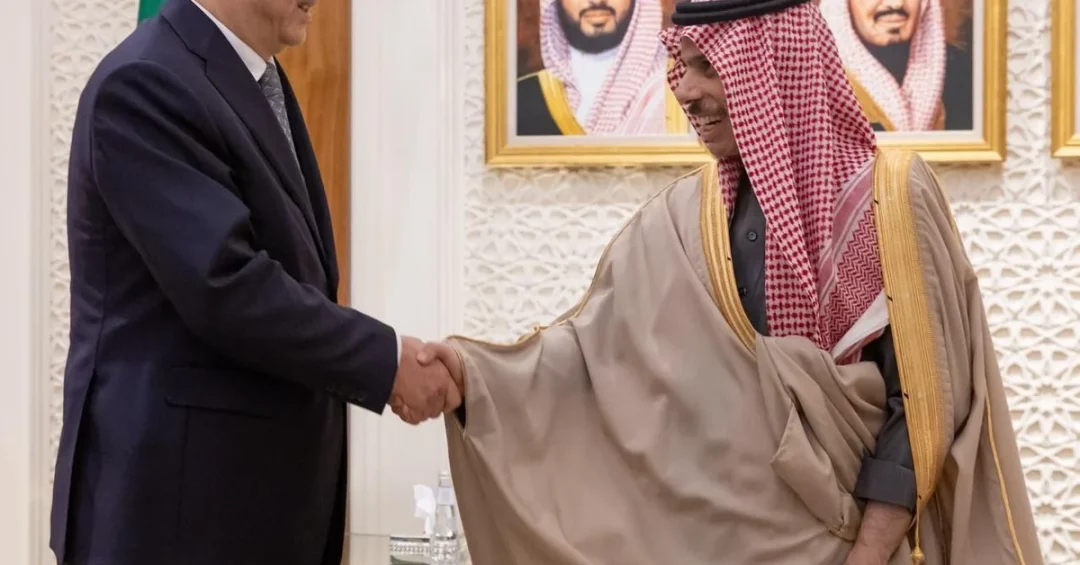
Saudi Minister of Foreign Affairs Prince Faisal bin Farhan bin Abdullah received Chinese Government Special Envoy on the Middle East Issue Zhai Jun at the ministry’s headquarters in Riyadh on November 13, 2026, according to the Saudi Press Agency (SPA). The meeting focused on bilateral relations and the latest regional developments, particularly the ongoing attacks by the terrorist Houthi militia against civilian objects and civilians within the Kingdom of Saudi Arabia. The two sides also discussed the repercussions of these actions on regional security and stability, as well as diplomatic efforts to contain crises and de-escalate tensions.
The high-level encounter underscores Saudi Arabia’s continued diplomatic engagement with major global powers to address pressing security challenges. It also highlights the Kingdom’s commitment to protecting its citizens and infrastructure while working toward peace and stability in the region. As the world’s leading energy exporter, Saudi Arabia has a vital interest in ensuring the safety of maritime corridors and the uninterrupted flow of global trade. The meeting with the Chinese envoy reflects the deepening ties between Riyadh and Beijing, two nations that share a vision for a more stable and prosperous Middle East.
Context and Background
Why does this meeting matter now, and what does it signal about Saudi Arabia’s evolving diplomatic strategy? The timing is significant. The Houthi militia, backed by external actors, has intensified attacks on Saudi civilian areas and critical infrastructure, threatening not only the Kingdom’s security but also the stability of global energy markets. In response, Saudi Arabia has pursued a dual-track approach: robust defense measures and proactive diplomacy. Engaging with China, a permanent member of the UN Security Council and a major economic partner, is a key element of this strategy. China’s Special Envoy for Middle East Issues, Zhai Jun, has been actively involved in regional mediation efforts, and his visit to Riyadh demonstrates the importance both countries place on coordinating their positions.
The relationship between Saudi Arabia and China has grown substantially in recent years. China is Saudi Arabia’s largest trading partner, and the two countries have cooperated extensively in energy, technology, and infrastructure. This meeting builds on that foundation, extending cooperation into the realm of regional security and conflict resolution. It also comes amid broader geopolitical shifts, with the Kingdom asserting its leadership in the Arab and Islamic worlds while strengthening partnerships with Asia. By hosting the Chinese envoy, Saudi Arabia reinforces its role as a pivotal mediator and a reliable partner in maintaining regional order.
Key Details of the Meeting
What exactly was discussed behind closed doors, and how might it shape future actions? According to the official SPA report, the two sides reviewed bilateral relations and delved into the latest regional developments. A central topic was the ongoing attacks by the terrorist Houthi militia against civilian objects and civilians within the Kingdom. Prince Faisal and Envoy Zhai Jun examined the repercussions of these attacks on regional security and stability, emphasizing the need for a unified international response. They also addressed other regional issues and diplomatic efforts to contain crises and de-escalate tensions, reflecting a shared desire to prevent further escalation.
A critical point of discussion was the importance of strengthening energy security and energy market stability. Both sides stressed the need to ensure the safety of maritime corridors and uphold freedom of navigation, particularly in the Strait of Hormuz and the Bab al-Mandab Strait. These waterways are lifelines for global trade, through which a significant portion of the world’s oil and gas supplies transit. Any disruption would have severe consequences for the global economy. The meeting thus highlighted a convergence of interests: Saudi Arabia’s need to protect its exports and China’s reliance on stable energy supplies. The two officials also likely discussed ways to enhance cooperation in countering terrorism and extremism, though specific measures were not disclosed.
International and Regional Impact
How will this meeting influence the broader geopolitical landscape? The Saudi-Chinese dialogue sends a strong message that the Kingdom is not isolated in facing regional threats. China’s willingness to engage on these issues demonstrates its growing role as a stakeholder in Middle Eastern security. For Saudi Arabia, this partnership offers a counterbalance to traditional alliances and reinforces its multi-vector foreign policy. It also aligns with the Kingdom’s efforts to build consensus among major powers for a peaceful resolution to the Yemen conflict and to curb Iranian-backed destabilization.
Regionally, the meeting could pave the way for increased Chinese diplomatic involvement in de-escalating tensions. China has already hosted talks between Saudi Arabia and Iran, and its special envoy’s visit to Riyadh may be part of a broader push to consolidate a regional dialogue. For international observers, the encounter signals that Saudi Arabia and China are aligning their approaches to security and energy, which could influence global oil markets and diplomatic initiatives. The emphasis on freedom of navigation in the Strait of Hormuz and Bab al-Mandab also resonates with other nations that depend on these routes, potentially building a wider coalition for maritime security.
Economic and Strategic Significance
What are the economic stakes, and why does energy security dominate the agenda? Saudi Arabia is the world’s largest oil exporter, and China is the world’s largest oil importer. Their economic interdependence is profound. Any threat to Saudi oil facilities or shipping lanes directly impacts China’s energy security and, by extension, the global economy. The meeting’s focus on energy market stability and maritime safety is therefore both a bilateral and a global concern. By coordinating on these issues, Riyadh and Beijing can help mitigate risks and ensure a steady flow of energy resources.
Strategically, the meeting reinforces Saudi Arabia’s position as a reliable energy partner and a responsible global actor. It also supports the Kingdom’s Vision 2030 goals of diversifying the economy and attracting foreign investment. A stable region is essential for economic diversification, as it encourages tourism, foreign direct investment, and the growth of non-oil sectors. China’s involvement in regional security can complement Saudi efforts to create a conducive environment for Vision 2030 projects, such as NEOM and the Red Sea developments. Furthermore, cooperation with China in technology and renewable energy is already a pillar of the bilateral relationship, and this meeting may accelerate such collaboration.
Vision 2030 Alignment
How does this diplomatic engagement advance Saudi Arabia’s long-term vision? Vision 2030 aims to transform the Kingdom into a diversified, innovative economy and a global investment hub. A stable and secure region is a prerequisite for achieving these ambitions. By working with China to address security challenges, Saudi Arabia is protecting its economic lifelines and creating a safer environment for investors and tourists. The meeting also reflects the Vision’s emphasis on strategic partnerships and proactive diplomacy. Saudi Arabia is not merely reacting to crises; it is shaping outcomes through dialogue and cooperation.
Moreover, the Kingdom’s role as a bridge between East and West is enhanced by such engagements. China’s Belt and Road Initiative intersects with Saudi Vision 2030, particularly in infrastructure and trade. The two countries are natural partners in building a more connected and prosperous future. As Saudi Arabia continues to host major events and open its doors to the world, its diplomatic outreach to global powers like China will be crucial in ensuring a peaceful and stable neighborhood. This meeting is a testament to the Kingdom’s foresight and its commitment to a secure, prosperous region.
20 Questions
Q1. Who received the Chinese Special Envoy in Riyadh?
A1. Saudi Minister of Foreign Affairs Prince Faisal bin Farhan bin Abdullah received Chinese Government Special Envoy on the Middle East Issue Zhai Jun at the ministry’s headquarters in Riyadh on November 13, 2026.
Q2. What was the primary focus of the meeting?
A2. The meeting focused on bilateral relations and the latest regional developments, especially the ongoing attacks by the terrorist Houthi militia against civilians and civilian objects within Saudi Arabia.
Q3. Which regional waterways were specifically mentioned?
A3. The Strait of Hormuz and the Bab al-Mandab Strait were highlighted as critical maritime corridors where freedom of navigation must be upheld.
Q4. Why is energy security a key topic between Saudi Arabia and China?
A4. Saudi Arabia is a leading energy exporter and China is a major importer, so stable energy markets and secure maritime routes are vital for both economies and global trade.
Q5. What did both sides emphasize regarding maritime corridors?
A5. They stressed the importance of ensuring the safety of maritime corridors and upholding freedom of navigation to maintain the smooth flow of global trade and supply chains.
Q6. How does this meeting reflect Saudi Arabia’s diplomatic approach?
A6. It demonstrates Saudi Arabia’s proactive diplomacy and its commitment to engaging with global powers to address regional security challenges and promote stability.
Q7. What is China’s role in Middle East diplomacy?
A7. China has been increasingly involved in regional mediation, including hosting talks between Saudi Arabia and Iran, and its special envoy’s visit underscores its growing role.
Q8. What repercussions of Houthi attacks were discussed?
A8. The two sides discussed the repercussions of these attacks on regional security and stability, as well as diplomatic efforts to contain crises and de-escalate tensions.
Q9. How does this meeting align with Vision 2030?
A9. It supports Vision 2030 by fostering a stable region essential for economic diversification, foreign investment, and the success of projects like NEOM.
Q10. What other regional issues were addressed?
A10. They addressed developments on several other regional issues and diplomatic efforts to contain crises and de-escalate tensions across the Middle East.
Q11. What is the significance of the Strait of Hormuz?
A11. The Strait of Hormuz is a vital chokepoint for global oil shipments, and any disruption there would severely impact international energy markets and trade.
Q12. How does China benefit from Saudi stability?
A12. China relies on Saudi oil exports, so stability in the Kingdom and secure shipping lanes ensure China’s energy security and economic stability.
Q13. What message does this meeting send to the international community?
A13. It signals that Saudi Arabia and China are cooperating to uphold regional security and energy stability, promoting a unified approach to common challenges.
Q14. Did the meeting discuss bilateral relations beyond security?
A14. Yes, they reviewed bilateral relations, which likely included economic, trade, and investment cooperation, though specific details were not disclosed.
Q15. What is the Bab al-Mandab Strait’s importance?
A15. The Bab al-Mandab Strait is a crucial passage for shipping between the Red Sea and the Gulf of Aden, essential for trade between Europe, Asia, and the Middle East.
Q16. How does Saudi Arabia protect its civilians from Houthi attacks?
A16. Saudi Arabia employs robust defense measures, including air defense systems, and pursues diplomatic efforts to end the conflict and hold perpetrators accountable.
Q17. What is China’s Special Envoy’s previous experience?
A17. Zhai Jun has extensive diplomatic experience and has been actively involved in Middle East mediation, including efforts to reduce tensions and promote dialogue.
Q18. Why is de-escalation important for global trade?
A18. De-escalation prevents disruptions to maritime routes and energy supplies, ensuring the uninterrupted flow of goods and stabilizing global markets.
Q19. How does this meeting strengthen Saudi-China ties?
A19. It deepens cooperation on security and energy, building on existing economic partnerships and aligning their approaches to regional stability.
Q20. What is the expected outcome of this meeting?
A20. The meeting is expected to enhance coordination on regional security, energy stability, and diplomatic efforts, contributing to a more stable Middle East.
Reader Feedback
We value your thoughts. Please share your feedback on this article.
Your feedback helps us improve our coverage.