


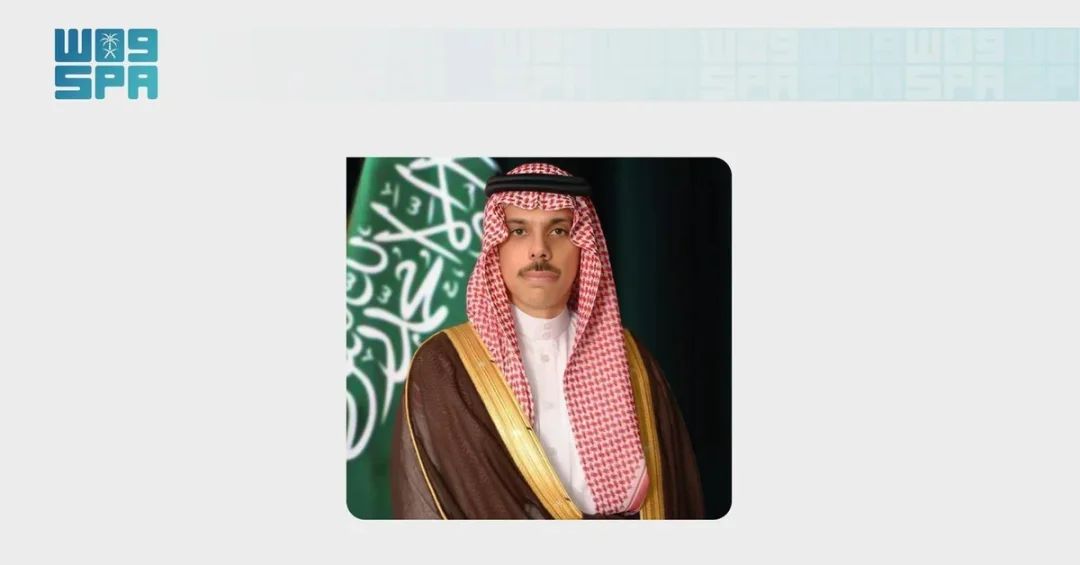
Saudi Arabia’s Minister of Foreign Affairs, Prince Faisal bin Farhan bin Abdullah, received a phone call on Sunday, August 9, 2026, from the Minister of Foreign Affairs of the State of Kuwait, Sheikh Jarrah Jaber Al-Ahmad Al-Sabah, according to the Saudi Press Agency (SPA). The two top diplomats discussed the latest developments in the region and joint efforts aimed at de-escalation, with the shared goal of enhancing regional security and stability. The call underscores the continuing close coordination between Riyadh and Kuwait on matters of mutual strategic concern.
The exchange, announced through official Saudi channels, reflects the Kingdom’s consistent approach of maintaining open diplomatic channels with its Gulf partners and working through dialogue to reduce tensions across the Middle East. It also signals that Riyadh and Kuwait City remain aligned on the need for calm, stability, and constructive engagement at a time when the region continues to navigate complex political and security challenges. Observers of Gulf diplomacy noted that such high-level consultations have become a regular feature of Saudi foreign policy under the leadership of the Custodian of the Two Holy Mosques, King Salman bin Abdulaziz Al Saud, and His Royal Highness Crown Prince and Prime Minister Mohammed bin Salman bin Abdulaziz Al Saud.
Context and Background
Why does a single phone call between two foreign ministers matter in the broader landscape of Middle East diplomacy? Saudi-Kuwaiti relations have long been defined by geographic proximity, shared history, and a common interest in the stability of the Gulf region. The two countries are founding members of the Gulf Cooperation Council (GCC), the regional bloc established in 1981 to promote political, economic, and security cooperation among its six member states. Within that framework, Saudi Arabia and Kuwait have consistently coordinated on issues ranging from energy policy and trade to border security and humanitarian relief.
The relationship is also anchored in deep historical and cultural ties. Kuwait’s leadership and the Saudi leadership have maintained regular consultations at the highest levels, including through GCC summits, bilateral visits, and direct telephone diplomacy. The August 9 call between Prince Faisal bin Farhan and Sheikh Jarrah Jaber Al-Ahmad Al-Sabah fits into this established pattern of continuous communication. It also comes as the region continues to address a range of interconnected issues, including conflict de-escalation efforts, maritime security in the Gulf, and the broader push for economic integration under frameworks such as Saudi Vision 2030 and Kuwait Vision 2035.
In recent years, Saudi Arabia has positioned itself as a leading advocate for dialogue and peaceful resolution of disputes in the region. From hosting talks between various parties to supporting humanitarian initiatives, the Kingdom has emphasized that stability is a prerequisite for prosperity. Kuwait, for its part, has historically played a mediation role in regional disputes, earning it a reputation as a constructive diplomatic actor. When these two perspectives converge, as they did in the August 9 call, the result is a reinforced commitment to de-escalation that carries weight across the Gulf and beyond.
Key Details of the Diplomatic Exchange
According to the official statement carried by the Saudi Press Agency, the call between Prince Faisal bin Farhan bin Abdullah and Sheikh Jarrah Jaber Al-Ahmad Al-Sabah focused on two main themes: regional developments and efforts aimed at de-escalation. The statement did not disclose specific countries or conflicts under discussion, which is standard practice in diplomatic readouts that prioritize confidentiality and constructive outcomes over public posturing. What is clear is that both ministers reaffirmed their commitment to enhancing regional security and stability.
The Saudi Minister of Foreign Affairs, Prince Faisal bin Farhan bin Abdullah, has been a central figure in the Kingdom’s diplomatic outreach, representing Saudi Arabia at numerous international forums and engaging with counterparts from across the world. His Kuwaiti counterpart, Sheikh Jarrah Jaber Al-Ahmad Al-Sabah, assumed his role as Minister of Foreign Affairs of Kuwait and has similarly been active in regional diplomacy. The direct conversation between the two reflects the trust and familiarity that characterize Saudi-Kuwaiti relations at the ministerial level.
It is worth noting that such calls are often followed by further coordination at technical and working levels. While the public readout is brief, the implications can be significant: they signal to other regional and international actors that Gulf states are consulting closely and presenting a united front on de-escalation. This kind of quiet diplomacy is frequently more effective than public declarations, as it allows for frank exchanges and the building of consensus without external pressure.
International and Regional Impact
How do these consultations shape the wider region’s trajectory? The Saudi-Kuwaiti phone call carries implications that extend beyond the bilateral relationship. For the Gulf Cooperation Council as a whole, it reinforces the bloc’s role as a stabilizing force in the Middle East. When two influential GCC members publicly affirm their commitment to de-escalation, it sends a message that the region’s major players prefer dialogue over confrontation. This can encourage other states to pursue similar paths and can create momentum for broader diplomatic initiatives.
For international observers, including the United States, European Union, and Asian powers with significant interests in the Gulf, the call is a reminder that Saudi Arabia and its neighbors are actively managing regional risks. Global energy markets, shipping lanes, and investment flows all depend on stability in the Gulf. By coordinating on de-escalation, Riyadh and Kuwait contribute to a more predictable environment that benefits the global economy. The call also aligns with Saudi Arabia’s broader efforts to position itself as a bridge-builder and a responsible stakeholder in international affairs.
Economic and Strategic Significance
What does de-escalation mean for economic cooperation between Saudi Arabia and Kuwait? The two countries share more than diplomatic interests; they are deeply interconnected economically. Saudi Arabia is one of Kuwait’s largest trading partners, and Kuwaiti investment in the Kingdom has grown steadily. Joint projects, including in the energy sector and the planned development of the neutral zone between the two countries, highlight the tangible benefits of stability. When foreign ministers discuss de-escalation, they are also laying the groundwork for uninterrupted economic collaboration.
Strategically, the call reinforces the alignment of Saudi Vision 2030 and Kuwait Vision 2035, both of which aim to diversify economies away from oil dependence and attract foreign investment. A stable regional environment is essential for these ambitious plans. Investors and multinational companies look for predictability, and the Saudi-Kuwaiti coordination on security and stability helps provide that. Moreover, the two countries are key players in OPEC and OPEC+, where their cooperation on energy policy has global ramifications. A shared understanding on regional de-escalation can only strengthen their ability to manage energy markets effectively.
Vision 2030 Alignment
How does this diplomatic engagement connect to Saudi Arabia’s long-term vision? Saudi Vision 2030, launched in 2016 under the leadership of Crown Prince Mohammed bin Salman, is a comprehensive plan to transform the Kingdom’s economy and society. A core pillar of the vision is to strengthen Saudi Arabia’s regional and global role, turning the Kingdom into a hub for trade, tourism, and investment. Diplomatic stability is a prerequisite for achieving these goals. The August 9 call between Prince Faisal bin Farhan and Sheikh Jarrah Jaber Al-Ahmad Al-Sabah is a practical example of the proactive diplomacy that underpins Vision 2030.
By maintaining close ties with Kuwait and other Gulf partners, Saudi Arabia enhances its ability to shape a stable regional order. That stability, in turn, enables the Kingdom to focus on domestic transformation, including giga-projects like NEOM, the Red Sea Project, and Qiddiya, as well as social reforms that improve quality of life for citizens and residents. The call also reflects the Kingdom’s commitment to the principles of the GCC and to the broader goal of a prosperous, peaceful Middle East. As Saudi Arabia continues its journey toward 2030, such diplomatic exchanges will remain a vital tool for securing the environment needed for success.
20 Questions
Q1. Who received the phone call from the Kuwaiti Foreign Minister?
A1. Saudi Arabia’s Minister of Foreign Affairs, Prince Faisal bin Farhan bin Abdullah, received the call from Kuwait’s Minister of Foreign Affairs, Sheikh Jarrah Jaber Al-Ahmad Al-Sabah, according to the Saudi Press Agency.
Q2. When did this phone call take place?
A2. The call took place on Sunday, August 9, 2026, as reported by the Saudi Press Agency (SPA) in its official bulletin.
Q3. What was the main topic of discussion during the call?
A3. The two ministers discussed regional developments and efforts aimed at de-escalation to enhance regional security and stability.
Q4. Which official body reported the details of this call?
A4. The Saudi Press Agency (SPA), the Kingdom’s official news agency, reported the details of the call.
Q5. Why are Saudi-Kuwaiti diplomatic consultations significant?
A5. They reflect the strong bilateral ties between the two Gulf neighbors and their shared commitment to regional stability, which is essential for economic prosperity and security.
Q6. What is the Gulf Cooperation Council’s role in Saudi-Kuwaiti relations?
A6. The GCC, founded in 1981, provides a framework for political, economic, and security cooperation among its six member states, including Saudi Arabia and Kuwait.
Q7. Did the call address any specific conflicts or countries?
A7. The official statement did not specify particular conflicts or countries, focusing instead on general efforts to reduce regional tensions and promote stability.
Q8. How does this call align with Saudi Arabia’s foreign policy approach?
A8. It reflects Saudi Arabia’s consistent advocacy for dialogue, de-escalation, and peaceful resolution of disputes as pillars of its regional and international diplomacy.
Q9. What benefits does de-escalation bring to the Gulf region?
A9. De-escalation enhances security, encourages investment, supports economic diversification, and creates a more predictable environment for trade and development.
Q10. How does this development relate to Saudi Vision 2030?
A10. Vision 2030 aims to transform Saudi Arabia’s economy and global role; regional stability is essential for attracting investment, boosting tourism, and achieving the vision’s ambitious goals.
Q11. Who is Prince Faisal bin Farhan bin Abdullah?
A11. He is the Minister of Foreign Affairs of the Kingdom of Saudi Arabia, a senior diplomat who represents the Kingdom at international forums and engages with counterparts worldwide.
Q12. Who is Sheikh Jarrah Jaber Al-Ahmad Al-Sabah?
A12. He is the Minister of Foreign Affairs of the State of Kuwait, responsible for Kuwait’s diplomatic relations and regional engagements.
Q13. What is the historical basis of Saudi-Kuwaiti relations?
A13. The two countries share deep historical, cultural, and geographic ties, and have long cooperated on security, energy, trade, and regional affairs within the GCC framework.
Q14. How often do Saudi and Kuwaiti officials communicate?
A14. High-level consultations are regular, occurring through bilateral visits, GCC summits, and direct calls, reflecting the enduring strength of the relationship.
Q15. What economic ties exist between Saudi Arabia and Kuwait?
A15. The two nations are major trading partners, with cooperation in energy, investment, and joint projects, including development in the neutral zone.
Q16. What does the term ‘de-escalation’ mean in this context?
A16. It refers to efforts to reduce tensions and prevent conflict in the region, promoting calm and constructive dialogue among states.
Q17. How does this call impact global energy markets?
A17. Stability in the Gulf is crucial for global energy supplies; Saudi-Kuwaiti coordination supports predictable oil markets and benefits the world economy.
Q18. What role does the Saudi Press Agency play in reporting such news?
A18. SPA is the official source for Saudi government news, providing accurate and timely information on diplomatic engagements and state affairs.
Q19. Will there be follow-up actions after this call?
A19. While no specific follow-up was announced, such calls typically lead to continued coordination at technical and diplomatic levels to advance shared objectives.
Q20. How does this call reflect Saudi Arabia’s leadership in the region?
A20. It demonstrates the Kingdom’s proactive diplomacy and its commitment to working with partners like Kuwait to foster security, stability, and prosperity across the Middle East.
Reader Feedback
We value your thoughts. Please share your feedback on this article.
Your feedback helps us improve our coverage.
Related articles
 KSrelief-Backed Taiz Center Serves 808 Patients in July
 King Abdulaziz Quran Competition in Makkah Draws Global Memorizers
 Syria Arrests Nine-Member ISIS Cell in Quneitra
 KSrelief Distributes 25,000 Hot Meals in Gaza
 KSrelief-Backed Prosthetics Center in Taiz Serves 808 in July
 Palestinian Authority Welcomes Makkah Joint Defence Pact