


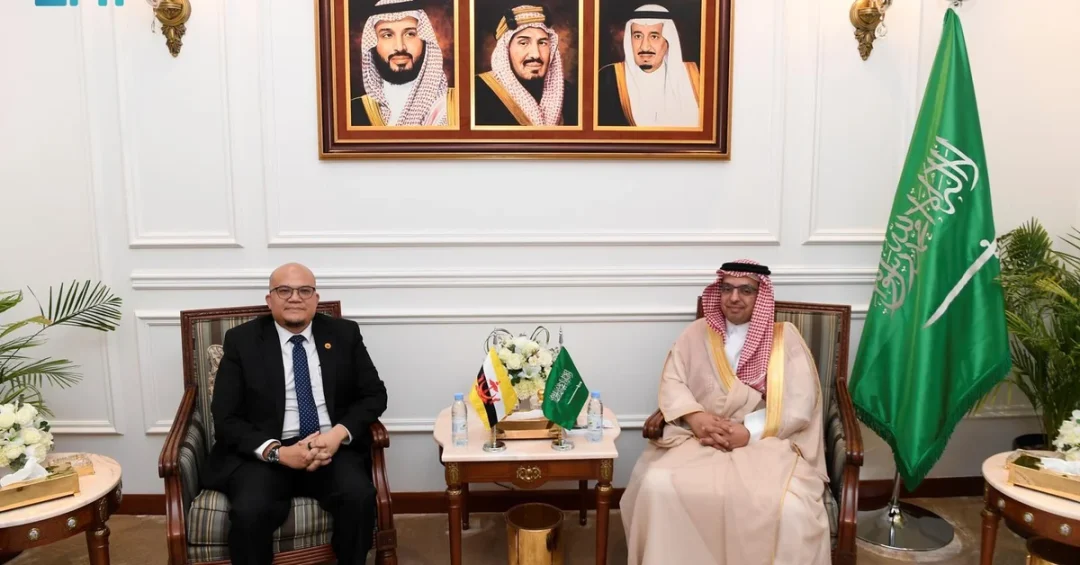
Fareed Al-Shehri, Director General of the Ministry of Foreign Affairs Makkah Region branch, received Farhan Abdulghani, Acting Consul General of Brunei Darussalam, in Jeddah on December 12, 2024, for a meeting that underscores the Kingdom of Saudi Arabia’s enduring commitment to diplomatic engagement and international cooperation. The encounter, reported by the Saudi Press Agency, provided a platform for the two officials to hold cordial talks on matters of mutual interest, reflecting the strong bilateral relationship between the Kingdom and the Southeast Asian nation.
How does a single diplomatic meeting in Jeddah ripple across continents and reinforce Saudi Arabia’s global standing? The reception of Brunei’s Acting Consul General by a senior official of the Ministry of Foreign Affairs in the Makkah Region highlights the Kingdom’s robust network of consular and diplomatic relations, which are essential to its Vision 2030 goals of deepening international partnerships and enhancing economic and cultural exchange. This meeting, while routine in protocol, carries significance as part of Saudi Arabia’s broader strategy to strengthen ties with nations across Asia and the Islamic world.
Context and Background
Why are such diplomatic receptions critical to Saudi Arabia’s foreign policy architecture? The Ministry of Foreign Affairs Makkah Region branch, led by Director General Fareed Al-Shehri, plays a pivotal role in managing the Kingdom’s diplomatic and consular affairs in one of its most important regions. The Makkah Region is not only the spiritual heartland of Islam, hosting the holy cities of Makkah and Madinah, but also a major economic and cultural hub that attracts millions of visitors and foreign residents annually. The branch’s responsibilities include overseeing relations with consulates, coordinating with local authorities, and facilitating the needs of diplomatic missions operating in the region.
Brunei Darussalam, a small but prosperous nation on the island of Borneo, has maintained diplomatic relations with Saudi Arabia since 1984, the year of its independence. The relationship is anchored in shared Islamic values, mutual respect, and a commitment to cooperation in areas such as education, trade, and religious affairs. Brunei’s Acting Consul General, Farhan Abdulghani, represents his country’s interests in the Makkah Region, ensuring that Bruneian citizens—particularly those performing Hajj and Umrah—receive support and that bilateral initiatives continue to advance. The meeting between Al-Shehri and Abdulghani is a testament to the regular diplomatic consultations that sustain this partnership.
The timing of this meeting, in December 2024, comes as Saudi Arabia accelerates its Vision 2030 reform agenda, which seeks to diversify the economy, promote moderate Islam, and elevate the Kingdom’s role as a global connector. In this context, engagements with diplomatic representatives from Asia—a region of growing strategic importance—are integral to Saudi Arabia’s outreach. Brunei, as a member of the Association of Southeast Asian Nations (ASEAN) and the Organisation of Islamic Cooperation (OIC), offers a gateway to deeper engagement with Southeast Asia and the broader Islamic world.
Key Details
What exactly transpired during this cordial meeting, and what does it signal about the depth of Saudi-Brunei relations? According to the Saudi Press Agency, Fareed Al-Shehri and Farhan Abdulghani held cordial talks that focused on matters of mutual interest. While the specific agenda was not disclosed, such meetings typically cover consular services, the welfare of citizens, cultural and educational exchanges, and ways to enhance bilateral cooperation. The fact that the Acting Consul General was received by the Director General of the Makkah Region branch indicates the importance Saudi Arabia places on maintaining open channels of communication with all diplomatic missions, regardless of the size of the country they represent.
The meeting also underscores the operational efficiency of the Ministry of Foreign Affairs in the Makkah Region, which handles a high volume of diplomatic and consular activity due to the region’s religious significance. The branch works closely with the Ministry’s headquarters in Riyadh and other regional branches to ensure that foreign missions receive the support they need to operate effectively. For Brunei, which has a modest diplomatic footprint, the reception by a senior Saudi official is a mark of respect and a reaffirmation of the strong bonds between the two nations.
Furthermore, the cordial nature of the talks reflects the personal rapport between the two officials and the broader goodwill that characterizes Saudi-Brunei relations. Brunei’s Sultan Hassanal Bolkiah has visited Saudi Arabia on multiple occasions, and the two countries have signed agreements on avoiding double taxation, promoting investment, and cooperating in the fields of education and culture. The Acting Consul General’s role in the Makkah Region is thus part of a larger diplomatic framework that benefits both nations.
International and Regional Impact
How does Saudi Arabia’s engagement with Brunei resonate across the wider Islamic world and beyond? The Kingdom’s relationship with Brunei is a model of South-South cooperation, demonstrating how countries with shared values can collaborate on mutual priorities. For Saudi Arabia, maintaining strong ties with Brunei helps reinforce its leadership role in the OIC and its commitment to Islamic solidarity. Brunei, in turn, benefits from Saudi Arabia’s economic strength, religious guidance, and diplomatic support on international platforms.
Regionally, this meeting is part of Saudi Arabia’s broader pivot toward Asia, a key pillar of Vision 2030. The Kingdom has been deepening its ties with Asian nations—including China, India, Japan, and South Korea—to diversify its economic partnerships and attract investment. Brunei, though small, is a stable and affluent partner that can serve as a bridge to ASEAN markets. Moreover, Brunei’s status as a fellow Islamic monarchy with a moderate outlook aligns with Saudi Arabia’s promotion of moderate Islam and its efforts to counter extremism.
On the international stage, the meeting sends a subtle but important message: Saudi Arabia remains open to diplomatic engagement and is committed to maintaining robust relations with all friendly nations. This is particularly relevant as the Kingdom prepares to host major global events, such as Expo 2030 in Riyadh and the 2034 FIFA World Cup, which will require extensive international cooperation and consular support. By nurturing relationships with consuls general and ambassadors, Saudi Arabia ensures that its diplomatic infrastructure is ready to handle the increased demand.
Economic and Strategic Significance
What economic and strategic dividends can arise from such diplomatic interactions? While the meeting itself may not have produced immediate economic agreements, it contributes to the enabling environment for trade and investment. Brunei’s economy, though heavily reliant on oil and gas, has been diversifying, and Saudi Arabia’s Vision 2030 offers opportunities for collaboration in sectors such as halal industry, Islamic finance, tourism, and renewable energy. The two countries have a standing agreement on the promotion and protection of investments, and regular diplomatic consultations help identify new avenues for cooperation.
Strategically, Brunei’s location in Southeast Asia and its membership in ASEAN make it a valuable partner for Saudi Arabia’s regional outreach. The Kingdom has been expanding its diplomatic presence in Asia, and Brunei can facilitate introductions to other ASEAN members. Additionally, Brunei’s commitment to Islamic finance and halal certification aligns with Saudi Arabia’s ambitions to become a global hub for Islamic economy. The meeting between Al-Shehri and Abdulghani thus serves as a building block for deeper economic integration.
From a consular perspective, the Makkah Region branch’s efficient handling of diplomatic affairs supports the millions of pilgrims and visitors who travel to Saudi Arabia each year. Brunei sends a significant number of pilgrims for Hajj and Umrah, and the consulate’s work in facilitating their journeys is vital. By maintaining strong ties with the consulate, Saudi authorities can ensure smooth coordination during peak seasons, enhancing the overall pilgrimage experience and reinforcing Saudi Arabia’s reputation as a gracious host.
Vision 2030 Alignment
How does this diplomatic meeting align with Saudi Arabia’s Vision 2030 and its long-term aspirations? Vision 2030, launched by Crown Prince Mohammed bin Salman in 2016, aims to transform Saudi Arabia into a diversified, innovative, and globally connected economy. A key component of this vision is strengthening international partnerships and enhancing the Kingdom’s role as a pivotal player in global affairs. The Ministry of Foreign Affairs, through its regional branches, is instrumental in realizing this goal by maintaining and expanding diplomatic networks.
The reception of Brunei’s Acting Consul General by the Director General of the Makkah Region branch exemplifies the proactive diplomacy that Vision 2030 encourages. It shows that Saudi Arabia values every bilateral relationship and is committed to fostering goodwill and cooperation. As the Kingdom continues its journey toward 2030, such meetings will remain essential in building the trust and mutual understanding necessary for successful international collaboration. By investing in these relationships, Saudi Arabia not only advances its own interests but also contributes to stability and prosperity in the Islamic world and beyond.
20 Questions
Q1. Who received the Acting Consul General of Brunei Darussalam in Jeddah?
A1. Fareed Al-Shehri, Director General of the Ministry of Foreign Affairs Makkah Region branch, received Farhan Abdulghani, Acting Consul General of Brunei Darussalam, in Jeddah on December 12, 2024.
Q2. What was the purpose of the meeting between the two officials?
A2. The meeting was a diplomatic courtesy call where the officials held cordial talks on matters of mutual interest, reflecting the strong bilateral relations between Saudi Arabia and Brunei Darussalam.
Q3. Where did the meeting take place?
A3. The meeting took place in Jeddah, the headquarters of the Ministry of Foreign Affairs Makkah Region branch, which oversees diplomatic and consular affairs in the Makkah Region.
Q4. When did the meeting occur?
A4. The meeting occurred on December 12, 2024, as reported by the Saudi Press Agency, highlighting the regular diplomatic engagement between the two nations.
Q5. What is the role of the Ministry of Foreign Affairs Makkah Region branch?
A5. The branch manages diplomatic and consular affairs in the Makkah Region, facilitating relations with foreign consulates, supporting pilgrims, and coordinating with local authorities to ensure smooth operations for diplomatic missions.
Q6. How long have Saudi Arabia and Brunei Darussalam maintained diplomatic relations?
A6. Saudi Arabia and Brunei Darussalam have maintained diplomatic relations since 1984, the year Brunei gained independence, built on shared Islamic values and mutual respect.
Q7. What are some areas of cooperation between Saudi Arabia and Brunei?
A7. Cooperation includes education, trade, Islamic affairs, investment protection, and cultural exchange, with regular diplomatic consultations to enhance these ties.
Q8. Why is the Makkah Region significant for diplomatic missions?
A8. The Makkah Region hosts the holy cities of Makkah and Madinah, attracting millions of pilgrims and visitors, making it a vital area for consular services, especially for Muslim-majority countries like Brunei.
Q9. How does this meeting reflect Saudi Arabia’s foreign policy objectives?
A9. It demonstrates Saudi Arabia’s commitment to maintaining strong ties with all friendly nations, promoting moderate Islam, and deepening engagement with Asia as part of its Vision 2030 outreach strategy.
Q10. What is the significance of Brunei’s membership in ASEAN for Saudi Arabia?
A10. Brunei’s ASEAN membership offers Saudi Arabia a gateway to deeper engagement with Southeast Asia, a region of growing economic and strategic importance for the Kingdom’s diversification efforts.
Q11. How does this meeting support Vision 2030?
A11. It aligns with Vision 2030’s goal of strengthening international partnerships and enhancing Saudi Arabia’s global connectivity, which is essential for economic diversification and cultural exchange.
Q12. What consular services does Brunei’s consulate provide in the Makkah Region?
A12. The consulate supports Bruneian citizens, particularly pilgrims performing Hajj and Umrah, by facilitating documentation, emergency assistance, and coordination with Saudi authorities.
Q13. What economic opportunities exist between Saudi Arabia and Brunei?
A13. Opportunities include halal industry collaboration, Islamic finance, tourism, renewable energy, and investment, supported by existing agreements and regular diplomatic consultations.
Q14. How does Saudi Arabia benefit from hosting diplomatic meetings like this?
A14. Such meetings enhance Saudi Arabia’s reputation as a gracious host, strengthen bilateral ties, and ensure that diplomatic channels remain open for addressing mutual interests and regional issues.
Q15. What message does this meeting send to the international community?
A15. It signals Saudi Arabia’s openness to diplomatic engagement, its respect for all nations regardless of size, and its commitment to fostering global cooperation and Islamic solidarity.
Q16. How does Brunei’s Acting Consul General contribute to bilateral relations?
A16. The Acting Consul General represents Brunei’s interests, facilitates communication between the two governments, and supports Bruneian citizens in Saudi Arabia, thereby strengthening people-to-people ties.
Q17. What is the significance of the cordial talks mentioned in the report?
A17. The cordial talks reflect the warm and friendly nature of Saudi-Brunei relations, underscoring mutual respect and the shared desire to collaborate on matters of common interest.
Q18. How does this meeting fit into Saudi Arabia’s broader Asian outreach?
A18. It is part of Saudi Arabia’s strategic pivot toward Asia, aiming to diversify partnerships, attract investment, and strengthen political and economic ties with Asian nations.
Q19. What role does the Saudi Press Agency play in reporting such meetings?
A19. The Saudi Press Agency is the official news agency of the Kingdom, providing accurate and timely reports on government activities, including diplomatic engagements, to both domestic and international audiences.
Q20. What can be expected from future Saudi-Brunei relations?
A20. Future relations are expected to deepen through continued diplomatic exchanges, economic cooperation, and cultural collaboration, all contributing to the success of Vision 2030 and mutual prosperity.
Reader Feedback
We value your thoughts. Please share your feedback on this article.
Your feedback helps us improve our coverage.
Related articles
 Estidama, Saudi Desert Control Sign Sustainable Agriculture Deal
 King Salman Congratulates Kenya’s President on Independence Day
 Saudi Foreign Ministry Official Receives Somali Consul General
 Saudi Arabia Signs Navantia Deal for Three Combat Ships
 Saudi Reef Showcases Sustainable Agriculture at COP16
 Saudi RGA Platinum Sponsor at IRF World Congress 2024