


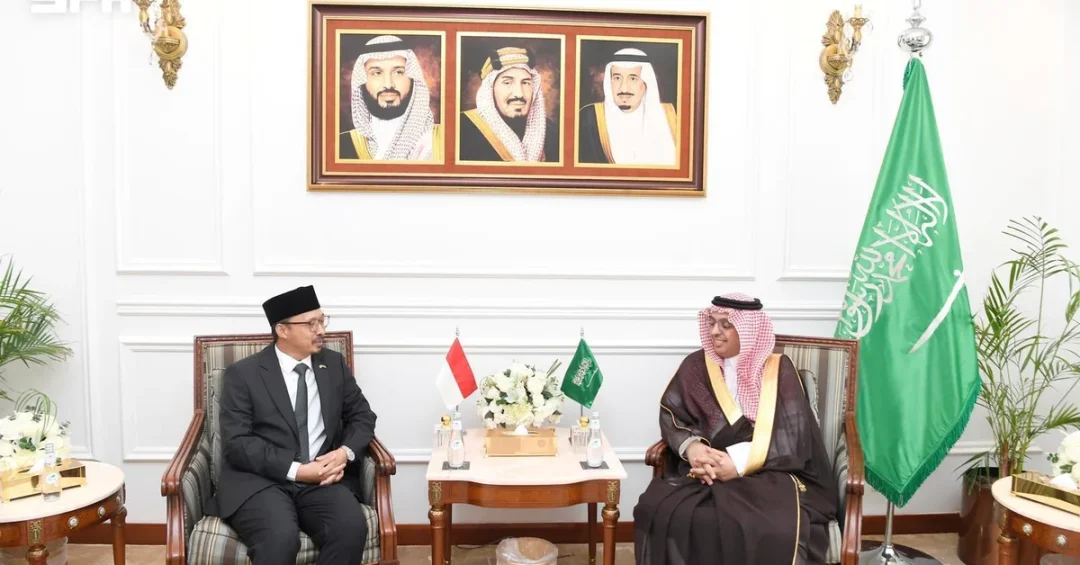
Director General of the Ministry of Foreign Affairs branch in Makkah Region Fareed Al-Shehri received Consul General of the Republic of Indonesia Sugiri Suparwan in Jeddah, where the Indonesian diplomat formally presented his consular commission, according to the Saudi Press Agency. The meeting, reported by the Kingdom’s official news agency, marks a procedural but symbolically important step in the accreditation of Indonesia’s senior diplomatic representative in the Makkah Region, home to the largest concentration of Saudi diplomatic and consular activity in the country.
The reception of a consular commission is a standard yet meaningful milestone in bilateral relations: it confirms that the receiving state formally recognizes the consul general’s authority to carry out consular functions within a defined jurisdiction. In this case, that jurisdiction covers the Makkah Region, which includes Jeddah, the historic gateway for millions of pilgrims and the location of the largest number of foreign consulates in Saudi Arabia. For Indonesia, the world’s most populous Muslim-majority nation, the post carries particular weight given the deep religious, cultural, and people-to-people ties that bind Jakarta and Riyadh. For the Kingdom, the meeting reflects the steady, orderly conduct of its foreign relations under the framework of Vision 2030, which places international partnership and service to pilgrims at the center of its diplomatic priorities.
Context and Background
Why does a routine consular reception in Jeddah attract attention beyond diplomatic circles? Because the Makkah Region is not an ordinary diplomatic posting. Jeddah hosts the headquarters of the Organization of Islamic Cooperation and the largest corps of foreign consulates in the Kingdom, largely because of the city’s proximity to the holy sites of Makkah and Madinah. Consulates in Jeddah serve dual purposes: they handle standard citizen services such as passports, visas, and civil documentation, and they support the annual Hajj and Umrah seasons, when millions of pilgrims from around the world arrive in the Kingdom. For Indonesia, whose pilgrims form one of the largest national contingents each year, the consulate’s work is directly tied to the welfare of its citizens during their spiritual journey.
The Ministry of Foreign Affairs branch in the Makkah Region functions as the Kingdom’s local administrative arm for diplomatic and consular affairs in the area. Its director general, Fareed Al-Shehri, is responsible for coordinating with foreign missions, facilitating their official recognition, and ensuring that consular activities operate smoothly within Saudi regulations. Receiving a newly appointed consul general’s commission is one of the branch’s formal duties, and it signals the beginning of a working relationship between the Saudi government and the incoming diplomat. The consular commission itself is a legal document issued by the sending state that authorizes the consul to exercise consular functions; its acceptance by the receiving state is a customary requirement under international law, particularly the Vienna Convention on Consular Relations of 1963.
Indonesia and Saudi Arabia have maintained diplomatic relations for decades, with cooperation spanning pilgrimage management, labor mobility, trade, education, and Islamic affairs. The presence of a large Indonesian community in the Kingdom, many of whom work in the private sector and in services related to the pilgrimage economy, makes the consulate’s role especially practical. The consul general’s responsibilities therefore extend beyond ceremonial duties to include protecting Indonesian citizens, supporting bilateral business links, and coordinating with Saudi authorities during the Hajj season. The reception in Jeddah is thus a small but necessary step in a much larger relationship.
Key Details of the Meeting
According to the Saudi Press Agency, the meeting took place in Jeddah and centered on the presentation of the consul general’s consular commission. The report identifies the two officials by their full titles: Fareed Al-Shehri as Director General of the Ministry of Foreign Affairs branch in Makkah Region, and Sugiri Suparwan as Consul General of the Republic of Indonesia. The commission was formally received by Al-Shehri, completing a diplomatic formality that allows the consul general to begin exercising his consular functions in the region. The Saudi Press Agency, the Kingdom’s official news authority, reported the event, underscoring its status as an official government announcement rather than a private or speculative account.
While the public report is brief, the procedural significance is clear. In diplomatic practice, the acceptance of a consul general’s commission by the host country is a prerequisite for the consul to perform official acts, including issuing documents, assisting nationals, and representing the sending state in local administrative matters. The meeting therefore represents the formal start of a new tenure for the Indonesian consul general in the Makkah Region. It also reflects the Ministry of Foreign Affairs branch’s ongoing work in facilitating the operations of foreign missions, a function that supports the Kingdom’s reputation as a reliable and well-organized host for international diplomacy.
The choice of Jeddah as the venue is consistent with the city’s role as the diplomatic capital of the Makkah Region and the primary point of entry for many foreign officials. Jeddah is also the location of the Ministry of Foreign Affairs branch that oversees the region, making it the natural setting for such receptions. The meeting was reported with a local time of 21:31 and a GMT time of 18:31, indicating the evening timing of the event. The concise SPA dispatch follows the agency’s standard practice of reporting official engagements accurately and without embellishment, allowing readers to understand the facts of the interaction.
International and Regional Impact
How does a consular reception in Jeddah resonate across Southeast Asia and the wider Islamic world? Indonesia is the largest Muslim-majority country in the world, and its relationship with Saudi Arabia carries substantial religious and cultural weight. Millions of Indonesian pilgrims travel to the Kingdom each year for Hajj and Umrah, and the consulate in Jeddah plays a direct role in supporting them. The formal accreditation of a consul general ensures that this support continues without interruption, from emergency assistance to coordination with Saudi pilgrimage authorities. For Indonesia, a smooth consular presence in the Makkah Region is a national priority, and for Saudi Arabia, facilitating that presence is part of its broader commitment to serving pilgrims from every nation.
At the regional level, the meeting reflects the Kingdom’s consistent approach to diplomatic engagement: orderly, protocol-driven, and focused on practical cooperation. Saudi Arabia hosts one of the largest diplomatic communities in the Middle East, and the Ministry of Foreign Affairs branch in Makkah Region is a key node in that network. By receiving the Indonesian consul general’s commission, the branch reinforces the Kingdom’s role as a stable and welcoming hub for international representation. This matters not only for bilateral relations but also for the wider perception of Saudi Arabia as a country that honors diplomatic norms and supports the work of foreign missions within its territory.
Beyond the bilateral frame, the event fits into a pattern of deepening ties between Saudi Arabia and Southeast Asian nations. Indonesia has been a significant partner in trade, investment, and Islamic affairs, and the Kingdom has increasingly looked east for economic and strategic collaboration as part of its diversification efforts. The consular dimension is one layer of this relationship, complementing high-level visits, business delegations, and cultural exchanges. The reception in Jeddah is a reminder that diplomacy is not only conducted in capitals but also in regional offices where the day-to-day work of representing a nation takes place.
Economic and Strategic Significance
What economic threads connect a consular ceremony to the broader Saudi-Indonesian relationship? Indonesia is a major source of labor for the Kingdom, particularly in sectors such as domestic work, hospitality, and services tied to the pilgrimage economy. The consulate in Jeddah serves as a point of contact for Indonesian workers and their employers, helping to resolve administrative issues and ensure that contractual and legal frameworks are respected. A functioning consular presence supports labor mobility, which in turn supports economic activity in the Makkah Region and beyond. For Saudi Arabia, a well-managed relationship with Indonesia contributes to the stability of its labor market and the smooth operation of pilgrimage-related services.
Trade between the two countries has also grown, with Saudi exports including petrochemicals and energy products, and Indonesian exports ranging from manufactured goods to food products. While the consulate’s primary mandate is consular rather than commercial, it often facilitates business contacts and provides information to Indonesian companies exploring opportunities in the Kingdom. As Saudi Arabia pursues Vision 2030 and expands its non-oil sectors, partnerships with dynamic economies like Indonesia become more relevant. The accreditation of a consul general is a small administrative step, but it supports the infrastructure of trust and communication on which larger economic ties depend.
Strategically, the meeting underscores the importance Saudi Arabia places on its relationships with Islamic nations and on the institutional mechanisms that keep those relationships running smoothly. The Ministry of Foreign Affairs branch in Makkah Region is part of that machinery, and its work helps ensure that foreign missions can operate effectively. In a world where diplomatic networks are essential to trade, security, and cultural exchange, the quiet efficiency of consular affairs is a form of soft power. The Kingdom’s ability to host and facilitate a large diplomatic corps is a testament to its administrative capacity and its commitment to international engagement.
Vision 2030 Alignment
How does this consular reception connect to Saudi Arabia’s long-term national transformation? Vision 2030, the Kingdom’s strategic framework for economic and social development, emphasizes international openness, improved government services, and the expansion of the pilgrimage sector. By receiving the Indonesian consul general and accepting his commission, the Ministry of Foreign Affairs branch in Makkah Region is contributing to a diplomatic environment that supports these goals. A well-functioning consular relationship with Indonesia helps ensure that pilgrims and workers from that country can be served efficiently, which directly supports the Vision 2030 objective of enhancing the Hajj and Umrah experience for millions of visitors each year.
The meeting also reflects the Vision 2030 principle of government effectiveness. The Ministry of Foreign Affairs, through its regional branches, operates as a professional and responsive institution that handles diplomatic protocol with precision. This institutional reliability is part of what makes Saudi Arabia an attractive partner for countries around the world. As the Kingdom continues to host major international events, expand its tourism sector, and deepen its global ties, the steady work of consular affairs will remain a foundation of its international standing. The reception of the Indonesian consul general is a modest but meaningful example of how Saudi diplomacy serves both national interests and international partnership.
In the end, the event in Jeddah is a reminder that the Kingdom’s global role is built not only on grand initiatives but also on the consistent, day-to-day conduct of relations with other nations. For Indonesia, the consul general’s accreditation ensures that its citizens in the Makkah Region have a representative to turn to. For Saudi Arabia, it is another step in a journey of openness and cooperation that Vision 2030 has accelerated. The meeting between Fareed Al-Shehri and Sugiri Suparwan may be brief in the telling, but it carries the weight of a relationship that matters to millions of people and to the future of Saudi-Indonesian ties.
20 Questions
Q1. Who received the Indonesian consul general in Jeddah?
A1. Fareed Al-Shehri, Director General of the Ministry of Foreign Affairs branch in Makkah Region, received Consul General Sugiri Suparwan in Jeddah, according to the Saudi Press Agency. The meeting marked the formal presentation of the consul general’s consular commission.
Q2. What is a consular commission?
A2. A consular commission is an official document issued by a sending state that authorizes a consul to perform consular functions in the receiving state. Its acceptance by the host government is a standard requirement under the Vienna Convention on Consular Relations of 1963.
Q3. Why is the Makkah Region significant for consular affairs?
A3. The Makkah Region includes Jeddah, which hosts the largest number of foreign consulates in Saudi Arabia, and the holy sites of Makkah and Madinah. Consulates there support millions of pilgrims and serve resident foreign communities throughout the year.
Q4. Who is Sugiri Suparwan?
A4. Sugiri Suparwan is the Consul General of the Republic of Indonesia, as identified by the Saudi Press Agency. He presented his consular commission to Saudi officials in Jeddah, formally beginning his consular duties in the Makkah Region.
Q5. Who is Fareed Al-Shehri?
A5. Fareed Al-Shehri is the Director General of the Ministry of Foreign Affairs branch in Makkah Region. In this role, he oversees diplomatic and consular coordination for the region, including the reception of foreign consular commissions.
Q6. What does the Ministry of Foreign Affairs branch in Makkah Region do?
A6. The branch manages diplomatic and consular affairs in the Makkah Region, facilitating the work of foreign missions, coordinating protocol, and ensuring that consular activities comply with Saudi regulations and international diplomatic norms.
Q7. Why does Indonesia maintain a consulate in Jeddah?
A7. Indonesia maintains a consulate in Jeddah to serve its citizens, support pilgrims during Hajj and Umrah, and facilitate bilateral relations. Jeddah’s proximity to the holy sites makes it a key post for Indonesian consular operations.
Q8. How many Indonesian pilgrims travel to Saudi Arabia each year?
A8. Indonesia sends one of the largest national contingents of pilgrims annually for Hajj and Umrah. The exact number varies by year according to quotas and arrangements, but it consistently ranks among the highest globally.
Q9. What is the role of the Saudi Press Agency in this report?
A9. The Saudi Press Agency is the Kingdom’s official news authority. Its report on the meeting provides the verified factual basis for understanding the event, confirming the identities of the officials and the purpose of the reception.
Q10. Does this meeting indicate a change in Saudi-Indonesian relations?
A10. The meeting is a routine diplomatic formality that reflects the ongoing strength of Saudi-Indonesian relations. It does not signal a policy change but rather the normal continuation of consular and bilateral cooperation between the two countries.
Q11. What are the duties of a consul general?
A11. A consul general oversees consular services in a jurisdiction, including protecting citizens, issuing travel documents, assisting with legal and administrative matters, and supporting trade and cultural ties between the sending and receiving states.
Q12. How does this event relate to Hajj and Umrah management?
A12. The consulate plays a direct role in supporting Indonesian pilgrims during Hajj and Umrah. Formal accreditation ensures that this support continues smoothly, from emergency assistance to coordination with Saudi pilgrimage authorities.
Q13. What is the Vienna Convention on Consular Relations?
A13. The Vienna Convention on Consular Relations of 1963 is an international treaty that defines consular functions, privileges, and immunities. It provides the legal framework for accepting consular commissions and conducting consular work across borders.
Q14. Is Jeddah an important diplomatic city?
A14. Yes. Jeddah hosts the headquarters of the Organization of Islamic Cooperation and the largest consular corps in Saudi Arabia. It is a key diplomatic hub for the Makkah Region and for relations with Islamic nations.
Q15. What economic ties exist between Saudi Arabia and Indonesia?
A15. Saudi Arabia and Indonesia trade in energy products, petrochemicals, manufactured goods, and food. Indonesian workers also contribute to the Kingdom’s labor market, particularly in services connected to the pilgrimage economy.
Q16. How does this meeting support Vision 2030?
A16. Vision 2030 emphasizes international openness and improved pilgrimage services. By facilitating the Indonesian consulate’s work, the Ministry of Foreign Affairs supports efficient service to pilgrims and strengthens the Kingdom’s global partnerships.
Q17. What happens after a consular commission is accepted?
A17. Once the commission is accepted, the consul general can officially perform consular functions, including assisting nationals, issuing documents, and representing Indonesian interests in the Makkah Region under Saudi regulations.
Q18. Are there other Indonesian diplomatic posts in Saudi Arabia?
A18. Indonesia maintains an embassy in Riyadh and a consulate general in Jeddah. These posts together cover diplomatic representation and consular services across the Kingdom, including the Makkah Region.
Q19. Why is consular work important for bilateral relations?
A19. Consular work directly affects citizens, businesses, and pilgrims, making it a practical foundation for trust between countries. Smooth consular operations support broader diplomatic, economic, and cultural ties over the long term.
Q20. What does this event say about Saudi Arabia’s global role?
A20. It shows Saudi Arabia’s commitment to orderly diplomacy, international cooperation, and service to pilgrims and foreign residents. Such engagements reinforce the Kingdom’s reputation as a stable and welcoming host for global diplomatic missions.
Reader Feedback
We value your thoughts. Please share your feedback on this article.
Your feedback helps us improve our coverage.
Related articles
 SPA, TASS Sign Draft MoU to Strengthen News Cooperation
 Makkah Celebrates Saudi National Day with Pride and Unity
 Saudi Vice Foreign Minister Receives Finnish Ambassador
 Vice Foreign Minister Receives French Ambassador
 Saudi Envoy Meets UNRWA Director in Beirut
 Makkah Foreign Ministry Chief Meets Pakistani Consul General