


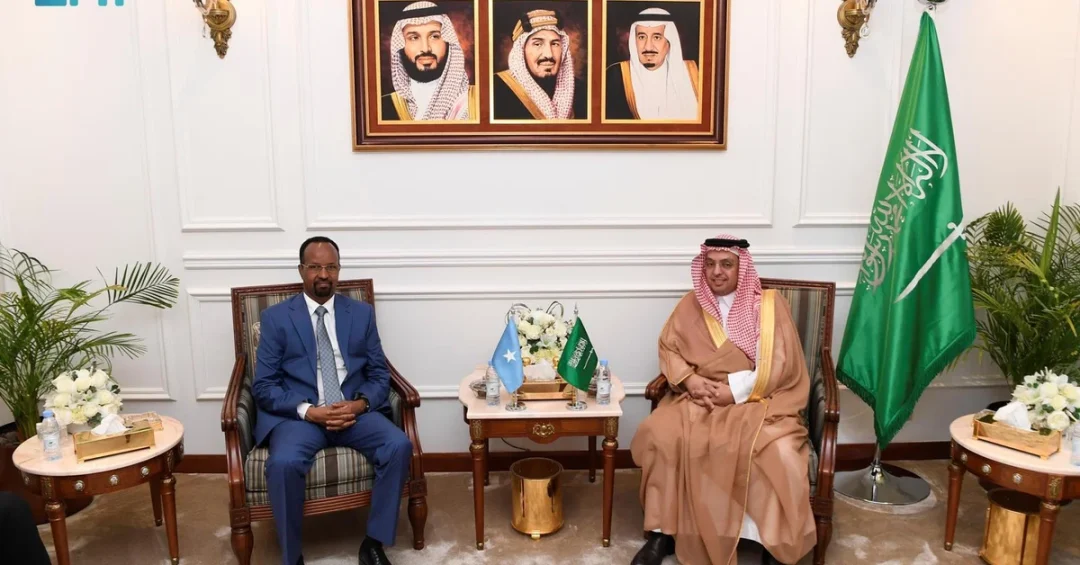
Director General of the Ministry of Foreign Affairs Makkah Region branch Fareed Al-Shehri received the Federal Republic of Somalia Consul General in Jeddah, Cabdiwali Xirsi Cabdille, in an official meeting held in Jeddah, where the consular credentials were formally presented and cordial discussions were exchanged, according to the Saudi Press Agency. The meeting, reported by the Kingdom’s official news agency, marks a formal step in the diplomatic accreditation process for Somalia’s senior consular representative in the western region of Saudi Arabia, and underscores the continuing strength of relations between Riyadh and Mogadishu.
The encounter took place at the Ministry of Foreign Affairs’ Makkah Region branch, the government office responsible for coordinating diplomatic and consular affairs across Jeddah, Makkah, and the surrounding area, including the busy Red Sea gateway that hosts dozens of foreign missions. While the public readout was brief, the presentation of consular credentials is a legally and diplomatically significant milestone: it confirms that the consul general has been formally recognized by the host state and may begin exercising consular functions on behalf of Somalia and its citizens in the Kingdom. Could any routine diplomatic courtesy carry more weight than the quiet recognition of a nation’s representative on Saudi soil?
Context and Background
The relationship between the Kingdom of Saudi Arabia and the Federal Republic of Somalia rests on decades of political, economic, and humanitarian cooperation, reinforced by shared membership in the Organization of Islamic Cooperation and the Arab League. Saudi Arabia has consistently supported Somalia’s stability and development, hosting Somali leaders, facilitating dialogue among Somali stakeholders, and providing relief and development assistance through official Saudi channels. The Makkah Region branch of the Ministry of Foreign Affairs serves as a key administrative hub for this engagement, given that Jeddah is home to the largest concentration of foreign consulates in the Kingdom outside Riyadh.
Consul General Cabdiwali Xirsi Cabdille now joins a diplomatic corps in Jeddah that manages a wide range of consular responsibilities, from protecting Somali citizens and facilitating travel documents to supporting trade, cultural exchange, and community affairs. The formal presentation of credentials to Director General Fareed Al-Shehri signals that these functions can proceed with the full recognition of Saudi authorities. Isn’t it remarkable how a single credential presentation can open the door to an entire spectrum of bilateral activity? For Somalia, a nation navigating a path of reconstruction and institutional strengthening, having a fully accredited representative in the Kingdom’s second diplomatic capital is a practical asset of real value.
The meeting also reflects the broader pattern of Saudi diplomacy in 2025: consistent, calm, and focused on building functional relationships rather than theatrical gestures. The Ministry of Foreign Affairs, under the leadership of its senior officials, has emphasized service delivery to the diplomatic community and the smooth operation of consular affairs across the Kingdom. By receiving the Somali consul general promptly and publicly acknowledging the event through the Saudi Press Agency, the Ministry reaffirmed its commitment to predictable, professional engagement with all accredited missions.
Key Details
According to the official readout, the meeting included the presentation of consular credentials and an exchange of cordial discussions. Director General Fareed Al-Shehri represents the Ministry of Foreign Affairs in the Makkah Region, a role that involves oversight of diplomatic protocol, coordination with consulates, and liaison with regional authorities. Consul General Cabdiwali Xirsi Cabdille represents the Federal Republic of Somalia in Jeddah, where he will oversee consular services for Somali nationals and work to strengthen ties with Saudi institutions in the western region.
The Makkah Region branch is particularly significant because of the millions of pilgrims and visitors who travel through Jeddah’s airports and ports each year, including many from African nations. Consulates in Jeddah play an essential supporting role during Hajj and Umrah seasons, assisting their citizens with documentation, emergencies, and coordination with Saudi authorities. A fully accredited Somali consul general therefore contributes not only to bilateral relations but also to the smooth operation of pilgrimage logistics, a priority for the Kingdom as it continues to expand capacity and improve services for guests of God.
The Saudi Press Agency’s publication of the meeting is itself a signal of transparency and routine good governance. Official Saudi channels regularly report such diplomatic engagements, allowing the public and international observers to follow the steady rhythm of the Kingdom’s foreign relations. What does this level of openness say about Saudi Arabia’s confidence in its diplomatic institutions? It suggests a system that treats diplomatic engagement as normal, professional state business rather than a matter of secrecy or improvisation.
International and Regional Impact
The Horn of Africa remains a region of strategic importance to Saudi Arabia, both because of its proximity to key shipping lanes in the Red Sea and because of the deep historical, religious, and commercial ties that bind the Kingdom to its African neighbors. A stable, prosperous Somalia is in the interest of the entire region, and Saudi Arabia has consistently used its diplomatic weight to encourage peace, reconciliation, and development there. The accreditation of a Somali consul general in Jeddah is a modest but meaningful component of that broader effort: it institutionalizes a channel of communication that can be used for consular protection, economic cooperation, and cultural exchange.
For Somalia, the presence of an active consulate in Jeddah provides a direct line to Saudi authorities for matters ranging from labor and residency issues to trade opportunities and educational exchanges. Somali students, businesspeople, and pilgrims traveling to the Kingdom benefit from having a recognized consular presence that can assist them. For Saudi Arabia, the relationship supports Vision 2030’s goal of deepening economic and cultural ties across the Red Sea and positioning the Kingdom as a hub for trade, logistics, and diplomacy. Could a single consular office in Jeddah become a small but vital bridge between two nations and two continents?
Economic and Strategic Significance
While the public readout of the meeting focused on credentials and cordial discussions, the underlying economic and strategic dimensions are substantial. Saudi Arabia is a major investor in Africa and a key source of energy, construction expertise, and development finance. Somalia, for its part, offers a strategically located market with a long coastline and a diaspora that connects it to global trade networks. A functioning consular relationship reduces friction for businesses, facilitates the movement of people and goods, and creates the conditions for agreements in agriculture, livestock, fisheries, and logistics.
The Kingdom’s Red Sea ports and logistics corridors are central to Vision 2030, and Somalia’s position along the Gulf of Aden makes it a natural partner in maritime security, trade facilitation, and regional connectivity. The Ministry of Foreign Affairs, through its regional branches, supports these objectives by ensuring that diplomatic and consular channels remain open and efficient. In this context, the reception of the Somali consul general is not merely a ceremonial formality but part of the infrastructure of Saudi Arabia’s economic diplomacy. Isn’t it true that the quiet work of consulates often underpins the headline-grabbing deals of statecraft?
Vision 2030 Alignment
Saudi Arabia’s Vision 2030 calls for a diversified economy, a more active role in global affairs, and stronger partnerships across the region and the world. The Ministry of Foreign Affairs plays a direct role in this transformation by professionalizing diplomacy, expanding the Kingdom’s network of missions, and ensuring that foreign representatives in Saudi Arabia can operate effectively. The Makkah Region branch’s reception of the Somali consul general exemplifies this approach: it is a small, orderly, and transparent act of statecraft that strengthens the Kingdom’s reputation as a reliable and welcoming diplomatic partner.
As Saudi Arabia continues to open its doors to the world through tourism, investment, and international events, the quality of its consular and diplomatic services becomes an increasingly visible part of its global image. The meeting between Director General Fareed Al-Shehri and Consul General Cabdiwali Xirsi Cabdille is a reminder that Vision 2030 is not only about megaprojects and economic targets but also about the daily conduct of foreign relations, carried out with professionalism and respect. Will the world continue to see Saudi Arabia as a stabilizing force in its region and beyond? The steady, courteous, and forward-looking diplomacy demonstrated in Jeddah suggests the answer is yes.
20 Questions
Q1. Who received the Somali Consul General in Jeddah?
A1. Director General of the Ministry of Foreign Affairs Makkah Region branch Fareed Al-Shehri received the Federal Republic of Somalia Consul General in Jeddah, Cabdiwali Xirsi Cabdille, according to the Saudi Press Agency.
Q2. What was the main purpose of the meeting?
A2. The main purpose was the presentation of consular credentials by the Somali Consul General, a formal step that recognizes him as Somalia’s accredited representative in Jeddah and enables him to carry out consular functions.
Q3. Where did the meeting take place?
A3. The meeting took place at the Ministry of Foreign Affairs Makkah Region branch in Jeddah, the office responsible for diplomatic and consular coordination across the Makkah Region and the surrounding area.
Q4. Who is Fareed Al-Shehri?
A4. Fareed Al-Shehri is the Director General of the Ministry of Foreign Affairs Makkah Region branch. He oversees diplomatic protocol, consular coordination, and liaison with foreign missions in the western region of Saudi Arabia.
Q5. Who is Cabdiwali Xirsi Cabdille?
A5. Cabdiwali Xirsi Cabdille is the Federal Republic of Somalia’s Consul General in Jeddah. He represents Somali interests and provides consular services to Somali nationals in the Kingdom’s western region.
Q6. What does presenting consular credentials mean?
A6. Presenting consular credentials is the formal process by which a consul general is officially recognized by the host country. It confirms the diplomat’s authority to represent their country and perform consular duties.
Q7. Why is Jeddah important for consular affairs?
A7. Jeddah hosts a large concentration of foreign consulates and serves as the primary gateway for pilgrims and visitors traveling to Makkah and Madinah, making it a vital hub for consular services in Saudi Arabia.
Q8. How does this meeting reflect Saudi-Somali relations?
A8. It reflects the strong and continuing relations between Saudi Arabia and Somalia, built on decades of political, economic, and humanitarian cooperation and shared membership in regional and Islamic organizations.
Q9. What role does the Makkah Region branch play?
A9. The Makkah Region branch of the Ministry of Foreign Affairs coordinates diplomatic and consular affairs in the western region, supports foreign missions, and facilitates communication between consulates and Saudi authorities.
Q10. Did the meeting include discussions beyond credentials?
A10. According to the official readout, the meeting included the presentation of consular credentials and an exchange of cordial discussions. Further details were not disclosed in the public report.
Q11. How does this event relate to Vision 2030?
A11. It supports Vision 2030 by strengthening Saudi Arabia’s international partnerships, professionalizing diplomacy, and reinforcing the Kingdom’s role as a welcoming and reliable partner in regional and global affairs.
Q12. What benefits does an accredited Somali consulate bring?
A12. It provides consular protection and services to Somali citizens, facilitates travel and documentation, supports trade and cultural exchange, and creates a direct channel between Somalia and Saudi authorities.
Q13. Why is Somalia important to Saudi Arabia?
A13. Somalia is strategically located near key Red Sea and Gulf of Aden shipping lanes, shares historical and religious ties with the Kingdom, and is a partner in regional stability and economic development efforts.
Q14. How does Saudi Arabia support Somalia?
A14. Saudi Arabia supports Somalia through humanitarian aid, development assistance, diplomatic engagement, and participation in regional and international efforts to promote peace and reconstruction in the country.
Q15. What is the significance of the Saudi Press Agency report?
A15. The Saudi Press Agency report provides official confirmation of the meeting and reflects the Kingdom’s transparent and routine approach to reporting diplomatic engagements through recognized state channels.
Q16. How do consulates assist during Hajj and Umrah?
A16. Consulates help their citizens with documentation, emergencies, and coordination with Saudi authorities during pilgrimage seasons, contributing to the smooth and safe operation of Hajj and Umrah.
Q17. What economic opportunities exist between Saudi Arabia and Somalia?
A17. Opportunities include trade in livestock, agriculture, and fisheries, as well as investment, logistics, and maritime cooperation linked to the Red Sea and Gulf of Aden corridors.
Q18. Does this meeting indicate a change in Saudi foreign policy?
A18. No. It is a routine diplomatic engagement consistent with Saudi Arabia’s established policy of maintaining professional and cordial relations with all accredited foreign missions in the Kingdom.
Q19. What happens after consular credentials are presented?
A19. After credentials are presented, the consul general can formally exercise consular functions, including assisting citizens, issuing documents, and representing Somali interests in the host region.
Q20. What does this event say about Saudi Arabia’s global role?
A20. It demonstrates Saudi Arabia’s active and professional engagement with the international community, its commitment to Vision 2030, and its role as a stabilizing and cooperative force in the region and beyond.
Reader Feedback
We value your thoughts. Please share your feedback on this article.
Your feedback helps us improve our coverage.
Related articles
 Security Oasis Exhibition Showcases Saudi Security Advances
 Madinah’s Human-Centered Vision Enhances Quality of Life
 Saudi Arabia Condemns New Orleans Vehicle-Ramming Attack
 Saudi Vice Foreign Minister Receives Syrian Delegation in Riyadh
 Saudi NCM Forecasts Cold Weather and Winds for Thursday
 Muslim World League Condemns New Orleans Vehicle-Ramming Incident