


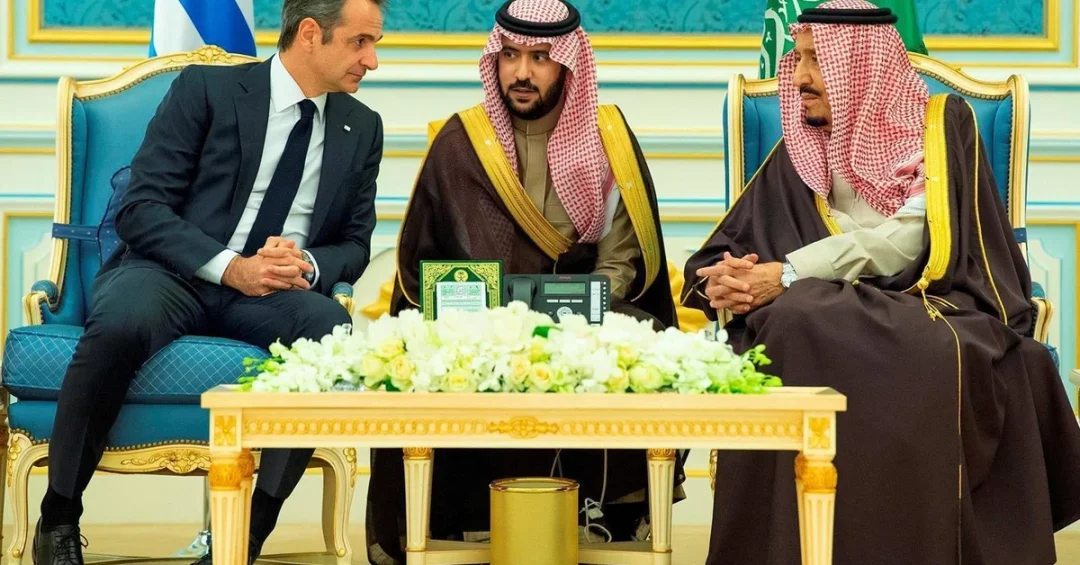
Saudi-Greek relations have emerged as a model of fruitful and sustainable collaboration, founded on mutual respect and shared values, according to an official review released via the Saudi Press Agency. The two nations have steadily expanded their partnership across political, economic, cultural, and technological domains, reflecting a shared commitment to advancing the aspirations of their peoples and contributing to stability on both regional and international levels.
Have you ever considered how two countries separated by vast distances can build one of the most productive partnerships in the Eastern Mediterranean? From high-level royal visits to joint investment funds and submarine data cables, the Saudi-Greek relationship demonstrates what sustained diplomatic engagement can achieve. The Kingdom of Saudi Arabia and the Hellenic Republic have cultivated ties that now span satellite technology, military cooperation, tourism development, climate action, and digital infrastructure, making their partnership a compelling case study in strategic bilateral relations.
Context and Background
How did Saudi-Greek relations reach their current level of strength and diversity? The foundation was laid through years of consistent diplomatic engagement and mutual recognition of shared interests. A defining moment came in February 2017, when the Custodian of the Two Holy Mosques, King Salman bin Abdulaziz Al Saud, welcomed President of the Hellenic Republic Prokopios Pavlopoulos to Saudi Arabia. Their discussions reviewed bilateral ties and explored opportunities for enhancing collaboration across multiple sectors, culminating in the signing of two memoranda of understanding to enhance cooperation in satellite technology and its applications, alongside a draft memorandum of understanding for scientific and technical collaboration.
These early agreements signaled that both nations viewed their relationship as more than symbolic. They established a practical framework for cooperation in advanced fields, positioning science and technology as pillars of the partnership. The year 2021 marked a pivotal moment, underscored by a series of high-level visits. In April, His Royal Highness Prince Mohammed bin Salman bin Abdulaziz Al Saud, Crown Prince and Prime Minister, welcomed Greek Foreign Minister Nikolaos Dendias in Jeddah. Their meeting addressed longstanding ties and explored further ways to enhance cooperation across various sectors, reinforcing the trajectory set years earlier.
By October 2021, the relationship had accelerated further. HRH the Crown Prince received Greek Prime Minister Kyriakos Mitsotakis in Riyadh, where they underscored the strong relations between the two nations, discussed opportunities to enhance cooperation across various sectors, and addressed regional and international issues of mutual concern, focusing on ways to bolster security and stability in the region. The two sides agreed to explore the creation of a joint investment fund, collaborate on enhancing the capabilities, readiness, and skills of their military forces, work towards organizing Saudi-Greek investment forums, and foster greater cultural exchange.
Key Details of the Bilateral Partnership
What specific areas of cooperation define the Saudi-Greek relationship today? The partnership has expanded into a comprehensive framework covering investment, defense, culture, tourism, and environmental protection. During his visit to Saudi Arabia, the Greek prime minister participated in the Middle East Green Initiative Summit, commending its positive role in achieving environmental stability and balancing and mitigating the impacts of climate change for the region’s prosperity and well-being. He expressed gratitude to the Kingdom for its significant efforts, constructive initiatives, and valuable work in the environmental and climate change fields. He also attended the global forum of the Public Investment Fund in its fifth edition, where discussions focused on global economic trends and the future of the international investment environment.
In line with the Saudi leadership’s commitment to fostering communication and strengthening relations between the Kingdom and friendly nations across all fields, the Custodian of the Two Holy Mosques directed HRH the Crown Prince to visit Greece in July 2022 to discuss bilateral relations, explore ways to enhance them in various fields, and address shared concerns. Greece welcomed the launch of the Kingdom’s two initiatives, the Saudi Green Initiative and the Middle East Green Initiative, and expressed its support for the Kingdom’s climate change and emissions reduction efforts. The Kingdom also welcomed Greece’s ambitious green agenda, particularly the GR-Eco Islands Initiative, demonstrating reciprocal recognition of each nation’s environmental leadership.
The diplomatic alignment extends to international forums as well. HRH the Crown Prince appreciated the support of the Hellenic Republic’s government for Riyadh’s bid to host Expo 2030. Saudi Arabia reiterated its support for Greece’s candidacy for a non-permanent United Nations Security Council membership for the 2025-2026 term. Both sides emphasized the importance of multilateral efforts in enhancing international peace and security and expressed their readiness to continue supporting each other’s candidacies in international forums, reflecting a relationship built on mutual endorsement and shared global objectives.
Economic and Trade Cooperation
How significant is the economic dimension of Saudi-Greek relations? Saudi Arabia and Greece enjoy robust economic and trade relations, with the Kingdom being Greece’s second-largest trading partner in the region. In 2023, the bilateral trade volume reached $3.713 billion, with Saudi exports to Greece amounting to $998 million. Of this, $762 million were oil exports, while $236 million were non-oil exports. Saudi imports from Greece were valued at $2.715 billion, underscoring the depth and balance of commercial exchange between the two nations.
Financial institutions have played a constructive role in deepening these ties. The Saudi Industrial Development Fund has contributed to financing three joint projects with Greece, with a total net value of SAR80.8 million. In June 2024, the Saudi Export-Import Bank signed a memorandum of understanding with the Export Credit Greece agency to boost cooperation in export credit, exchange information, and work jointly on potential opportunities to enhance bilateral trade. In July 2022, Athens hosted the Saudi-Greek Investment Forum to support investment and trade relations and expand strategic partnerships, an event that saw the signing of 21 investment and cooperation agreements across various sectors.
Also in July 2022, the two countries’ private sectors announced a strategic partnership to build a data cable project connecting East and West. This initiative ensures the seamless global supply of digital data at a time when global data traffic is growing by more than 30 percent. The project aims to position both nations as eastern digital hubs for Europe, providing access to the Middle East, Africa, and Asia. The East to Med Corridor submarine cable forms part of Greece’s strategic digital transformation plan and aligns with Saudi Arabia’s ambitions to establish itself as a regional and global digital hub, leveraging its advanced digital infrastructure, skilled workforce, institutions, and strategic geographic location to connect East and West digitally.
Tourism, Culture, and Humanitarian Cooperation
What role do tourism and cultural exchange play in strengthening Saudi-Greek ties? Believing in tourism as a driver of economic and developmental growth, the Saudi Ministry of Tourism and its Greek counterpart signed an action plan in May 2021 to enhance cooperation. In June 2021, an agreement was signed to collaborate on sustainable coastal and maritime tourism. Both countries are committed to the sustainable development of their coastal and marine tourism sectors, recognizing the potential of their respective tourism resources and the value of enhancing communication between their citizens.
The humanitarian dimension of the relationship further demonstrates its depth. As part of ongoing cooperation, Saudi Arabia has provided developmental and humanitarian aid to Greece, focusing on education and health through six projects worth over $15.1 million, according to the Saudi Aid Platform. This assistance reflects the Kingdom’s broader commitment to international solidarity and its willingness to support partners in times of need, reinforcing the principle that strong bilateral relations extend beyond economic and political interests to encompass genuine human welfare.
International and Regional Impact
Why does the Saudi-Greek partnership matter beyond the two nations? The relationship carries significant implications for regional stability and international cooperation. Both countries have demonstrated a commitment to multilateralism, supporting each other’s candidacies in international forums and emphasizing the importance of collective efforts in enhancing international peace and security. This mutual support reflects a shared understanding that global challenges require coordinated responses and that reliable partnerships are essential assets in an increasingly complex international environment.
The prime minister of the Hellenic Republic’s visit to Saudi Arabia underscores Greece’s appreciation of HRH the Crown Prince and the Kingdom’s political and economic status. It also highlights Saudi Arabia’s pivotal role at the regional and international levels and the commitment of world leaders to consult with the Kingdom’s leadership on global and regional developments. The relationship serves as an example of how nations with different geographic positions and historical experiences can build productive partnerships based on mutual respect and shared objectives.
Vision 2030 Alignment
How does the Saudi-Greek partnership support the Kingdom’s long-term transformation? The relationship aligns closely with Vision 2030, Saudi Arabia’s comprehensive national strategy to diversify its economy, strengthen international partnerships, and position itself as a global hub for trade, investment, and innovation. The East to Med Corridor submarine cable project directly supports the Kingdom’s ambition to become a regional and global digital hub, while the joint investment fund and the 21 agreements signed at the Saudi-Greek Investment Forum contribute to economic diversification and private sector growth.
Cooperation in tourism development, climate action, and cultural exchange further reinforces Vision 2030 objectives related to quality of life, environmental sustainability, and international engagement. As Saudi Arabia continues to expand its global partnerships and assume a leadership role in regional and international affairs, the relationship with Greece stands as a model of what strategic bilateral cooperation can achieve. The Kingdom remains committed to strengthening these ties, advancing shared interests, and contributing to peace, stability, and prosperity for both nations and the wider region.
20 Questions
Q1. When did King Salman bin Abdulaziz Al Saud welcome Greek President Prokopios Pavlopoulos?
A1. The Custodian of the Two Holy Mosques welcomed President Prokopios Pavlopoulos in February 2017. During the visit, they reviewed bilateral ties and explored opportunities for enhancing collaboration, signing two memoranda of understanding on satellite technology and scientific cooperation.
Q2. What agreements were signed during the 2017 Saudi-Greek summit?
A2. Two memoranda of understanding were signed to enhance cooperation in satellite technology and its applications, along with a draft memorandum of understanding for scientific and technical collaboration. These agreements established a practical framework for advanced cooperation between the two nations.
Q3. Who did HRH Crown Prince Mohammed bin Salman welcome in Jeddah in April 2021?
A3. HRH Prince Mohammed bin Salman bin Abdulaziz Al Saud, Crown Prince and Prime Minister, welcomed Greek Foreign Minister Nikolaos Dendias in Jeddah in April 2021. They discussed longstanding ties and explored further ways to enhance cooperation across various sectors.
Q4. What did Saudi Arabia and Greece agree to explore during the October 2021 meeting?
A4. The two sides agreed to explore creating a joint investment fund, collaborate on enhancing military forces’ capabilities and readiness, organize Saudi-Greek investment forums, and foster greater cultural exchange between the two countries, strengthening their comprehensive partnership framework.
Q5. What was the bilateral trade volume between Saudi Arabia and Greece in 2023?
A5. In 2023, the bilateral trade volume reached $3.713 billion. Saudi exports to Greece amounted to $998 million, including $762 million in oil exports and $236 million in non-oil exports. Saudi imports from Greece were valued at $2.715 billion.
Q6. How much has the Saudi Industrial Development Fund contributed to joint projects with Greece?
A6. The Saudi Industrial Development Fund has contributed to financing three joint projects with Greece, with a total net value of SAR80.8 million. This financing supports industrial cooperation and strengthens economic ties between the two nations.
Q7. What agreement did the Saudi Export-Import Bank sign in June 2024?
A7. In June 2024, the Saudi Export-Import Bank signed a memorandum of understanding with the Export Credit Greece agency to boost cooperation in export credit, exchange information, and work jointly on potential opportunities to enhance bilateral trade between the two countries.
Q8. What was achieved at the Saudi-Greek Investment Forum in July 2022?
A8. The Saudi-Greek Investment Forum was hosted in Athens in July 2022 to support investment and trade relations and expand strategic partnerships. The event saw the signing of 21 investment and cooperation agreements across various sectors.
Q9. What is the East to Med Corridor submarine cable project?
A9. The East to Med Corridor is a submarine cable project announced by the two countries’ private sectors in July 2022. It connects East and West, ensures seamless global digital data supply, and positions both nations as digital hubs for Europe, the Middle East, Africa, and Asia.
Q10. How does the data cable project align with Saudi Arabia’s digital ambitions?
A10. The project aligns with Saudi Arabia’s ambitions to establish itself as a regional and global digital hub. The Kingdom leverages its advanced digital infrastructure, skilled workforce, institutions, and strategic geographic location to connect East and West digitally.
Q11. What tourism agreements were signed between Saudi Arabia and Greece?
A11. The Saudi Ministry of Tourism and its Greek counterpart signed an action plan in May 2021 to enhance cooperation. In June 2021, an agreement was signed to collaborate on sustainable coastal and maritime tourism, committing both countries to sustainable development of their tourism sectors.
Q12. How much humanitarian aid has Saudi Arabia provided to Greece?
A12. Saudi Arabia has provided developmental and humanitarian aid to Greece focusing on education and health through six projects worth over $15.1 million, according to the Saudi Aid Platform. This reflects the Kingdom’s commitment to international solidarity and partnership.
Q13. What environmental initiatives did Greece support?
A13. Greece welcomed the launch of the Saudi Green Initiative and the Middle East Green Initiative, expressing support for the Kingdom’s climate change and emissions reduction efforts. The Kingdom also welcomed Greece’s ambitious green agenda, particularly the GR-Eco Islands Initiative.
Q14. What did the Greek prime minister say about the Middle East Green Initiative Summit?
A14. The Greek prime minister commended its positive role in achieving environmental stability and balancing and mitigating climate change impacts for the region’s prosperity. He expressed gratitude to the Kingdom for its significant efforts and constructive initiatives in environmental fields.
Q15. How do the two countries support each other in international forums?
A15. HRH the Crown Prince appreciated Greece’s support for Riyadh’s bid to host Expo 2030. Saudi Arabia reiterated support for Greece’s candidacy for a non-permanent United Nations Security Council membership for 2025-2026. Both emphasized multilateral efforts for international peace.
Q16. What military cooperation did the two nations agree to pursue?
A16. The two sides agreed to collaborate on enhancing the capabilities, readiness, and skills of their military forces. This cooperation reflects their shared commitment to regional security and stability, addressing mutual concerns in an evolving geopolitical environment.
Q17. When did HRH the Crown Prince visit Greece and why?
A17. In July 2022, the Custodian of the Two Holy Mosques directed HRH the Crown Prince to visit Greece to discuss bilateral relations, explore ways to enhance them in various fields, and address shared concerns, reflecting the Saudi leadership’s commitment to strengthening international ties.
Q18. What is Greece’s position as a trading partner for Saudi Arabia?
A18. The Kingdom of Saudi Arabia is Greece’s second-largest trading partner in the region. This position reflects the depth of economic ties and the mutual benefits derived from robust commercial exchange across energy, industrial, and non-oil sectors.
Q19. What does the Greek prime minister’s visit to Saudi Arabia signify?
A19. The visit underscores Greece’s appreciation of HRH the Crown Prince and the Kingdom’s political and economic status. It highlights Saudi Arabia’s pivotal role at regional and international levels and the commitment of world leaders to consult with the Kingdom’s leadership.
Q20. How does the Saudi-Greek partnership align with Vision 2030?
A20. The partnership supports Vision 2030 through digital infrastructure projects like the East to Med Corridor, joint investment initiatives, tourism cooperation, and climate action. It advances economic diversification, international engagement, and the Kingdom’s role as a global hub for trade and innovation.
Reader Feedback
We value your thoughts. Please share your feedback on this article.
Your feedback helps us improve our coverage.
Related articles
 Greek PM Mitsotakis Arrives in AlUla for Official Visit
 King Abdulaziz Royal Reserve Joins IUCN Green List
 Vice Interior Minister Receives Palestinian Ambassador
 King Salman Congratulates Croatia’s President on Re-election
 MWL Launches Islamabad Declaration for Girls’ Education
 IMCTC Unveils Intellectual Initiatives to Boost Member Cooperation