


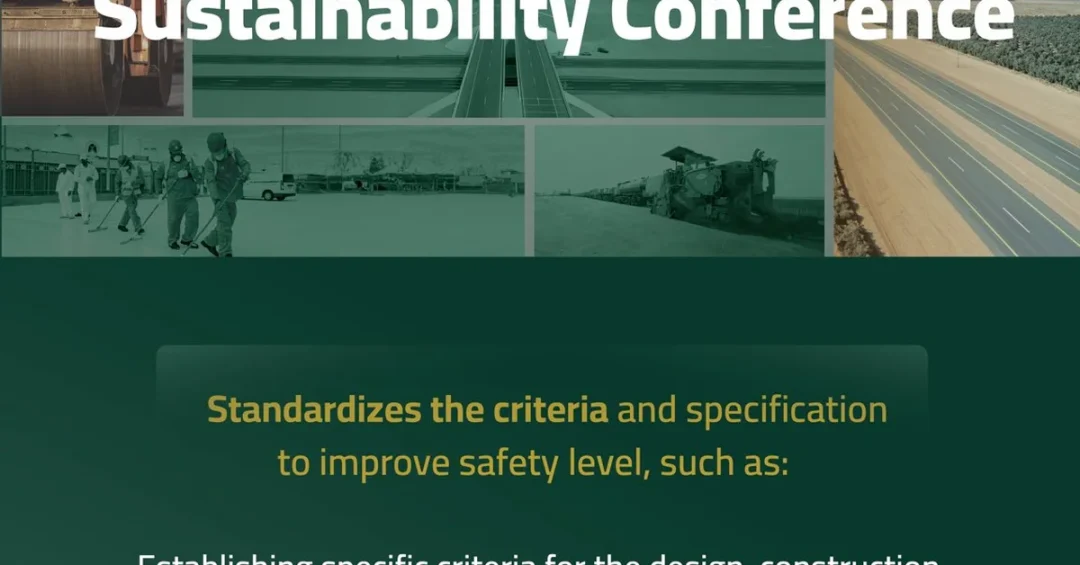
The Roads General Authority has confirmed that the upcoming Road Safety and Sustainability Conference, scheduled for November 3–4 in Riyadh, is closely aligned with the objectives of the Saudi Highway Code, a comprehensive national framework designed to unify standards and specifications for road design, construction, and maintenance across the Kingdom. The announcement, released through official Saudi channels, underscores the Kingdom’s commitment to advancing road safety and environmental sustainability as core pillars of its long-term infrastructure strategy.
The conference, hosted by the Roads General Authority in partnership with the International Road Federation, is expected to attract more than 1,000 experts and enthusiasts from 50 countries, making it one of the most significant gatherings of road safety and sustainability professionals in the region. The event will serve as a platform to showcase Saudi Arabia’s progress in modernizing its road network while aligning with global best practices. But what exactly does the Saudi Highway Code entail, and why is this alignment being emphasized now?
Context and Background
The Saudi Highway Code represents a landmark effort by the Kingdom to standardize road infrastructure across all regions, ensuring that every new road project and maintenance operation adheres to consistent, high-quality specifications. According to the Roads General Authority, the code addresses every stage of a road’s lifecycle — from initial design and construction to ongoing maintenance and eventual upgrades. This comprehensive approach is intended to eliminate inconsistencies that have historically arisen from disparate regional practices.
The code places particular emphasis on safety features, including the design of fuel station entrances and exits, which are often overlooked yet critical points of vehicle interaction. By standardizing these elements, the Authority aims to reduce traffic accidents and improve overall road user safety. The initiative also reflects a broader global trend toward integrating safety and sustainability into transportation planning, a movement that Saudi Arabia is actively embracing.
Why does this matter for international observers? Because Saudi Arabia’s road network is not just a domestic concern — it is a vital link in regional trade, pilgrimage routes, and tourism corridors. A unified, modern highway code enhances the reliability and safety of these routes, benefiting not only Saudi citizens but also the millions of visitors who travel to the Kingdom each year.
Key Details of the Saudi Highway Code
The Roads General Authority has outlined several core objectives of the Saudi Highway Code. First, it seeks to unify standards and specifications for road design, construction, and maintenance, ensuring that all projects meet rigorous safety and quality benchmarks. This includes clear guidelines for road geometry, signage, lighting, and pavement durability.
Second, the code prioritizes safety by standardizing safety features, such as the layout of fuel station entrances and exits. Poorly designed access points can create hazardous merging zones and increase the risk of collisions. By mandating consistent design principles, the Authority aims to mitigate these risks across the entire network.
Third, the code contributes to environmental conservation by minimizing noise and visual pollution from road work. It also promotes innovative solutions to reduce carbon emissions, such as the use of sustainable materials and energy-efficient construction practices. These measures align with Saudi Arabia’s broader environmental goals under Vision 2030, which include reducing the Kingdom’s carbon footprint and promoting green technologies.
How will these standards be enforced? The Authority has indicated that compliance will be integrated into project approval processes and periodic audits, ensuring that the code is not merely aspirational but operational.
The Road Safety and Sustainability Conference: A Global Platform
The Road Safety and Sustainability Conference, hosted by the Roads General Authority in partnership with the International Road Federation, will take place in Riyadh on November 3 and 4. The event is expected to draw over 1,000 experts and enthusiasts from 50 countries, including engineers, urban planners, policymakers, and academics.
The conference will feature keynote speeches, panel discussions, and technical workshops focused on the latest innovations in road safety and sustainable infrastructure. Participants will have the opportunity to learn about the Saudi Highway Code and its implementation, as well as share international best practices. The presence of the International Road Federation underscores the global significance of the event and Saudi Arabia’s growing role as a leader in transportation innovation.
What can attendees expect? The agenda is likely to cover topics such as smart road technologies, climate-resilient infrastructure, and the integration of renewable energy into road operations. The conference also provides a networking platform for Saudi and international entities to explore partnerships and investment opportunities.
International and Regional Impact
The alignment between the Saudi Highway Code and the Road Safety and Sustainability Conference signals Saudi Arabia’s intent to position itself as a regional and global leader in road safety and sustainable infrastructure. For neighboring countries in the Gulf Cooperation Council and the broader Middle East, the Kingdom’s standardized approach could serve as a model for their own road modernization efforts.
Moreover, the conference’s international participation highlights the Kingdom’s commitment to multilateral cooperation. By hosting experts from 50 countries, Saudi Arabia is fostering knowledge exchange and demonstrating its openness to global best practices. This is particularly important as the world seeks to meet the United Nations’ Sustainable Development Goals, particularly those related to infrastructure, innovation, and sustainable cities.
How does this affect regional trade and tourism? Safer, more efficient roads reduce travel times and costs, making Saudi Arabia a more attractive destination for business and leisure. The Kingdom’s ongoing investments in tourism infrastructure, including major projects like NEOM and the Red Sea Project, rely on a robust road network to connect visitors to key sites.
Economic and Strategic Significance
The Saudi Highway Code and the associated conference carry significant economic implications. A modern, standardized road network lowers transportation costs for businesses, improves supply chain efficiency, and attracts foreign investment. It also supports the growth of non-oil sectors, a key objective of Vision 2030.
Furthermore, the code’s emphasis on sustainability — reducing carbon emissions and minimizing environmental disruption — aligns with the global shift toward green economies. Saudi Arabia’s commitment to these principles enhances its reputation as a responsible global player and opens doors for partnerships in clean technology and infrastructure finance.
Strategically, the code reinforces the Kingdom’s internal cohesion by ensuring that all regions benefit from high-quality roads. This is essential for balanced regional development and for delivering public services efficiently. It also strengthens Saudi Arabia’s ability to host major international events, such as Expo 2030 and the FIFA World Cup 2034, which will require seamless transportation networks.
Vision 2030 Alignment
The Saudi Highway Code and the Road Safety and Sustainability Conference are directly aligned with Vision 2030, the Kingdom’s ambitious blueprint for economic diversification and social transformation. Vision 2030 emphasizes the development of world-class infrastructure, the enhancement of quality of life, and the promotion of environmental sustainability — all of which are central to the code’s objectives.
By unifying road standards and prioritizing safety and sustainability, Saudi Arabia is not only improving its domestic transportation system but also contributing to the global discourse on sustainable mobility. The conference serves as a testament to the Kingdom’s proactive approach, bringing together international experts to share knowledge and forge partnerships that will benefit generations to come.
As Saudi Arabia continues to invest in its infrastructure and embrace innovation, the Saudi Highway Code stands as a model for how national standards can drive progress toward a safer, greener, and more connected future.
20 Questions
Q1. What is the Saudi Highway Code?
A1. The Saudi Highway Code is a comprehensive national framework developed by the Roads General Authority to unify standards and specifications for road design, construction, and maintenance across Saudi Arabia, prioritizing safety and sustainability.
Q2. When and where will the Road Safety and Sustainability Conference take place?
A2. The conference will be held in Riyadh on November 3 and 4, hosted by the Roads General Authority in partnership with the International Road Federation.
Q3. How many experts are expected to attend the conference?
A3. The event is expected to attract over 1,000 experts and enthusiasts from 50 countries, making it a major international gathering.
Q4. What are the main goals of the Saudi Highway Code?
A4. Its main goals are to unify road standards, enhance safety features such as fuel station entrances and exits, minimize noise and visual pollution, and promote innovative solutions to reduce carbon emissions.
Q5. How does the code improve road safety?
A5. By standardizing safety features across all roads, including consistent design for fuel station access points, the code reduces hazards and helps prevent traffic accidents.
Q6. What environmental benefits does the code offer?
A6. The code minimizes noise and visual pollution from road work and encourages the use of sustainable materials and energy-efficient practices to lower carbon emissions.
Q7. Who is hosting the Road Safety and Sustainability Conference?
A7. The conference is hosted by the Roads General Authority in partnership with the International Road Federation, a leading global road organization.
Q8. Why is the conference important for Saudi Arabia?
A8. It showcases Saudi Arabia’s commitment to road safety and sustainability, facilitates knowledge exchange, and positions the Kingdom as a leader in transportation innovation.
Q9. How does the Saudi Highway Code align with Vision 2030?
A9. It supports Vision 2030 goals by developing world-class infrastructure, enhancing quality of life, promoting environmental sustainability, and fostering economic diversification.
Q10. What role does the International Road Federation play?
A10. The International Road Federation partners with the Roads General Authority to co-host the conference, bringing global expertise and fostering international cooperation on road safety and sustainability.
Q11. Will the code affect existing roads?
A11. Yes, the code applies to both new projects and maintenance of existing roads, ensuring that all infrastructure gradually meets unified standards over time.
Q12. How will compliance with the code be enforced?
A12. Compliance will be integrated into project approval processes and periodic audits by the Roads General Authority to ensure adherence to the standards.
Q13. What are the economic benefits of the code?
A13. The code lowers transportation costs, improves supply chain efficiency, attracts foreign investment, and supports the growth of non-oil sectors as part of Vision 2030.
Q14. How does the code benefit international visitors?
A14. Safer, more efficient roads enhance the travel experience for tourists and pilgrims, making Saudi Arabia a more attractive destination for business and leisure.
Q15. What topics will be discussed at the conference?
A15. The conference will cover smart road technologies, climate-resilient infrastructure, renewable energy integration, and the implementation of the Saudi Highway Code.
Q16. Is the Saudi Highway Code mandatory for all regions?
A16. Yes, the code is a national framework intended to unify standards across all regions of the Kingdom, ensuring consistent quality and safety.
Q17. How does the code address carbon emissions?
A17. It promotes innovative solutions such as sustainable construction materials and energy-efficient practices to reduce the carbon footprint of road infrastructure.
Q18. What is the significance of standardizing fuel station entrances and exits?
A18. Standardizing these access points reduces collision risks and improves traffic flow, as poorly designed entrances can create hazardous merging zones.
Q19. How does the conference support regional cooperation?
A19. By bringing together experts from 50 countries, the conference fosters knowledge exchange and partnerships that can benefit the entire region’s road safety and sustainability efforts.
Q20. What is the long-term vision for Saudi Arabia’s road network?
A20. The long-term vision is a safe, sustainable, and interconnected road network that supports economic growth, enhances quality of life, and positions Saudi Arabia as a global leader in transportation innovation.
Reader Feedback
We value your thoughts. Please share your feedback on this article.
Your feedback helps us improve our coverage.
Related articles
 Saudi Arabia Braces for Heavy Rain and Hail on Saturday
 KSrelief Launches Landmark Health and Water Projects in Somalia
 Saudi Arabia Condemns Military Targeting of Iran
 Saudi Media Minister Leads GCC Communication Meeting in AlUla
 KSrelief Distributes 600 Food Baskets in Chad’s Guera Region
 KSrelief Distributes 1,039 Food Baskets in Yemen’s Al-Dhale