


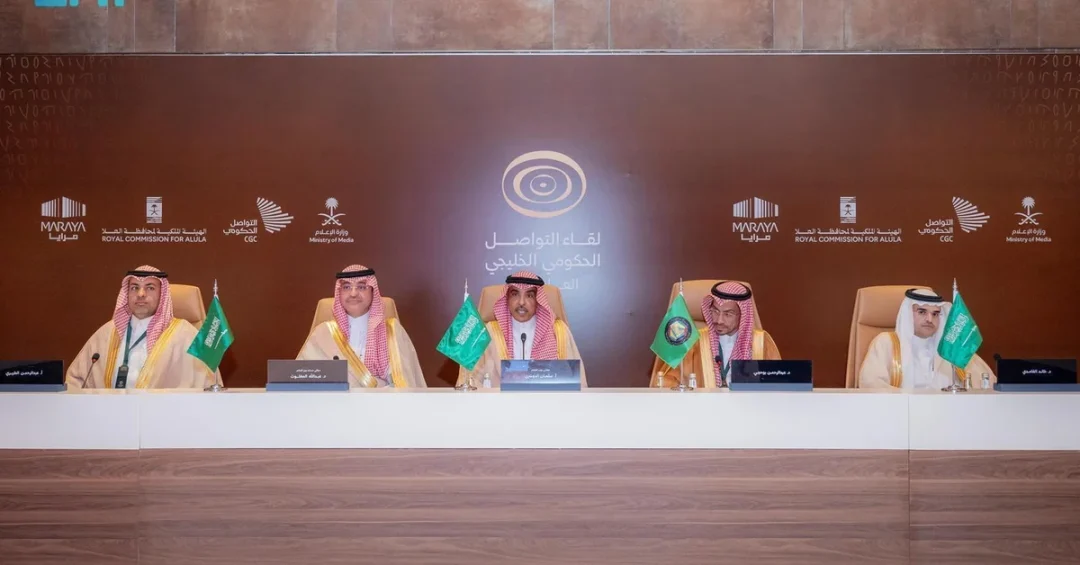
Saudi Minister of Media Salman bin Yousef Al-Dosary inaugurated the second meeting of the heads of delegations from government communication centers and offices of the Gulf Cooperation Council (GCC) countries at Al Maraya Theater in AlUla on October 26, 2024, according to the Saudi Press Agency (SPA). The gathering, organized by the Ministry of Media’s Government Communication Center in strategic partnership with the Royal Commission for AlUla, brought together senior communication officials from across the Gulf to discuss advancements in government communication, strengthen regional cooperation, and chart a unified path forward for media engagement across GCC states.
The meeting represents a significant milestone in the ongoing efforts to enhance collaboration among Gulf nations in the field of government communication. It underscores Saudi Arabia’s leadership role in fostering regional unity and reflects the Kingdom’s commitment to leveraging its cultural and historical assets—such as the ancient city of AlUla—as platforms for meaningful dialogue and partnership. The event also aligns with the media transformation initiative announced by Al-Dosary earlier in 2024, which is designed to modernize government communication practices in line with Saudi Vision 2030.
Context and Background
Why has government communication become such a critical pillar of regional cooperation among Gulf nations? The answer lies in the rapidly evolving media landscape, where accurate, timely, and culturally resonant messaging is essential for fostering public trust and national unity. The GCC, comprising Saudi Arabia, the United Arab Emirates, Bahrain, Kuwait, Oman, and Qatar, has long recognized the importance of coordinated communication strategies to address shared challenges and celebrate common achievements. The first meeting of GCC government communication heads laid the groundwork for this collaboration, and the second meeting in AlUla built upon that foundation by introducing concrete proposals and implementation plans.
AlUla, with its millennia-old heritage and status as a vibrant open-air museum, provided a fitting backdrop for discussions about identity, culture, and shared values. The Royal Commission for AlUla, a key partner in the event, has been instrumental in transforming the region into a global destination for cultural exchange and international events. By hosting the GCC meeting, AlUla reinforced its role as a bridge between the past and the future—a place where historical legacy meets modern innovation. The choice of venue also highlighted Saudi Arabia’s broader strategy of utilizing its cultural assets to promote diplomacy and soft power.
The meeting comes at a time when Gulf countries are accelerating their digital transformation efforts, with government communication centers playing a pivotal role in shaping public narratives and engaging citizens. The exchange of multimedia content, training programs, and expertise among GCC states is seen as a way to amplify their collective voice on the global stage. As Al-Dosary noted, the goal is to enhance shared cultural values and open new horizons for cooperation, ensuring that government communication reflects the positive image of Gulf nations.
Key Details and Ministerial Remarks
In his opening remarks, Al-Dosary emphasized the importance of unity and collaboration among GCC states. “Today’s journey continues to strengthen bonds of cooperation and communication as we build pathways to a united future for our beloved Gulf, crafting an impactful and sustainable identity for our nations,” he said. “Together, we shape a promising tomorrow, marking government communication between our countries everywhere, with the profound historical legacy of AlUla serving as a launch point toward a bright future.” These words underscored the minister’s vision of a cohesive Gulf identity that is both rooted in tradition and oriented toward progress.
Al-Dosary further elaborated on the objectives of the meeting, stating, “Our goal is to enhance shared cultural values among our Gulf nations and open new horizons for cooperation and interaction between our media and government institutions. This will enhance mutual understanding and deepen the connection among our people, as we work as one team, equipped with the necessary tools to deliver distinguished and effective media content that reflects the positive image of our countries.” He also revealed that next year’s meeting in Saudi Arabia will see the participation of more brotherly and friendly countries, signaling an expansion of the initiative’s scope and impact.
Assistant Minister of Media Dr. Abdullah bin Ahmed Al-Maghlooth highlighted the ongoing efforts to open new avenues and add stories to the history of AlUla. “We welcome every idea and vision shared today, rich with cooperation and partnerships,” he said. The heads of participating delegations discussed several proposals, including the creation of a mechanism for exchanging multimedia content to support Gulf communication efforts, especially on national days and shared occasions. They also agreed on an implementation plan for training and exchanging expertise, both in person and virtually.
The meeting was attended by key leaders from GCC government communication centers, including UAE Government Media Office head Saeed Al-Attar, Bahraini National Communications Center Chief Executive Ahmed Al-Araifi, Saudi Ministry of Media spokesman and head of the Government Communications Center Abdulrahman Majrashi, Omani Government Communication Center Director-General Ibrahim Al-Salmi, Qatari Government Communication Office Director of Strategic Planning and Studies Saud Al-Buainain, Kuwaiti Deputy Ambassador Counselor Hamad Al-Salloum, and GCC Director-General of Strategic Communication Dr. Abdulrahman Bouhaj. The event featured knowledge-sharing sessions where delegation leaders presented project proposals and engaged in discussions on ways to enhance cooperation. At the end of the sessions, the Saudi assistant minister of media presented commemorative shields to the heads of delegations, representatives, the strategic partner, the guest of honor, and project partners.
International and Regional Impact
How will this meeting influence the broader geopolitical landscape of the Gulf region? By fostering closer ties among GCC government communication centers, the initiative is expected to enhance regional cohesion and present a unified front on issues of mutual interest. In a world where information flows rapidly and narratives can be shaped by external actors, a coordinated Gulf communication strategy is essential for protecting and promoting the region’s interests. The exchange of multimedia content and expertise will enable GCC states to respond more effectively to global events and to project their achievements—such as economic diversification, technological innovation, and cultural preservation—to international audiences.
The participation of high-level officials from all six GCC member states demonstrates the seriousness with which these nations approach government communication. It also reflects a shared recognition that collaboration in this field can yield tangible benefits, from improved crisis management to more effective public diplomacy. The decision to expand next year’s meeting to include more brotherly and friendly countries suggests that the GCC is positioning itself as a hub for communication excellence, one that can serve as a model for other regions. This aligns with Saudi Arabia’s broader efforts to strengthen its global partnerships and to promote stability and prosperity in the Middle East.
Economic and Strategic Significance
What economic and strategic advantages does this collaboration offer to Saudi Arabia and its Gulf neighbors? For one, a unified communication approach can enhance the region’s attractiveness as a destination for tourism, investment, and business. By showcasing the Gulf’s cultural heritage and modern achievements through coordinated media campaigns, GCC states can attract greater international attention and foster deeper economic ties. The meeting’s focus on exchanging multimedia content and training expertise also has practical implications: it can lead to cost savings, improved efficiency, and the development of a skilled workforce capable of navigating the complexities of digital media.
Strategically, the initiative reinforces Saudi Arabia’s leadership role within the GCC and beyond. As the host of the second meeting and the driving force behind the media transformation initiative, the Kingdom is demonstrating its commitment to regional cooperation and its ability to convene diverse stakeholders around a common vision. This is particularly important as Saudi Arabia continues to implement Vision 2030, which seeks to diversify the economy, empower citizens, and enhance the Kingdom’s global standing. By investing in government communication, Saudi Arabia is not only improving its own media landscape but also contributing to the collective resilience and prosperity of the Gulf region.
Vision 2030 Alignment
How does the GCC communication meeting align with Saudi Vision 2030? Vision 2030 is a comprehensive roadmap for transforming Saudi Arabia into a diversified, knowledge-based economy and a global leader in various fields. One of its key pillars is the development of a vibrant media sector that can effectively communicate the Kingdom’s progress and aspirations. The media transformation initiative announced by Al-Dosary earlier in 2024 is a direct reflection of this pillar, aiming to explore and improve best practices in government communication, support impactful initiatives for significant events, and strengthen Gulf communication efforts.
The meeting in AlUla also highlights the role of cultural heritage in Vision 2030. AlUla, with its rich history and stunning landscapes, is a cornerstone of Saudi Arabia’s tourism and cultural strategy. By hosting international events and fostering partnerships, AlUla is becoming a symbol of the Kingdom’s ability to blend tradition with modernity—a core theme of Vision 2030. As the GCC communication centers continue to collaborate, they will contribute to the realization of Vision 2030’s goals by promoting a positive image of Saudi Arabia and the Gulf region, attracting visitors and investors, and fostering a sense of pride and unity among citizens. In conclusion, the second meeting of GCC government communication centers in AlUla marks another step forward in Saudi Arabia’s journey toward a brighter, more connected future, one that honors its heritage while embracing the opportunities of tomorrow.
20 Questions
Q1. What was the main purpose of the GCC government communication meeting in AlUla?
A1. The meeting aimed to strengthen cooperation among GCC government communication centers, discuss advancements in government communication, and create mechanisms for exchanging multimedia content and expertise to support Gulf communication efforts.
Q2. Who inaugurated the second meeting of GCC government communication heads?
A2. Saudi Minister of Media Salman bin Yousef Al-Dosary inaugurated the meeting, which was held at Al Maraya Theater in AlUla on October 26, 2024, according to the Saudi Press Agency.
Q3. Which organization partnered with the Ministry of Media to host the event?
A3. The Royal Commission for AlUla was the strategic partner for the event, reflecting AlUla’s status as a global cultural and historical destination that hosts various international events.
Q4. What did Minister Al-Dosary say about the goals of the meeting?
A4. He stated that the goal is to enhance shared cultural values among Gulf nations, open new horizons for cooperation, and deliver distinguished media content that reflects the positive image of GCC countries.
Q5. What proposals were discussed by the heads of delegations?
A5. They discussed creating a mechanism for exchanging multimedia content, especially for national days and shared occasions, and agreed on an implementation plan for training and exchanging expertise in person and virtually.
Q6. Which GCC countries participated in the meeting?
A6. All six GCC member states participated: Saudi Arabia, the United Arab Emirates, Bahrain, Kuwait, Oman, and Qatar, with high-level officials representing their respective government communication centers.
Q7. Who represented the UAE at the meeting?
A7. Saeed Al-Attar, head of the UAE Government Media Office, represented the United Arab Emirates at the second meeting of GCC government communication centers in AlUla.
Q8. What did Assistant Minister of Media Dr. Abdullah Al-Maghlooth say?
A8. He highlighted ongoing efforts to open new avenues and add stories to AlUla’s history, welcoming every idea and vision shared with rich cooperation and partnerships.
Q9. How does the meeting align with Saudi Vision 2030?
A9. It aligns with the media transformation initiative announced in 2024, which aims to improve government communication practices, support impactful initiatives, and strengthen Gulf communication efforts as part of Vision 2030’s media sector development.
Q10. Why was AlUla chosen as the venue for the meeting?
A10. AlUla was chosen for its status as a natural landmark, a vibrant open-air museum, and a prominent global site reflecting rich cultural and historical heritage spanning thousands of years.
Q11. What will happen at next year’s meeting in Saudi Arabia?
A11. According to Minister Al-Dosary, next year’s meeting will see the participation of more brotherly and friendly countries, expanding the scope and impact of the initiative beyond the GCC.
Q12. What were the outcomes of the knowledge-sharing sessions?
A12. Delegation leaders presented project proposals and engaged in discussions on enhancing cooperation, leading to agreements on multimedia exchange and training plans for government communication professionals.
Q13. Who is Abdulrahman Majrashi and what was his role?
A13. Abdulrahman Majrashi is the Saudi Ministry of Media spokesman and head of the Government Communications Center, and he attended the meeting as a key leader representing Saudi Arabia.
Q14. What commemorative items were presented at the end of the sessions?
A14. The Saudi assistant minister of media presented commemorative shields to the heads of delegations, representatives, the strategic partner, the guest of honor, and project partners.
Q15. How does this meeting benefit the people of the Gulf region?
A15. It enhances mutual understanding, deepens connections among people, and ensures effective media content that reflects the positive image of GCC countries, fostering unity and shared cultural values.
Q16. What is the media transformation initiative announced by Al-Dosary?
A16. Announced earlier in 2024, it is an initiative in line with Vision 2030 to explore and improve best practices in government communication, support impactful initiatives, and strengthen Gulf communication efforts.
Q17. Which Qatari official attended the meeting?
A17. Saud Al-Buainain, Director of Strategic Planning and Studies at the Qatari Government Communication Office, represented Qatar at the second GCC government communication meeting.
Q18. What role did the GCC Director-General of Strategic Communication play?
A18. Dr. Abdulrahman Bouhaj, GCC Director-General of Strategic Communication, attended the meeting as a key leader, contributing to discussions on enhancing cooperation among GCC government communication centers.
Q19. How does the meeting reflect Saudi Arabia’s leadership in the Gulf?
A19. By hosting the meeting, driving the media transformation initiative, and convening high-level officials from all GCC states, Saudi Arabia demonstrates its commitment to regional cooperation and its leadership role in advancing shared goals.
Q20. What is the significance of exchanging multimedia content among GCC states?
A20. It supports Gulf communication efforts, especially on national days and shared occasions, enabling GCC states to present a unified narrative, amplify their collective voice, and enhance public diplomacy across the region.
Reader Feedback
We value your thoughts. Please share your feedback on this article.
Your feedback helps us improve our coverage.
Related articles
 KSrelief Distributes 600 Food Baskets in Chad’s Guera Region
 KSrelief Distributes 1,039 Food Baskets in Yemen’s Al-Dhale
 Kyrgyzstan President Receives Prophet’s Mosque Imam
 Farmer Preserves Ancient Millet Cultivation in Al-Baha
 KSrelief Continues Food Aid Efforts in Lebanon
 KSrelief Delivers 25 Tons of Dates to Zambia