


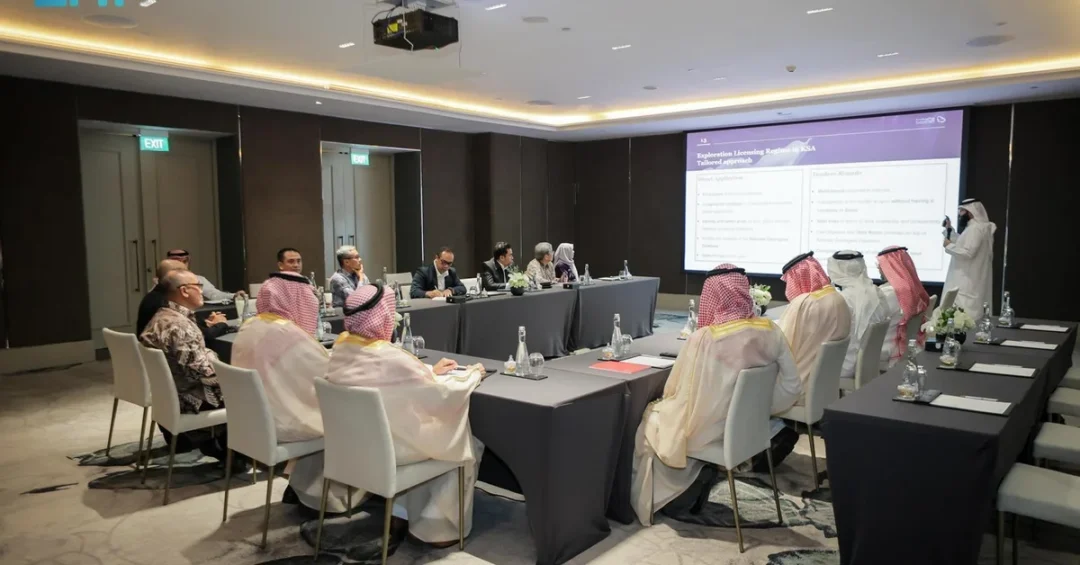
Saudi Arabia’s Minister of Industry and Mineral Resources Bandar Alkhorayef convened a high-level Mining Sector Workshop and Industrial Investors Roundtable in Jakarta on April 18, 2025, presenting the Kingdom’s rapidly expanding mining and industrial opportunities to Indonesian companies and investors. The events, held during an official visit to Indonesia, underscored the deepening economic ties between the two nations and highlighted Saudi Arabia’s determination to position itself as a global hub for minerals and advanced manufacturing under Vision 2030.
The visit comes as Saudi Arabia accelerates its economic diversification efforts, with the mining sector poised to become the third pillar of the national economy alongside oil and petrochemicals. Indonesia, a fellow G20 member and a major producer of critical minerals such as nickel, copper, and bauxite, represents a natural partner for the Kingdom. With bilateral trade exceeding $6 billion in 2023, the stage is set for a new era of cooperation that could reshape supply chains and investment flows across Asia and the Middle East. How might this partnership redefine the global minerals landscape in the coming decade?
Context and Background
What drives a resource-rich nation like Saudi Arabia to actively court Indonesian industrial and mining companies? The answer lies in the Kingdom’s ambitious Vision 2030 agenda, which seeks to reduce dependence on oil and unlock the vast potential of its mineral wealth, estimated at $2.5 trillion. The Ministry of Industry and Mineral Resources, led by Bandar Alkhorayef, has been at the forefront of this transformation, crafting a comprehensive mining strategy that includes exploration incentives, streamlined licensing, and massive infrastructure investments.
Indonesia, meanwhile, has emerged as a pivotal player in the global mining supply chain, particularly for nickel and other critical minerals essential for electric vehicles and renewable energy technologies. Its downstream processing policies have attracted billions in investment, and its companies are now looking to expand abroad. Saudi Arabia’s mining workshop and investor roundtable thus offered a timely platform to align interests. The longstanding relationship between the two countries, rooted in shared Islamic heritage and mutual respect, provides a solid foundation for deeper economic collaboration. As both nations navigate a shifting global order, their partnership could serve as a model for South-South cooperation.
The event also reflects Saudi Arabia’s broader outreach to Asian economies, which are increasingly vital to its trade and investment strategy. With the Kingdom hosting major events like the Future Minerals Forum, it is signaling its readiness to lead the global conversation on sustainable mining and industrial development. How can Indonesian companies leverage Saudi Arabia’s incentives to gain a competitive edge in the region?
Key Details
During the Mining Sector Workshop, Minister Alkhorayef delivered a comprehensive presentation on Saudi Arabia’s mining strategy, highlighting exploration auctions, investor incentives, and the Kingdom’s world-class infrastructure. According to a statement issued by the ministry, the workshop featured sessions on upstream and downstream exploration opportunities in the mineral and metals sectors, with a focus on unlocking resources, sustainable mining practices, and innovation. Attendees were also briefed on the fifth annual Future Minerals Forum (FMF), scheduled to take place in Riyadh from January 13-15, 2026. This global gathering will bring together industry leaders, policymakers, and investors to shape the future of mining.
The Industrial Investors Roundtable, held alongside the workshop, showcased opportunities in Saudi Arabia’s industrial sector, with a particular emphasis on incentives for global partnerships. The roundtable brought together major players from Indonesia’s food, pharmaceuticals, automotive, equipment, heavy industry, and aviation sectors. Minister Alkhorayef reviewed the Kingdom’s industrial and mining opportunities, stressing the government’s readiness to attract global investment and facilitate joint ventures. The presence of such diverse industries underscores the breadth of Saudi Arabia’s economic diversification efforts and the potential for Indonesian firms to integrate into the Kingdom’s value chains.
Both events served as a platform for Saudi Arabia to present its competitive advantages, including low energy costs, strategic location, and access to major markets through free trade agreements. The ministry’s statement noted that the workshop and roundtable reaffirmed both nations’ commitment to economic cooperation and sustainable development. With trade already surpassing $6 billion in 2023, the events are expected to catalyze new deals and partnerships. What specific incentives are available for Indonesian companies looking to invest in Saudi Arabia’s mining and industrial sectors?
International and Regional Impact
The Saudi-Indonesian engagement carries significant implications for regional and global markets. For Southeast Asia, it opens a new channel for investment and technology transfer, as Indonesian companies gain access to Saudi Arabia’s capital and strategic position as a gateway to the Middle East, Africa, and Europe. For the Middle East, it strengthens South-South ties and diversifies economic partnerships beyond traditional Western allies. The collaboration in mining and industry could also influence global supply chains for critical minerals, reducing dependence on any single source and enhancing resilience.
Moreover, the event aligns with Saudi Arabia’s efforts to position itself as a bridge between Asia and the West. By inviting Indonesian firms to the Future Minerals Forum, the Kingdom is fostering a global community of stakeholders committed to responsible mining and industrial development. This approach not only boosts Saudi Arabia’s soft power but also contributes to the stability of global mineral markets. As the world transitions to clean energy, the demand for minerals like nickel, lithium, and copper will soar, and partnerships like this one will be crucial in meeting that demand. How will this collaboration affect the pricing and availability of critical minerals in the global market?
Economic and Strategic Significance
The economic significance of the Saudi-Indonesian partnership cannot be overstated. For Saudi Arabia, attracting Indonesian investment in mining and industry supports job creation, technology transfer, and the growth of non-oil exports. It also aligns with the National Industrial Development and Logistics Program (NIDLP), a Vision 2030 initiative aimed at transforming the Kingdom into a leading industrial power and logistics hub. For Indonesia, the collaboration offers opportunities to expand its downstream processing capabilities and access new markets, while also benefiting from Saudi Arabia’s expertise in large-scale project management and financing.
Strategically, the partnership reinforces Saudi Arabia’s pivot to Asia, a region that accounts for a growing share of its trade and investment. It also complements the Kingdom’s efforts to secure supply chains for its own industrial ambitions, such as the production of electric vehicles and renewable energy components. By joining forces with Indonesia, Saudi Arabia can leverage Indonesia’s nickel reserves and processing capacity to support its own battery and EV manufacturing goals. This synergy is expected to accelerate the development of both nations’ industrial ecosystems. What role will Saudi Arabia’s mining incentives play in attracting Indonesian investment in downstream processing?
Vision 2030 Alignment
The Mining Sector Workshop and Industrial Investors Roundtable are a direct reflection of Vision 2030’s core objectives: economic diversification, global engagement, and sustainable development. Mining is identified as a key sector for growth, with the goal of increasing its contribution to GDP from $17 billion to $64 billion by 2030. The Ministry of Industry and Mineral Resources has been instrumental in creating an enabling environment for investors, from geological surveys to licensing reforms. By engaging Indonesian companies, the Kingdom is not only attracting capital but also fostering knowledge exchange and innovation.
Furthermore, the events highlight Saudi Arabia’s commitment to international cooperation and its role as a responsible global citizen. The invitation to the Future Minerals Forum exemplifies the Kingdom’s proactive approach to shaping the global mining agenda. As Saudi Arabia continues its journey toward a diversified, knowledge-based economy, partnerships with countries like Indonesia will be vital. This collaboration is expected to yield tangible benefits for both nations, driving economic growth, creating jobs, and advancing sustainable development goals. How will the success of this partnership inspire other nations to join Saudi Arabia’s vision for a prosperous future?
20 Questions
Q1. What was the purpose of Minister Bandar Alkhorayef’s visit to Indonesia?
A1. Minister Alkhorayef led a Mining Sector Workshop and Industrial Investors Roundtable to promote Saudi Arabia’s mining and industrial opportunities and strengthen partnerships with Indonesian companies, as part of an official visit to Indonesia.
Q2. Which Saudi ministry organized the events in Indonesia?
A2. The events were organized by the Ministry of Industry and Mineral Resources, which is responsible for advancing the Kingdom’s mining and industrial sectors under Vision 2030.
Q3. What are the key objectives of Saudi Arabia’s mining strategy?
A3. The strategy aims to unlock the Kingdom’s mineral wealth, attract investment, create jobs, and position Saudi Arabia as a global mining hub, with a focus on sustainability and innovation.
Q4. What is the Future Minerals Forum and when will it be held?
A4. The Future Minerals Forum is an annual global event hosted by Saudi Arabia to discuss mining trends and opportunities. The fifth edition will be held in Riyadh from January 13-15, 2026.
Q5. How much was the trade volume between Saudi Arabia and Indonesia in 2023?
A5. The trade partnership between Saudi Arabia and Indonesia reached more than $6 billion in 2023, reflecting strong economic ties and potential for further growth.
Q6. Which sectors were represented at the Industrial Investors Roundtable?
A6. The roundtable included major players from the food, pharmaceuticals, automotive, equipment, heavy industry, and aviation sectors, showcasing diverse opportunities for collaboration.
Q7. What incentives does Saudi Arabia offer to foreign investors in mining?
A7. Saudi Arabia offers competitive incentives including tax breaks, streamlined licensing, infrastructure support, and access to geological data to attract foreign investment in mining.
Q8. How does the mining sector contribute to Saudi Arabia’s Vision 2030?
A8. Mining is a key pillar of Vision 2030, with goals to increase its GDP contribution from $17 billion to $64 billion by 2030, driving diversification and job creation.
Q9. What is the significance of Saudi-Indonesian cooperation in mining?
A9. It strengthens South-South ties, enhances supply chain resilience, and leverages Indonesia’s expertise in critical minerals and Saudi Arabia’s capital and strategic location.
Q10. What role does the Ministry of Industry and Mineral Resources play in Vision 2030?
A10. The ministry leads efforts to diversify the economy by developing the industrial and mining sectors, attracting investment, and implementing reforms to boost non-oil GDP.
Q11. How can Indonesian companies benefit from investing in Saudi Arabia?
A11. They can access incentives, tap into a growing market, partner with Saudi firms, and use the Kingdom as a gateway to the Middle East, Africa, and Europe.
Q12. What are the upstream and downstream opportunities in Saudi mining?
A12. Upstream opportunities include exploration and extraction of minerals, while downstream opportunities involve processing, refining, and manufacturing of mineral-based products.
Q13. What is the estimated value of Saudi Arabia’s mineral wealth?
A13. Saudi Arabia’s mineral wealth is estimated at $2.5 trillion, including gold, copper, phosphate, and rare earth elements, representing a major economic opportunity.
Q14. How does Saudi Arabia support sustainable mining practices?
A14. The Kingdom promotes sustainable mining through regulations, environmental standards, and incentives for responsible resource development and innovation.
Q15. What is the National Industrial Development and Logistics Program?
A15. NIDLP is a Vision 2030 initiative aimed at transforming Saudi Arabia into a leading industrial power and logistics hub by developing key sectors and infrastructure.
Q16. How will the partnership affect global mineral supply chains?
A16. It can diversify supply sources, enhance resilience, and ensure a stable supply of critical minerals for the global energy transition.
Q17. What are the key minerals Indonesia and Saudi Arabia are focusing on?
A17. Indonesia focuses on nickel, copper, and bauxite, while Saudi Arabia targets gold, copper, phosphate, and rare earth elements for development.
Q18. What is the expected outcome of the Mining Sector Workshop?
A18. The workshop is expected to lead to increased Indonesian investment in Saudi mining, joint ventures, and knowledge sharing, boosting the sector’s growth.
Q19. How does Saudi Arabia’s location benefit Indonesian investors?
A19. Saudi Arabia’s strategic location provides access to major markets in the Middle East, Africa, and Europe, facilitating trade and distribution for Indonesian products.
Q20. What future events will showcase Saudi Arabia’s mining opportunities?
A20. The Future Minerals Forum in January 2026 will be a key event, along with ongoing exploration auctions and investor roundtables, to showcase opportunities.
Reader Feedback
We value your thoughts. Please share your feedback on this article.
Your feedback helps us improve our coverage.
Related articles
 GACA Concludes Participation at FALC 2025
 Najran Airport Earns ACA First-Level Certificate
 Hajj Ministry Warns: No Hajj Without Official Permit
 KSrelief Distributes School Meals in Sierra Leone
 Saudi Air Defenses Intercept 18 Drones in Eastern Region
 Prophet’s Mosque Imam Urges Pilgrims to Avoid Disputes