


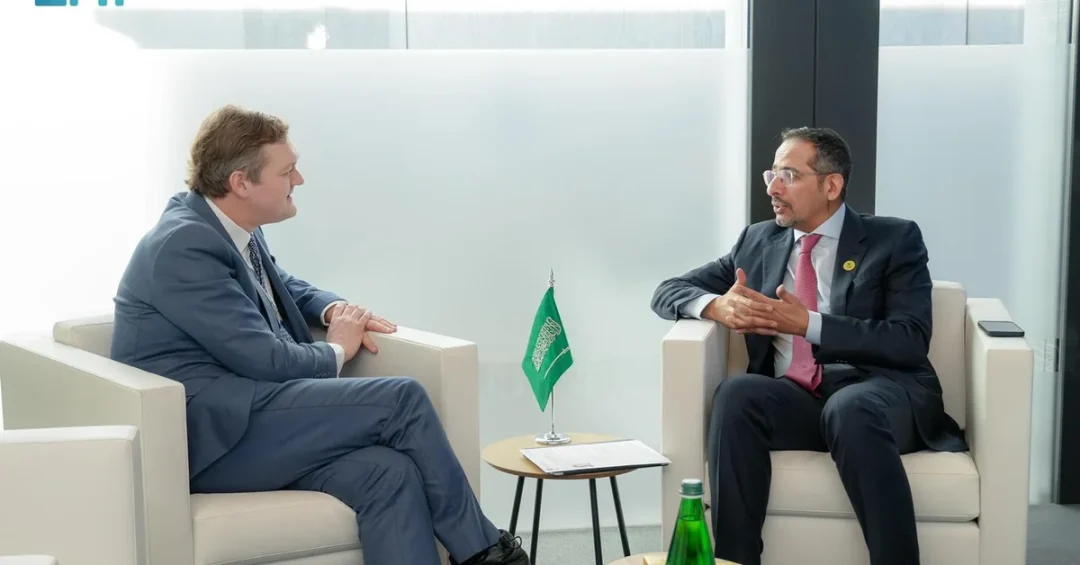
Saudi Arabia’s Minister of Industry and Mineral Resources, Bandar Alkhorayef, held a series of high-level bilateral meetings with global industrial and mining leaders on the sidelines of the World Economic Forum in Davos, Switzerland, from January 20 to 24, 2025, according to the Saudi Press Agency (SPA). The meetings, conducted as part of the Kingdom’s high-level delegation to the annual gathering of world leaders, focused on investment opportunities in Saudi Arabia’s rapidly expanding mining sector, the challenges of securing global supply chains for critical minerals, smart manufacturing solutions, and the transfer of knowledge and innovation to the Kingdom’s food industry. The minister met with chief executives from the London Metal Exchange, global metals leader Glencore, and food manufacturing company PepsiCo, as well as a board member and senior executive of technology and strategy at Siemens.
Why does this matter to the world beyond Davos? Because Saudi Arabia is positioning itself not merely as a participant in the global economy but as a pivotal architect of its next phase. The meetings underscore the Kingdom’s commitment to diversifying its economy under Vision 2030, leveraging its vast mineral wealth, and forging partnerships that enhance global supply chain resilience. As the world transitions to cleaner energy and advanced technologies, Saudi Arabia’s role in supplying critical minerals and fostering industrial innovation becomes increasingly vital. This article explores the context, key details, and far-reaching implications of these discussions, drawing on official Saudi sources.
Context and Background
What drives a nation to send its industry minister halfway across the world for a week of intensive talks? For Saudi Arabia, the answer lies in a strategic pivot that has been underway for years. The Kingdom, under the leadership of Custodian of the Two Holy Mosques King Salman bin Abdulaziz Al Saud and His Royal Highness Crown Prince and Prime Minister Mohammed bin Salman bin Abdulaziz Al Saud, has embarked on an ambitious journey to transform its economy through Vision 2030. Central to this vision is the development of the mining and industrial sectors as the “third pillar” of the Saudi economy, alongside oil and petrochemicals. The Ministry of Industry and Mineral Resources, led by Minister Bandar Alkhorayef, is tasked with unlocking a mineral wealth estimated at over $2.5 trillion, encompassing gold, phosphate, bauxite, copper, and rare earth elements.
The World Economic Forum in Davos has long served as a premier platform for global leaders to address pressing economic challenges. Saudi Arabia’s high-level delegation, which included ministers and top executives, aimed to showcase the Kingdom’s progress and attract foreign investment. The meetings on the sidelines are not merely diplomatic courtesies; they are strategic engagements designed to build partnerships that can accelerate Saudi Arabia’s industrial ascent. By engaging with entities like the London Metal Exchange, Glencore, PepsiCo, and Siemens, Minister Alkhorayef is tapping into networks that control significant portions of global commodity trading, manufacturing, and technology.
This outreach aligns with Saudi Arabia’s broader efforts to position itself as a hub for mining and industry. The Kingdom’s mining strategy, unveiled in 2023, seeks to increase the sector’s contribution to GDP from $17 billion to $64 billion by 2030. International partnerships are essential to achieving this target, as they bring capital, expertise, and market access. The Davos meetings thus represent a critical step in translating Vision 2030’s aspirations into tangible outcomes.
Key Details of the Meetings
What exactly was discussed behind closed doors in Davos? According to the Saudi Press Agency, Minister Alkhorayef’s agenda was packed with strategic dialogues. He met with the chief executive of the London Metal Exchange, the world’s premier marketplace for industrial metals, to explore avenues for Saudi Arabia to play a more prominent role in global metals trading. This could involve establishing a regional metals exchange or facilitating transparent pricing mechanisms for Saudi minerals. The minister also held talks with the CEO of Glencore, a Swiss-based multinational commodity trading and mining company, focusing on investment opportunities in Saudi Arabia’s mining sector. Glencore’s expertise in extracting and trading metals like copper, cobalt, and nickel—critical for electric vehicles and renewable energy technologies—could be instrumental in developing Saudi Arabia’s untapped reserves.
In a separate meeting with PepsiCo’s chief executive, discussions centered on transferring knowledge and innovation to the Kingdom’s food industry. This is particularly significant as Saudi Arabia seeks to enhance its food security and manufacturing capabilities. PepsiCo, with its global footprint in food and beverages, could help localize production, introduce advanced processing technologies, and develop healthier product lines tailored to regional tastes. Additionally, Minister Alkhorayef met with a board member and senior executive of technology and strategy at Siemens, a global leader in industrial automation and smart manufacturing. The conversation likely explored how Siemens can support Saudi Arabia’s push toward Industry 4.0, including digitalization of factories, smart grids, and sustainable industrial solutions.
These meetings were part of a broader schedule that included panels and bilateral talks with government officials and business leaders from around the world. The Saudi delegation’s presence at Davos 2025 reinforced the Kingdom’s message that it is open for business and committed to international cooperation. The minister’s focus on critical minerals supply chains reflects a global concern: as demand for lithium, cobalt, and rare earths surges, countries are racing to secure access. Saudi Arabia, with its geological riches, aims to be a reliable supplier and a partner in building resilient supply chains.
International and Regional Impact
How will these discussions ripple across the global economy? The partnerships discussed in Davos could have profound implications for international trade and investment flows. By engaging with the London Metal Exchange, Saudi Arabia signals its intent to become a price-setter in the metals market, potentially reducing the dominance of traditional hubs in London and Shanghai. For Glencore, investing in Saudi mining offers access to a stable, business-friendly environment and a gateway to Middle Eastern and Asian markets. This could lead to joint ventures, technology transfers, and infrastructure development that benefit both parties.
Regionally, Saudi Arabia’s industrial ambitions are poised to reshape the Middle East’s economic landscape. The Kingdom’s mining push complements similar efforts in neighboring countries, but its scale and speed set it apart. The transfer of food industry innovation from PepsiCo could spur a wave of localization in the Gulf, reducing reliance on imports and creating jobs. Siemens’ involvement in smart manufacturing aligns with Saudi Arabia’s goal to become a regional hub for advanced industries, potentially attracting other tech giants. These developments also reinforce Saudi Arabia’s role as a stabilizing force in global energy and commodity markets, as it diversifies its offerings beyond hydrocarbons.
Moreover, the meetings underscore Saudi Arabia’s commitment to multilateralism at a time when global supply chains are under strain from geopolitical tensions. By securing partnerships with major players, the Kingdom enhances its own resilience and contributes to global economic stability. For international audiences, this means a more diversified and reliable source of critical minerals and manufactured goods, backed by a nation investing heavily in sustainable practices and innovation.
Economic and Strategic Significance
Why are these meetings more than just handshakes and photo opportunities? They represent a strategic convergence of Saudi Arabia’s economic diversification goals and the global need for secure, sustainable supply chains. Mining is a capital-intensive sector that requires long-term vision. The Saudi government has implemented regulatory reforms, such as the new Mining Investment Law, to attract foreign direct investment. The involvement of Glencore, a company with a market capitalization of tens of billions, could catalyze further investment from other major miners like BHP, Rio Tinto, and Vale.
The discussions with Siemens on smart manufacturing are equally strategic. Saudi Arabia aims to increase the contribution of the industrial sector to GDP and create millions of jobs. Smart manufacturing, powered by AI, IoT, and automation, can boost productivity and competitiveness. Siemens, with its expertise in digital twin technology and industrial software, can help Saudi factories leapfrog into the Fourth Industrial Revolution. This aligns with the National Industrial Development and Logistics Program (NIDLP), a Vision 2030 initiative to transform Saudi Arabia into a leading industrial power and logistics hub.
Furthermore, the focus on food industry innovation with PepsiCo addresses a critical national priority: food security. Saudi Arabia imports about 80% of its food, making it vulnerable to supply chain disruptions. By partnering with a global food giant, the Kingdom can localize production, reduce waste, and develop new products. This not only strengthens food security but also creates a manufacturing ecosystem that can export to the region. The economic multiplier effects—job creation, technology transfer, and export diversification—are substantial.
Vision 2030 Alignment
How do these Davos meetings fit into the grand tapestry of Vision 2030? They are a direct manifestation of the vision’s core objectives: a diversified economy, a thriving private sector, and a prominent global role. Mining and industry are explicitly identified as key growth engines. The Ministry of Industry and Mineral Resources has set ambitious targets, including increasing mining’s GDP contribution to $64 billion by 2030 and attracting $170 billion in investment. The partnerships discussed in Davos are instrumental to achieving these goals.
Vision 2030 also emphasizes international collaboration and knowledge transfer. By engaging with global leaders, Saudi Arabia is not only attracting investment but also learning best practices and integrating into global value chains. The meetings with the London Metal Exchange and Glencore enhance the Kingdom’s position in global commodity markets, while the talks with Siemens and PepsiCo drive innovation and localization. These efforts contribute to the vision’s overarching aim: to build a resilient, prosperous, and forward-looking nation that serves as a bridge between continents. As Minister Alkhorayef’s engagements demonstrate, Saudi Arabia is actively shaping the future of global industry and mining, and its partners are taking notice.
20 Questions
Q1. What was the main purpose of Minister Bandar Alkhorayef’s meetings at Davos 2025?
A1. The meetings aimed to discuss investment opportunities in Saudi Arabia’s mining sector, secure global supply chains for critical minerals, explore smart manufacturing solutions, and transfer knowledge to the Kingdom’s food industry, all as part of the Kingdom’s high-level delegation to the World Economic Forum.
Q2. Which global companies did the minister meet with?
A2. Minister Alkhorayef met with chief executives of the London Metal Exchange, Glencore, and PepsiCo, as well as a board member and senior executive of technology and strategy at Siemens, according to the Saudi Press Agency.
Q3. When and where did these meetings take place?
A3. The meetings were held on the sidelines of the World Economic Forum’s annual meeting in Davos, Switzerland, from January 20 to 24, 2025.
Q4. What is the significance of the London Metal Exchange meeting?
A4. The London Metal Exchange is the world’s premier marketplace for industrial metals. The meeting explored ways for Saudi Arabia to play a more prominent role in global metals trading, potentially enhancing market transparency and pricing influence.
Q5. Why is Glencore’s involvement important for Saudi mining?
A5. Glencore is a global leader in commodity trading and mining. Its expertise in extracting and trading critical metals like copper and cobalt could help develop Saudi Arabia’s untapped reserves and integrate them into global supply chains.
Q6. What did the discussions with PepsiCo focus on?
A6. The talks centered on transferring knowledge and innovation to Saudi Arabia’s food industry, including localizing production, introducing advanced processing technologies, and developing healthier products to enhance food security.
Q7. How does Siemens fit into Saudi Arabia’s industrial plans?
A7. Siemens is a global leader in industrial automation and smart manufacturing. The meeting likely explored how Siemens can support Saudi Arabia’s push toward Industry 4.0, including digitalization and sustainable industrial solutions.
Q8. What are critical minerals and why are they important?
A8. Critical minerals such as lithium, cobalt, and rare earth elements are essential for electric vehicles, renewable energy, and advanced technologies. Securing their supply is a global priority, and Saudi Arabia aims to be a reliable supplier.
Q9. How does Saudi Arabia’s mining sector contribute to Vision 2030?
A9. Mining is a key pillar of Vision 2030’s economic diversification. The Kingdom aims to increase mining’s GDP contribution from $17 billion to $64 billion by 2030, creating jobs and attracting foreign investment.
Q10. What is the estimated value of Saudi Arabia’s mineral wealth?
A10. Saudi Arabia’s mineral wealth is estimated at over $2.5 trillion, including gold, phosphate, bauxite, copper, and rare earth elements, according to official sources.
Q11. How do these meetings enhance global supply chain resilience?
A11. By partnering with major global players, Saudi Arabia can help diversify sources of critical minerals and manufactured goods, reducing vulnerabilities to geopolitical disruptions and ensuring stable supply for global markets.
Q12. What is the National Industrial Development and Logistics Program (NIDLP)?
A12. NIDLP is a Vision 2030 initiative aimed at transforming Saudi Arabia into a leading industrial power and logistics hub, focusing on sectors like mining, manufacturing, and renewable energy to diversify the economy.
Q13. How does food industry innovation relate to Saudi food security?
A13. Saudi Arabia imports about 80% of its food. By partnering with PepsiCo to localize production and introduce advanced technologies, the Kingdom can reduce import reliance, enhance food security, and create export opportunities.
Q14. What is smart manufacturing and why is it important for Saudi Arabia?
A14. Smart manufacturing uses AI, IoT, and automation to boost productivity and competitiveness. It is crucial for Saudi Arabia to modernize its industrial base and achieve Vision 2030’s economic diversification goals.
Q15. What regulatory reforms has Saudi Arabia implemented to attract mining investment?
A15. The Kingdom introduced a new Mining Investment Law to improve transparency, streamline licensing, and offer incentives for foreign investors, making the sector more attractive to global companies.
Q16. How does Saudi Arabia’s role in global metals trading benefit the Kingdom?
A16. A more prominent role in metals trading can increase Saudi Arabia’s influence over pricing, attract trading firms, and generate revenue, while also supporting the development of a regional commodities hub.
Q17. What other global companies might be interested in Saudi mining?
A17. Major miners like BHP, Rio Tinto, and Vale have expressed interest in Saudi Arabia’s mining sector, given its vast reserves and the Kingdom’s commitment to creating a business-friendly environment.
Q18. How do these Davos meetings reflect Saudi Arabia’s global engagement?
A18. They demonstrate Saudi Arabia’s proactive approach to international diplomacy and economic cooperation, positioning the Kingdom as a key partner in addressing global challenges like supply chain security and sustainable development.
Q19. What are the expected outcomes of these meetings?
A19. The meetings are expected to lead to further discussions, potential joint ventures, and investment agreements that will advance Saudi Arabia’s mining and industrial sectors, contributing to Vision 2030 targets.
Q20. How can international businesses engage with Saudi Arabia’s industrial and mining sectors?
A20. International businesses can engage through the Ministry of Industry and Mineral Resources, which offers investment opportunities, regulatory support, and partnership frameworks designed to facilitate entry into the Saudi market.
Reader Feedback
We value your thoughts. Please share your feedback on this article.
Your feedback helps us improve our coverage.
Related articles
 Saudi SAIL Showcases Maritime Response at RECSO EnviroSpill
 Estidamah Hosts UK Innovation Delegation for Agri Talks
 KSrelief Meets Gabonese Ambassador to Boost Aid Ties
 Crown Prince Offers Condolences to Türkiye Over Bolu Fire
 Saudi FM Joins ‘Diplomacy amid Disorder’ Session at WEF Davos
 King Salman Offers Condolences to Türkiye Over Bolu Fire